
I Wrote Every Day for 6 Months and Burned Out Completely. Here’s What I Was Doing Wrong.
Writing streaks gone wrong.

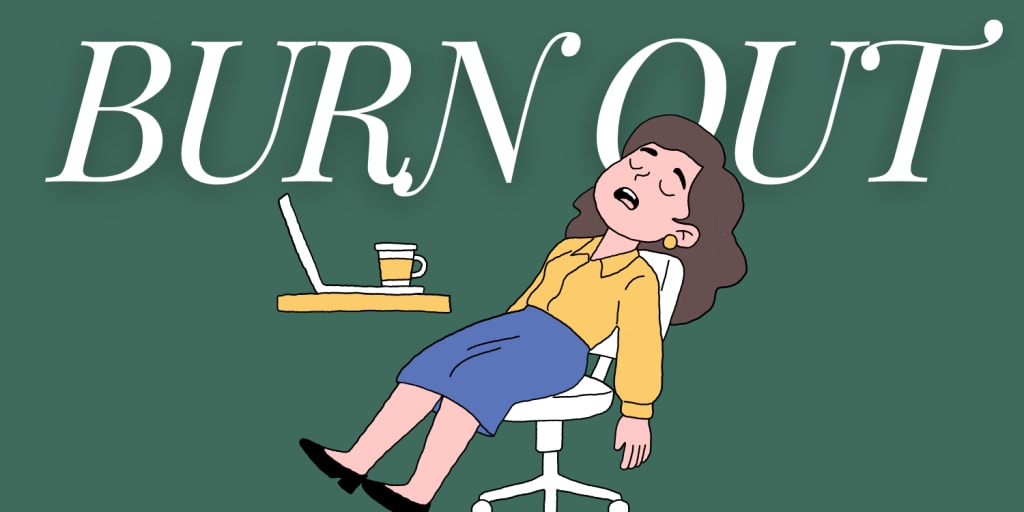
Six months of writing every single day without a single missed day, and I was proud of that streak. But I was also completely exhausted, resentful, and starting to hate the thing I'd committed to doing.
I'd wake up, and the first thought wasn't "what do I want to write about today?" Instead, it was "I have to write today - again - and I can't skip because the streak must continue."
Writing had become a punishment I inflicted on myself daily.
I thought I was being disciplined, that the suffering meant I was serious about my craft, and that if it was hard, I must be doing it right.
I was wrong.
Discipline isn't supposed to destroy you, and by month six, I was destroying myself one day at a time.
What My "Discipline" Actually Looked Like
I had rules; strict ones.
Rule 1: Write every day, no matter what. Sick? Write anyway. Exhausted? Write anyway. Had a terrible day and just want to sleep? Too bad, write.
Rule 2: Minimum 1,000 words per day; not 500, not "just show up," but a thousand words or the day didn't count. It had to be 1000 or else.
Rule 3: No bad writing allowed, because every word had to be good. If I wrote something mediocre, I'd feel like I wasted the day.
Rule 4: Writing comes first, before everything else; it came before rest, before fun and always before taking care of myself. Writing was the priority.
I thought these rules made me disciplined, but they made me miserable.
When Discipline Becomes Self-Punishment
Here's what I didn't understand: there's a difference between discipline and self-punishment.
Discipline is sustainable. It's showing up consistently in a way that energises you over time.
However, self-punishment is unsustainable, forcing yourself to show up in a way that depletes you until you break.
My six-month streak was self-punishment disguised as discipline.
I wasn't showing up because I wanted to write; I was showing up because I was terrified of breaking the streak and my own rules. The motivation wasn't "I love this," it was "I can't fail."
Every day felt like I was proving something to myself, to the internet or to some imaginary audience judging whether I was "serious" enough.
I wasn't writing from desire. I was writing from fear.
The Warning Signs I Ignored
Looking back, the signs were obvious, but I just didn't want to see them.
I dreaded opening my laptop. I felt guilty on good days. If I only wrote 1,000 words instead of 2,000, I felt like I'd slacked off, and nothing was ever enough.
I couldn't enjoy other activities because if I went for a walk or spent time with friends, I'd feel guilty for not writing. Everything that wasn't writing felt like wasting time.
And here was the part I hated the most. My writing got worse, not better. Despite writing every day, my work was getting stale, repetitive, and forced.
I started resenting people who seemed to enjoy writing. When other writers talked about loving their work, I'd think "they're lying" or "they're not taking it seriously."
I was so committed to suffering that I couldn't imagine any other way.
What I Was Doing Wrong
Mistake #1: I made the streak more important than the writing.
My goal shifted from "write something meaningful" to "don't break the streak."
On days when I had nothing to say, I'd force out 1,000 words of nonsense just to hit the count, writing for the sake of writing and not because I had something to express.
The streak became the point, and the writing became the price I paid to maintain it.
Mistake #2: I confused suffering with effort.
I thought if writing felt hard and painful, that meant I was working hard, and that the suffering was proof of dedication.
But effort and suffering aren't the same thing.
Effort is pushing yourself to grow, while suffering is pushing yourself past the point of sustainability.
I was suffering every day and calling it discipline.
Mistake #3: I had no flexibility.
Life happens, right? Some days you're sick, some days you're emotionally exhausted, and some days you genuinely need rest more than you need to write.
My rules had no room for this. Every day was the same demand: 1,000 words, no matter what.
That's not discipline, I've discovered. That's rigidity, and rigidity breaks you.
Mistake #4: I was writing from shame, not from desire.
Every day, I wrote because I was afraid of what it would mean if I didn't. I was genuinely fearful I wasn't a "real" writer, afraid I was lazy and petrified I'd lose momentum and never start again.
Shame is a terrible long-term motivator. It works for a while, but eventually it burns you out.
The Day I Broke My Writing Streak
Day 184.
I woke up, opened my laptop, stared at the blank page, and couldn't do it. Not "didn't want to" but couldn't.
I sat there for an hour trying to force words out, but nothing came. For the first time in six months, I closed my laptop without writing.
I felt like I'd failed, like I'd proven I wasn't disciplined enough, and like the whole six months were pointless because I couldn't make it to seven.
Then something unexpected happened: I felt relieved. The pressure was gone, the streak was over, and I didn't have to prove anything anymore.
And that's when I realised how toxic my relationship with writing had become.
What Healthy Writing Discipline Actually Looks Like
After I burned out, I had to rebuild my writing practice from scratch, and this time, I did it differently.
I lowered the bar. Instead of 1,000 words every day, I committed to writing for 10 minutes. Some days turned into more. Some days stayed at 10 minutes. Both counted in my mind.
I built in flexibility. If I were genuinely sick or exhausted, I'd give myself permission to skip, because one missed day didn't mean failure. I reminded myself that it meant I was human.
I focused on the process, not the streak. The goal wasn't "write every day forever" but "show up consistently over time." Missing one day didn't erase the previous hundred, I kept repeating.
I checked my motivation. Before writing, I'd ask: Am I doing this because I want to, or because I'm afraid not to? If it were only fear, I'd reassess.
I made resting part of the practice. Writing isn't the only thing that makes you a writer. There's so much more to it, like reading, thinking, living, and resting from the work. I stopped treating rest like laziness and reminded myself that I needed rest to function.
What I Do Now
It's been a while since the writing streak burnout. It took a long time to recalibrate my behaviours and get to where I am now. I still write almost every day, but it's different now.
Some days I write 2,000 words because I'm in the flow and the ideas are coming. Some days I write 200 words and stop because that's all I have.
I don't judge either kind of day. There's no ranking my performance or handing out gold stars for the type of work I completed. I just show up.
I've missed days, sometimes several in a row, when life gets overwhelming, or I genuinely need rest. When that has happened, I don't spiral, I don't feel like I've failed, and I just return when I'm ready.
My writing is better now than it was during my six-month streak, not because I'm working harder, but because I'm not working from a place of fear and exhaustion.
I'm showing up because I want to, not because I'm terrified of what it means if I don't.
The Question to Ask Yourself
If you're writing every day and it feels like punishment, ask yourself: Am I doing this because I love it, or because I'm afraid to stop?
If the answer is fear, you're not being disciplined; you're punishing yourself.
Real discipline doesn't destroy you. It sustains you.
If your writing practice is making you hate writing, something is wrong. And it's not something wrong with you, but it's with the system you've built.
You're allowed to rest, you're allowed to have bad days, and you're allowed to miss a day without your entire identity as a writer collapsing.
Discipline isn't about perfection; it's about showing up consistently over time in a way that's sustainable.
If your system isn't sustainable, it's not discipline; it's self-punishment.
And you don't have to punish yourself to be a writer.
How to Know the Difference
You're practising discipline if:
- You can miss a day without spiralling
- Writing energises you more often than it depletes you
- You're motivated by desire, not fear
- You have flexibility built into your practice
- You celebrate showing up, even imperfectly
You're punishing yourself if:
- Missing one day feels like total failure
- You dread writing more often than you enjoy it
- You're motivated by shame or fear of being "lazy"
- Your rules are rigid with no room for being human
- Nothing you do ever feels like enough
I spent six months punishing myself and called it being serious about my craft. Don't make the same mistake.
Build something sustainable, something that makes you want to write, but avoid anything that makes you hate it.
---
I write about the emotional and practical reality of being a writer - drafting, doubt, discipline, and publishing while still figuring it out.
Mostly for people who write because they have to, need to, want to | https://linktr.ee/ellenfranceswrites
About the Creator
Ellen Frances
Daily five-minute reads about writing — discipline, doubt, and the reality of taking the work seriously without burning out. https://linktr.ee/ellenfranceswrites
Keep reading
More stories from Ellen Frances and writers in Writers and other communities.
I’ve Started 23 Writing Projects. I’ve Finished 2. Here’s Why.
I have a folder on my computer called "Writing Projects." It contains 23 documents. Each one is a project I started with full conviction that this was the one. There is a book that would I would call my masterpiece. And the series that would take off. Most are ideas that were too good not to pursue.
By Ellen Frances2 days ago in Writers
DEBORAH
There is an opera in town and the songs sung tell of a man who met a woman at a well. Looking at her wardrobe, she realizes she must recreate the look she imagined for the event. This grand occasion called for glitz and glam, gowns and heels. Only her choices were limited and lacking the fashion this opera required. As any woman would, she refused to let anything stand in the way of her childhood dream day. She reached into the back of her closet after pulling everything down from it. There it was, her Leopard print dress! Deborah grabs the dress and runs to her dressing room to jump into it. By this time it feels like she is in an inferno. Could it be the spanks she had on restricting her breath, movement and ventilation? I’m sure she thinks to herself, but who has time to concentrate on that. Beauty Calls! After doing her hair and makeup, then putting on her dress, Deborah steps back to look into the mirror. The dress fits perfectly as if she had tattooed it on herself. Very good, she says, and off she goes. The image before her in the mirror was one that was cultivated in the presence of God, even though the scars remained. Her outward appearance now matched her inner esteem through God’s redemptive power working through her life. Chin up! What’s meant to keep you looking down cannot overpower the God-given confidence that has been born on the inside of you. Deborah recalls these things to mind. Finally, embracing her identity as the apple of God’s eye, and that’s more than enough.
By Rasheeda R6 days ago in Writers



Comments
There are no comments for this story
Be the first to respond and start the conversation.