
How to Match Crusher Machines to Granite Material Hardness and Size
Match Crusher Machines to Granite Material Hardness and Size

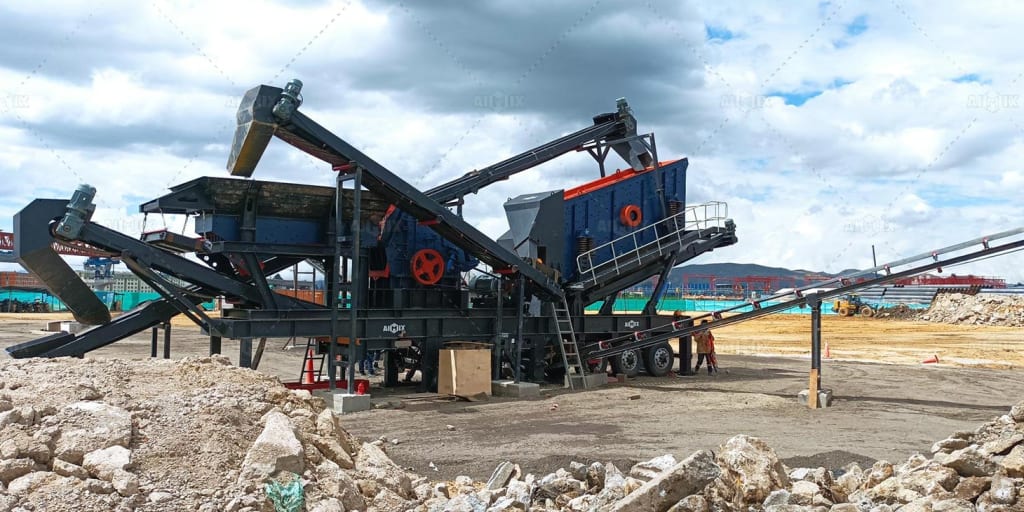
Granite is a formidable material, known for its unyielding hardness and intricate crystalline structure. While its durability makes it ideal for construction, processing it requires specialized crushers tailored to its distinct properties. A mismatch between crusher type and granite characteristics can result in excessive wear, reduced efficiency, and compromised output quality. Understanding how to match the right crusher machine to granite’s hardness and size ensures optimal performance while prolonging equipment lifespan.
Understanding Granite’s Unique Properties
High Compressive Strength and Abrasiveness
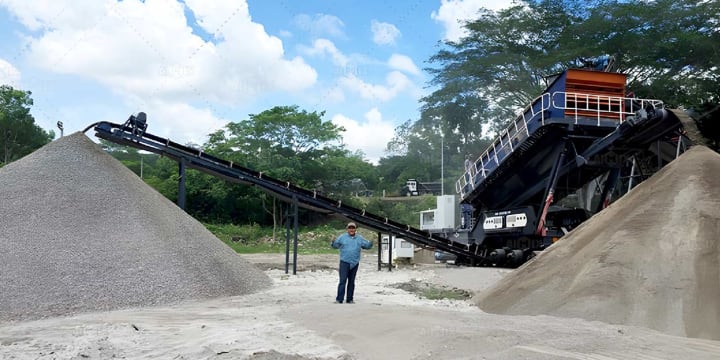
Granite’s impressive compressive strength, often exceeding 200 MPa, makes it one of the hardest natural stones to crush. This resilience means high-impact forces are required to fracture it, necessitating powerful and robust granite crusher machine. Additionally, granite’s high quartz content contributes to its abrasive nature, accelerating wear on crusher components such as jaw plates, mantles, and liners. Crushers not designed for granite’s toughness will experience rapid degradation and frequent downtime.
Variability in Grain Size and Structural Composition
Not all granite is uniform. Some varieties exhibit fine-grained textures, while others contain large, interlocking mineral crystals. These differences influence breakability—fine-grained granite may fracture more predictably, whereas coarse-grained types resist crushing forces unevenly. Structural inconsistencies, including natural fractures or veins, can also affect how the material breaks under pressure. Choosing a crusher without considering these factors may lead to inefficient crushing or excessive production of undesired fines.
Selecting the Right Crusher for Hardness and Size
Primary Crushers: Handling Large Granite Blocks
Granite processing typically begins with a primary crusher, responsible for breaking down large boulders into manageable sizes. Jaw crushers are the most common choice due to their high impact resistance and deep crushing chamber, which accommodates oversized, dense material. Alternatively, gyratory crushers, with their continuous crushing action and robust build, offer superior capacity for handling massive granite deposits. A misstep in this selection phase could mean slow processing rates or frequent mechanical failures.
Secondary and Tertiary Crushers: Refining for Specific Applications
Once reduced, granite requires further refinement to meet project specifications. Cone crushers, designed for compressive strength materials, efficiently produce well-graded aggregates with minimal waste. Their ability to adjust settings for precise output sizes makes them ideal for road construction, concrete production, and decorative stone applications. For highly specific particle shapes, impact crushers may be introduced in the tertiary stage, leveraging controlled force to enhance cubicity. However, if misapplied, impact crushers may wear prematurely due to granite’s abrasive composition.
Optimizing Crushing Efficiency and Longevity
Wear-Resistant Components for Extended Durability
Given granite’s abrasiveness, material selection for wear parts is critical. Manganese steel liners, tungsten carbide inserts, and ceramic-coated surfaces significantly extend component life, reducing frequent maintenance and replacement costs. Investing in high-quality wear-resistant parts ensures crushers operate efficiently despite granite’s relentless friction. Ignoring this factor could lead to unexpected machine failures and costly operational interruptions.
Adjusting Crusher Settings for Maximum Output
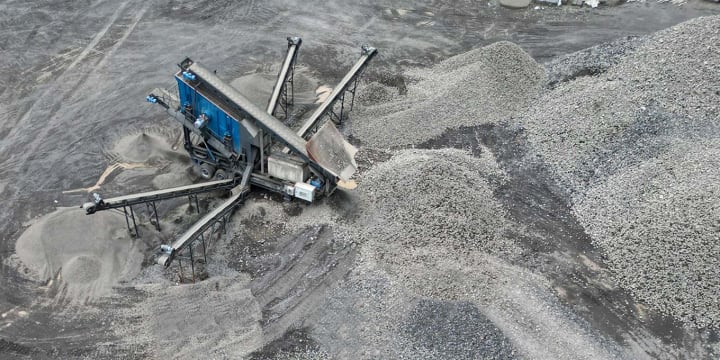
Crushing efficiency hinges on proper machine calibration. Oversized feed material can choke the crusher, while improper settings may generate excessive fines or irregular particle distribution. Hydraulic setting adjustments, automated gap control, and real-time monitoring help fine-tune crushers for peak efficiency. Ensuring the machine operates within recommended parameters prevents unnecessary strain on components and maximizes throughput without excessive wear.
Matching crusher machines to granite’s specific hardness and size requires a strategic approach. Choosing the correct equipment, implementing wear-resistant components, and optimizing operational settings ensures seamless processing and extended machine life. With the right setup, granite’s formidable nature transforms from a crushing challenge into a production advantage, delivering high-quality aggregates while maintaining cost-efficiency.
About the Creator
Aimixmachine
AIMIX is a customer-center-oriented heavy equipment manufacturer and supplier, devoted to production, innovation, combination, one-stop solution, etc.
Keep reading
More stories from Aimixmachine and writers in Writers and other communities.
A City’s Success in Recycling 90% of Demolition Waste with Mobile Track Mounted Crushers
Urban landscapes are constantly evolving, with buildings rising and falling in a continuous cycle of renewal. Yet, with every demolition project comes an avalanche of waste—concrete, brick, asphalt, and steel—that often ends up clogging landfills. One city, determined to rewrite the narrative, took a bold step toward sustainability. By integrating mobile track crusher into its demolition strategy, it achieved a 90% recycling rate, setting a benchmark for urban waste management worldwide.
By Aimixmachine11 months ago in Writers
It's Winter
Anne Bernays and Pamela Painter — What If? Writing Exercise for Fiction Writers prompts The Exercise —Write a scene involving two characters. Have the point-of-view character presume something entirely different about the situation from what the other character's overt behavior seems to imply. For example, a landlord comes to visit, and the tenant suspects that it isn't a visit but an inspection. Make up several situations in which one character can fantasize or project or suspect or even fear what another character is thinking. The Objective - To show how your characters can use their imaginations to interpret the behavior and dialogue of other characters.
By Denise E Lindquist18 days ago in Writers
Understanding Prototype PCB Assembly and Its Role in Modern Electronics Development
In the fast-evolving electronics industry, prototype PCB assembly plays a central role in turning design concepts into functional hardware. Before any electronic product reaches large-scale manufacturing, it must pass through a critical testing and validation phase. This is where prototype printed circuit boards (PCBs) become essential.
By Abbasi Publisher7 days ago in Writers
The Devil's Cut
“Comrade, finally you’re awake.” The voice was smooth, sensual. A flickering incandescent bar was all that lit the white, sterile room. All Vladimir remembered was everything going black. He tried to move his arms and found them strapped to the gurney.
By Matthew J. Fromm6 days ago in Fiction


Comments