
How to Improve Your Mental Health by Writing
Learn the three types of writing that help improve mental health.

It is not good to keep emotions bottled up inside you. It can lead to psychological distress. Writing about your feelings helps tremendously. Writing is a free, safe, and confidential way to express what is on your mind. When you write for self-awareness, you will not be judged, challenged, or put down for your beliefs, fears, and unexplained emotions because the information is not to be shared. It is for your eyes only.
You can write about things you aren't comfortable speaking about. You will become aware of yourself through your own writing. Recent studies have shown how an increase in writing helps a great deal with discovering things about yourself.
Writing can be the key to the improvement of your mental health. The activity can be the avenue to turning your attention inward towards self-awareness. When writers express on paper what is inward, they can become more aware of their behavior, beliefs, dreams, feelings, motivations, personality, traits, and values. Often, writers can put on paper what they will never tell someone in person.
Medical professionals suggest that writers become more aware of themselves through their writing, and that can be beneficial in many ways. It can increase confidence in yourself. Writing can provide satisfaction, self-control, and the ability to make better decisions.
Keep in mind that you are writing for your mental health and not to win a Nobel or Pulitzer Prize. No one might ever read what you write, but it helps tremendously to get your thoughts on paper and out of your mind. When you read it later, you will be surprised how much you have grown because of your own writing.
Self-awareness is a major key to good mental health, and writing is a great place to start.
Three Main Types of Writing
There are many types of writing, but they all fall under three distinct categories. Some people write in all three categories, but some people favor one over the others. It doesn't matter which category you prefer. It is the writing process that improves mental health and is not necessarily the finished product. The point is to get your thought out of your head and onto a piece of paper.
Expressive Writing

It is very therapeutic to express yourself by writing about your own thoughts and feelings that are related to a stressful life event. Expressive writing helps emotionally to process difficult situations. Expressive writing can reduce stress, anxiety, and depression, and can enhance self-awareness.
When you use expressive writing for your mental health, express what you feel, think, and believe without considering what others might think. In other words, express yourself.
Reflective Writing

Reflective writing gives people a way to assess their beliefs and actions. This type of writing helps people sort out what is going on within themselves. They flesh out what is happening to make them feel the way they do. Reflective writing is a perfect way to analyze what is happening in your life and why it is happening. Ernest Hemingway, the American novelist, short-story writer, and journalist, advised people to write about what hurts. He was convinced that writing about your hurts can help improve mental health.
Reflective writing allows the writer to be open and honest without holding anything back. Reflective writing can improve personal and professional relationships and help you get to know yourself better.
Creative Writing
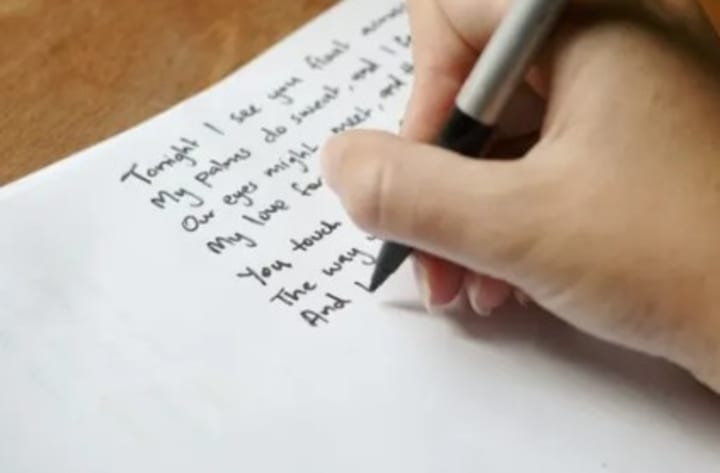
Creative writing is different from expressive and reflective writing. Creative writing is “make-believe.” It typically consists of fictional works, poetry, and short stories in which the author expresses self-awareness by using his imagination rather than telling the truth. Creative writing uses imagery and figures of speech, such as metaphors, similes, and dozens of other literary devices, to give the impression that a fictional scene is real.
One kind of writing that frequently necessitates reader interpretation is creative writing. It is much like a painting that an artist does. Many people can see the same painting in different ways, but only the artist knows exactly what he had in mind when his picture became alive.
Writing creatively can help with subjects that are too hard to talk about, such as heartbreaks, grief, and things that upset a writer. As a result, writing about them under the guise of creative writing is more comfortable.
Writing Suggestions
Writing may be about a difficult situation or a tense incident that consumes your thoughts. Write what you have learned from those experiences.
Try writing a story or a poem if you'd rather write something more imaginative. Ask yourself important questions as you write, and then answer them in your own way.
Get into the habit of writing something every single day.
Sometimes you will write a little, and sometimes you will write a lot. Don't put unnecessary stress on yourself by establishing unrealistic goals.
About the Creator
Margaret Minnicks
Margaret Minnicks has a bachelor's degree in English. She is an ordained minister with two master's degrees in theology and Christian education. She has been an online writer for over 15 years. Thanks for reading and sending TIPS her way.
Keep reading
More stories from Margaret Minnicks and writers in Writers and other communities.
E-Books: How to Write and Sell Them
E-books, short for electronic books, are very popular these days. They are quick and easy for the writer and convenient for the reader. Thousands of these books are available, and this article will help you decide to add yours to the number.
By Margaret Minnicks4 months ago in Writers
A Transparent Look at Vocal Challenges and Top Stories
Almost three years ago, we shared a resource article that served as a place for people to suggest new challenge prompts. We thought it would be a good idea to refresh that thread, and take the opportunity to answer a few common questions about top stories, how challenges are judged and how submissions are reviewed.
By Vocal Curation Teama day ago in Resources




Comments
There are no comments for this story
Be the first to respond and start the conversation.