
How to Check If an Opal Stone Is Real, Authentic or Fake
Easy Ways to Identify Genuine Opal from Fakes

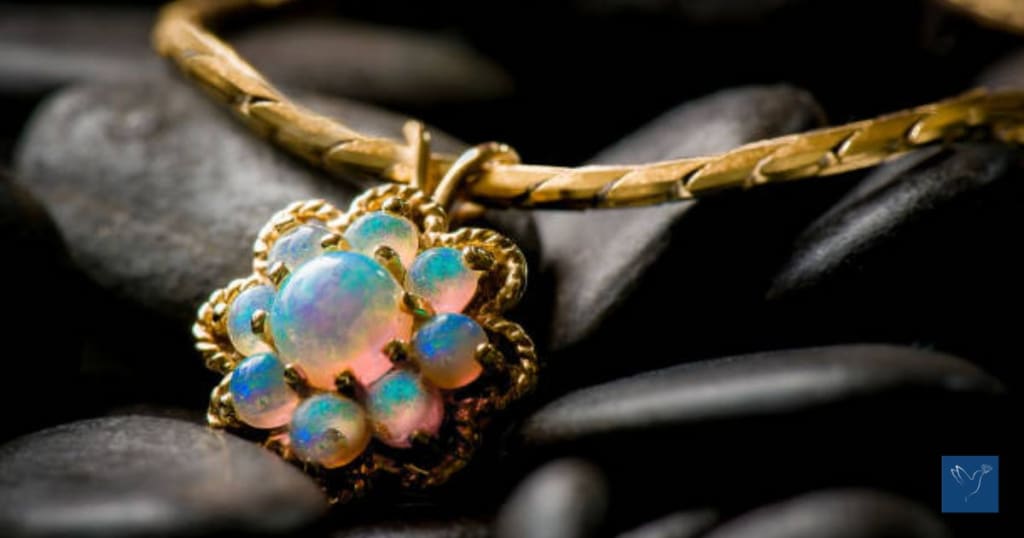
We all adore gemstones for the way they sparkle and steal our attention without trying too hard. Then there are some stones like opals that captivate you with their soul, and not just their outer beauty. However, as more and more people seek this stone for its healing benefits and visual charm, spotting the difference between real and synthetic opal has become very important. That’s also because the opal stone price varies based on its authenticity.
So, how do you know if the opal in your hand is real or an imitation? In this blog, we’ll explore how to differentiate between a natural and a synthetic opal.
Why Are Fake Opals So Common?
Opals are mainly known for their play-of-color, which makes them quite unique in the gemstones segment. This effect refers to the shifting spectrum of rainbow-like colors that seem to glow from within and keep changing as the light falls on them. But that same effect makes it easy for manufacturers to replicate using resins, plastics, and lab-created composites.
Such opals look real on the surface, especially if you buy online gemstone. Nevertheless, they lack the energy and individuality of a real stone. Not all sellers disclose this. Thus, knowing what to look for in an opal can help you protect both – your wallet and spiritual practice.
How to Identify a Real Opal?
If you’re buying an opal for healing purposes, then it’s very important for the stone to be real. If not, then you won’t experience any benefits, despite using them regularly. That’s why you should learn to differentiate between fake vs real opal. Here’s how:
Check the Play of Color
Real opals display a random, irregular pattern of color. It might look like lightning bolts or swirling rainbows. In contrast, synthetic opals often show a repetitive or too-perfect pattern, like a digital print or glitter scattered uniformly. If you want to check whether an opal is real or not, turn the stone under light. Turn the stone under the light. If the color play moves like layers shifting in slow motion, it’s likely real. If it stays too static or overly symmetrical, be cautious.
Look From the Sides
Some sellers combine a thin slice of real opal with a black backing (doublet) or with both backing and a glass top layer (triplet) to mimic the look of expensive black opals. The doublets appear as a sharp line between the stone and its backing. On the other hand, triplets may have a domed top, often made of clear quartz or plastic. Real solid opals usually don’t have distinct layering when viewed from the side. Hence, check the edge for that, whether buying cabochon stones wholesale or just a single piece.
Feel the Weight and Temperature
Fake or synthetic opals, especially the plastic ones, feel unnaturally lightweight. They also tend to warm quickly in your hand, while natural opals stay cool longer and then warm up gradually. For the opal authenticity test, gently press the stone against your cheek. If it feels warm immediately, it may not be genuine.
Look for Tiny Inclusions or Imperfections
Nature isn’t perfect, and neither are real opals. As a result, you might find tiny specks, cloudy areas, or uneven surfaces. In contrast, synthetic opals often appear “too clean,” with a glass-like polish and no visible flaws. You can use a magnifying glass and explore the texture. Slight imperfections are actually a good sign and are usually present in real stones.
Water Test (For Ethiopian Opals)
Hydrophane opals, especially from Ethiopia, absorb water. If you drop a few water droplets on the surface and they soak in slowly, it’s likely an Ethiopian opal. However, be careful and don’t soak your opal completely unless you’re sure it’s hydrophane, as some opals can be damaged by moisture. Most importantly, this test doesn’t apply to all opals and shouldn’t be your only method.
Get a Lab Certification or Buy from Reputable Sellers
If you’re investing in a high-quality or rare opal, consider asking for a certificate of authenticity. Labs can distinguish natural vs synthetic through tests that aren’t visible to the naked eye. It’s one of the most reliable methods for a genuine opal stone check. Besides that, always buy from trusted platforms that openly share sourcing details. When buying opal online, choose sellers who offer photos from multiple angles, return policies, and ethical sourcing info.
Why Does Authenticity Matter?
It’s not just about price but purpose. Real opals carry Earth’s natural energy. As a result, they support emotional healing, spiritual clarity, and creative flow. Fake ones might look the part, but they don’t hold the same vibration. So, if you're wearing an opal to enhance your intuition or amplify your feelings, working with a synthetic version may leave you feeling disconnected or energetically flat.
Trust Your Intuition and These Tips
If you’ve ever looked into a real opal, you know it’s unlike anything else. It doesn’t just shine or reflect light, but tells a celestial story. That’s why spotting the real deal matters. When you know what to look for and trust where you’re buying from, you’ll not only protect your purchase but also deepen your connection with a truly transformative stone.
So next time you decide to explore or compare stone prices, keep these signs in mind. Your intuition knows when an opal feels real, and now, your eyes will too.
About the Creator
James_Harden
Hi, I am James Harden, a product manager at Cabochons for sale for the last five years. Gemstones For Sale is the most trusted online wholesale gemstone manufacturer and supplier grounded in the USA.
Keep reading
More stories from James_Harden and writers in Writers and other communities.
Malachite and Its Mysterious Role in Ancient Alchemy
Since ancient times Malachite has enchanted humans with its charming green shade. People consider the stone valuable because its complex designs blend with its brilliant coloration for jewelry creations and spiritual talismans and magical ceremonies. The symbolic beauty of malachite stone went beyond decoration in ancient times because this gemstone served vital purposes in alchemical studies. People believed malachite stone possessed transformative powers because it contained energies able to change physical objects along with spiritual elements.
By James_Harden12 months ago in Writers



Comments (1)
helpful tips