
How the Great European famine 1315-1317, influenced the story of Hansel and Gretel.
The real tales of horror which we never hear.

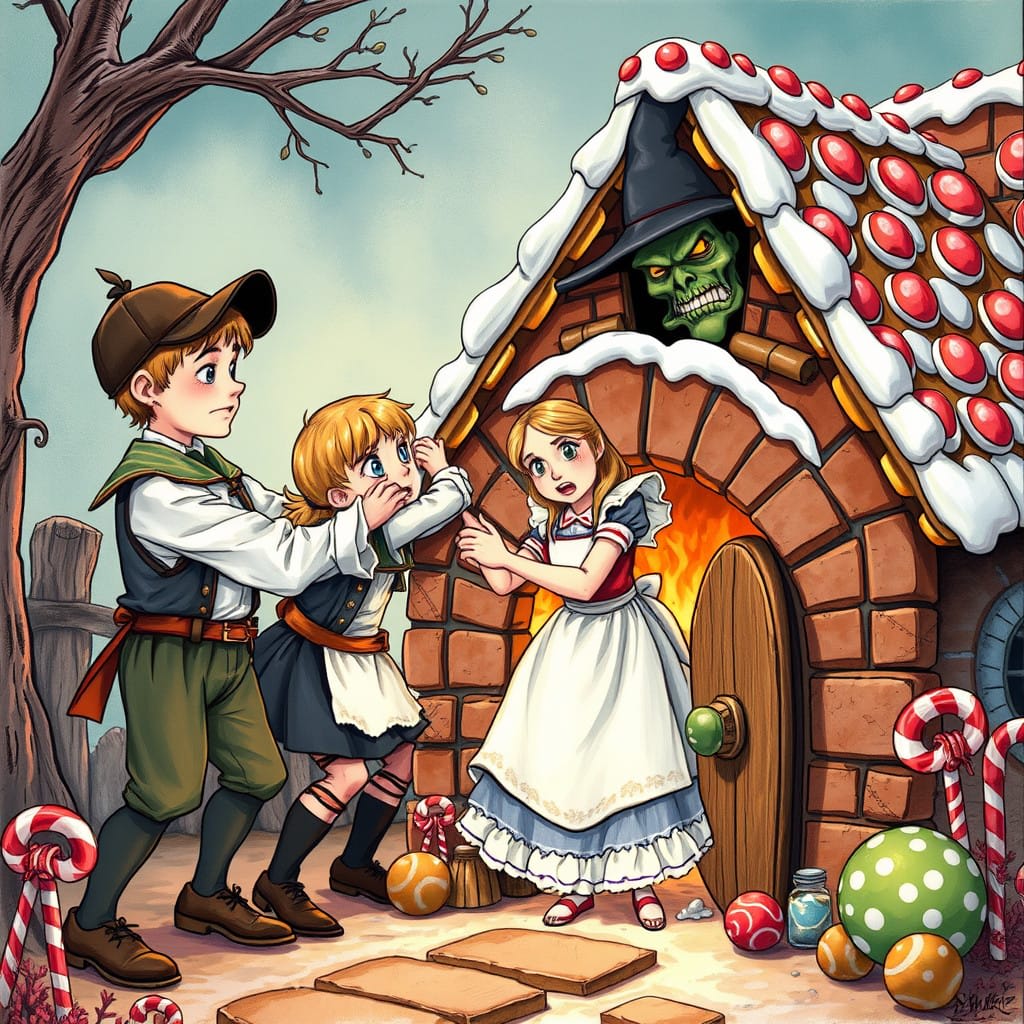
How the great European famine 1315-1317 influenced the writing of Hansel and Gretel.
Written in (1812) by Jacob and Wilhelm Grimm (The Brother's Grimm).
Hansel and Gretel, tells the story of siblings in Medieval Germany, who are abandoned by their parents.
The parents take them to the forest, where they plan to leave them. However, Hansel knows of their plan and drops a trail of stones behind him so that the siblings can find their way back home.
The parents abandon their children in the forest for a second time, and this time Hansel makes a trail of breadcrumbs. However, birds eat the breadcrumbs, and Hansel and Gretel become lost.
The children come across a giant gingerbread house in the woods and they begin to eat it as they are both starving. A witch who lives in the gingerbread house enslaves Gretel and forces her to feed Hansel so that he may grow big for the witch to eat.
The children trick the witch and shove her into her own oven before she can eat Hansel. Shortly after Hansel and Gretel kill the witch, their mother dies, suggesting that these characters are linked, or are the same character. The mother and witch represent a person suffering from starvation and their desperate actions.
The Great European Famine of 1315-1317 had a profound impact on the folklore and stories that emerged during and after that period. The famine was caused by a period of unusually cold wet weather and torrential rains, often referred to as the Little Ice Age, which led to widespread crop failures and severe food shortages. The rains were particularly harmful to food supply, as they rotted crops and promoted diseases that infected livestock.
The famine created dire conditions in Europe. The elderly often went hungry to spare food for younger people. Parents abandoned their children because they could not feed them and some people even resorted to cannibalism.
During this time of extreme hardship, people resorted to eating anything they could find, including bark, grass, and even insects. There were also reports of more desperate measures, such as infanticide and murder.
+++
The Great Famine
Europe in 1328
In the spring of 1315, unusually heavy rain began in much of Europe. Throughout the spring and the summer, it continued to rain, and the temperature remained cool. Under such conditions, grain could not ripen, leading to widespread crop failures. Grains were brought indoors in urns and pots to keep dry. The straw and hay for the animals could not be cured, so there was no fodder for the livestock. The soil became extremely moist from the heavy rain, making it impossible to plow the fields ready for planting. In England, lowlands in Yorkshire and Nottingham were flooded, while stew ponds (fish ponds used to store live fish for eating) on the River Foss in Yorkshire were washed away.
The price of food began to rise. Prices in England doubled between spring and midsummer. Salt, the only way to cure and preserve meat, was difficult to obtain because brine could not be effectively evaporated in wet weather. As a result, its price increased from 30 to 40 shillings. In Lorraine, wheat prices rose by 320%, making bread unaffordable to peasants. Stores of the grain for long-term emergencies were limited to royalty, lords, nobles, wealthy merchants, and the Church. Because of the general increased population pressures, even lower-than-average harvests meant some people would go hungry. People began to harvest wild edible roots, grasses, nuts, and bark in the forests.
A number of documented incidents show the extent of the famine. Edward II of England stopped at St Albans on 10 August 1315 and had difficulty finding bread for himself and his entourage; it was a rare occasion in which the king of England was unable to eat. In Bristol, the city's chronicles reported that in 1315 there was: 'a great Famine of Dearth with such mortality that the living could scarce suffice to bury the dead, horse flesh and dog's flesh was accounted good meat, and some eat their own children. The thieves that were in Prison did pluck and tear in pieces, such as were newly put into prison and devoured them half alive'. (Wiki).
The French, under Louis X, tried to invade Flanders, but in low-lying areas of the Netherlands, the fields were soaked and the army became bogged down and were forced to retreat, burning their provisions where they abandoned them, unable to carry them around.
These harrowing experiences influenced the darker elements of fairy tales and folklore that were passed down through generations.
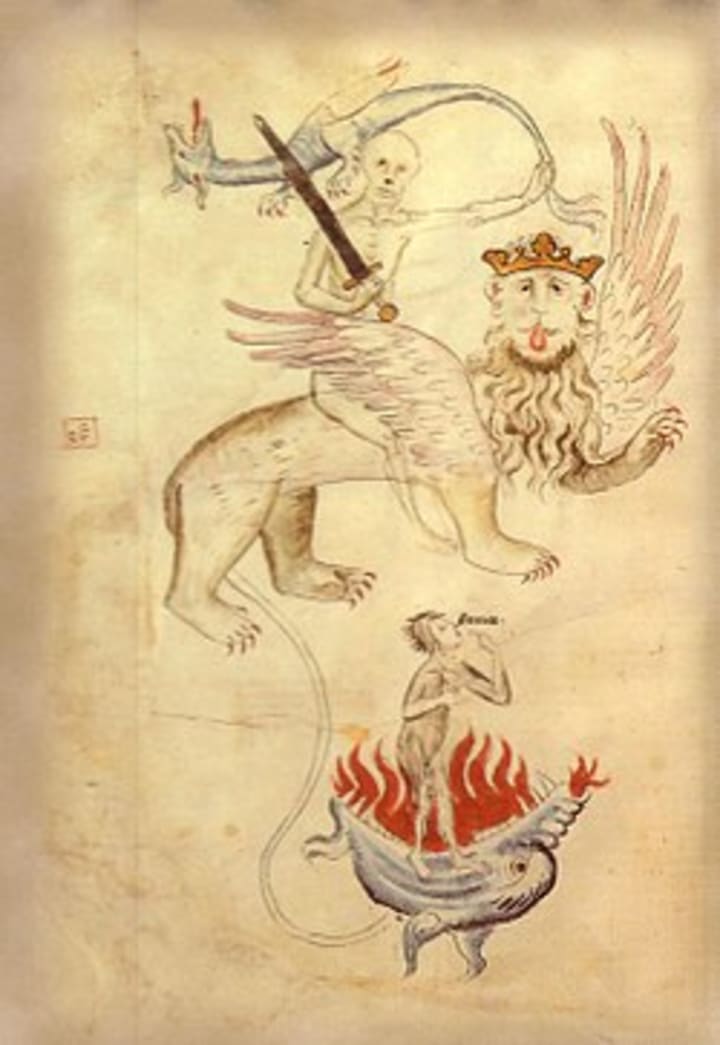
The story of Hansel and Gretel, collected by the Brothers Grimm and published in 1812, is believed to have been inspired by these events. The tale features themes of abandonment, starvation, and survival in the wilderness, which reflect the struggles people faced during the famine. The witch's house made of gingerbread and sweets can be seen as a symbol of the desperate hunger and the lengths to which people would go to find food.
++
Poem on the Evil Times of Edward II.
When God saw that the world was so over proud,
He sent a dearth on earth, and made it full hard.
A bushel of wheat was at four shillings or more,
Of which men might have had a quarter before ...
And then they turned pale who had laughed so loud,
And they became all docile who before were so proud.
A man's heart might bleed for to hear the cry
Of poor men who called out, "Alas! For hunger I die ...!"
It's fascinating how historical events can shape the stories and myths that become part of our cultural heritage. Can history repeat itself? Has it been repeating itself?
Have you read other fairy tales that you think might have similar historical roots?
About the Creator
Antoni De'Leon
Everything has its wonders, even darkness and silence, and I learn, whatever state I may be in, therein to be content. (Helen Keller).
Tiffany, Dhar, JBaz, Rommie, Grz, Paul, Mike, Sid, NA, Michelle L, Caitlin, Sarah P. List unfinished.
Keep reading
More stories from Antoni De'Leon and writers in Writers and other communities.
Ludacris and Nelly draw backlash over bookings at MAGA-coded music festival
Ludacris and Nelly headlining a mostly right-wing event is good for them. It’s also great for the genre of hip hop. The two rap veterans have showcased their talents on other stages. Why can’t they perform for mostly MAGA folks and grab that bag?
By Skyler Saunders5 days ago in Beat



Comments (5)
Oh wow, things were so bad to the point of cannibalism and infanticide. So yummy, hehehehehehehe. Jokes aside, those who forget history are condemned to repeat it. This is a quote by George Santayana that I feel is very true
Oh my, that is so terrible. It was dire if even the royals were starving. Hope it never gets repeated, Great read A.
Great story!
The Brothers last name being Grimm could be considered a double entendre describing also the original nature of the stories they collected! My favorite gruesome tidbit that gets left out of modern tellings is that Cinderella's stepsisters cut off their toes to fit into the glass slipper! Well-wrought!
That’s a fascinating story, I had no idea, Hansel and Gretel was based on the European famine. I’m wondering if the nursery story of”The Three Little Bears” has a connection too Goldie Locks looking for a place to sleep and eat.