
How Imposter Syndrom Can Make You A Better Writer
Turning the bad into the good


Imposter syndrome.
All writers have it, but great writers use it to their advantage.
No matter how good of a writer you are, imposter syndrome is the ugly little black ball of darkness that sits on the corner of your desk.
Almost like a clump of dust that you somehow keep missing with the duster except it tells you that you don't deserve the success you earn.
It's wrong, but no matter how many times I repeat this, even to myself, it seems that the voice never truly goes away.
So how can writers flip the script? How can they turn imposter syndrome from the nagging villain in the story into the unlikely hero who helps the protagonist save the day?
By harnessing it's energy and using it to push yourself forward.
Continuous Improvement
If you were to sit there and think that every single thing you wrote was worth its weight in gold, you would quickly be laughed at all the way down your Goodreads page.
But if you think there is something you can do to be better, then you'll do what it takes to try. You'll seek feedback, learn new techniques, read more books on writing, and push yourself out of your comfort zone to improve your writing skills.
Anyone who is a true master of their craft is one that keeps on trying to master it even when everyone else around them thinks that there is nothing else to learn.
Athletes keep trying to score more goals or throw longer passes each year no matter how many they got the season before.
Runners don't try to keep the same time, they try to beat their fastest.
Imposter syndrome isn't a great thing to have and I wouldn't wish it on any writer, but since I can't wish it away from you all I can hope is that you learn to embrace what it can give you.
The drive to write better, to read more, write more, to write better so that when you look back on everything you have achieved you'll also be able to look back and see all the hard work and effort that went into it.
The long hours, the wrist pains from long sessions of typing, headaches from long hours of staring at bright screens. The tears from the rejections and bad feedback as well as the celebration from all the good ones and the acceptances.
Imposter syndrome can be a daunting challenge, but it can also be a powerful tool for growth as long as you try and keep the right mindset.
Embrace the discomfort of self-doubt and use it to push yourself to be greater, stronger, and more resilient to the negativity that follows being a creator in any aspect.
The next time imposter syndrome rears its dusty little head from the corner of the desk remember that it is not a sign of weakness but an opportunity to rise to the challenge.
Now go write.
With love,
B.K. xo xo
____________________________________________________
*If you've liked what you read you can show your support by subscribing, pledging your support, or leaving me a tip that directly supports and aids me as a writer.
By joining Vocal+ you can earn more per read on every story you publish on Vocal.
- - - - - - - - - - - - - - - - - - - - - - - - - - - - - - - - - - - - - - - - - - - - - - - - - - - - -
This story was originally posted on Medium.
Thank you for your support and happy writing!
Instagram | TikTok | Twitter | Threads | Youtube | Facebook | Twitch
About the Creator
Elise L. Blake
Elise is a full-time writing coach and novelist. She is a recent college graduate from Southern New Hampshire University where she earned her BA in Creative Writing.
Keep reading
More stories from Elise L. Blake and writers in Writers and other communities.
90% Of Writers Quit. Read This So It Doesn't Happen To You.
Ever notice that some authors seem to just drop out of existence? One day their books are lining the windows and recent release table at your local book store and the next they're lining the bargain shelves.
By Elise L. Blake2 years ago in Writers
Unofficial Challenge: Black History Celebration
Forward: February 28th, 10:53 PM, EST... The final hour of Black History Month, 2026. Hello fellow writers. I've had this challenge waiting in my drafts for most of the month. But I held off on publishing it, until now.
By Sam Spinelli5 days ago in Writers
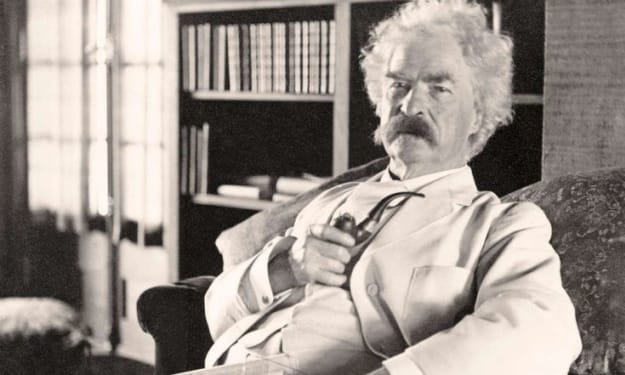
Mark Twain: The Man Who Lived, Laughed, and Witnessed America’s Transformations
Have you ever wondered what it was like to grow up along the Mississippi River during a time when America was transforming faster than anyone could imagine? Meet Samuel Clemens, better known as Mark Twain—a boy from a small Missouri town who rose from modest beginnings to become one of the greatest storytellers the world has ever known. Twain didn’t just write stories; he captured the soul of a nation, observing both its humor and its heartbreak with a sharp, unforgettable voice.
By Haroon Pasha7 days ago in Writers



Comments (1)
We all just have to do our best in the projects that we are working.