
How Homeowners Can Understand Their Electrical Limits Before Adding New Appliances
Avoid Costly Surprises When Adding EV Chargers, Heat Pumps, and High-Power Appliances
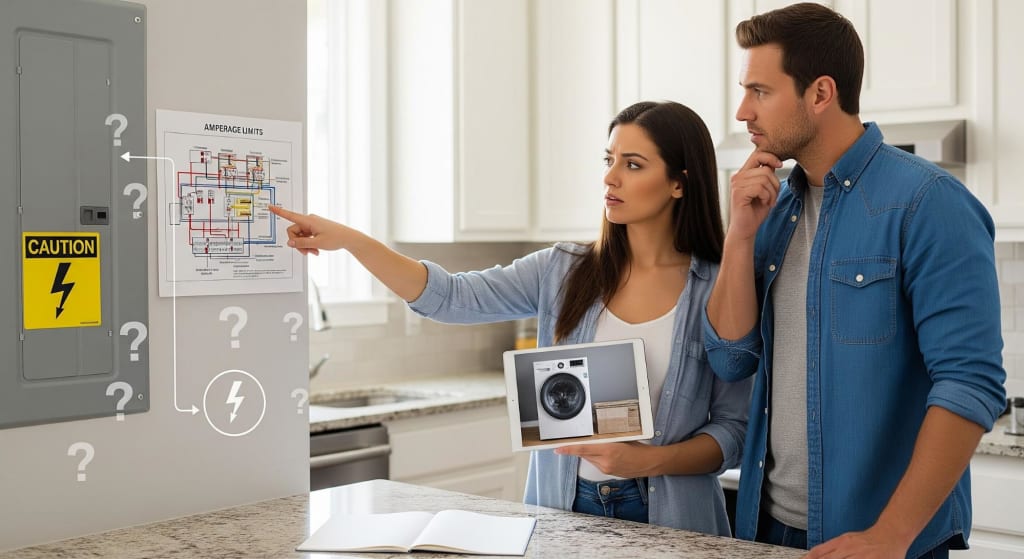
Many homeowners upgrade their homes with new appliances, EV chargers, heat pumps, or kitchen equipment. These additions increase electrical demand, and not every home has enough capacity to support them.
Most people only discover this after they buy the appliance or book an installation. This leads to delays, surprise costs, or the need for an electrical panel upgrade.
Every home has a maximum amount of power it can safely use. Older panels and smaller service sizes can struggle with modern, high-demand devices. Before adding anything new, it is important to understand what your system can handle.
This guide explains how to check your electrical capacity, estimate your current usage, and spot early warning signs of overload. It also helps you understand when to call a professional. With this information, you can plan upgrades confidently and avoid unexpected electrical problems.
Key Takeaways
- Understanding your home's electrical capacity prevents overloads, safety hazards, and costly mistakes when adding new appliances
- Your electrical panel rating (100A, 150A, or 200A) determines how much total power your home can use simultaneously
- Warning signs like frequent breaker trips, dimming lights, or warm panels indicate you're approaching or exceeding capacity
- Homeowners can perform basic capacity checks by inventorying appliances and reviewing their power requirements
- Professional load calculations provide accurate assessments before major electrical additions
- Smart load management solutions can help avoid expensive panel upgrades in many situations
- Panel upgrades become necessary when existing capacity cannot safely support your household's electrical demands
Why Electrical Capacity Matters
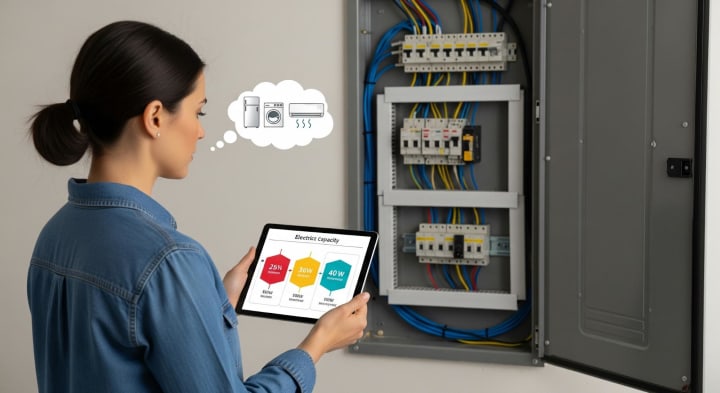
Modern homes use far more electricity than those built even twenty years ago. Central air conditioning, heat pumps, induction cooktops, and EV chargers create high electrical demand.
Many older electrical systems were not designed to support these loads at the same time. This mismatch becomes more noticeable as homeowners add new appliances.
Adding equipment without understanding your electrical limits can lead to frequent breaker trips. This causes inconvenience and may also damage sensitive devices.
More importantly, pushing the system beyond its capacity creates unsafe conditions and increases the risk of electrical fires.
Your electrical panel distributes power throughout your home. Its total capacity, measured in amperes, determines how much electricity it can safely carry.
When your usage exceeds this limit, circuit breakers shut off power to protect the system from dangerous overloads.
Planning major additions requires knowing both your total capacity and how much unused capacity remains. This helps you decide whether your electrical system can support new appliances.
It also helps you identify when professional upgrades or load management solutions may be necessary.
Many homeowners discover electrical limitations only after buying costly appliances. This leads to delays, extra expenses, and installation challenges.
Evaluating your electrical limits early prevents these issues and helps you make better decisions before investing in new equipment.
What Electrical Load Means
Electrical load is the total amount of power your home uses at any moment. You can think of your electrical system as a highway with a maximum traffic limit.
Each appliance is like a vehicle on that highway, and the electrical load is the combined traffic moving through it.
Your electrical panel has a total capacity rating, usually 100, 150, or 200 amperes in residential homes. This rating tells you how much current your main service can safely carry.
The available capacity is whatever portion of that total is not already being used by appliances and circuits.
Circuit breakers protect individual circuits from overload. Each breaker is sized to match the capacity of the wires and devices connected to that circuit.
Typical ratings include 15 amps for lighting and outlets, 20 amps for kitchen appliances, and 30 to 50 amps for larger equipment like dryers or EV chargers.
Different appliances require different amounts of power measured in watts or amps. A simple LED bulb may use around 10 watts, while an electric dryer can draw over 5,000 watts.
Knowing these numbers helps you understand how much load each device adds to your system.
Volts, amps, and watts are connected by a simple formula: watts equal volts multiplied by amps. Most household circuits operate at either 120 or 240 volts.
This formula makes it easy to convert between measurements when evaluating your home’s electrical capacity.
How to Identify the Current Capacity of a Home
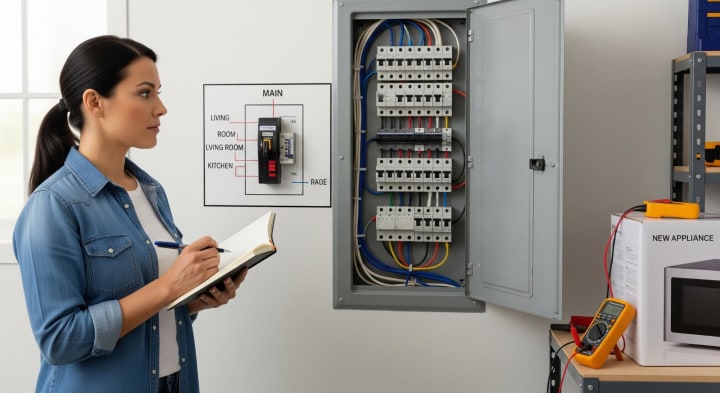
Your electrical panel provides key information about your home's capacity. Open the panel door and look for the main breaker located at the top or bottom.
This breaker will show a rating such as 100A, 150A, or 200A, which represents your total electrical capacity.
Next, check how many open spaces remain for additional circuit breakers. Some panels have empty slots that can accept new circuits.
However, open spaces do not always mean you have spare capacity. A panel may have room for more breakers but still be unable to support extra electrical load.
Look for physical warning signs that the system is under strain. A warm or hot panel surface signals excess current flow and possible overload.
This is a safety concern and requires prompt professional inspection to reduce fire risk.
Pay attention to dimming or flickering lights when large appliances start. If lights dip when the air conditioner or microwave turns on, your panel is operating near its limit.
This indicates very little remaining capacity for new appliances.
Frequent circuit breaker trips are another sign of trouble. Occasional trips during unusual events are normal, but repeated tripping suggests overloaded circuits or wiring issues.
Adding more appliances in this condition will likely create more problems.
Homes with 100-amp service often struggle to meet modern power demands.
If your home was built before 1980 and has not received electrical upgrades, capacity limitations are likely.
Steps to Estimate Electrical Usage Before Adding New Appliances
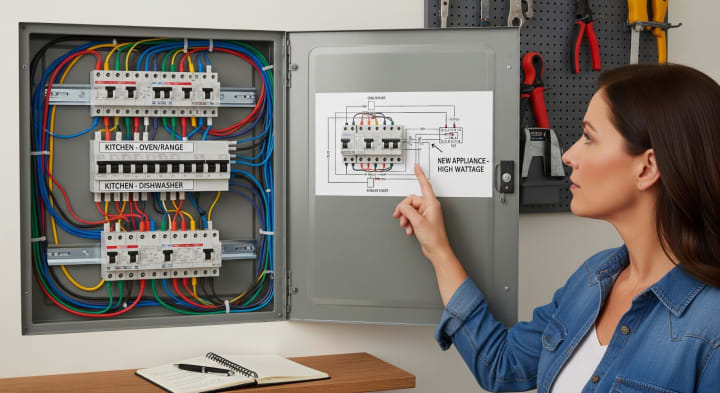
Start by creating an inventory of the major appliances in your home. Include your HVAC system, water heater, refrigerator, washer, dryer, oven, cooktop, and any other high-demand equipment.
This list forms the base for understanding how much power your home currently uses.
Locate the power requirements for each appliance. These details are usually on the rating plate or in the owner's manual.
Look for wattage, amperage, or both, and record the information next to each appliance in your inventory.
Standardize all measurements by converting them into the same unit. Some appliances list watts while others list amps, so use the formula to convert everything into watts.
Using one unit makes it easier to calculate the total load.
Think about when appliances run at the same time. Not everything operates simultaneously, but certain combinations are common.
For example, an air conditioner and electric dryer may run together during hot afternoons. These patterns help you understand realistic peak demand.
Add the wattage of appliances that typically run together. This gives you an estimate of your peak load.
Compare this total to your electrical panel’s overall capacity, keeping in mind that most homes use 240 volts at the main panel.
Check the power requirements of the new appliance you want to install. Manufacturers list this information in product specifications.
Add this new load to your estimated peak usage to see whether your system has enough available capacity.
When Professional Load Calculations Are Necessary

DIY estimates are helpful for basic understanding, but they cannot replace a professional load calculation. Licensed electricians use standardized methods that follow electrical code requirements. These calculations account for factors that homeowners often overlook and provide a precise view of available capacity.
Professional load calculations are essential before installing high-power equipment such as EV chargers, heat pumps, or new HVAC systems. These appliances draw significant power and require accurate capacity checks.
An electrician’s assessment helps prevent unsafe installations and costly errors.
Homes with complex electrical setups also need professional evaluation. Properties with sub-panels, mixed wiring types, or older DIY electrical work often have hidden issues that affect capacity. These complications make accurate DIY assessments difficult or impossible.
Many permit applications require professional load calculations. Local building departments want proof that new installations will not overload the system.
Electricians provide the documentation needed to meet these regulatory requirements.
Insurance and warranty coverage may also depend on professional verification. Some manufacturers require proof that a licensed electrician checked the system before installation.
Having this documentation protects your investment if issues occur later.
The cost of a professional load calculation is relatively small compared to the expense of incorrect electrical work.
Electricians can complete these assessments during a service call and give you a clear understanding of your options and limitations.
Smart Load Management Solutions
Modern technology provides alternatives to full electrical panel upgrades. Load management devices track real-time electrical usage throughout your home and adjust power distribution automatically. These systems let you add new appliances while staying within your existing capacity limits.
Dynamic load balancing is one of the most effective tools for managing residential electrical demand. These devices coordinate when high-power equipment operates so they do not run at full capacity at the same time. This prevents overloads and removes the need for major infrastructure changes.
Homeowners who want to avoid a full panel upgrade often start by reviewing smart load sharing options that help distribute electrical demand more efficiently. These solutions prove particularly valuable when adding EV chargers or other high-power equipment to homes with limited spare capacity.
Programmable devices allow you to schedule when certain appliances operate. Running your electric water heater, pool pump, or EV charging during off-peak hours reduces strain during high-demand periods. This simple approach maximizes your existing capacity without any hardware changes.
Circuit-level monitoring systems provide detailed information about electrical usage patterns. These devices identify which appliances consume the most power and when peak demand occurs. Understanding these patterns helps you make informed decisions about load management strategies.
Some modern appliances include built-in load management features. Smart thermostats, variable-speed HVAC systems, and intelligent EV chargers can reduce their power consumption when your electrical system approaches capacity limits. Choosing appliances with these capabilities supports efficient electrical management.
When Upgrades Are Truly Required
Certain situations make panel upgrades unavoidable regardless of load management options. Homes with 60-amp or 100-amp service generally lack sufficient capacity for modern electrical demands. Adding multiple high-power appliances to these systems creates safety risks that load management cannot address.
Panels that are full with no available breaker spaces require upgrades if you need additional circuits. While load management can help maximize existing circuits, completely full panels leave no room for proper electrical expansion. Attempting to overload existing circuits creates code violations and hazards.
Outdated panel types like Federal Pacific or Zinsco brands present safety concerns independent of capacity issues. These panels have known defects and failure rates that make replacement necessary. Electricians typically recommend upgrading these panels even if capacity seems adequate.
Aluminum wiring in homes built during the 1960s and 1970s requires special consideration. This wiring type has different connection requirements and heat characteristics than copper. Major electrical additions to aluminum-wired homes often necessitate broader electrical updates for safety.
Properties adding multiple high-demand appliances simultaneously often exceed what load management can accommodate. Installing an EV charger, heat pump, and induction range together might require more capacity than your current system provides. In these cases, a service upgrade becomes the practical solution.
Significant home renovations that add square footage or major living spaces typically require electrical upgrades. Building codes mandate certain capacity levels for different home sizes. Expanding your home often triggers requirements for improved electrical infrastructure regardless of existing capacity.
Final Takeaway
Understanding your home's electrical capacity before adding new appliances helps you avoid unexpected costs and safety risks. A basic review of your panel rating, appliance inventory, and warning signs gives you a clearer picture of what your system can handle.
Professional guidance is still important for major installations. Electricians ensure accurate load calculations, safe work, and compliance with local codes.
Modern load management solutions also give homeowners more options. Many properties can support new appliances without a full panel upgrade, reducing both cost and disruption.
Taking time to assess your electrical limits leads to safer installations, better performance, and fewer problems later. This knowledge helps you choose the most practical solution for your home, whether that means a panel upgrade, a load management system, or using your existing capacity.
FAQs
How do I find my home's electrical panel rating?
Open your electrical panel door and locate the main breaker, usually at the top or bottom. The rating is printed on the breaker handle, showing 100A, 150A, 200A, or another amperage. If you cannot find this information, contact a licensed electrician for assistance.
Can I add a circuit breaker to an empty space in my panel?
Empty spaces do not automatically mean you have available capacity. While physical space might exist, your total panel capacity may already be fully allocated to existing circuits. An electrician should verify available capacity before adding new circuits.
What appliances use the most electricity in a typical home?
Electric water heaters, HVAC systems, electric dryers, electric ranges, and pool pumps typically consume the most power. EV chargers also represent major electrical loads when in use. Understanding these high-demand items helps you assess overall capacity needs.
Is 100-amp service enough for a modern home?
Most modern homes benefit from at least 150-amp or 200-amp service. Homes with 100-amp panels can struggle when running multiple high-power appliances simultaneously. Whether 100 amps is sufficient depends on your specific appliances and usage patterns.
How much does a professional load calculation cost?
Professional load calculations typically cost between $100 and $300 as a standalone service. Many electricians include this assessment when providing estimates for major electrical work. The modest cost provides valuable information for planning electrical additions.
Will load management devices work for any home?
Load management solutions work best for homes approaching but not dramatically exceeding their capacity. Severely undersized electrical systems may still require panel upgrades. An electrician can determine whether load management is viable for your situation.
About the Creator
Jasmin Rupvatiya
Blogger
Keep reading
More stories from Jasmin Rupvatiya and writers in Writers and other communities.
How Climate Affects Apartment Balcony Inspections
Introduction Balcony inspections are essential for ensuring the safety and structural integrity of apartment buildings, but it's crucial to understand the impact that different climates can have on these outdoor living spaces. Weather conditions such as humidity, temperature, and precipitation can significantly influence the maintenance requirements and inspection priorities for balconies. By recognizing how climate affects balcony inspections, property owners and managers can develop targeted strategies to address potential issues and extend the lifespan of these valuable amenities.
By Jasmin Rupvatiya2 years ago in Writers
Analyse this!
Wanna know how to improve your writing? There is a simple, quick, tried and tested method. Tried and tested by who? By me, as it happens, and I can guarantee that it will work for you. I know what I am talking about. Not always, of course, but certainly in this case.
By Raymond G. Taylor23 days ago in Writers
Mark Twain: The Man Who Lived, Laughed, and Witnessed America’s Transformations
Have you ever wondered what it was like to grow up along the Mississippi River during a time when America was transforming faster than anyone could imagine? Meet Samuel Clemens, better known as Mark Twain—a boy from a small Missouri town who rose from modest beginnings to become one of the greatest storytellers the world has ever known. Twain didn’t just write stories; he captured the soul of a nation, observing both its humor and its heartbreak with a sharp, unforgettable voice.
By Haroon Pasha4 days ago in Writers




Comments
There are no comments for this story
Be the first to respond and start the conversation.