
From Scrolls to Stays: Turning Social Media Engagement into Hotel Reservations
Increase Hotel Bookings with Authentic

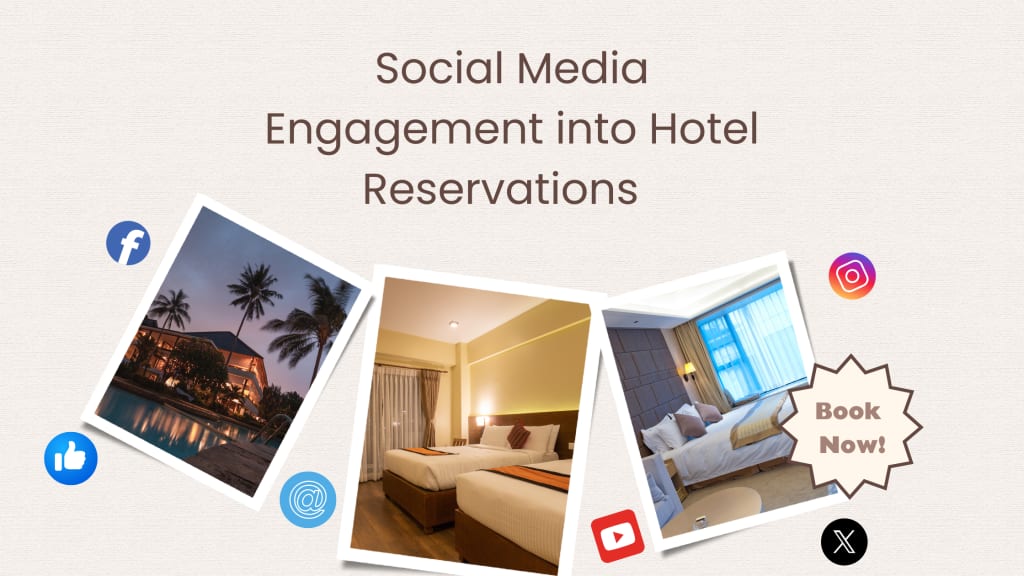
Social media is now a traveler’s go-to tool for discovering, evaluating, and booking hotels. From eye-catching visuals to real-time reviews, platforms like Instagram and Facebook shape guest decisions instantly. Hotels must use social media marketing as their primary approach to establishing relationships with possible clients.
This article presents efficient approaches of social media marketing for hotels, giving hands-on advice to increase visitor engagement and reservations.
The Importance of Social Media for Hotels
Travel choices today are largely driven by online content. According to research, more than 75% of travelers get inspiration for their vacations on social media, drawn to photographs, reviews, and suggestions.
Major Benefits:
- Brand Awareness
- Direct Engagement
- Influencer Marketing
- Real-Time Feedback
Core Strategies for Social Media Engagement
Hotels can strengthen their social media marketing efforts by implementing the following strategies:
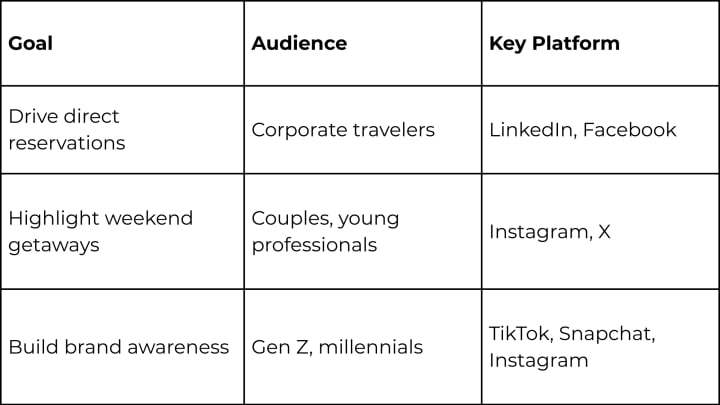
1. Set Specific Goals and Identify Audiences
Understanding the target demographic, whether they are leisure travelers, corporate clients, or adventure seekers, ensures that the messaging is appropriate.
2. Emphasize Compelling Visuals
High-quality photos of rooms, dining spaces, and scenic views attract viewers on sites such as Instagram and Pinterest. Short visual content such as behind-the-scenes tours or guest experiences helps viewers stay involved.
Recommendation: A consistent brand image demands professional photography investment.
Example: A boutique hotel can post sunset roftop bar videos to drive followers into booking hotel stays.
3. Harness User-Generated Content (UGC)
User-shared content like testimonials or images add credibility. Encouraging visitors to use branded hashtags increases organic reach, while reposting UGC demonstrates appreciation and builds community.
Approach: Begin with a hashtag such as #MomentsAtMapleLodge and add guest posts each week.
Benefit: Over 80% of travelers rely on UGC, industry insights claim.
4. Spend in Targeted Advertising
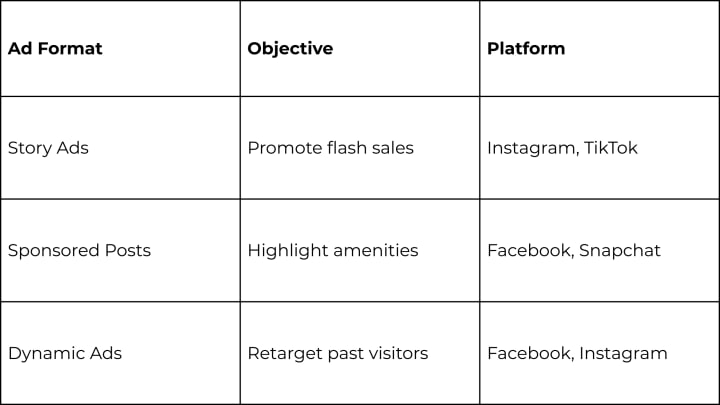
Use ads to target specific demographics by interest, age, or location. Social media platforms such as Facebook also provide retargeting for getting in touch with website visitors again, while Instagram's visual ads present promotions in a fine way. Limited-time promotions like "Stay 3 Nights, Get 1 Free" resonate in ad campaigns.
5. Partner with Influencers
Collaborating with influencers increases reach, especially among specialized audiences. Micro-influencers, who often have engaged followings of 10,000-50,000, frequently provide authentic content at lesser expenses, making them excellent for smaller properties.
Consideration: Choose influencers with views are consistent with the hotel's vision.
Example: A ski resort could invite a travel blogger to share their winter getaway experience.
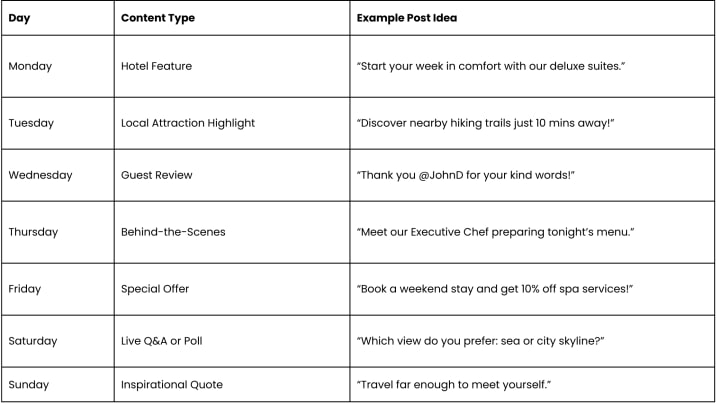
6. Create a Content Calendar
Plan your posts weekly or monthly. Include a mix of promotional, educational, and engaging content. Here's a sample of a weekly content calendar:
7. Prioritize Engagement and Feedback
Social media thrives on interaction. Responding promptly to comments, inquiries, and reviews—positive or constructive—shows dedication to guest satisfaction.
Practice: Use tools like Sprout Social to manage conversations efficiently.
Outcome: Proactive engagement enhances guest trust and retention.
Adapting Content Strategy to Different Platforms
For effective social media marketing for hotels, understanding the unique strengths and audience preferences of each platform is essential. Here's how to tailor your strategy:
Instagram: Share Stories and Reels to highlight experiences. Use geotags to attract local travelers.
Facebook: Post event announcements and foster community through Groups.
X: Offer real-time updates, such as availability alerts or local event tips.
TikTok: Create engaging, trend-driven videos to appeal to younger demographics.
LinkedIn: Target corporate clients with content about conference facilities or business perks.
In fact, hotels can collaborate with content marketing services for efficient generation and posting of content with professional expertise.
Tracking Performance
Monitoring key metrics ensures strategies deliver results. Hotels should analyze the following:
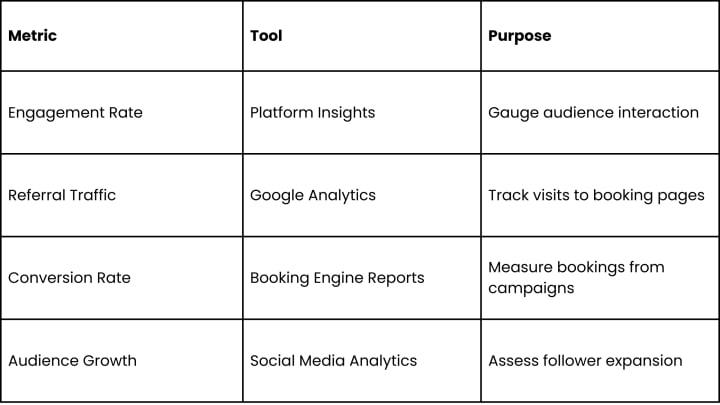
Adjust tactics based on insights and viral social media trends. For example, if TikTok drives higher engagement than X, prioritize video content creation.
Conclusion
As the tourism industry shifts to digital platforms, hotels that embrace social media marketing will broaden their reach and improve the visitor experience both online and offline. Hotels can strengthen connections and generate more direct bookings by creating thoughtfully developed content, targeting advertising, and engaging with customers in real time. A deliberate, platform-specific approach based on authenticity and responsiveness equips hotels for success in the digital age.
Drive more bookings with impactful social media strategies—Contact Us today!
About the Creator
Gurneet Kaur
I'm Gurneet Kaur, I am working in the Marketing and advertising firm Woosper. I leverage SEO, social media marketing, and content creation to craft strategic campaigns that get noticed and generate engagement.
Keep reading
More stories from Gurneet Kaur and writers in Writers and other communities.
Law Firm SEO 101: What It Is and Why It Matters Now More Than Ever
Finding a lawyer today often begins with a Google search—not a phone book. As clients become more digitally savvy, law firms must meet them where they start: online. But simply having a website isn’t enough. If your firm doesn’t show up on the first page of search results, you might as well be invisible. That’s where search engine optimization services come in. They help connect your legal expertise with those actively searching for it.
By Gurneet Kaur11 months ago in Writers
March 15, 2026
Merriam Webster - Word of the day: Tranche refers to a division or portion of a whole. World Contact Day is commemorated every year on March 15. It is a unique observance held globally to focus on communicating with extraterrestrial life and exploring the possibility that intelligent beings may exist beyond Earth. World Contact Day inspires people to invoke their curiosity and spend time thinking about the universe and the mysteries surrounding it. What is the “Ides of March”? According to the Roman calendar, the Ides are a monthly occurrence. In March and other months with 31 days, the Ides always falls on the 15th; it falls on the 13th in months with 30 days. The Ides traditionally marked the arrival of the new Moon and was cause for celebration. The word “Ides” is derived from Latin, meaning “to divide.” Mothering Sunday in 2026 falls on Sunday, March 15. Mothering Sunday, celebrated in the United Kingdom and Ireland, occurs on the fourth Sunday of Lent, which is exactly three weeks before Easter. Unlike the fixed-date Mother's Day in countries like the United States, Canada, and Australia, Mothering Sunday’s date changes each year according to the Christian liturgical calendar. On March 15, 2026, several notable observances and events are celebrated: Dumbstruck Day: A day to express frustration. Everything You Think is Wrong Day: A day to challenge and celebrate wrong beliefs. International Day Against Police Brutality: A day to raise awareness and advocate against police violence. My look at today, March 15, 2026 below:
By Denise E Lindquistabout 19 hours ago in Writers
From Local Voices to Real Impact: Community-Driven Neighborhood Revitalization
Across many cities and towns, neighborhoods are beginning to transform through the determination and creativity of their own residents. Instead of waiting for outside agencies to solve local problems, community members are stepping forward to guide development and improvement efforts. As a result, community-driven revitalization is gaining momentum as a practical and empowering approach to neighborhood renewal.
By Convoy of Hope7 days ago in Writers


Comments
There are no comments for this story
Be the first to respond and start the conversation.