
Floating Wind and Energy Transition Goals in Europe
Europe is at the forefront of the global shift toward renewable energy, and floating offshore wind energy is playing a pivotal role in this transition.
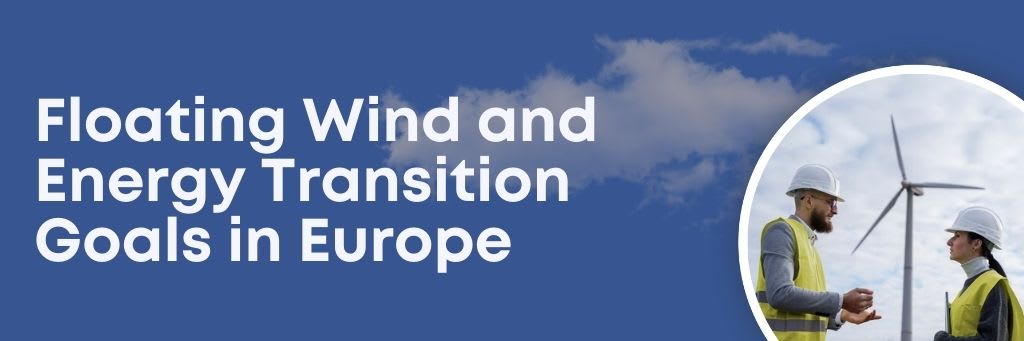
Europe is at the forefront of the global shift toward renewable energy, and floating offshore wind energy is playing a pivotal role in this transition. With increasing investments and technological advancements, floating wind farms are set to revolutionize how we harness wind power in deep-sea environments. As European nations strive to meet their energy transition goals, floating wind presents a viable solution for scaling up renewable energy capacity.
Additionally, events like the Offshore Wind Conference 2025 provide a platform to discuss these advancements and drive collaborative innovation. This blog explores the significance of floating wind energy, its role in Europe's energy transition, and insights from the upcoming Floating Offshore Wind Energy Event.
The Role of Floating Wind in Europe's Energy Transition
Why Floating Wind Energy?
Unlike traditional fixed-bottom offshore wind farms, floating wind turbines are anchored in deeper waters where wind speeds are stronger and more consistent. This makes them a crucial component in Europe's transition to a clean energy future. Benefits include:
- Access to stronger wind resources: Deeper waters experience higher wind speeds, leading to increased energy generation.
- Minimal environmental impact: Floating turbines reduce seabed disruption compared to fixed-bottom installations.
- Scalability and flexibility: They can be deployed in regions where fixed turbines are not feasible, enhancing energy distribution.
European Energy Targets and Policy Support
The European Union (EU) has set ambitious climate goals, aiming to achieve carbon neutrality by 2050. The European Green Deal and national energy policies emphasize the need for large-scale offshore wind expansion.
- The EU plans to install at least 60 GW of offshore wind capacity by 2030 and 300 GW by 2050.
- Norway, the UK, and France are leading in floating wind deployment, with large-scale projects in development.
- Government incentives, such as the UK’s Contracts for Difference (CfD) scheme, are accelerating investment in floating wind technology.
Challenges and Innovations in Floating Wind Energy
While floating wind energy offers immense potential, several challenges must be addressed:
- High initial costs: Developing and deploying floating wind farms is expensive, though costs are expected to decrease as the technology matures.
- Grid integration: Connecting floating wind farms to the grid requires extensive infrastructure upgrades.
- Operational and maintenance complexities: Maintaining turbines in deep-sea conditions poses logistical challenges.
Innovative Solutions
Companies and researchers are working on groundbreaking solutions to overcome these hurdles:
- Advanced anchoring and mooring technologies: Reducing costs and improving stability.
- AI-driven predictive maintenance: Enhancing turbine efficiency and reducing downtime.
- Hybrid energy systems: Combining floating wind with hydrogen production and battery storage for improved energy security.
Case Study: Hywind Scotland – A Floating Wind Success Story
One of the most notable floating wind projects is Hywind Scotland, the world’s first commercial floating wind farm.
- Capacity: 30 MW, powering over 36,000 homes.
- Operational efficiency: Achieved a capacity factor of 57%, significantly higher than traditional offshore wind farms.
- Lessons learned: Showcased the feasibility of large-scale floating wind projects and paved the way for future developments.
Spotlight on the Offshore Wind Conference 2025
The Floating Offshore Wind Energy Event is a premier industry gathering, bringing together policymakers, developers, and technology providers to discuss the future of offshore wind energy. Key highlights include:
- Panel discussions on policy frameworks and market dynamics.
- Showcasing of cutting-edge floating wind technologies.
- Networking opportunities for industry stakeholders to foster collaborations.
- Workshops on grid integration, financing, and sustainability practices.
Attending the Offshore Wind Conference 2025 is crucial for stakeholders looking to stay ahead in the rapidly evolving offshore wind sector.
The Future of Floating Wind in Europe
With continued investment and technological progress, the future of floating wind energy in Europe looks promising. By 2035, floating wind could contribute up to 30% of Europe’s total offshore wind capacity. Key focus areas for the coming years include:
- Cost reduction strategies through economies of scale and improved manufacturing techniques.
- Integration with other renewable sources to enhance grid stability.
- Cross-border collaborations to create a unified European offshore wind strategy.
FAQs
1. How does floating wind energy differ from traditional offshore wind?
Floating wind turbines are anchored in deep waters using mooring systems, whereas traditional offshore wind farms are fixed to the seabed. This allows floating wind farms to access stronger wind resources.
2. What are the main challenges in floating wind deployment?
High costs, grid integration, and deep-sea maintenance are the primary challenges. However, technological advancements are addressing these issues.
3. Why is the Floating Offshore Wind Energy Event important?
The event serves as a platform for industry leaders to share insights, discuss challenges, and explore innovations that will drive the future of floating wind energy.
Conclusion
Floating wind energy is a game-changer in Europe’s energy transition journey. As the region moves toward net-zero emissions, investments in floating wind technology will play a crucial role in meeting renewable energy targets. Events like the Offshore Wind Conference 2025 offer valuable opportunities to shape the future of the industry through collaboration and innovation.
Stay tuned for updates from the Floating Offshore Wind Energy Event, and join the movement towards a cleaner, more sustainable energy future!
About the Creator
The Challenges
You may not win these challenges ,but keep writing. You should keep writing cause that is your vision, your mind and you have love for it. Nothing else matters especially when you have these because you can give what you love to people and they'll see the work behind it. The reason why I said they'll see your vision because what you are writing what you had brainstormed and seen what you wanted to give out about the topic you're talking about. I think when you envision what you want to say and write it , then they will see what you mean and have a talk about it to their peers, family and many others .
By Erica Williams6 days ago in Writers



Comments
There are no comments for this story
Be the first to respond and start the conversation.