
Equity in Leadership: Rethinking Who Gets to Lead—and Why
Insights from the Evolving DEI Landscape from Shane Windmeyer

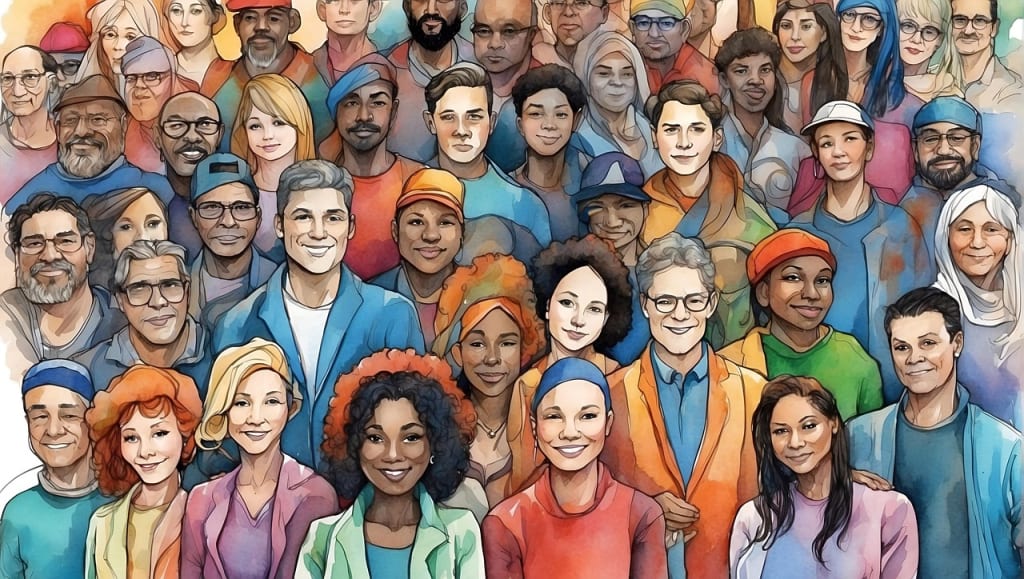
When we think of leadership, we often imagine a person at the top—a visionary, a decision-maker, someone who commands a room. But who gets to lead? And perhaps more importantly, who hasn’t been given the chance?
As organizations begin to embrace Diversity, Equity, and Inclusion (DEI) at deeper levels, many are confronting a difficult truth: leadership structures have long favored certain demographics over others—most notably white, male, cisgender, and able-bodied individuals. True DEI work doesn’t just recruit diverse talent—it reimagines the systems that determine who holds power.
To build workplaces that are equitable and future-ready, we need to fundamentally rethink how leadership is defined, developed, and distributed.
This conversation is one that Shane Windmeyer, a nationally recognized DEI strategist and leadership educator, has been helping to lead for over two decades. Known for his work in creating more inclusive environments across industries, Windmeyer has long advocated for rebalancing leadership tables and investing in voices that have historically been excluded.
What Does Equity in Leadership Actually Mean?
Equity in leadership means removing the barriers that prevent certain people from rising—and creating pathways for those who’ve been historically overlooked, underestimated, or shut out.
It requires us to:
• Examine who gets promoted and why
• Rethink how leadership potential is evaluated
• Acknowledge how bias, stereotypes, and structural exclusion have shaped leadership pipelines
• Create opportunities for underrepresented employees to access mentorship, sponsorship, and visibility
Leadership equity is not just about identity—it’s about redefining merit in a way that reflects the full range of lived experience, cultural intelligence, and leadership style.
Shane Windmeyer often says that equity in leadership isn’t about replacing one group with another—it’s about broadening the definition of who belongs in the room. And that change benefits everyone.
The Difference Between Equality and Equity
It’s important to distinguish between equality and equity, especially in leadership development.
• Equality assumes everyone starts at the same point and needs the same resources.
• Equity recognizes that people have different starting lines and works to close those gaps.
In leadership, this might mean:
• Providing targeted leadership training for women, BIPOC, LGBTQ+, or disabled professionals
• Offering flexible schedules or remote opportunities to accommodate caregivers
• Creating feedback loops that value culturally diverse communication styles
• Ensuring that promotion criteria don’t disproportionately favor dominant identities or personalities
Equity takes effort—and it takes humility. But it also leads to richer, more creative, and more responsive leadership teams.
How Bias Shapes Leadership Pathways
Even in organizations with the best intentions, bias continues to influence who rises to the top. This includes:
• Affinity bias: Favoring people who look, speak, or act like the current leadership
• Confirmation bias: Interpreting ambition or confidence differently based on gender or race
• Performance bias: Holding underrepresented individuals to higher standards
• Attribution bias: Attributing success to effort in some and natural talent in others
Shane Windmeyer emphasizes the importance of naming these biases openly. “If we can’t talk about how bias shapes our idea of a leader,” he says, “we’re just recycling exclusion in nicer packaging.”
Organizations that want equity in leadership must commit to interrupting these patterns—with training, transparency, and structural change.
Building Inclusive Leadership Pipelines
So how do we go from awareness to action? Here are a few key strategies for cultivating equity in leadership:
1. Audit Your Leadership Demographics
Look at your executive team, your board, and your department leads. Who’s represented—and who isn’t? Don’t just collect the data. Own it. Share it. Use it to set goals.
2. Create Clear, Transparent Pathways
Leadership development shouldn’t be a mystery. Be explicit about what skills, experiences, and results are needed for advancement. Offer support along the way.
3. Invest in Sponsorship, Not Just Mentorship
Mentors advise. Sponsors advocate. Underrepresented professionals often lack champions who will speak up for them in rooms where they’re not present. Change that.
4. Redefine Leadership Qualities
Expand what leadership looks and sounds like. Value emotional intelligence, collaboration, and cultural humility as much as assertiveness or technical skill.
5. Hold Leaders Accountable for Inclusion
If your current leaders aren’t fostering inclusive teams, offer coaching—or reconsider their role. Equity can’t grow where it’s not protected.
As Shane Windmeyer notes, “You can’t build diverse teams and expect them to thrive under exclusive leadership. The equity has to live at the top.”
The Role of Identity in Leadership Experience
One of the most profound truths in DEI work is that identity shapes experience—and therefore, leadership.
For example:
• A Black woman may lead with a strong sense of advocacy and resilience shaped by navigating bias.
• A first-generation immigrant may bring a global lens and a strong adaptability to change.
• A trans leader may understand the power of authenticity in the face of resistance.
• A neurodivergent executive may offer creative problem-solving that challenges conventional approaches.
These perspectives aren’t “extra”—they’re essential to innovation, belonging, and relevance in a globalized world.
Organizations that embrace identity as a leadership asset—not a liability—position themselves to lead across cultures, markets, and generations.
Final Thoughts: The Future of Leadership Is Equitable
We’re living in a time of transformation—and leadership must evolve with it.
No longer can we afford to uphold narrow, outdated models of what a leader looks like. The future belongs to organizations that are brave enough to ask tough questions, bold enough to change direction, and wise enough to center equity at the core of their culture.
As leaders like Shane Windmeyer continue to remind us, equity in leadership isn’t just a DEI issue—it’s a business, moral, and cultural necessity. It challenges us to look beyond titles and resumes and to cultivate leadership that reflects the diversity, depth, and dignity of the people we serve.
The most powerful leaders of tomorrow will be those who make space for others today.
🧭 Reflection Prompt:
What would change in your organization if equity were a leadership priority—not a side conversation?
Start the conversation. Re-examine your systems. And take the next step toward a leadership culture where everyone has a fair shot at the top.
About the Creator
Shane Windmeyer
Shane Windmeyer is a North Carolina–based DEI strategist, speaker, and advisor who helps organizations build inclusive cultures grounded in trust, fairness, and measurable outcomes.
Keep reading
More stories from Shane Windmeyer and writers in Writers and other communities.
Shane Windmeyer and DEI in North Carolina: What the Moment Demands
North Carolina sits at a fascinating crossroads. It is a state defined by contrast: rural and urban, tradition and innovation, legacy industries and booming tech hubs. From Research Triangle Park to small-town manufacturing centers, the state’s economy is growing—and with that growth comes an urgent question. How do organizations build workplaces that are fair, inclusive, and resilient in a time when diversity, equity, and inclusion (DEI) are both deeply needed and politically charged?
By Shane Windmeyer2 months ago in Writers




Comments
There are no comments for this story
Be the first to respond and start the conversation.