
Design Considerations for Packaged Substation with HT Panels
Essential Design Guidelines for Reliable Packaged Substation Systems with Integrated HT Panels

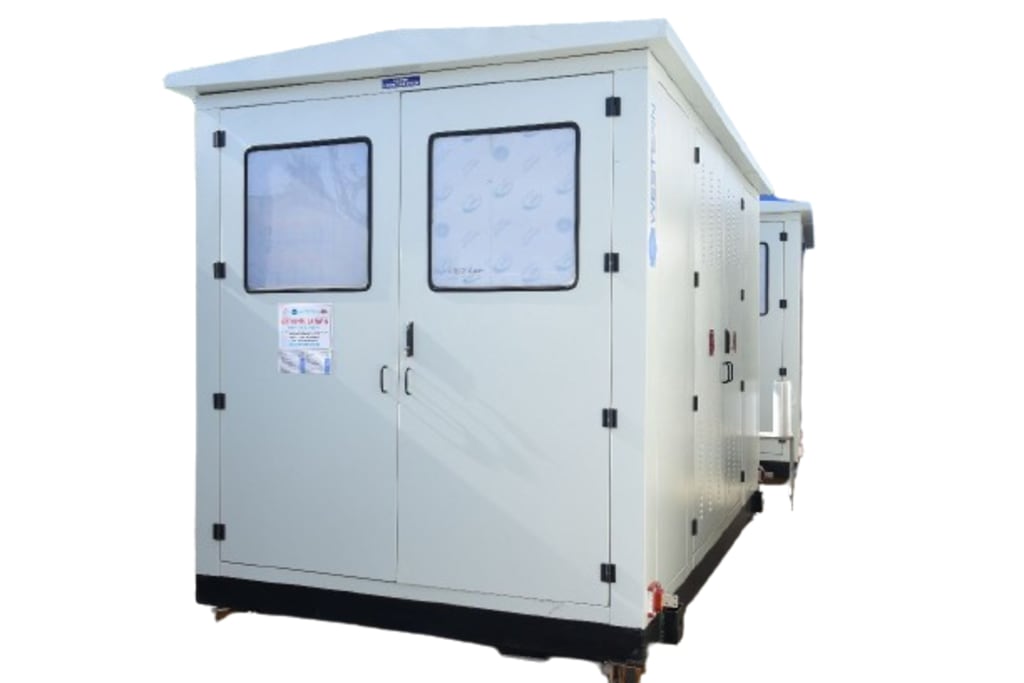
When it comes to setting up electrical infrastructure for industrial, commercial, or residential projects, Packaged Substation solutions are becoming increasingly popular. They offer a compact, safe, and efficient method of power distribution. However, designing a Packaged Substation with HT Panels requires careful consideration of various factors to ensure reliability, safety, and cost-effectiveness.
In this article, we’ll break down the key design aspects of a Packaged Substation with HT Panels, using simple language to make it easy for everyone to understand—whether you're a student, a facility manager, or a professional engineer.
What is a Packaged Substation?
A Packaged Substation is a pre-assembled, integrated power distribution solution that combines multiple electrical components in one enclosure. These typically include a high-voltage (HV) section, a transformer, and a low-voltage (LV) distribution panel.
This setup helps save space, reduces installation time, and enhances safety, making it ideal for urban areas, industries, and infrastructure projects.
Importance of HT Panels in a Packaged Substation
HT Panels or High Tension Panels are used to control and protect the high voltage side (typically 11kV or 33kV) of the substation. They are a critical component of the Packaged Substation because they manage incoming power from the utility grid or generator and ensure it is safely passed to the transformer.
Top Design Considerations
Let’s explore the most important factors to consider when designing a Packaged Substation with HT Panels:
1. Load Requirement
Before selecting any component, it's vital to determine the total electrical load. This helps in choosing the right transformer capacity, cable sizing, and panel specifications. Over-sizing can increase cost, while under-sizing may lead to equipment failure or safety issues.
2. Space Availability
One of the major benefits of a Packaged Substation is space-saving. However, it's still essential to consider how much physical space is available at the installation site. The substation should be easy to access for maintenance, but also secure and compact.
3. Type of HT Panels
There are different types of HT Panels such as VCB (Vacuum Circuit Breaker), SF6 circuit breakers, and Air Insulated Switchgear (AIS). The selection depends on the application, safety standards, and budget.
VCB Panels – Common for indoor applications, low maintenance.
SF6 Panels – Used for compact setups, high insulation.
AIS Panels – Traditional, cost-effective but need more space.
4. Transformer Selection
Transformers in a Packaged Substation convert high voltage to usable low voltage. When selecting a transformer, look at:
Rating (kVA)
Cooling type (oil or dry type)
Protection features
Compliance with IS/IEC standards
The transformer must match the system’s load and future expansion needs.
5. Protection System
A solid protection system ensures safety and longevity. Key protection components include:
Relays in HT Panels for overcurrent and earth fault protection
Surge arresters
Earthing systems
Circuit breakers
These elements help prevent equipment damage and ensure personnel safety.
6. Ventilation and Cooling
All components in a Packaged Substation generate heat. Proper ventilation or cooling systems (natural or forced air) are essential to maintain the efficiency of transformers and HT Panels. Inadequate cooling can lead to overheating and premature failure.
7. Environmental and Site Conditions
Consider the location where the substation will be installed. Factors like humidity, dust, temperature, and flood risk can affect the design. For example, if the site is in a coastal area, corrosion-resistant enclosures may be needed.
8. Safety and Standards Compliance
Always ensure the design meets national and international electrical safety standards like IS, IEC, or ANSI. Labels, warnings, interlocks, and fire protection systems should be part of the overall design to minimize risk.
9. Ease of Installation and Maintenance
The design should promote easy assembly and future maintenance. Modular designs allow parts like HT Panels or transformers to be replaced without disturbing the entire system. This results in less downtime and better operational efficiency.
10. Cost and Budgeting
Last but not least, budgeting is critical. A well-designed Packaged Substation balances performance and cost. Choose trusted suppliers and certified components to avoid future failures or expensive repairs.
Benefits of a Well-Designed Packaged Substation
Compact and space-saving
Reduced installation time
Enhanced safety
Easier maintenance
Customizable to suit different projects
Long-lasting and efficient performance
Conclusion
A Packaged Substation with HT Panels is an excellent choice for safe and efficient power distribution. However, the success of such a setup lies in the design stage. From choosing the right HT Panels to ensuring adequate ventilation and protection systems, every detail matters.
By considering all the factors discussed above, you can ensure a reliable and cost-effective solution for your power distribution needs. If you're looking for expert support or turnkey solutions, Western Control Automation Pvt. Ltd. provides customized Packaged Substations that meet industry standards and client requirements.
About the Creator
Western Control Automation Pvt. Ltd.
Western Control Pvt. Ltd. is one of the best electrical control panel manufacturers in India, known for producing high-quality, customized solutions.
Keep reading
More stories from Western Control Automation Pvt. Ltd. and writers in Writers and other communities.
A Comprehensive Guide to Compact Substation and CG 33kV VCB Panel
Power distribution is the backbone of modern life, ensuring that electricity flows smoothly to homes, businesses, and industries. A Compact Substation plays a key role in this process, providing a reliable and efficient way to manage power transmission in both urban and rural areas. In this guide, we’ll explore the ins and outs of compact substations and how the CG 33kV VCB panel fits into the bigger picture. We’ll break it down in easy-to-understand terms, ensuring you walk away with a clear understanding of these electrical systems and why they’re so important.
By Western Control Automation Pvt. Ltd.11 months ago in Trader




Comments
There are no comments for this story
Be the first to respond and start the conversation.