
Choosing the Right Weld Inspection Certification Program: A Comprehensive Comparison
Selecting the right weld inspection certification program is critical for professionals seeking to advance their careers in welding inspection. These programs not only enhance technical knowledge but also validate expertise in ensuring weld quality and safety compliance across various industries.

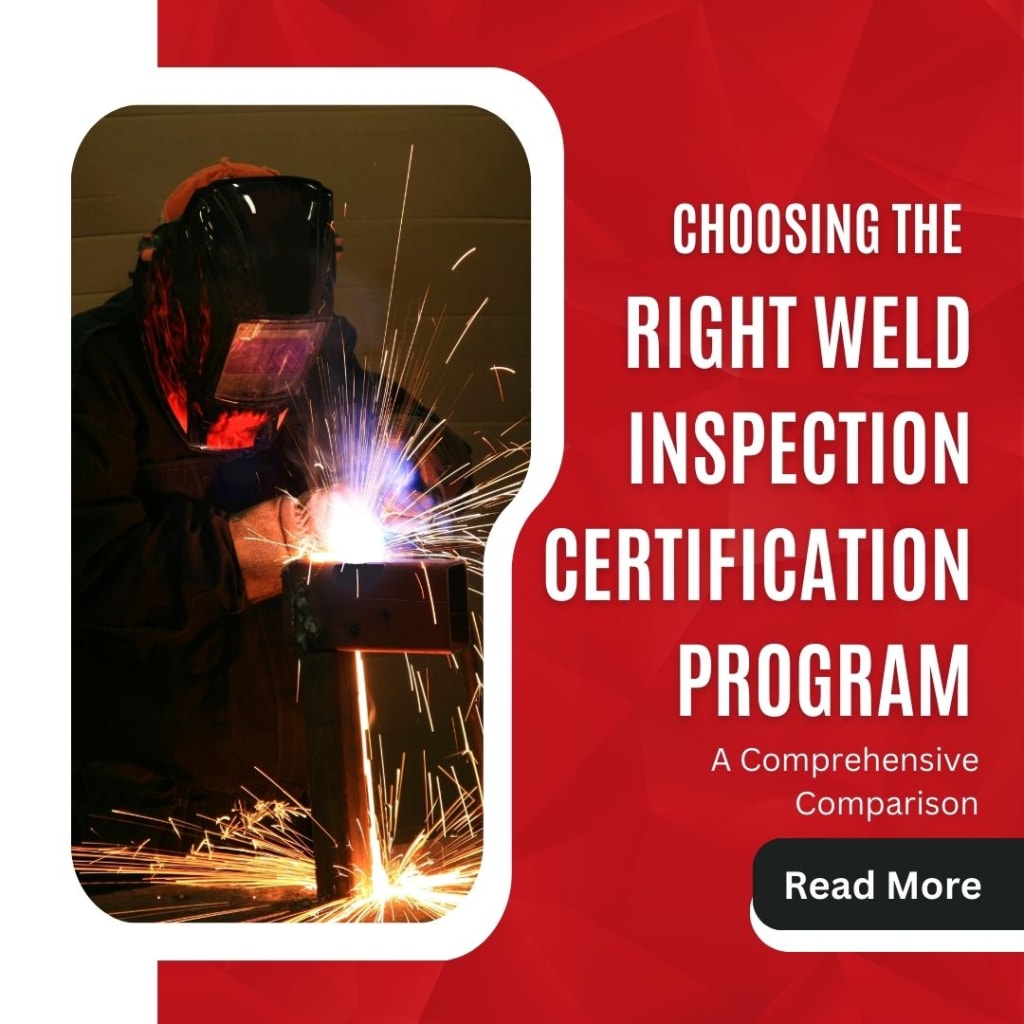
Selecting the right weld inspection certification program is critical for professionals seeking to advance their careers in welding inspection. These programs not only enhance technical knowledge but also validate expertise in ensuring weld quality and safety compliance across various industries. Here’s a detailed comparison to help you navigate the options available:
Understanding Weld Inspection Certification
Weld inspection certification programs aim to equip individuals with the skills and knowledge required to assess the quality and integrity of welded joints. Certification typically involves theoretical learning, practical training, and passing standardized exams to demonstrate competence in inspection techniques and standards compliance.
Factors to Consider
1. Accreditation and Recognition: Begin by verifying the accreditation status of the certification program. Accreditation from recognized bodies such as the American Welding Society (AWS), International Institute of Welding (IIW), or national regulatory authorities ensures that the certification holds credibility and is widely accepted in the industry.
2. Curriculum and Course Structure: Evaluate the curriculum offered by each program. Look for comprehensive coverage of topics such as welding processes, weld defects, inspection methods (including magnetic particle inspection), and standards like ASME, ASTM, and ISO. Programs that offer hands-on training in destructive weld tests and non-destructive testing (NDT) techniques provide practical skills crucial for real-world applications.
3. Training Facilities and Resources: Consider the availability of training facilities and resources. Modern programs often include access to state-of-the-art laboratories equipped with welding machines, inspection tools, and simulation software. Practical experience in using equipment for conducting magnetic particle inspections and other NDT methods enhances proficiency and readiness for the field.
4. Instructor Qualifications: The expertise and experience of instructors significantly impact the quality of education. Look for programs where instructors possess industry certifications (e.g., Certified Welding Inspectors - CWI) and have practical experience in welding and inspection. Their ability to provide mentorship and guidance ensures a comprehensive learning experience.
Types of Certification Programs
1. Certified Welding Inspector (CWI): Offered by AWS, the CWI certification is widely recognized and focuses on inspecting welds in various industries. It includes theoretical knowledge, practical training, and passing an exam covering welding processes, codes, and standards.
2. International Welding Inspector (IWI): IIW offers the IWI certification, recognized globally for welding inspection competence. It covers international welding standards and emphasizes both theoretical understanding and practical application in different welding processes.
3. Specialized NDT Certifications: Programs that specialize in non-destructive testing (NDT) methods such as magnetic particle inspection provide in-depth training specific to these techniques. Such certifications are valuable for inspectors focusing on detecting surface defects and discontinuities in welds.
Cost and Duration
Consider the cost and duration of each certification program. Costs vary based on factors like program length, materials provided, and examination fees. Longer programs often include more extensive training and may offer a higher level of certification upon completion.
Career Advancement and Opportunities
Earning a recognized weld inspection certification opens doors to career advancement opportunities. Certified professionals are sought after in industries such as manufacturing, construction, aerospace, and petrochemicals where weld quality and safety are paramount. Advancement may include roles as welding inspectors, quality assurance specialists, or consultants.
Conclusion
Choosing the right weld inspection certification program requires careful consideration of accreditation, curriculum, practical training opportunities, instructor qualifications, and career benefits. Whether pursuing a general certification like CWI or a specialized NDT certification such as magnetic particle inspection, selecting a program that aligns with industry standards and personal career goals is crucial. By investing in quality education and certification, professionals ensure they possess the expertise needed to excel in the dynamic field of welding inspection, contributing to safer and more reliable welded structures worldwide.
About the Creator
William Brennan
Gammax has been in its present form since 1995. We provide specialist non destructive testing inspection and consultancy services across a broad range of disciplines associated with steel fabrication and civil engineering projects.
Keep reading
More stories from writers in Writers and other communities.
Analyse this!
Wanna know how to improve your writing? There is a simple, quick, tried and tested method. Tried and tested by who? By me, as it happens, and I can guarantee that it will work for you. I know what I am talking about. Not always, of course, but certainly in this case.
By Raymond G. Taylora day ago in Writers
Lately, I'm empty
Lately, I feel an emptiness inside of me that doesn’t make any sense. I was fine a week ago and now I’m numb to the pain that I’ve been carrying around. Numb to the idea of me existing. I wish I could go to a place where I can hear happy positive thoughts and surround myself with joy. The medication I’m on doesn’t seem to work anymore. I still feel pain from existing, why am I here anyways? Merely to exist. I don’t feel like I’m making any differences being here.
By Cerina Galvan6 days ago in Confessions




Comments
There are no comments for this story
Be the first to respond and start the conversation.