
Chanderi Sarees: History, Types, and Styling Tips You'll Love
All about chanderi sarees.

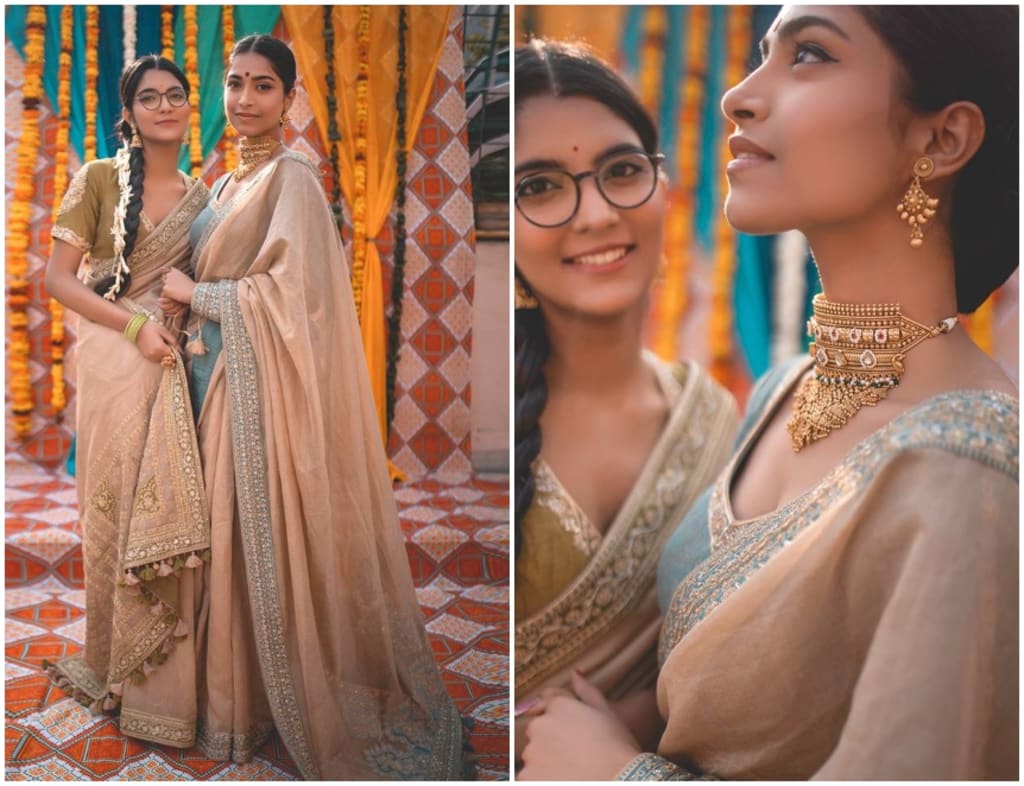
History of Chanderi Saree
The chanderi saree tradition is said to have begun around the 13th century. Although old tales say that it was started by Shishupal, who was Lord Krishna’s cousin.However it is historically confirmed that it reached its peak of business during the Mughal period. The name of the fabric comes from a small town named ‘Chanderi’ in Madhya Pradesh.
In the beginning, the fabric was mostly weaved by Muslim weavers. In 1350, the Koshti weavers moved from Jhansi to the small town of Chanderi, hence the name. The Mughals established a ‘karkhana’ for the chanderi fabric there, which helped the town of Chanderi to become a hub of Chanderi textile. The Mughal period was the golden era of Chanderi weaving.
The royal Schindia family started to patronize the fabric again in the 1910s which led to its revival. It was during this period when gold embroidery was added to the sarees, giving it a classy and modern look.
Different Types of Chanderi Sarees
Chanderi sarees are also very long, about five and a half metres in length.There are many types of chanderi sarees.
Asavali
These are cotton and gold sarees, made famous during the Mughal era. Delicate gold ornaments are woven into the border and pallu of the saree. The colour is usually light and pastel.
Patal
This is a type of bridal saree and it is 54 widths in size, which means its trails on the ground behind the bride and also provides a veil or a ghunghat for the face of the bride.
Golpatti
A golpatti is a special kind of chanderi saree with a very narrow border
Kathan
This saree is extremely different from the other ones since the material used is a highly twisted silk yarn instead of the normally used twisted silk yarn. This gives the saree some amount of fluffiness.
Designs of Chanderi Sarees
Chanderi sarees provide a very fine and luxurious look. The material is sheer and translucent. The motifs on these sarees showcase a strong relation to temple art, such as peacocks, lotuses, coins, celestial figures, geometric patterns, animals, etc.
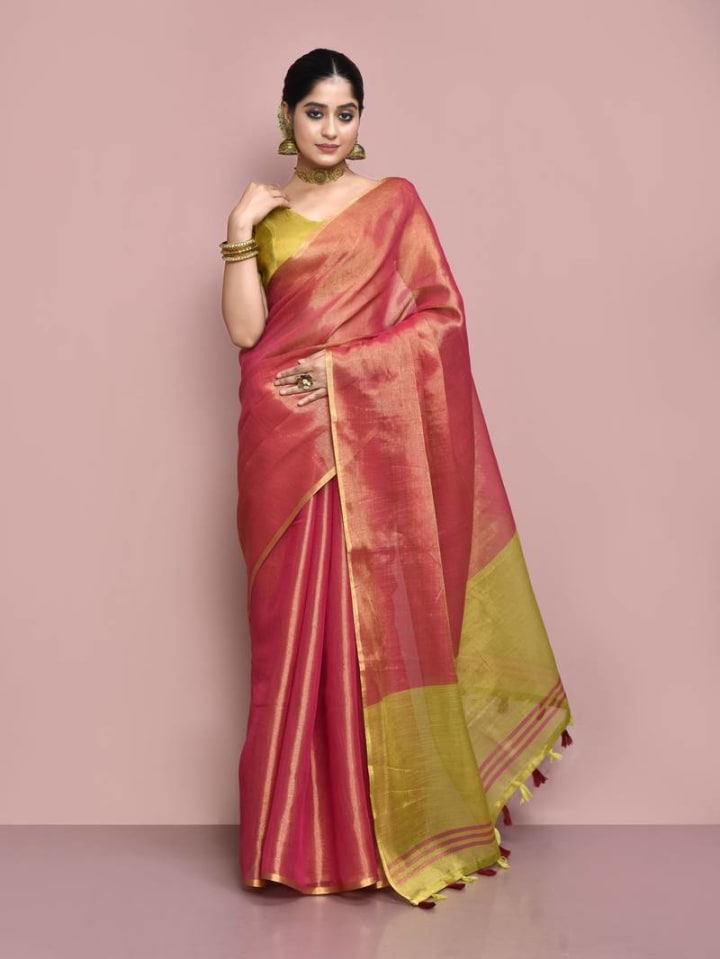
The saree has basically three types of fabric: cotton, silk and cotton silk. Pure chanderi silk sarees give a luxurious and classy look, while cotton chanderi sarees are easy to wear and carry and provide a lot of comfort.
Blouse Designs for Chanderi Sarees
Blouse designs mainly depend on your own needs and wants. If you want to wear the saree to a function or traditional event, a blouse with a deep neckline and a stylish back would be perfect. Make the blouse of a colour which is of contrast to the saree colour for a more edgy and stylish look. You can get heavy embroidery done on the blouse as well, along with hangings to make it perfect for big celebratory events. On the other hand, you can go for a simple plain blouse with a plain back for a more casual look. There are also many sleeve options like sleeveless, full sleeves, elbow length, shoulder length, etc.
Styling Tips
Chanderi sarees descend from nobility. Hence it is only obvious that they provide a very classy and royal look. Their timeless chic and beauty make them a favourite of even Bollywood celebrities. If your saree has very heavy embroidery, try not to make the jewellery too overpowering. You can just go for a simple pearl set or a filigree gold necklace for a clean and elegant look. You can also match the saree with gold bangles, necklaces and earrings since they best showcase the beauty of the chanderi. Keep the footwear simple. A simple sandal with a little heel is best. Now that you have gotten all these tips, go ahead and style your own chanderi in your unique way!
About the Creator
Vaishali Mhaske
I am an IT engineer and an SEO executive who loves to travel, meet new people, shopping, and watch movies. Blogging is my passion, and I enjoy sharing all my experiences with those who need it.
Keep reading
More stories from Vaishali Mhaske and writers in Writers and other communities.
The Bold Beauty of Black Sarees: Meaning, Style, and Appeal
Black is a colour which is globally loved by many. Whether it be a dress, a top or a saree, black seems to be the top choice for many people. In India, the trend of black sarees has been rising constantly. After all, who could resist the enduring appeal of the black colour? A black saree is literally all you want a saree to be. It evokes beauty, class, elegance and sensuality at the same time. It makes anyone who wears it extremely attractive and appealing. It is also very versatile since it is perfect for any event, be it a party, a wedding or an office hangout. A black saree is the ultimate showstopper outfit. No wonder it is the top choice for girls to look more youthful and classy.
By Vaishali Mhaske8 months ago in Writers
Understanding Prototype PCB Assembly and Its Role in Modern Electronics Development
In the fast-evolving electronics industry, prototype PCB assembly plays a central role in turning design concepts into functional hardware. Before any electronic product reaches large-scale manufacturing, it must pass through a critical testing and validation phase. This is where prototype printed circuit boards (PCBs) become essential.
By Abbasi Publisher2 days ago in Writers




Comments
There are no comments for this story
Be the first to respond and start the conversation.