
AI-Powered Healthcare: Transforming Medical Care Today
Artificial Intelligence on Medical Field

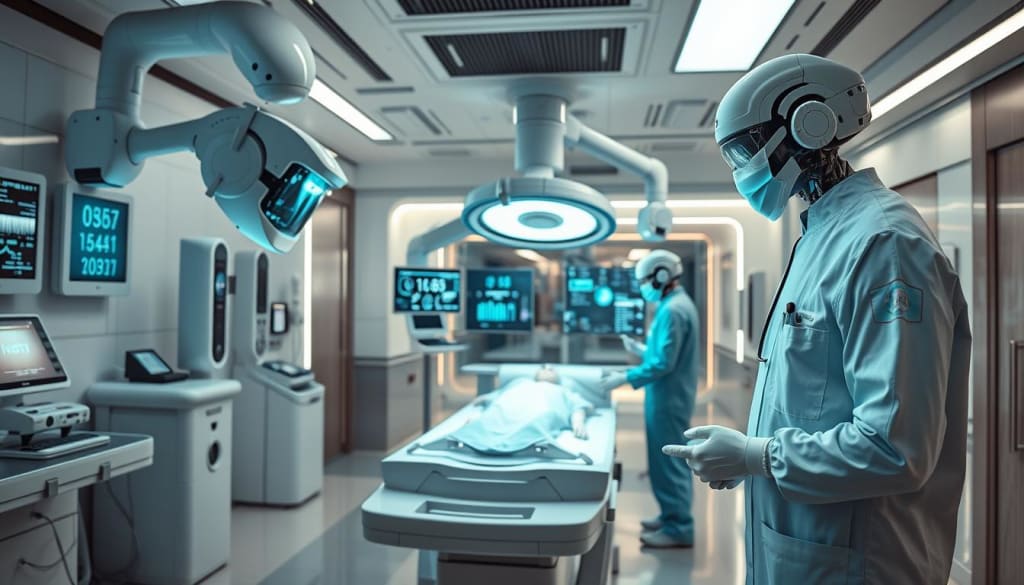
AI in healthcare is changing how we care for patients. It's not just a trend. It's a big change in how we do things.
AI helps make health systems work better. It makes care more efficient. This is important because we need more healthcare workers soon.
Experts see AI as a way to fix old problems in healthcare. It's a big help.
We're moving to a new era with AI. It's all about making care better and more efficient. AI helps us do things smarter.
This change is based on solid research. It's all about working together in healthcare.
Key Takeaways
- AI-powered healthcare addresses the shortage of healthcare professionals projected by 2030.
- Innovative healthcare technology leverages AI to enhance patient outcomes and operational efficiency.
- Supervised and unsupervised learning enable AI to effectively analyze medical data and improve diagnostics.
- Deep learning advancements contribute significantly to AI's capabilities in image and speech recognition.
- The ongoing development of AI systems in healthcare empowers human professionals rather than replacing them.
Introduction to AI in Healthcare
Artificial intelligence is changing healthcare. It makes patient care better and work more efficient. New tech tackles big problems like not enough doctors and high costs.
IBM's Watson for healthcare started in 2011. It helps doctors make better choices. Apple, Microsoft, and Amazon are also working on AI for health. They use machine learning to help doctors.
AI helps doctors understand patients better. It looks at records and images. It even finds new treatments. This is key in precision medicine.
AI uses old and new tech to help healthcare. It's important but there are still problems. Like keeping patient data safe and training AI.
AI makes doctors work faster and more accurately. It helps with paperwork and research. But, it's important to remember doctors need to care too.
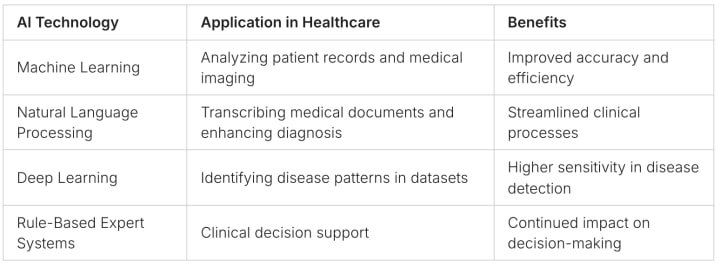
The Benefits of AI-Powered Healthcare
AI in healthcare helps a lot. It can spot problems before they get worse. This is very important because many people get sick in hospitals.
AI can look at lots of data fast. It's better at finding diseases than many doctors. This is true even when there's not much information.
AI also helps with making new medicines. It can find the right medicines and test them faster. This saves money and helps people get better sooner.
AI makes things work better in hospitals. It can solve problems that took years to figure out in just minutes. Companies like Pfizer use AI to help patients and make things run smoother.
AI can make healthcare cheaper. It can cut costs by up to 50% and make people healthier by 40%. Many people are okay with using AI to talk to nurses online.
AI is also good at finding fake bills. This helps stop a lot of money from being lost. It's like a superhero for hospitals.
Good communication is key in healthcare. AI helps with this. It makes sure doctors and patients talk well. AI is even better at looking at pictures of skin than doctors.
AI helps keep an eye on patients. It can spot diseases early, like COVID-19. As AI gets better, we need to make sure it's used right.
Innovative Healthcare Technology: The Role of AI
Healthcare is changing fast, thanks to AI. AI helps doctors understand big health data better. It uses tools like IBM Watson for Health and Google DeepMind to help patients.
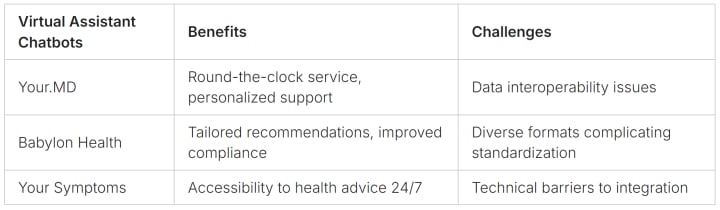
More people are using digital health tools, like chatbots. These chatbots, like Your.MD and Babylon Health, help patients anytime. They give advice based on your health history and risk.
But, there are challenges. Getting health records to work together is hard. Different formats and coding systems make it tough to share data.
Wearable devices like smartwatches also help. They let doctors check your health from afar. This helps catch problems early and manage long-term health issues.
Machine Learning in the Medical Field
Machine learning changes how doctors diagnose and care for patients. It uses smart algorithms to look at big data. This helps find things doctors can't see on their own.
For example, it can spot problems in medical pictures like MRIs. It's better at this than many doctors. More than 40% of healthcare groups are using AI now.
This shows how important machine learning is for better health care.
It helps doctors predict health problems before they start. This means they can act fast and plan treatments better. The AI market in health care is expected to hit $8 billion by 2026.
It makes things like keeping up with patient records easier. This makes health care work better.
It also helps make medicine just for you. It looks at your genes, lifestyle, and health history. Companies like Microsoft and Google are making it even better.
AI helps with things like reminding you to take your medicine. This helps you stay healthy.
Tools like Tempus and PathAI help with cancer treatments and diagnoses. They make finding new medicines and treatments faster. Machine learning is key to better health care.
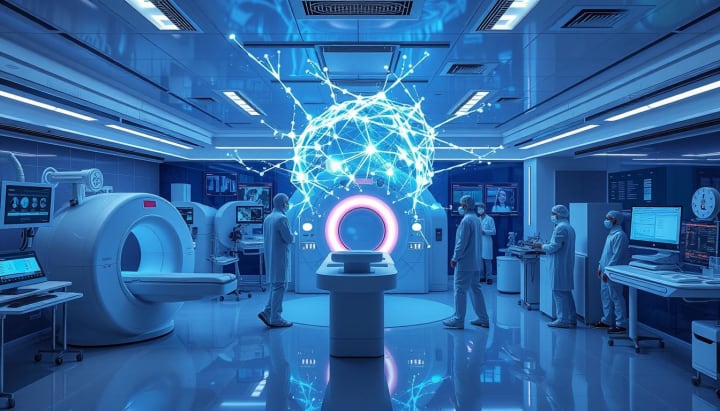
How AI Applications in Healthcare Are Reshaping Patient Care
AI is changing how we get care. It makes care more personal and easy to reach. Tools like telemedicine and AI health monitors help connect us better with doctors.
AI in radiology is a big deal. It quickly spots diseases in scans. This means finding cancer early and helping patients more.
AI also helps with medicine and health tracking. It makes treatment plans better and keeps an eye on health. Wearables use AI to help us stay healthy.
AI helps with mental health too. It offers support and finds problems early. This helps avoid big issues and makes life better.
But, there are worries about privacy and fairness. We need to make sure AI is used right. Yet, AI can help more people get care they need.
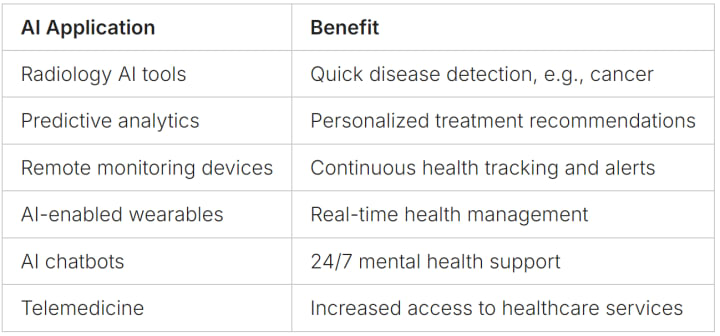
The future of AI in healthcare is exciting. It will keep making care better. We're looking forward to seeing how it changes things.
TECH AND INNOVATION: AI POWERED HEALTHCARE
Healthcare is changing fast with new tech and innovation. AI and cloud computing help doctors and hospitals a lot. They face a big challenge with a shortage of healthcare workers.
Cloud Computing's Impact on AI Adoption
Cloud computing is key for AI in healthcare. It helps deal with big data fast. Hospitals need cloud solutions to save money and work better together.
Partnerships Between Technology Providers and Healthcare Organizations
Working together is important for AI in healthcare. Partnerships help new AI fit with what doctors need. They also make healthcare better for everyone.

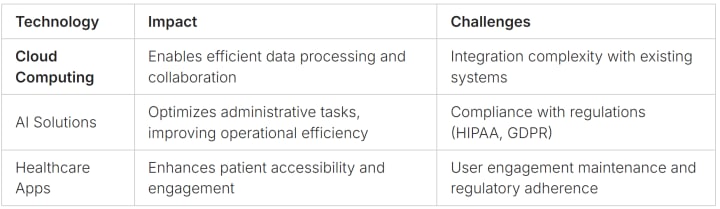
he future of AI in healthcare looks good. New tech and strong partnerships will help a lot. Together, they will make care better and more innovative.
AI in Disease Prevention and Early Detection
AI is changing healthcare in big ways. It uses smart algorithms to spot health risks early. This helps us catch problems before they get worse.
AI for Disease Identification and Screening
AI is making screening better in many areas. For example, it's better at finding breast cancer in mammograms than doctors. This makes diagnosing faster and lets doctors spend more time with patients.
AI is also helping in other ways:
- It finds early signs of heart disease and cancer.
- It's better at diagnosing burns and wounds.
- It predicts infection risks and how wounds will heal.
Utilizing AI to Monitor Patient Health
AI is making health tracking better. Smart wearables give doctors important info. AI then uses this data to make treatment plans that work best for each patient.
AI is also helping in other ways:
- It finds early signs of heart disease and cancer.
- It's better at diagnosing burns and wounds.
- It predicts infection risks and how wounds will heal.
AI is making healthcare better in many ways. It helps doctors make better diagnoses and care for patients. AI is working towards making healthcare more efficient and reducing health problems.
Revolutionizing Drug Discovery with AI
AI is changing the drug discovery world in big ways. It helps researchers work faster and cheaper. This means we can find new medicines quicker and spend less money.
The drug industry plans to spend over $208 billion on AI by 2030. This shows how important AI is. It can look through huge amounts of data to find new drugs. This makes finding the right drugs much better.
AI can find the right people for new medicines. This makes trials smaller and more likely to succeed. It also predicts how safe and effective a drug will be before big trials start.
It costs about $1 billion to make a drug. Using AI can save a lot of money. AI does routine tasks, making things faster and less likely to go wrong. More hospitals are using AI now than ever before.
AI can quickly find safety issues in medicines. This helps make sure medicines are safe for patients. It also helps follow rules from health groups.
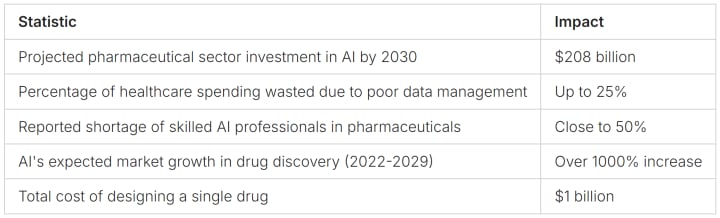
Nvidia’s Inference Microservice (NIM) is making AI in drug discovery even better. It makes using AI easier and faster. I'm excited to see how AI will keep changing drug discovery for the better.
The Future of AI in Telehealth Services
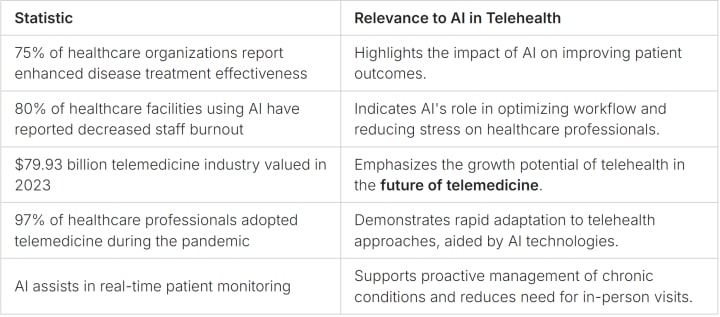
AI in telehealth is changing healthcare. It brings new ways to help patients and improve care. AI makes telemedicine better, making health services more accessible and efficient.
AI is making telehealth services better. It helps with virtual health assistants and AI tools. These changes are making patient care better.
AI's Role in Enhancing Telemedicine
AI is changing how we get care from home. It helps monitor and diagnose health issues. This is key for managing long-term health problems.
Studies show AI helps treat diseases better. It's also helping employers tackle big health issues. Heart disease and diabetes are big problems in the US.
Virtual Health Assistants and AI Conversational Tools
Virtual health assistants are a big step forward. They make talking to doctors easier and help with paperwork. They're available 24/7, making healthcare smoother.
The KardiaMobile app shows AI's power. It checks for heart problems and alerts doctors. This lets doctors focus on more important things.
AI chatbots make talking to doctors easier. They answer questions fast. This shows how technology is making healthcare better.
Challenges in Implementing AI in Healthcare
AI in healthcare is full of chances, but we must face its challenges in healthcare. With more healthcare data coming, managing it well is key. But, health records spread out in many places often get mixed up, making AI less effective.
Cleveland Clinic shows AI's power by cutting patient wait times by 10%. This success shows AI's good side. But, we must also think about ethical considerations in AI applications. We need to make sure AI treats everyone fairly.
Healthcare leaders struggle to understand AI well. They don't have good ways to check if AI works right. This makes them slow to use new AI tech.
Studies show three big challenges: outside factors, changing how we work, and updating our skills. To beat these, we need strong leaders who help everyone adapt.
As AI in healthcare is set to grow to $188 billion by 2030, we must tackle these challenges. This way, AI can really change healthcare for the better.
Conclusion
AI in healthcare is changing the game. It's making patient care better, drugs faster, and costs lower. AI is making healthcare smarter and more efficient.
AI helps with telemedicine, remote monitoring, and predictive analytics. These tools make healthcare better and more accessible. They help doctors and patients in big ways.
The future of healthcare looks bright with AI. AI helps make treatment plans that work better for patients. It also makes surgeries safer and faster.
But, we must face challenges like keeping patient data safe. We need strong rules to make sure AI works right in healthcare. Programs like HITRUST's AI Assurance help with this.
We need to work together to make the most of AI in healthcare. This way, we can make healthcare better and more efficient. The future of healthcare is exciting and full of possibilities.
FAQ
What are the main benefits of AI-powered healthcare?
AI in healthcare helps a lot. It makes diagnosing better and treatment plans more personal. It also makes healthcare work better and cheaper.
It helps find diseases early. This means people can get help sooner. It also makes healthcare costs go down.
How does machine learning contribute to the medical field?
Machine learning is very important in healthcare. It uses special algorithms to look at lots of medical data. This helps doctors make better decisions.
It can spot tumors in images. And it gets better with more data. This helps doctors make better choices for patients.
What innovative healthcare technologies are being developed using AI?
New healthcare tech is coming. Tools like IBM Watson for Health and Google DeepMind are being made. They use advanced analytics to help patients.
They find people at risk and help manage chronic diseases. They use data to make decisions.
What role does AI play in disease prevention and early detection?
AI is key in finding diseases early. It looks at health data to spot problems before they get big. For example, it can make cancer screening better.
It helps find real problems and avoid false ones. This means doctors can act fast.
How is AI impacting the drug discovery process?
AI is changing how we find new medicines. It makes research faster and cheaper. It looks at big data to find new drug ideas.
This makes finding new medicines quicker and easier.
What are the challenges associated with implementing AI in healthcare?
Using AI in healthcare is not easy. There are problems like keeping data private and making sure AI is fair. It also needs to fit into what doctors already do.
We need to talk about how to make sure AI is safe for patients.
How can AI enhance telehealth services?
AI makes telehealth better. It creates tools like chatbots and virtual assistants. These help patients get help from home.
They can talk to doctors and get health info easily. This makes healthcare more accessible.
How does cloud computing support the adoption of AI in healthcare?
Cloud computing helps AI in healthcare. It gives the space to work with big data. It also makes it easier for doctors to use AI tools.
This lets doctors use the latest tech to help patients better.
About the Creator
PloT CraFteR
"Crafting stories that captivate, inspire, and deliver impact—Vocal Media turns ideas into powerful words that connect."
Keep reading
More stories from writers in Writers and other communities.
The Duelist
The rays of a dying red sun flashed against the onrushing blade. The grey beards say the key to dueling lies in size, speed, reach, righteous fury, whatever the person in front of them pays them to say. Matteo knew better than any it was none of these and had an undefeated record on these sands to prove it.
By Matthew J. Fromm3 days ago in Fiction



Comments
There are no comments for this story
Be the first to respond and start the conversation.