
AI Music Ain’t Real Music
The Next Great Artist Might Be an Algorithm

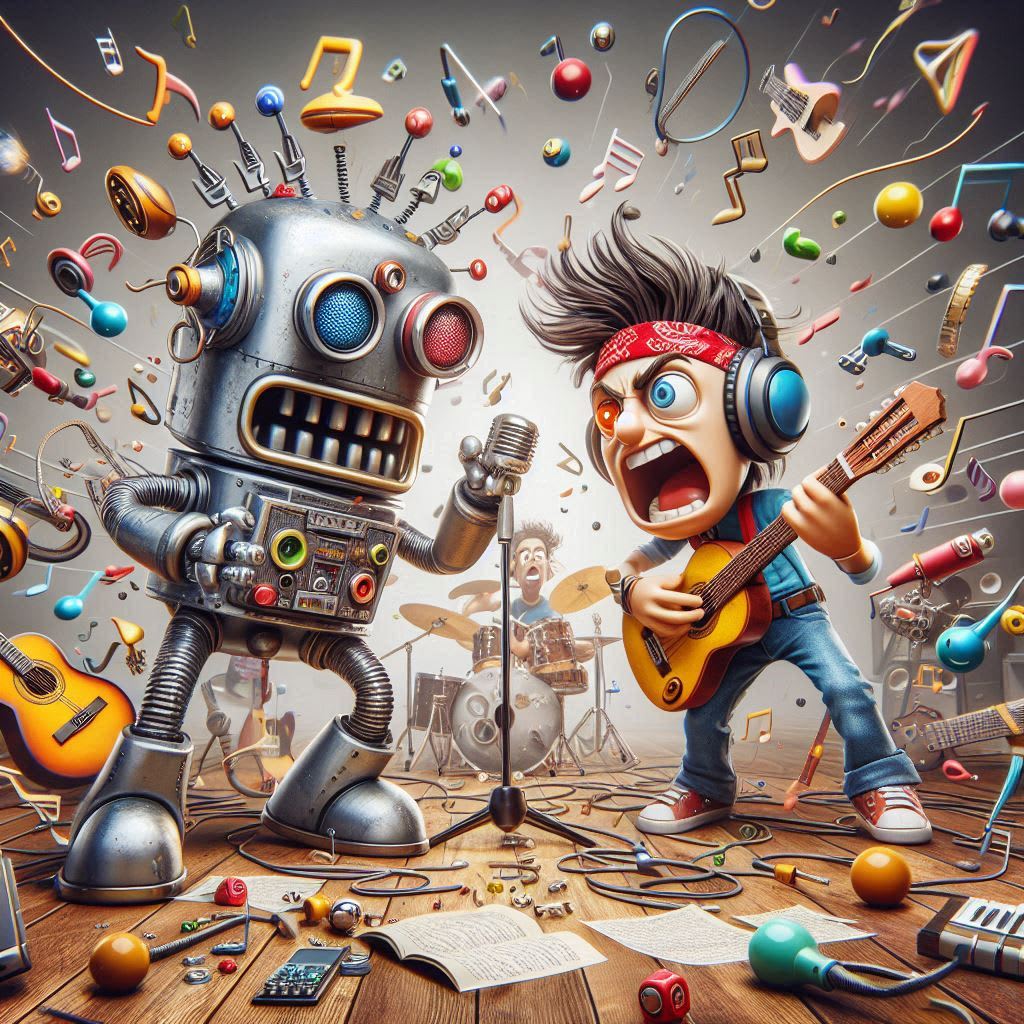
Recently, I, Thorne Empire, had a conversation with someone online who insisted that AI generated music isn’t real music; that it’s just synthetic noise with no genuine value. I found that perspective fascinating, especially because the only people I have heard make that argument are musicians themselves.
Out of curiosity, I looked a few of them up. These were artists who had been creating music for years, pouring heart, time, and energy into their craft. Yet, none of them had achieved recognition. They were clearly passionate; but also frustrated. And beneath that frustration, I sensed something deeper: fear, jealousy, and insecurity.
It’s easy to understand why. AI can now produce a song in seconds; something that might take a human musician hours, days, or even weeks. For artists who have spent years mastering their instruments or refining their production skills, that’s an intimidating thought. To make matters worse, AI is starting to undercut them financially.
Not long ago, I occasionally hired musicians to record vocals or produce backing tracks for my lyrics. They charged me for their work. But now, with AI tools, I can generate comparable results myself for a fraction of the cost; sometimes, honestly, with better quality.
Still, I don’t think musicians should see AI as their enemy. Yes, it’s competition. But competition has always been part of the music industry. Every major technological leap; from the electric guitar to the synthesizer to digital recording, was met with resistance at first. Yet none of these innovations destroyed music. They expanded it.
The same can be true for AI. Rather than replacing musicians, AI can become another instrument in their creative toolbox, a way to push boundaries, explore new textures, and discover sounds that were once impossible to imagine.
The debate over what makes music “real” isn’t new. It echoes the endless conversation about what makes art “real.” Remember Comedian; the artwork that featured a banana duct taped to a wall? When it went viral a few years ago, most people, myself included, laughed it off as absurd. It didn’t seem like art. But then, in 2024, a second edition of that same piece sold for $6.2 million to entrepreneur Justin Sun. Suddenly, everyone was talking about it again. Was it a joke, or was it genius?
The fact that people were arguing about it proved something: it had sparked thought and emotion.
And that’s the essence of art. Its value doesn’t come from how it’s made, but how it makes us feel. If a song born from the collaboration between a human and an AI moves someone; makes them dance, cry, or remember a moment in time; isn’t that real music?
History is full of creative breakthroughs that were first dismissed. When Monet and Renoir debuted their impressionist paintings, critics called them sloppy and unfinished. Jazz was once ridiculed as chaotic noise. Rock and roll was condemned as dangerous and unrefined. Even photography was mocked as a mechanical trick rather than an art form. Yet all of these forms eventually transformed culture.
Hip hop followed the same path. Early critics said it wasn’t “real” music; too repetitive, too shallow. Today, it’s one of the most influential genres on the planet, shaping global sound, fashion, and identity.
AI generated music may simply be the next step in that evolution. Right now, it feels strange; unfamiliar, even unsettling. But as technology matures and artists learn to collaborate with it rather than compete against it, we might witness something extraordinary: entirely new genres born from the fusion of human emotion and machine creativity.
In the end, “real music” isn’t defined by its process; it’s defined by the listener. If a melody, rhythm, or lyric resonates with someone, if it moves them, then it’s real to them. Whether it comes from a human, an algorithm, or a duet between the two doesn’t really matter.
Music has always evolved alongside technology. The piano, the electric guitar, the computer; each was once revolutionary. AI is simply the next instrument in that long, beautiful lineage.
About the Creator
Thorne Empire
I write the lyrics and let the AI carry the tune. Sometimes it’s magic, sometimes it misses the mark; but every word is a piece of me. Whether it hits or not, the fact that you listened, and felt anything at all; that means everything.
Keep reading
More stories from Thorne Empire and writers in Writers and other communities.




Comments