
Accountability of rulers and statesmen: How leadership is controlled in Islamic states.
শাসক ও রাষ্ট্রকর্তাদের জবাবদিহিতা: ইসলামী রাষ্ট্রে নেতৃত্ব কিভাবে নিয়ন্ত্রিত হয়।

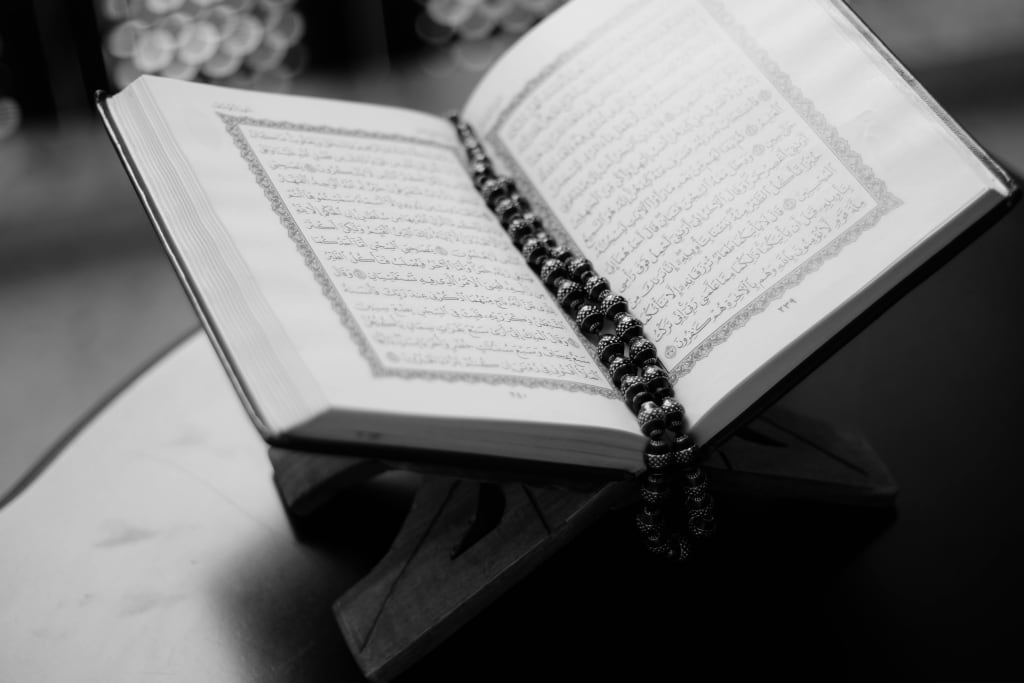
When governance is conducted according to Islamic principles, leadership is not a center of power, but a formidable responsibility. In Islam, the ruler or leader considers himself the guardian of the people, and conducts every decision and action out of fear of accountability before Allah. This is the characteristic of the Islamic state system — where leadership is not a royal position, but a solid trust.
Allah says in the Quran: “Indeed, Allah commands you to render back trusts to their rightful owners, and when you judge between people, do so with justice. Indeed, Allah teaches you the best.” (Surah An-Nisa 4:58). This verse is a fundamental principle for the Muslim state system. It is said here that governance is a trust. Protecting the lives, property and honor of the people, establishing justice, enforcing the law, guarding the borders, and repelling the enemy — all fall under this trust.
The Messenger of Allah (peace and blessings of Allah be upon him) said: “Every one of you is a trustee, and every one will be held accountable for his responsibility.” (Sahih Bukhari and Muslim). This hadith clearly states that leadership is not a ‘status’, it is a ‘responsibility’.
In Islamic governance, the ruler is not imposed on his people by force, but is chosen based on Shura or consultation, based on the consent and support of the people. If the ruler does wrong, acts according to whim, or violates the laws of Allah, then the people have the right to hold him accountable, even remove him through legal means.
Hazrat Abu Bakr (RA) said in his first speech after becoming the Caliph:
“O people! I have been appointed as a ruler over you, but I am not the best among you. If I do good, then help me; and if I do wrong, then correct me... I will obey Allah and His Messenger, as long as it is true; and if I violate it, then my obedience to you is not obligatory.”
These words are not just words of principle, they are the basis of practical governance. In an Islamic state, even the ruler stands before the judge, and even a common citizen can bring a complaint against him. The incident of Hazrat Umar (RA) is famous — once a person complained to the judge that Umar (RA) had resorted to injustice. When the judge summoned Umar (RA), he appeared, and even when he addressed him as “Umar”, he did not say anything. Later, when the judge asked him, he said, “When I am not sitting in the judge’s seat, I am an ordinary Muslim. Address me however you wish.”
This example is the beauty of the Islamic state system — even an ordinary citizen can raise his voice against the ruler, can stand in the court seeking justice. The ruler is not an ‘untouchable’, but is under the most fearful accountability of Allah.
In addition, an important institution in the Islamic state system is the Majlis-e-Shura or the Advisory Council. It consists of elected or appointed people who advise the ruler, correct him if he makes a mistake, and inform him about the state and feelings of the people. Allah says in the Quran: “They conduct their affairs by mutual consultation.” (Surah Shura 42:38). This verse is not just a proverb, it is the framework of the system of governance.
Here the question arises — what should be done if the ruler oppresses and violates the laws of Allah? There are guidelines for this in the Islamic system of governance as well. The Prophet (peace and blessings of Allah be upon him) said: “Whoever sees an injustice in a ruler, let him try to change it; and if he is unable to do so, then let him protest with his mouth; and if he is unable to do so, let him hate it in his heart — and that is the lowest level of faith.” (Sahih Muslim).
Therefore, accepting the injustice of the ruler or remaining silent is not an Islamic guideline. However, that protest must be organized, rational, and within moral boundaries. Islam does not support sedition, armed rebellion or chaos — Islam wants established justice, order and responsible resistance.
In today’s modern state system, we see that rulers consider it their right, not their responsibility, to run the state. They live a life of luxury, without question, without trial. And the people are victims of misery, poverty, corruption and oppression. But in an Islamic state, the ruler himself says, “If I am hungry and my subjects are satisfied, then I will not be able to enter Paradise.”
The Islamic state system does not make a caliph an ‘emperor’ or a ‘king’ — but a ‘Khademul Ummah’, that is, a servant of the Ummah. Leadership here is not an honor, but a burden; not pride, but fear.
In an Islamic state system, this accountability system is effective not only for the ruler, but at every level. Judges, officials, administrators, commanders — everyone performs their duties with the fear of accountability before Allah. For this reason, the Islamic state system can never survive on the abuse of power. The people also observe the leaders with the fear of Allah.
The main strength of this accountability comes from faith, piety and fear of Allah. When the ruler knows that, “Today I am the only one in power, but tomorrow I will have no security on the field of Judgment,” then he becomes responsible. Hazrat Umar (RA) once said, “If even a dog dies of hunger on the banks of the Euphrates River, Allah will question me on the Day of Judgment.”
This is the identity of Islamic leadership. Here there is no room for saying, “I am above anyone.” Rather, Allah alone is the Supreme, and the ruler is only His servant, and it is his duty to serve the servant.
About the Creator
Keep reading
More stories from Abdul Barik and writers in Writers and other communities.
“Hindu caste system and oppression of lower castes”
An integral yet painful reality of Indian society is the caste system and the millennia-long oppression of the lower classes of society based on it. This caste-based division is not just a social structure; it is a cultural, religious and political chain that has forced millions of people to suffer a kind of birthright punishment for centuries. This system has its origins in the Brahmanical stream of Hinduism and its scriptures, where society is basically divided into four castes—Brahmins, Kshatriyas, Vaishyas and Shudras. Beyond this, the large population that is identified as “untouchables” or “untouchables” is today’s Dalits or the so-called lower castes.
By Abdul Barik9 months ago in Writers
How Local Regulations Impact Mobile Apps in Milwaukee?
Regulations rarely feel urgent during early planning. They surface quietly, usually as footnotes in proposals or brief mentions during discovery calls. Then development begins, real data flows through the system, and suddenly those footnotes become constraints that reshape timelines, architecture, and cost.
By Mike Pichai8 days ago in Writers
Ludacris and Nelly draw backlash over bookings at MAGA-coded music festival
Ludacris and Nelly headlining a mostly right-wing event is good for them. It’s also great for the genre of hip hop. The two rap veterans have showcased their talents on other stages. Why can’t they perform for mostly MAGA folks and grab that bag?
By Skyler Saunders4 days ago in Beat



Comments
There are no comments for this story
Be the first to respond and start the conversation.