
A Cup of Fiction
Eco-Themed Creative Fiction Writing


A Cup of Fiction, Eco-Themes
Hello, my wonderful friends, followers, readers, fans, and critics; may your day be fantastical, adventurous, and joyful. Let's have a savory cup of coffee; you get the morning beverage that suits your desires, and meet me back here at the screen. Today, let's discuss how authors can craft their fantasy fiction stories to address the troubling moral dilemmas of our age. Many authors throughout time have addressed complex ethical issues in their works of fiction. Today's topic is invasive and creeps into our conversation as many of us find the impact of the status quo disastrous.
Fantasy and fiction have always been tools for navigating humanity's concerns. Environmental themes are no exception, from lush, enchanted forests that thrive under magical stewardship to dystopian wastelands warning us of ecological calamities. Eco-themes reflect our struggles and hopes with and for the natural world. How do authors challenge our views on sustainability and balance in fictional settings? Shall we explore this intersection of creativity and reality?
Understanding Eco-Themes in Fiction
Eco-themes in creative fiction, often called "eco-fiction," are deeply rooted in the human connection with nature. These themes explore how our environment shapes societies, cultures, and individual lives. By embedding environmental concerns into the fabric of their narratives, authors create rich, multidimensional worlds that resonate with readers on both emotional and intellectual levels.
At their core, eco-themes serve two primary purposes: they provide a mirror reflecting humanity's current environmental challenges, and they act as a canvas upon which solutions, warnings, and philosophical musings are painted. Through stories, readers are encouraged to see the natural world as a backdrop and a vital, dynamic character essential to continuing the world as we know it. The message is often woven within and throughout the narrative.
The Power of Allegory
Fantasy fiction, in particular, thrives on allegory, and eco-themes offer fertile ground for metaphorical storytelling. Consider Tolkien's The Lord of the Rings. Under the care of the ancient Ents, the lush forests of Fangorn stand in stark contrast to the barren, industrialized wastelands of Isengard. This dichotomy is a powerful commentary on the destructive nature of unchecked industrialization and its impact on the natural world. By personifying trees and giving them voices, Tolkien emphasizes their inherent value and agency, reminding readers that nature is not merely a resource but a force to be respected and protected.

Similarly, eco-themes often leverage fantastical elements to make the invisible visible. Pollution, deforestation, and climate change are concepts that can feel abstract or distant but become tangible and urgent through the lens of fiction. Whether it's a cursed land blighted by a greedy king's exploitation or a magical river that dries up when its guardian spirit is neglected, these narratives distill complex issues into compelling, relatable stories.
World-Building with Purpose
One of the most striking ways authors incorporate eco-themes is through world-building. The environment in a fictional world can shape everything from its geography and climate to its cultures and economies. Authors can explore the consequences of environmental neglect or stewardship by crafting ecosystems that mirror real-world issues.
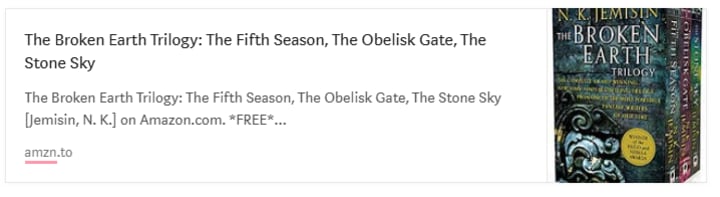
Take N.K. Jemisin's The Broken Earth Trilogy, where recurring apocalyptic events known as "Seasons" define how societies function. These events force communities to adapt and survive in harsh conditions, reflecting the resilience and resourcefulness required to face climate crises. Jemisin's narrative also addresses the socio-political implications of environmental disasters, such as inequality and exploitation, underscoring how environmental issues are inextricably linked with societal structures.
World-building allows for exploration beyond the immediate consequences of environmental degradation. It invites readers to ponder long-term scenarios: What happens when natural resources run out? How do communities rebuild after ecological collapse? By answering these questions, authors inspire readers to think critically about sustainability and the future of our planet.
Character as a Lens for Eco-Themes
Characters play a pivotal role in bringing eco-themes to life. Protagonists and antagonists can embody various attitudes toward the environment as proxies for real-world perspectives. A character's relationship with their surroundings, whether one of harmony, exploitation, or indifference, speaks volumes about their values and motivations.
For example, in Hayao Miyazaki's animated masterpiece Princess Mononoke, characters like San and Lady Eboshi represent opposing views on nature. San, raised by wolves, fights to protect the forest while Lady Eboshi's industrial ambitions encroach upon it. Neither character is entirely villainous or heroic, reflecting the complexity of environmental debates. Through their conflict, Miyazaki explores the topics of coexistence, compromise, and the cost of progress.
In fiction, eco-conscious characters often serve as catalysts for change, challenging others (and readers) to reevaluate their own relationship with the natural world. Whether it's a druid defending an ancient grove, a scientist uncovering the secrets of a polluted ocean, or an ordinary person discovering the wonders of a magical forest, these characters inspire us to reconnect with nature and consider our role in its preservation.
Subverting Expectations
Eco-themes in fiction also thrive on subverting expectations. Rather than presenting nature as an idyllic paradise, some narratives explore its darker, more dangerous aspects. This approach challenges romanticized notions of the environment and highlights the importance of balance.
For instance, Jeff VanderMeer's Southern Reach Trilogy introduces readers to Area X, a mysterious and otherworldly region where nature has reclaimed control in unsettling ways. The trilogy blurs the line between preservation and destruction, forcing readers to grapple with the idea that nature is not inherently benevolent or malevolent. It simply is. Such narratives remind us that humanity's attempts to dominate or "fix" nature can have unintended, often catastrophic consequences.
By embracing complexity, authors can create stories that challenge simplistic narratives and encourage deeper engagement with environmental issues. This nuanced approach reflects the real-world intricacies of ecological systems and the diverse ways people interact with them.
Environmental Hope in Fiction
While eco-themes in fiction often warn of disaster, it also has the power to inspire hope. Stories of renewal, restoration, and harmony offer a vision of what could be achieved if humanity embraced sustainable practices and respected the natural world. These narratives celebrate the resilience of ecosystems and the potential for positive change.
Take Kim Stanley Robinson's Ministry for the future, which envisions a world grappling with climate change's effects while finding innovative solutions. Robinson offers a blueprint for collective action and resilience through a mix of speculative and realistic elements. Such stories empower readers to believe that change is possible and that their actions, no matter how small, can contribute to a better future.

---
The Call to Action
Ultimately, eco-themes in fiction serve as a call to action. They invite readers to reflect on their own lives and consider how they can contribute to the health of our planet. By weaving environmental concerns into compelling narratives, authors create a bridge between imagination and reality, fostering empathy and awareness.
As writers, we have the opportunity to shape perceptions and inspire change. By crafting stories that celebrate the beauty and complexity of the natural world, we can encourage others to see it not as something separate from themselves but as an integral part of their existence. Whether through cautionary tales, allegories, or hopeful visions, our stories have the power to spark conversations and drive action.
And now my favorite part of the blog.
---
A Fresh Cup of Fiction
The Last Seed
The wind pushed and carried the sand and scent of decay from the barren wasteland across the land. What was once a sprawling, vibrant forest of an ancient world now lay silent, brown, decayed, and lifeless before her. Zephyr tightened her grip on the leather bag slung across her chest; its contents were meant to keep her alive on the journey before her as she fought to save a world on the brink of collapse.
She felt the seed pulse faintly from within the pouch of the priceless fresh soil she had gathered from the garden in her village. The seed, a faint hint of hope, defied the poisoned earth's deathly cold beneath her feet. It was no ordinary seed; it was the last of the Tellus Tree, a magical tree said to have roots that could purify even the most desolate lands. The Elders had told her it could heal the world, but they had all fallen before they could guide her further.
Zephyr pressed on, her boots crunching through brittle soil that crumbled beneath her feet. Ahead, the horizon shimmered with unnatural light, a border of green she had been chasing for weeks. Yutakmidor, the last untouched bastion of life, was said to exist beyond the toxic wasteland. But no maps led there, only whispers. Now she could see it.
As dusk fell, Zephyr paused to rest beneath the skeletal remains of a tree. The seed throbbed again, brighter this time, light spilling from her satchel. A figure stepped out of the shadows, tall, willowy, and cloaked in vines that seemed to pulse like veins.
"You carry the heart of Tellus," the figure said, its voice like rustling leaves.
Zephyr jumped to her feet, clutching the hilt of her father's sword, the only weapon she had. "Who, what are you?"
The figure smiled faintly, revealing teeth sharp as thorns. "I am the Keeper of the Wilds, child. I am bound to protect what little remains of the old world. You seek Yutakmidor, do you not?"
Zephyr nodded, wary but desperate. "I have to plant this. It's our only chance to save the world."
The Keeper's gaze darkened. "The world does not need saving child, it needs balance. Tellus's heart is not a gift of renewal but a test of desire and willingness. Where you plant it, life will flourish, but only at the cost of something else. Choose wisely."
Zephyr's chest tightened. She thought of her village, choked by famine and blight. She had promised to return and bring salvation.
"I must get to the Yutakmidor; it is the only place to plant it. It won't grow anywhere else."
"If you plant it in the Yutakmidor child, it will only grow and thrive; it will not renew the desolation. Only a great sacrifice will allow it to grow, thrive, and replace the wasteland."
"I don't have time for riddles!" she cried. "Tell me where to plant it!"
The Keeper extended a hand, bark-like skin gnarled and coarse. "Only your heart can decide. But remember, life thrives not through abundance, but through sacrifice."
Tears stung Zephyr's eyes as she stared at the seed. She could feel its potential, the power to create miracles, but also the weight of its cost.
As dawn broke, Zephyr stood at the edge of her village, the seed nestled at her feet in freshly turned earth. Behind her, the wastelands and Yutakmidor. She drenched the planting with the last of her water and watched as the first green sprout broke the soil, and with it came a whisper on the wind: balance, sacrifice, hope.
---
I hope you enjoyed my new Fresh Cup of Fiction. As we look at eco-themed narratives, I hope I helped clarify that fantasy fiction is not just an escape but a powerful mirror reflecting our struggles with the natural world. Through fantasy, dystopia, and speculative fiction, we are reminded of the fragility of our ecosystems and the responsibility we share in preserving them.
Whether it's the cataclysmic seasons of The Broken Earth Trilogy or the unraveling of global ecosystems in The Swarm, these stories compel us to confront truths and imagine new possibilities.
In the end, fantasy fiction offers a canvas for creativity and a call to action. It challenges us to change our relationship with the environment and pushes us to consider the future.
So, as you sip your cup of fiction, think about the worlds you create or the ones you immerse yourself in as a reader. Let these stories remind us of our shared responsibility to nurture and protect the environment in our imaginations and reality. After all, the most powerful stories are those that not only entertain but also leave a lasting impact on the hearts and minds of their audience.
---
© 2024, T. Mark Mangum
I am T. Mark Mangum. From an early age, I was hooked on the imagined, unfathomable worlds of Star Wars, Star Trek, Conan, the Lord of the Rings, and many others. I love writing fiction tales. I love writing in multiple genres, but my favorites are Sci-fi and Fantasy fiction. I am a father of six; we have two cats and two dogs. Tabletop gaming is a passion of mine.
About the Creator
T. Mark Mangum
I am T. Mark Mangum. I was hooked on the imagined, unfathomable worlds of Star Wars, Star Trek, Conan, The Hobbit, and many others early in life. I am a father of six; we have a cat and a dog. Tabletop gaming is a passion of mine.
Keep reading
More stories from T. Mark Mangum and writers in Writers and other communities.
A Cup Of Fiction
A Cup of Fiction, Magic Realism Good morning, my lovelies. I started writing this episode on a Monday. I am not afraid to tell you all that I struggle with Mondays. But I have decided that Monday won't stop me from my goal, so here we go. Let me know if you struggle with Mondays as well. I will assume you do and that it is because of work, school, or some otherworldly endeavor that must be done. But if it is something else and you feel like sharing, leave a comment let us know what it is. Get a cup of your favorite morning beverage and join me as I dig into today's creative writing element. How can we turn the mundane of our everyday life into the fantastical world of the characters we create in our writing?
By T. Mark Mangumabout a year ago in Writers
Preservation for Eternal Impact
It is easy to feel as though most of what is said disappears. Words are spoken, written, posted, argued over, and then quickly buried beneath the next wave of noise. Attention moves on. Platforms refresh. What once felt urgent becomes invisible. In that environment, a quiet but persistent question emerges. What actually lasts. And more uncomfortably, what is worth preserving when so much seems to vanish without consequence.
By Peter Thwing - Host of the FST Podcast2 days ago in Writers
One Hard Thing
Stop me if you’ve heard this one before: You have the number, you know your schedule- you’ve even picked out the perfect day and time to make this appointment. Shoot, you’ve even picked out alternative days and times just in case their schedules can’t accommodate you!
By Taylor Rigsby5 days ago in Motivation




Comments
There are no comments for this story
Be the first to respond and start the conversation.