


A Cup of Fiction, Portal Fiction
Hello, and Good morning. It is another fabulous day. Whatever your Morning entails, I hope you will make A Cup of Fiction a part of it. As I write this, it is a Sunday morning. At the moment, I am sipping a cup of coffee and pondering, what next? You will usually find me sitting, sipping, and reading a few Medium articles on Sunday mornings. Then, I will read a bit of whatever book I am currently into and ponder my own writing for the day. What does your Sunday morning look like? I enjoy reading as much as I enjoy writing. If only we had more time. At the moment, I am reading a Speculative Fiction novel in the Subgenre category of Portal Fiction.
What is Portal Fiction?
In creative fiction writing, the protagonist is compelled to answer a call to action to overcome a problem or dilemma. This call is often but not always accompanied by the protagonist's departure from their known, safe, comfortable place in the world to a life-altering course that separates them from the normal. Regardless of the genre, the portal, in Portal Fiction, is often the catalyst for the departure from the normal.
Authors can use Portal Fiction to create awe and mystery as the story begins. This technique is used in horror, Science Fiction, Fantasy, Romance, apocalyptic narratives, and other genres. Portal Fiction provides a convenient and mind-bending method of transporting characters from one reality to another. The portal can be doorways, an armoire, a mirror, or anything imaginable. After all, anything is possible in Creative Fiction Writing.
In the Harry Potter series by J.K. Rowling, there are several portals, but the very first portal we are introduced to is the one at Platform 9 3/4. This portal takes our young protagonist and his friends to the Hogwarts Express and into a world of mystery and magic.

While J.R.R. Tolkien did not use Portal Fiction in his Epic Fantasy World, he did speak extensively on the need for a "secondary world" in his "On Fairy-Stories." Authors who employ portal fiction often use it to transport the protagonist and the reader to this "secondary world." Tolkien defines it as a fictional universe crafted to be internally consistent and believable, allowing the readers to escape from reality while engaging with deeper truths about human experience.
In The Wizard of Oz, by L. Frank Baum, the portal from Dorithy's reality to the fantastical land of Oz is the Tornado, which interrupts events surrounding her dog Toto's attack on Miss Gulch and Miss Gulch's subsequent attempts to have the dog put down. Gregory Maguire, the author of Wicked, explains that portals allow the writer to create rich narratives and landscapes that allow for a deeper exploration of the human condition and the theme of the book.

Reader Engagement
Portal fiction captivates readers by blending the familiar with the fantastical. The initial setting in the real world grounds the story, making it relatable. At the same time, introducing a magical realm sparks curiosity and wonder. The journey through the portal serves as a metaphor for personal transformation, resonating with readers on an emotional level. Additionally, the sense of discovery and exploration keeps readers engaged as they uncover the mysteries and wonders of the new world alongside the protagonist.
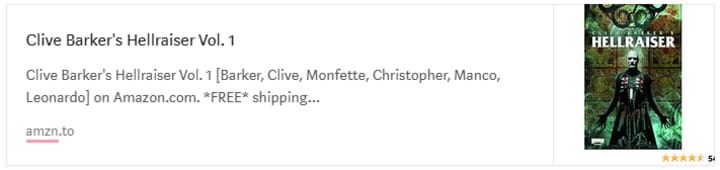
In Clive Barker's Hellraiser, the portal element is a puzzle box known as the Lament Configuration. When solved, this intricate puzzle box opens a gateway to a nightmarish dimension inhabited by the Cenobites, allowing them to cross into the Protagonist world and claim victims.
In these few examples, you can see that the portal can be almost anything, which is not surprising because in creative fiction writing, anything is possible, and where the portal leads or what the portal allows to transpire can be anything. This makes portal fiction very useful to Creative Fiction Writers.
In my Portal Fiction tale, The Akul, the characters are transported to the world of the Akul through A Cave. The mysterious elements of the portal are created through a ritual that the Akul performs. So do not hesitate to embrace this tool in crafting fantastical tales of wonder, amazement, and diabolical deeds. Let me know what you come up with.
A now my favorite part of the Blog.
A Fresh Cup of Fiction
Enjoy!
The Trip
"This is a fine cup of coffee, Andrew; what is it? I need to get me some," Juels asked.
"I got it from a local coop in Peru while I was on my Ayahuasca retreat," Andrew answered with a sly smile.
"What is that big cheesy grin about?" Jules felt her stomach twist, and the hairs stood on the back of her neck.
"Trip time," Andrew said.
"Andrew, why, that is not cool. You should have asked me first,"
"You know you would have never agreed; you talk about doing it but always have an excuse why you can't. So now it is too late; you have to go," Andrew said, taking Jules's hand and leading her to the couch. He sat next to her.
Jules was in shock. She couldn't even speak. Should I run to the bathroom and force myself to vomit, she thought. Then her world spun, her vision blurred.
"Andrew," She gasped.
"I'm here. We are ok. Give it a second," he said.
Finally, the world about her settled, stopped spinning, and her vision returned. Before her was a vast color-filled landscape with flocks of birds and buzzing bees. Trees as tall as New York skyscrapers and flowers as big as cars. A great beast, purple, pink, and white, stood on four legs a way off, long neck reaching up into the trees, munching on leaves.
"Where are we?" she asked.
In her mind, she knew she was tripping from some odd drug Andrew had laced her coffee with, but it felt so real. The breeze blew, fragrant scents, sweet and alluring, lofted upon the wind, and Andrew squeezed her hand.
"What do you think should we stay?"
"Andrew, this isn't real. We can't stay. I want this to end. How long will it take to wear off?"
"All we have to do is eat this fruit," Andrew walked over to a bush, its vast array of yellow leaves speckled with red berry clusters. He picked a handful and brought it over to her.
"But I want you to stay here with me. We don't have to go back. Everything we would ever need or want is here."
"Andrew, it's an illusion, a hallucination; it's not real. We can't stay, and I am furious that you did this to me without my permission," she reached out to take some of the berries from Andrews's hand.
He dropped them, his countenance changing to a grimace. "No, I think we will stay," he grabbed her hand. You will see; you'll change your mind."
I hope you enjoyed this flash of fiction. Is it just a drug-induced hallucination, or is the drug in the coffee the catalyst for a portal event? Remember, in Creative Fiction Writing, anything is possible.
Please clap and respond; let me know what you think of the topic Portal Fiction and my new Flash Fiction tale. Highlight and tell your friends if you are compelled to do so.

If you wish to explore the genre of Portal Fiction more, click on my Amazon Affiliate links and grab one of the excellent highlighted books.
Until the next Cup of Fiction, may adventure find you and inspiration move you.
References:
Propp, Vladimir. Morphology of the Folktale. In this seminal work, Propp discusses the departure from the protagonist's ordinary world as a fundamental narrative structure, which aligns with the concept of the portal as a catalyst in storytelling.
Tolkien, J.R.R. "On Fairy-Stories." This essay discusses the creation of secondary worlds and the imaginative leap required for readers and characters to enter these worlds, directly supporting the concept of portal fiction.
Maguire, Gregory. Wicked: The Life and Times of the Wicked Witch of the West. HarperCollins, 1995. Provides a reimagining of the Oz universe, delving into themes of human condition and moral ambiguity that portal fiction often explores.
Campbell, Joseph. The Hero with a Thousand Faces. Princeton University Press, 1949. Discusses the hero’s journey and the crossing of the threshold, which often involves a portal-like experience as part of the departure stage.
Mendlesohn, Farah. Rhetorics of Fantasy. Wesleyan University Press, 2008. Analyzes the different types of fantasy narratives, including portal fantasies, and their impact on reader engagement.
Zipes, Jack. The Enchanted Screen: The Unknown History of Fairy-Tale Films. Routledge, 2011. Explores how portals in film adaptations of fairy tales create a bridge between reality and fantasy, enhancing viewer immersion.
Armitt, Lucie. Fantasy Fiction: An Introduction. Continuum, 2005. Offers insights into how portal narratives resonate emotionally by symbolizing personal transformation and exploration.
© 2024, T. Mark Mangum
I am T. Mark Mangum. From an early age, I was hooked on the imagined, unfathomable worlds of Star Wars, Star Trek, Conan, the Lord of the Rings, and many others. I love writing fiction tales. I love writing in multiple genres, but my favorites are Sci-fi and Fantasy fiction. I am a father of six; we have two cats and two dogs. Tabletop gaming is a passion of mine.
About the Creator
T. Mark Mangum
I am T. Mark Mangum. I was hooked on the imagined, unfathomable worlds of Star Wars, Star Trek, Conan, The Hobbit, and many others early in life. I am a father of six; we have a cat and a dog. Tabletop gaming is a passion of mine.
Keep reading
More stories from T. Mark Mangum and writers in Writers and other communities.
A Cup of Fiction
Good morning to all of you lovely authors, readers, and followers. I hope your week went well. Breathe, you are a success, and more is yet to come. You are awesome, and my life is better because I know you. I enjoy reading your wonderful articles, stories, and poetry. I wish I had more time. I am thankful for those of you who follow me and take the time to read my works. Today, I feel like chatting about Epic Science Fiction and Fantasy writing. The term Epic refers to a subgenre of fantasy and science fiction literature characterized by a grand scale, complex plot, large cast of characters, and a deeply developed fictional world, often featuring themes of destiny, heroism, major societal shifts, and the conflict between good and evil. I will highlight a few examples of this type of writing and include an Amazon Affiliate link within our discussion here.
By T. Mark Mangumabout a year ago in Writers
Unusual Names To Go In Writing Fiction
Anne Bernays and Pamela Painter — What If? Writing Exercise for Fiction Writers prompts The Exercise — In your notebook, keep a list of unusual names for potential characters. In fact, every writer should have a collection of old yearbooks, benefit programs, phonebooks, and so forth to browse through when he needs to name a character. And don't stop there. Keep lists for things you might need to name sometime in a story. Remember that tone is important, so when naming the list below of things choose an earnest name and a farcical one. Name the following things. Imagine stories they might go in. The Objective - To loosen up your imagination by naming things you wouldn't ordinarily have to name - never mind "own."
By Denise E Lindquist3 days ago in Writers


Comments
There are no comments for this story
Be the first to respond and start the conversation.