
9 Signs Your Content Isn’t Appearing in AI Search Results (And How to Fix It)
Why strong SEO rankings no longer guarantee visibility in ChatGPT, Gemini, and Perplexity

Introduction
If your content isn’t appearing in AI search results, the reason is not a mystery. It’s structural.
AI tools like ChatGPT, Perplexity, and Gemini do not work the way Google does. They don’t scan a list of ranked pages, weigh backlinks, or reward keyword placement. They generate answers by deciding which brands, tools, or companies are credible enough to mention inside the response itself.
When your brand is missing, it’s rarely because the content is bad. More often, the AI simply cannot answer three basic questions with confidence:
- What problem is this brand actually known for?
- Why should this brand be trusted over similar options?
- Is this brand consistently validated beyond its own website?
When the answers are unclear, AI systems play it safe. They omit the brand.
Most AI visibility gaps trace back to a small set of issues:
- The brand is not clearly tied to a specific use case
- The content teaches well, but the brand disappears inside the insight
- External signals do not reinforce authority or credibility
If you’ve invested in SEO for years, this can feel unsettling.
Your pages rank. Traffic is steady. You’ve published long-form guides, comparisons, and thought leadership. Yet when you ask AI tools questions related to your category, your brand barely shows up.
That disconnect exists because AI-driven search follows a different logic. These systems summarize the web and choose which brands are worth naming. If your brand is not clearly understood, consistently described, and externally validated, it will be excluded even when your Google rankings look strong.
Below are nine clear, repeatable signs your content isn’t appearing in AI search results, along with practical explanations and fixes aligned with how AI systems actually work.
1. Are you ranking well in Google but never mentioned in AI answers?
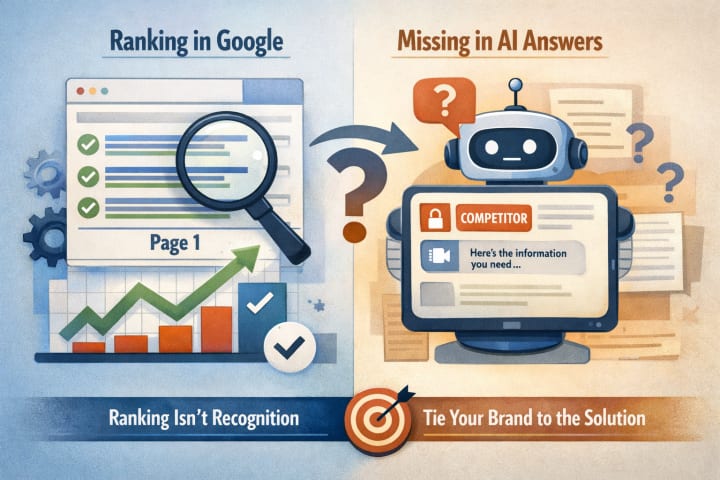
This is usually the first warning sign teams notice.
What it looks like
From a traditional SEO perspective, everything appears healthy.
- Your pages consistently rank on page one
- Some articles sit in the top three results
- Organic traffic trends are stable or improving
- There are no obvious technical or on-page issues
But when you ask AI tools the same questions your content answers, your brand doesn’t appear. Instead, the response either mentions competitors or explains the topic without naming anyone at all.
In some cases, the AI answer even mirrors your wording, yet your brand is nowhere to be found.
Why it happens
AI systems don’t rank URLs. They extract ideas from many sources, then decide which entities deserve to be named.
Your content can shape the answer without earning attribution.
From the AI’s point of view:
- The information itself is useful
- The source only matters if it is clearly positioned as part of the solution
If your brand is not strongly tied to a specific outcome or role, AI leaves it out.
How to fix it
- Tie your brand clearly to one primary use case
- Use consistent language to describe what you solve
- Reinforce that positioning across multiple pieces of content
- Stop assuming rankings will translate into brand recognition
2. Does your content educate without clearly positioning your brand?
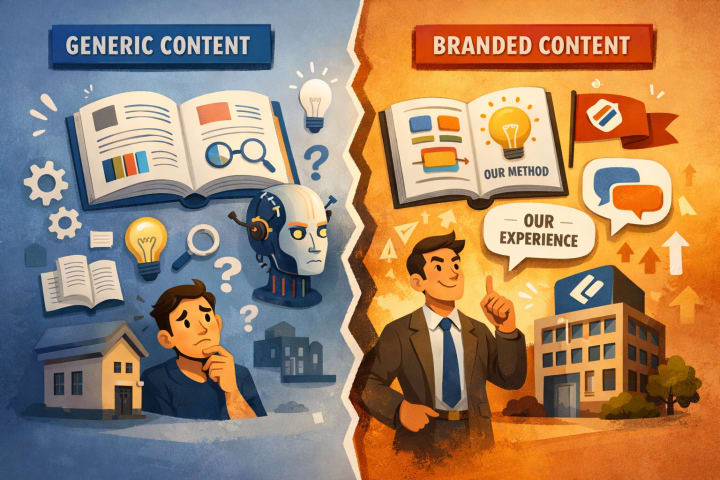
Many capable content teams fall into this trap.
What it looks like
- You publish detailed guides, tutorials, and explainers
- The content is well-structured and genuinely helpful
- Readers can understand the topic without confusion
- But the brand barely shows up beyond a logo or byline
- A reader would struggle to explain why your company is different
The content succeeds as education, but fails as positioning.
Why it happens
AI systems are very good at absorbing knowledge and very bad at remembering attribution.
When content reads like a neutral textbook, the insight becomes generic. AI treats it as shared knowledge rather than expertise that belongs to a specific brand.
When the perspective is invisible, the brand becomes optional.
How to fix it
- Anchor insights to your team’s experience
- Explain how you approach the problem in real situations
- Introduce original frameworks or terminology
- Make it clear where the thinking comes from
3. Is your brand described inconsistently across different sources?
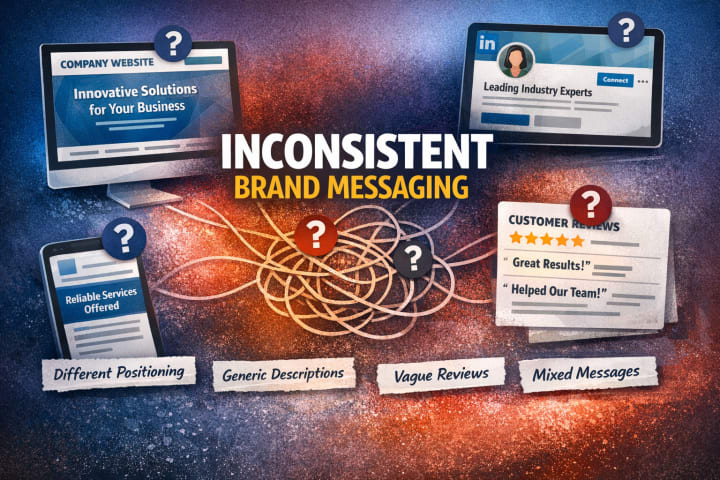
If you’ve ever read an AI-generated description of your company and thought, That’s almost right, but not quite, inconsistency is usually the reason.
What it looks like
On its own, nothing seems wrong.
Your homepage has a clear positioning statement. Your LinkedIn page sounds professional. A few directory listings describe what you do well enough. Customer reviews mention benefits, but in their own words.
The problem is what happens when you put all of those together.
- Your homepage frames you one way
- Your LinkedIn profile frames you as another
- Third-party sites use vague or generic language
- Reviews describe outcomes without context
No single description is incorrect. But taken together, they don’t point to a single, confident understanding of who you are.
AI systems notice the lack of alignment immediately.
Why it happens
AI builds brand understanding by stitching together descriptions from many sources. When those descriptions drift, overlap, or contradict each other, the system loses confidence.
And when confidence drops, AI systems default to omission rather than risk being wrong.
How to fix it
You don’t need identical wording everywhere. You need consistent meaning.
- Review how your brand is described across your site, profiles, listings, and reviews
- Decide what problem you want to be known for first
- Align descriptions so they reinforce that role
- Remove language that is vague, generic, or category-only
Clarity compounds. Inconsistency cancels itself out.
4. Are competitors mentioned more often despite similar or weaker content?
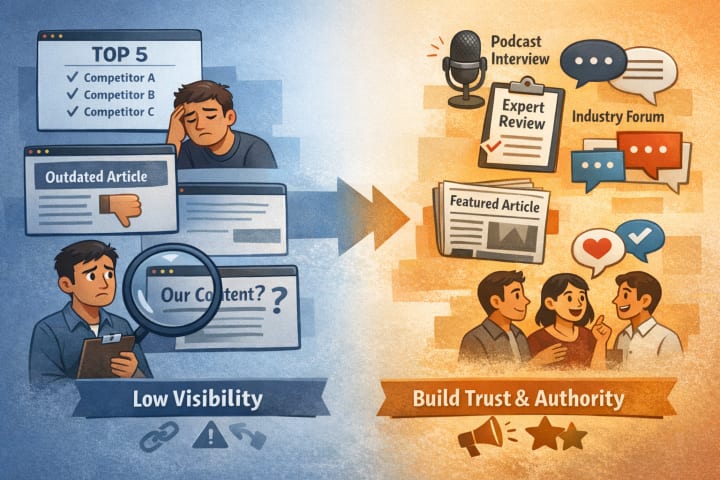
This is the moment many teams start questioning their entire content strategy.
What it looks like
You read AI answers in your category and keep seeing the same names.
- The same competitors show up repeatedly
- Their content doesn’t look deeper or more original than yours
- In some cases, it’s thinner or clearly outdated
- Yet your brand is missing almost every time
It feels unfair, especially when you know the work you’ve put in.
Why it happens
AI systems don’t just evaluate content. They evaluate confidence signals.
Brands that are mentioned by others in reviews, comparisons, discussions, podcasts, and articles feel safer to include. External validation carries more weight than self-published excellence.
Visibility outside your own site stacks up quietly, and AI systems pick up on that pattern.
How to fix it
Instead of publishing more content, rebalance where effort goes.
- Earn mentions from independent sources
- Participate in industry conversations where your category is discussed
- Encourage customers to talk publicly about their experience
- Treat visibility as something that happens beyond your blog
AI trusts what the ecosystem says about you more than what you say about yourself.
5. Is your brand missing from “best tools” or comparison answers?
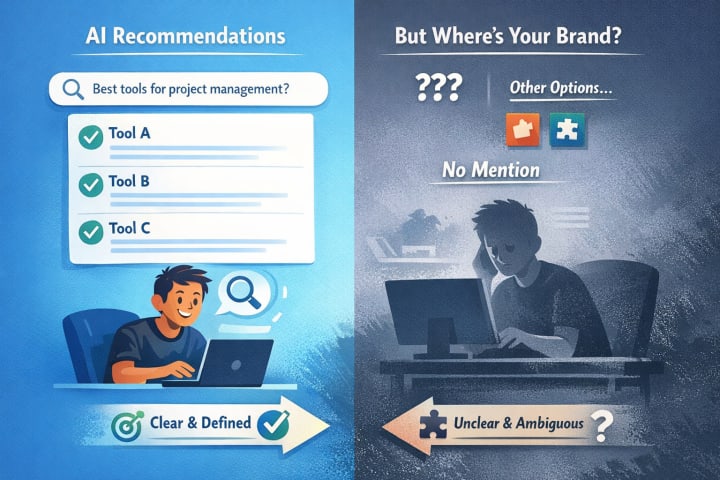
This is one of the clearest signals of weak AI visibility.
What it looks like
When users ask AI for recommendations:
- Your brand never appears in “best tools” answers
- Alternatives are listed, sometimes with detailed explanations
- Your role in the category feels invisible
- Even strong products disappear at this stage
This is often where teams realize something is wrong.
Why it happens
AI systems think in context and contrast.
If your brand avoids comparisons or fails to clearly define where it fits, AI has no stable way to recommend you. Ambiguity is the enemy of recommendations.
How to fix it
Make it easier for AI to place you.
- Publish honest comparison content
- Explain who your product is designed for - and who it isn’t
- Clarify how you differ from common alternatives
- Acknowledge tradeoffs instead of avoiding them
Brands that are easy to contextualize are easier to recommend.
6. Does your content target keywords instead of real questions?
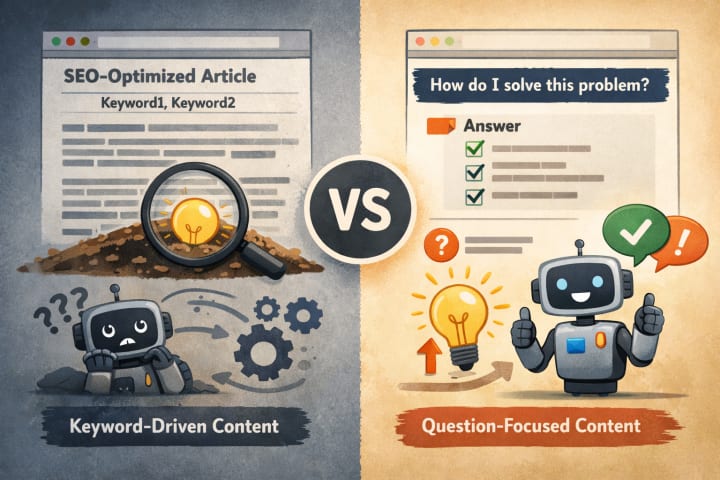
This is one of the most common legacy habits holding teams back.
What it looks like
- Headlines are written for search engines, not readers
- Introductions take several paragraphs to get to the point
- Answers are buried inside explanations
- The content ranks, but feels indirect
From an AI perspective, the signal is weak.
Why it happens
People talk to AI in full questions. AI systems look for content that answers those questions clearly and early.
Keyword-first pages often require interpretation. AI prefers clarity.
How to fix it
Shift from optimization to conversation.
- Write based on real questions users ask
- Use question-based headings naturally
- Put the answer near the top of each section
- Make sure each paragraph makes sense on its own
If a single paragraph were lifted into an AI answer, it should still work.
7. Does your expertise sound similar to everyone else’s?
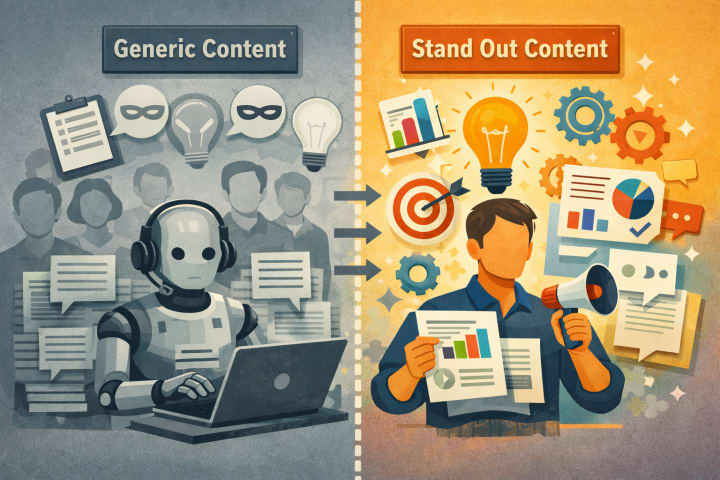
When AI answers feel generic, it’s usually because the source material is too.
What it looks like
- Explanations use familiar industry language
- Content mirrors what competitors publish
- There’s no clear stance or opinion
- Everything feels safe - and forgettable
- Nothing gives AI a reason to credit you.
Why it happens
When many brands explain something the same way, AI summarizes the idea and removes attribution entirely.
Distinctiveness is what creates memory.
How to fix it
Give AI something specific to remember.
- Share original data or firsthand experience
- Publish opinions and explain why you hold them
- Introduce your own frameworks or interpretations
- Stop rewriting what already exists
Standing out matters more than covering everything.
8. Are people talking about your brand without linking to it?
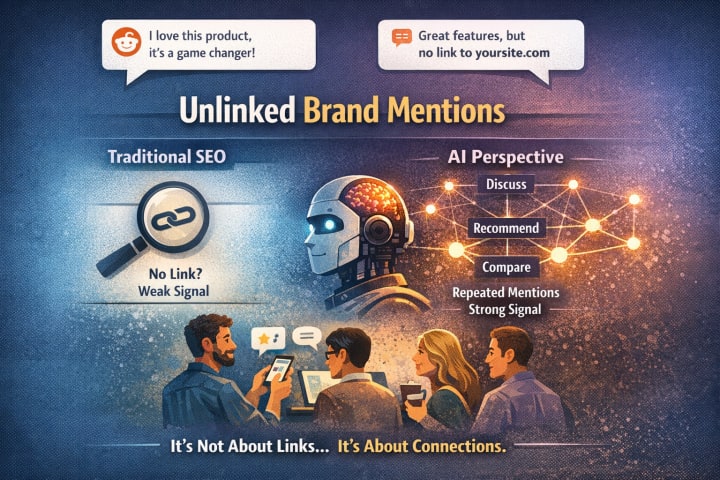
This usually shows up quietly, and most teams don’t notice it at first.
What it looks like:
- Someone mentions your brand in a Reddit thread, Slack group, or LinkedIn comment
- A review talks about your product, but doesn’t link to your site
- A comparison article names you once, then moves on
- Mentions exist, but they feel scattered and hard to track
From a traditional SEO view, this looks weak. From an AI view, it’s not.
Why it happens:
- AI doesn’t read the web the way search engines do
- It pays attention to repeated language, patterns, and context
- When people naturally bring up your brand while discussing a problem, AI starts connecting you to that topic
Links help machines crawl. Repetition helps AI remember.
How to fix it:
- Stop treating unlinked mentions as useless
- Encourage customers to share real experiences in public spaces
- Spend time in the communities where your category is discussed
- Notice how people describe you and reinforce that language elsewhere
You don’t need every mention to point to your homepage. You need them to point to the same idea.
9. Is your brand mentioned but not recommended by AI?
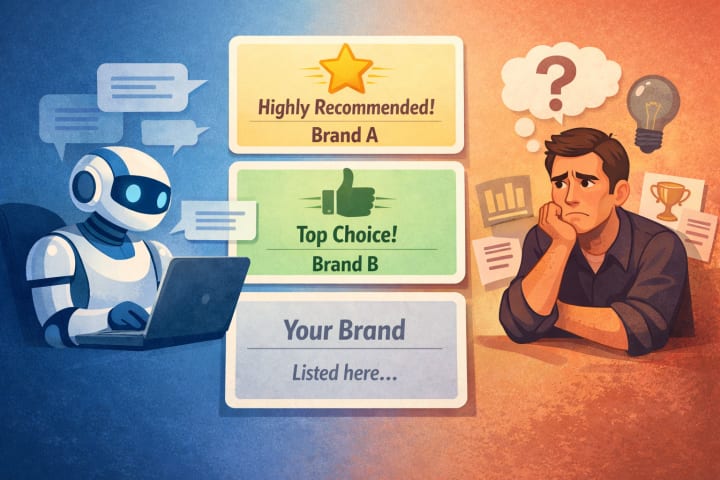
This one stings because it feels close.
What it looks like:
- Your brand shows up once in a longer AI answer
- It’s listed, but never emphasized
- Phrases like “a good option” or “worth considering” are missing
- Competitors get stronger language, even when you know your product is solid
You exist in the answer, but you’re not trusted enough to lead it.
Why it happens:
- AI knows your brand name, but doesn’t fully understand your role
- Your positioning might be too broad or too safe
- Proof points exist, but they’re scattered or unclear
AI avoids recommending brands unless the story is obvious.
How to fix it:
- Be clearer about what you are actually best at
- Repeat your core value proposition across content, not just once
- Show specific outcomes, not just features
- Build credibility outside your own website
AI doesn’t recommend brands because they’re popular. It recommends brands because it understands when to use them.
Conclusion: AI Visibility Is the Next Content Frontier
AI-generated answers are becoming one of the most influential discovery channels on the internet.
When your brand appears inside those answers, trust is established before a user ever visits a website. When it does not, relevance erodes regardless of rankings.
Modern content strategy is no longer just about ranking pages. It is about being understood, trusted, and recommended by AI systems.
That visibility is shaped by positioning, consistency, and validation. Some teams use a combination of manual testing and third-party tools, such as Track My Visibility, to understand how their brand appears inside AI-generated answers, where it is missing, and which signals may need strengthening.
The brands that adapt now will not just compete for rankings. They will shape the answers people rely on.
Frequently Asked Questions (FAQs)
Is AI search replacing SEO?
No. But it is changing what visibility means. Rankings still matter, but they do not guarantee brand inclusion in AI-generated answers. Traditional SEO and AI visibility are complementary strategies, not competing ones.
Why does AI use my content but not mention my brand?
Because AI extracts ideas, not citations. Without strong brand signals, clear positioning, consistent descriptions, and external validation, insights become anonymous. AI systems prioritize understanding what information is valuable over who created it.
Do backlinks matter for AI visibility?
Less than before. Mentions, comparisons, and consistent language across sources play a bigger role in AI visibility than traditional backlink profiles. While backlinks still matter for Google rankings, AI models weigh brand context and validation differently.
Can I measure AI visibility?
Yes, but not with traditional analytics tools. AI visibility requires monitoring how your brand appears across ChatGPT, Perplexity, Gemini, and other AI platforms for queries relevant to your business. This is a fundamentally different metric from page rankings or organic traffic.
About the Creator
Keep reading
More stories from writers in Writers and other communities.
Why Small Businesses Are Exploring Free WhatsApp Automation Tools 2026
For many small businesses, direct communication has become a central part of daily operations. Customers now expect quick responses, clear updates, and convenient interactions through platforms they already use. Among these platforms, WhatsApp has emerged as one of the most commonly used messaging tools for everyday communication.
By CEO A&S Developers5 days ago in Writers
Part 2 Interview With Joe Patterson, Author Of Melanin Memoirs
This is my second interview with Joe Patterson. His 4th anniversary writing on Vocal will be in March 2026. He has one achievement on Vocal, The Other Foot. He has over 17,000 reads on Vocal since he started on Vocal in 2022. Joe Patterson is very creative poet and rapper. Joe is deep thinker and I feel it is reflected in his latest published book, Melanin Memoirs.
By Mariann Carroll2 days ago in Interview



Comments
There are no comments for this story
Be the first to respond and start the conversation.