
Yamaha YZF-R7 (2024)
The Ultimate Middleweight Sportbike Experience


Introduction
The 2024 Yamaha YZF-R7 represents the perfect balance between track-focused aggression and real-world riding practicality. As the spiritual successor to Yamaha's legendary R-series lineage, this 689cc parallel-twin sportbike delivers thrilling performance wrapped in razor-sharp styling. Designed for riders who crave adrenaline without the intimidation of liter-class machines, the R7 has quickly established itself as one of the most compelling middleweight options on the market.
With its race-derived DNA, aggressive ergonomics, and accessible power delivery, the YZF-R7 bridges the gap between beginner-friendly motorcycles and full-blown superbikes. Whether you're carving canyon roads, commuting through city streets, or pushing limits on track days, this Yamaha offers an intoxicating blend of performance and usability.

Engine Performance: Controllable Brutality
At the heart of the YZF-R7 lies Yamaha's proven 689cc CP2 parallel-twin engine, derived from the MT-07 platform but significantly refined for sportbike duty. The liquid-cooled, DOHC powerplant delivers:
- 73.4 horsepower @ 8,750 rpm
- 50 lb-ft torque @ 6,500 rpm
- 270-degree crankshaft for V-twin-like character
- Slipper-assist clutch for smooth downshifts
What makes this engine special isn't just the numbers - it's how the power is delivered. The R7's torque curve is beautifully linear, with strong pull from as low as 3,000 rpm that builds progressively to its 10,500 rpm redline. This makes the bike incredibly forgiving for newer riders while still providing enough top-end rush to satisfy experienced pilots.
The engine's 270-degree firing order gives it a distinctive, throaty exhaust note that sounds more aggressive than typical parallel-twins. Combined with Yamaha's optional quick-shifter (available as an accessory), the R7 delivers a truly engaging riding experience that rewards precise throttle control and aggressive gear changes.

Chassis and Handling: Precision Engineering
Yamaha's engineers have created one of the most balanced chassis in the middleweight category. The lightweight Deltabox aluminum frame provides exceptional rigidity while keeping overall weight down to just 188kg (414 lbs) wet. Key handling components include:
- 41mm KYB inverted front forks (non-adjustable)
- Linked-type Monocross rear shock (preload adjustable)
- 10-spoke lightweight wheels
- Bridgestone Battlax Hypersport S22 tires
The R7's 1,395mm wheelbase strikes an ideal balance between stability at speed and flickable agility in corners. The bike changes direction with telepathic immediacy, yet remains planted when leaned over. While the suspension isn't fully adjustable, Yamaha's baseline setup works remarkably well for both street and occasional track use.
Riders will appreciate the communicative feedback through the chassis. You always know exactly what the front tire is doing, and the rear follows the front with perfect harmony. This makes the R7 an excellent platform for developing proper sport riding techniques.

Braking and Safety: Confidence-Inspiring Control
The YZF-R7's braking system provides strong, predictable stopping power:
- Dual 298mm front discs with 4-piston radial-mount calipers
- 245mm rear disc with single-piston caliper
- Standard ABS (non-switchable)
While not quite at supersport levels of bite, the brakes offer excellent initial feel and progressive power delivery. The ABS system is unobtrusive during normal riding but provides valuable safety net during emergency stops. More aggressive riders might wish for higher-spec calipers, but the stock setup works well for the bike's intended purpose.

Ergonomics and Comfort: Race-Ready But Livable
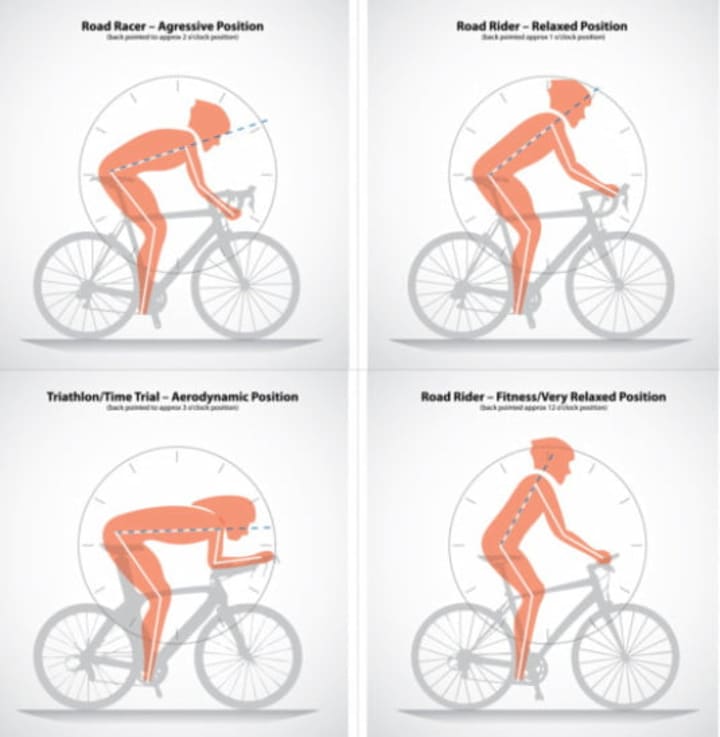
The R7's riding position strikes a careful balance between sporty aggression and daily usability:
- Clip-on handlebars mounted below the triple clamp
- Rear-set footpegs (but not extreme)
- Slim fuel tank for easy knee grip
- Comfortably padded seat (31.7-inch seat height)
While clearly sport-oriented, the ergonomics are less extreme than true supersport machines. Most riders will find they can manage 2-3 hours in the saddle before needing a break. The narrow profile between the knees and relatively low weight make the bike easy to manage at slow speeds and in traffic.
Electronics and Features: Purposefully Simple
Yamaha has kept the electronics package straightforward:
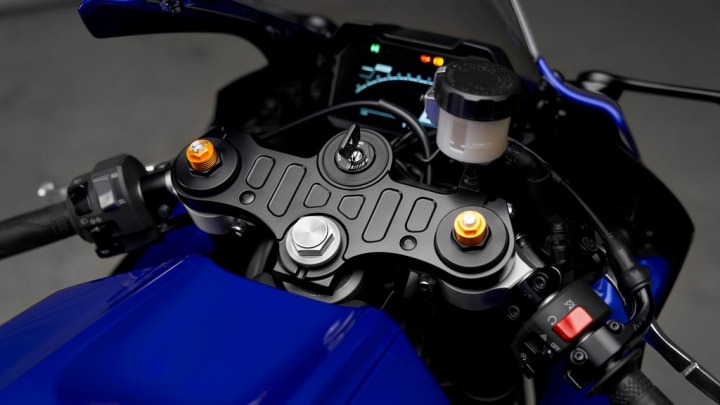
- Full LCD instrument display
- Gear position indicator
- Shift light
- ABS (non-switchable)
Notably absent are riding modes, traction control, or IMU-based systems found on more expensive bikes. This simplicity keeps costs down and weight low, putting focus squarely on the riding experience. The LCD dash provides all essential information clearly, including a large analog-style tachometer that's easy to read at a glance.
Styling and Design: Pure YZF-R DNA
The R7's aesthetics follow Yamaha's latest R-series design language:
- Dual LED headlights with aggressive "eyes"
- Full fairing with functional air intakes
- Compact tail section with LED lighting
- Available in Icon Blue, Performance Black, and Yamaha Black color schemes
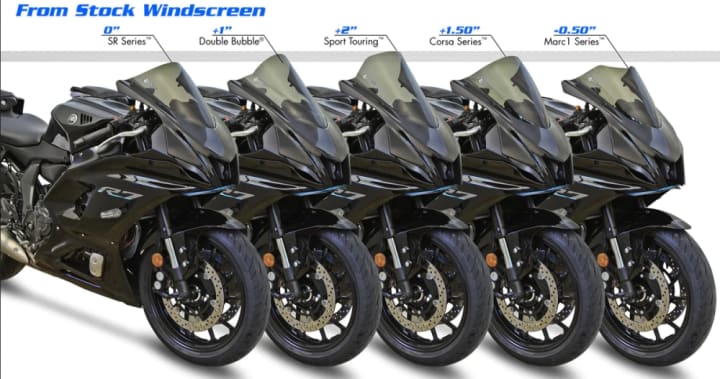
Every design element serves a purpose, from the wind-cheating fairing to the carefully shaped fuel tank that facilitates proper body positioning. The overall look is unmistakably Yamaha R-series, with sharp lines and an aggressive stance that looks fast even standing still.
Real-World Riding Impressions
On the road, the R7 shines as an engaging all-rounder. The torquey engine makes commuting effortless, with enough midrange punch to easily overtake traffic. The light clutch and smooth throttle response make stop-and-go riding manageable, while the narrow profile allows easy filtering through traffic.
When the roads get twisty, the R7 truly comes alive. The combination of accessible power, sharp handling, and communicative chassis gives riders confidence to push harder. You can carry impressive corner speed thanks to the stable chassis, and the engine's strong midrange means you're never caught out of the powerband.
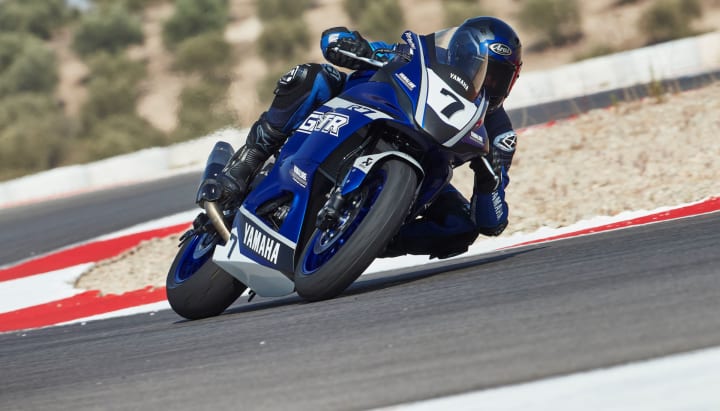
Track day riders will appreciate how easy the R7 is to ride at pace. While it lacks the outright power of 600cc supersports, its torquey nature makes it faster out of corners and easier to ride consistently. The bike forgives mistakes and rewards smooth inputs, making it an excellent tool for developing track skills.
Competition and Value Proposition
At $9,199, the R7 sits in a competitive segment:
- Aprilia RS 660 ($9,999) - More advanced electronics but higher maintenance
- Kawasaki Ninja 650 ($7,899) - More street-focused but less exciting
- Triumph Daytona 660 ($8,995) - Smoother triple but less track-focused
The R7's value lies in its perfect balance of performance, handling, and everyday usability. It's significantly more engaging than standard middleweights while being more approachable than full supersports.
Conclusion: Who Should Buy the R7?
The 2024 Yamaha YZF-R7 is ideal for:
- Intermediate riders looking to upgrade from beginner bikes
- Experienced riders wanting a fun backroad/track day weapon
- Commuters who want sporty performance without discomfort
Track day enthusiasts on a budget
With its intoxicating blend of accessible performance, sharp handling, and stunning looks, the R7 represents one of the most compelling sportbike propositions in the middleweight category. It's a bike that rewards skill development while remaining enjoyable at any pace.
About the Creator
Keep reading
More stories from Shahzad Khan and writers in Wheel and other communities.
Ford Maverick Hybrid
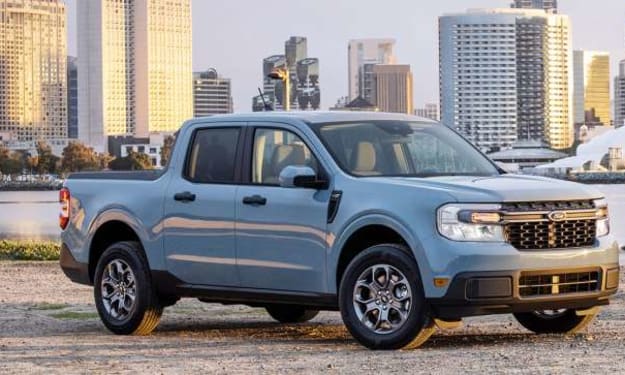
Ford Maverick Hybrid Front View The Ford Maverick Hybrid is redefining what a pickup truck can be—combining affordability, fuel efficiency, and practicality in a way no other truck does. With a starting price under $25,000, it’s the most budget-friendly hybrid pickup on the market, making it an ideal choice for cost-conscious buyers who still want versatility. Whether you're a city commuter, a weekend DIYer, or a small business owner, the Maverick Hybrid delivers real-world utility without the usual truck compromises.
By Shahzad Khan7 months ago in Wheel
A Historic Waterwheel Returns to Family Roots Along the Riverbank
The story of a Historic Waterwheel Returns to Family Roots is more than a tale of wood and water. It is a story of memory, family honor, and deep love for local history. For many years, the old waterwheel stood silent near the bend of a quiet river. Time and storms had worn it down. The wood had faded. The iron had rusted. Yet the spirit of the wheel never faded in the hearts of the family who once built and cared for it.
By Grady Gaston6 days ago in Wheel
Why Elon Musk Keeps Cutting Tesla Prices And What It Means For The Future Of EVs
The discounts keep coming, the stock keeps shaking, and the EV future suddenly feels a lot less predictable I remember the first time I realized Tesla had quietly dropped the price of a car I’d been obsessively speccing out.
By abualyaanart3 days ago in Wheel
Belle of the Bayou
Bad move, cher. Not just the slip of her kitten heel on the rainy February cobblestones in the Fourth Ward. She got caught snooping. Detective Deleon clucked and strutted like a rooster in his rush to clear her from the scene, waving cigar smoke to and fro as he gesticulated amid the thick air of the speak easy. An experienced crime reporter, Marie knew better than to let the coppers catch her on the wrong side of the line, but curiosity had gotten the better of her.
By Maia Gadwall the metAlchemist7 days ago in Fiction



Comments
There are no comments for this story
Be the first to respond and start the conversation.