
Why Food-Production Lines Should Treat Tool Balancers as Hygiene and Ergonomics Essentials
How suspended tools help food manufacturers improve cleanliness, worker safety, and production consistency

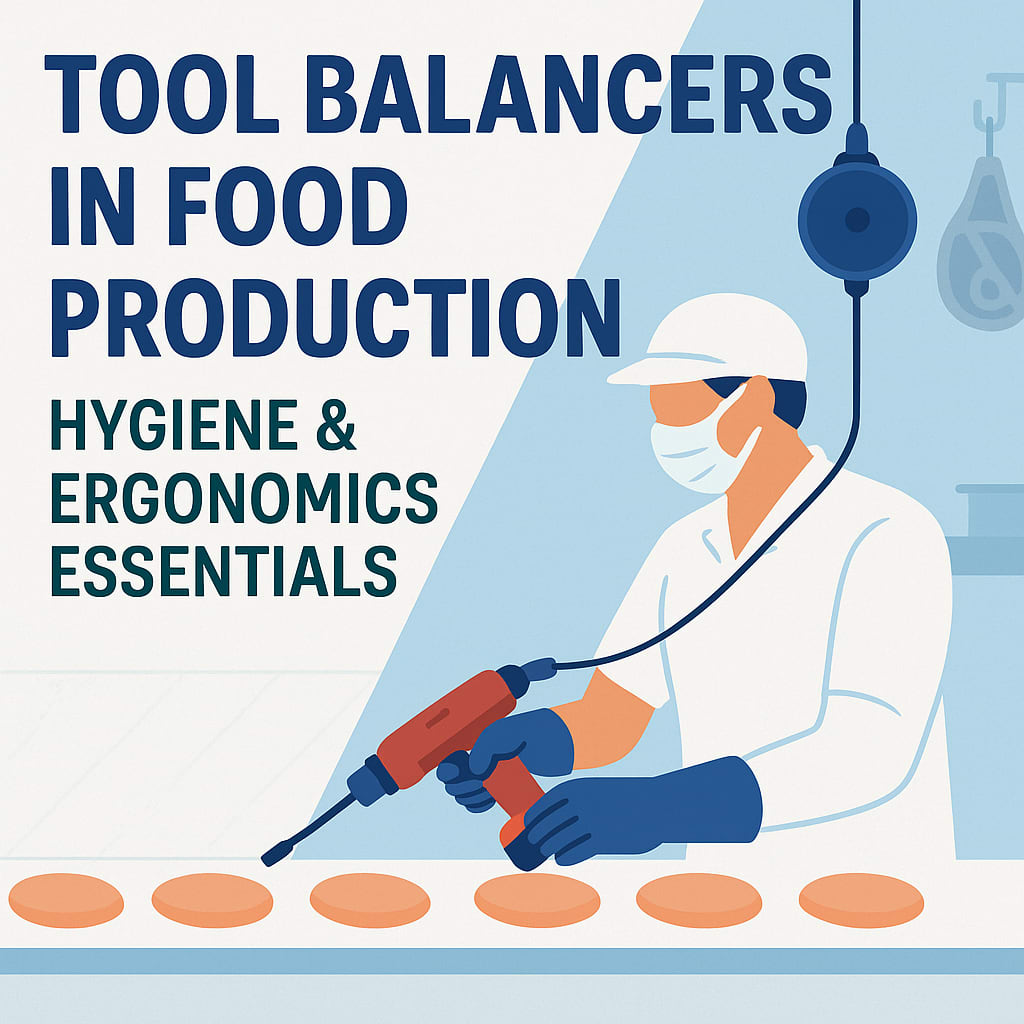
Food production is not only about speed. Every line must balance hygiene, worker safety, and consistent output. While most facilities invest heavily in sanitation systems, protective clothing, and automated equipment, one simple solution is often overlooked: tool balancers.
Tool balancers are commonly viewed as convenience tools. In reality, they support cleaner workspaces, healthier operators, and more reliable production. In food-processing environments, these benefits make them far more than optional accessories.
Cleaner Workstations Support Better Hygiene
In food production, contamination risks exist everywhere. Tools that are placed on work surfaces, tables, or floors can easily pick up unwanted residue. Each time a tool is picked up again, the risk increases.
Tool balancers keep tools suspended when they are not in use. This limits unnecessary contact with surfaces and helps maintain a cleaner environment. Operators always know where the tool is, and it remains in a controlled position instead of resting on shared areas.
Overhead suspension also reduces clutter. Hoses, cords, and cables stay off the floor and away from food contact zones. This makes cleaning faster and more effective, especially during routine washdowns. A clear workstation is easier to sanitize and inspect, which supports stronger hygiene practices across the line.
Reduced Physical Strain for Operators
Food-processing tasks are repetitive by nature. Workers often use the same tools for hours at a time while standing in fixed positions. Holding the weight of a tool throughout a shift places constant strain on shoulders, wrists, and the lower back.
Tool balancers absorb the weight of the tool. Operators guide the tool rather than carry it. This allows for more natural movements and reduces muscle fatigue. Over time, this can help lower the risk of repetitive strain injuries and other musculoskeletal issues.
When fatigue is reduced, workers maintain better focus. This leads to steadier hands, fewer mistakes, and safer tool handling. A workforce that feels less physical stress is also more likely to remain engaged and productive throughout long shifts.
Better Control Leads to More Consistent Output
Consistency is critical in food production. Whether cutting, trimming, fastening, or packaging, small variations can affect product quality and waste levels.
Tool balancers improve control. Because the tool feels lighter and easier to maneuver, operators can work with greater precision. Cuts are cleaner, movements are smoother, and results are more uniform. This consistency helps maintain quality standards and reduces the need for rework.
Tool balancers also help organize workflow. Tools return to the same position after each use. This reduces wasted motion and saves time. Over a full production day, these small efficiencies add up and support steady throughput.
Improved Safety on Busy Production Floors
Food-processing floors are often wet and fast-moving. Loose tools, hoses, and cables increase the risk of slips, trips, and dropped equipment. These hazards can lead to injuries and unplanned downtime.
By keeping tools suspended, balancers help keep floors clear. Many systems are designed to hold tools securely even if the operator releases their grip. This reduces the chance of tools falling or swinging unpredictably.
A safer workspace protects not only individual operators but also coworkers nearby. Fewer hazards mean fewer interruptions and a more stable production environment.
A Practical Investment With Long-Term Value
Installing tool balancers requires planning and an initial investment. However, the long-term value is significant. Reduced injuries can lead to lower absenteeism and fewer compensation claims. Improved ergonomics often result in higher worker satisfaction and lower turnover.
Cleaner workstations support hygiene audits and quality control. More consistent output reduces waste and protects margins. When viewed together, these benefits often outweigh the upfront cost.
Final thoughts
Food-production lines demand precision, cleanliness, and endurance. Tool balancers quietly support all three. They help maintain hygienic workspaces, protect worker health, and improve consistency on the line.
Rather than treating tool balancers as optional add-ons, food manufacturers should view them as hygiene and ergonomics essentials. When integrated thoughtfully, they contribute to safer operations, better quality, and more resilient production systems.
About the Creator
Deborah Ferguson
Content Creator.
Keep reading
More stories from Deborah Ferguson and writers in Wheel and other communities.
10 Essential IT Certifications for 2026
If you’ve been thinking about leveling up your IT career in 2026, certifications are still one of the fastest ways to stand out. Tech roles are evolving fast. AI, cloud, cybersecurity, and data skills are no longer “nice to have”. They’re essential. But the real question is this:
By Deborah Fergusonabout a month ago in Education
Top 10 Pickup Trucks Every Aussie Should Consider in 2026
Choosing the right pickup truck can make a huge difference in daily life, whether you’re hauling gear for work, towing a trailer, or exploring the Australian outback. With 2026 just around the corner, several models are standing out for their performance, reliability, and features. In this guide, we’ll cover the top 10 pickup trucks that every Aussie should consider this year, helping you to pick the right vehicle for your daily life and long-term plans.
By Alec Johnson4 days ago in Wheel
Car Rental in Dubai for Tourists vs Residents: Key Differences
Both can legally rent cars, but the documentation required, insurance, rental costs, deposit requirements and legal obligations are very similar. Tourists often rent short term with more deposits and less insurance flexibility, while residents are at a lower rate, monthly rent, and better insurance. Understanding these differences can save you hidden charges, fines and coverage gaps.
By Sarath Menon4 days ago in Wheel
Center Stage with Paul Stewart
*** I'm keen to republish the interviews I did for my series with Vocal creators. It's been a few years and I thought it might be nice to revisit these wonderful conversations. I'll be releasing them one at a time for a few weeks/months.
By Heather Hubler3 days ago in Interview



Comments
There are no comments for this story
Be the first to respond and start the conversation.