
The Operational and Economic Benefits of Mobile Crusher
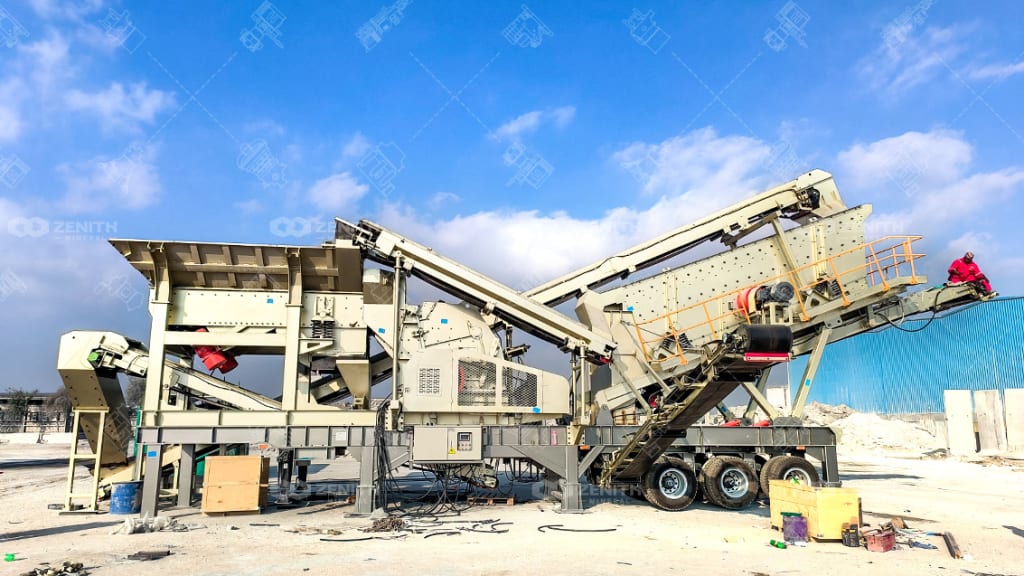
As self-contained, wheeled crushing units, mobile crushers bring unparalleled advantages to streamline on-site material flows. This article examines how the C&D recycling and mining industries are optimizing operations and reducing costs through the use of mobile crushers.
Introduction
Industries such as construction and demolition (C&D) waste recycling and mining require efficient material handling to turn raw feedstocks into saleable products in a profitable manner. A critical step is crushing processes to size reduce oversized materials. Traditionally, stationary crushing plants have been used, which involve hauling materials over long distances. This leads to issues like wasted time and fuel as well as inconsistent quality due to delays.
To address these productivity bottlenecks, mobile crusher has emerged as a flexible solution that can be deployed closer to excavation sites. As self-contained, wheeled crushing units, mobile crushers bring unparalleled advantages to streamline on-site material flows. This article examines how the C&D recycling and mining industries are optimizing operations and reducing costs through the use of mobile crushers.
Optimizing C&D Recycling with Mobile Crushers
In the C&D recycling industry, construction debris from demolition sites must be processed to extract recyclable and saleable fractions like aggregates, sand, gravel and reused concrete. Traditionally, loose debris would be transported long distances from job sites to centralized stationary crushing facilities. This tie-ups trucks, increases fuel use and carbon footprint while degrading material quality.
Mobile crushers provide a sustainable alternative to directly size reduce mixed debris on site before separation and processing downstream. Their compact footprint allows setting up close to excavators within construction zones with minimal site preparation. Crushing is done in one go, minimizing hauls and sorting only optimized sized product fractions right away.
Some key advantages of on-site mobile crushing include:
- Reduced transportation - Crushing debris where it's produced eliminates long hauls, freeing up trucks for more loads daily.
- Continuous workflow - Crushers can move with demolition crews, keeping operations flowing 24/7 versus waiting at fixed plants.
- Scalable output - Adjusting crusher configurations matches changing input mix/volumes, preventing over- or under-processing.
- Lower carbon footprint - Shorter roundtrips and optimized loading shrink environmental impact versus central plants.
- Safer working - Removing large chunks before sorting screens improves worker safety conditions.
- Higher yields - Quick processing while fresh minimizes material degradation/loss versus delays at centralized facilities.
- Ability to crush difficult debris - Mobile plants can easily handle mixed/contaminated loads challenging for stationary machinery.
These advantages have proven that up to 30% more annual tonnage can be profitably processed versus traditional methods according to industry case studies. Reduced downtime means higher material and cost savings for recyclers.
Optimizing Mining Operations with Mobile Crushers
In surface mining applications, maximizing resources extracted from quarries, pits and mines is critical to profitability. Traditionally, excavators load raw material onto haul trucks which transport overburden and ores over long distances to stationary crushing plants located far from active mining faces.
This centralized static approach leads to various inefficiencies including double-handling, wasted haul cycle times and scale inflexibilities preventing continuous output. Mobile crushers provide an effective on-site solution to streamline material flows from extraction to final sizing. Their compact design means multiple units can work together in close proximity without occupying valuable mining space. Some key advantages of deploying mobile crushers in mining sites include:
- Eliminating waste - Crushing is done where material is mined, sizing it optimally for efficient extraction in one pass.
- Continuous workflow - Mobile units moved with mining advance, preventing downtime versus waiting at stationary plants.
- Scalable production - Capacity matches variable ore grades/stripping ratios to avoid over- or under-processing volumes.
- Lower operating costs - Fuel savings from shorter hauls and ability to downsize haul truck fleets deliver ongoing savings.
- Faster ROI - Mobile plants see quicker returns than time/space-intensive stationary alternatives.
- Improved safety - Safer on-site working conditions versus haul road traffic to centralized plants.
With higher payloads and fewer double handling steps, mining companies typically see a 15-25% increase in resource recovery volumes by using an integrated mobile crushing system. New technology like onboard scanning also helps pre-process ores right in quarries.
The Rise of Intelligent Mobile Crushing
Technological advancements are further enhancing the processing capabilities of mobile crushers. Intelligent control systems now monitor fleet health, track production/fuel usage and remotely manage operations from central command centers. Wireless connectivity allows remote access and operations/maintenance support to maximize uptime.
Lowering Operating Costs through Technology
Advanced digital solutions are helping mobile crushing fleets become ever more cost-efficient. Fleet management platforms using telematics track equipment locations, utilization rates, fuel consumption and planned/unplanned downtime. This provides insights to right-size fleets based on spatial/seasonal demand changes.
Predictive maintenance uses sensor data streams to detect anomalies and sends alerts to perform just-in-time repairs during scheduled site visits. This avoids potentially costly breakdowns and expensive emergency roadside repairs. Digital twins simulate operations to test optimization strategies before implementation such as sensor upgrades, battery chemistries or duty cycle alterations.
Together, intelligent monitoring and predictive maintenance lower operating expenses through:
- Higher equipment availability (~98% uptime for mobile crushers)
- Reduced fuel waste via optimized loading/speed/production schedules
- Lower maintenance/repair costs with diminished downtime
- Extended component lives through just-in-time part replacements
- Rightsizing of new purchase/rental needs based on analytics
For large operations, these technologies help save 5-15% on total cost of ownership annually according to industry studies. Remote troubleshooting eliminates much travel.
Maximizing ROI through Flexible Contract Crushing
Besides owning mobile crushing fleets, an asset-light operational model gaining popularity is renting out plants on contract to maximize equipment utilization. This offers clients project-based access without large upfront capital costs. Contractors provide turnkey solutions for site setup, operations and post-processing.
Benefits for recyclers/miners include:
- Scalableshort/long term crushing needs
- Performance-based pricing for tonnage crushed
- Reduced logistics/staffing requirements
- Access to latest plant technologies
- No large capital tied to equipment during slack periods
Contractors benefit through:
- Higher plant utilization rates (>300 days/year utilization)
- Steady revenue streams from multi-site contracts
- Lower unit costs with optimized fleet maintenance
- Long term client relationships and recurring business
Win-win models see contractors guaranteeing throughput while clients pay a fixed rate per tonne processed. Remote monitoring ensures SLAs. This flexible contracting model is ideal during peaks or for one-off large volume short jobs. It has accelerated the shift to client-centric mobile crushing as the new industry standard.
Conclusion
Mobile crushing equipment has revolutionized processing within construction and mining industries through unmatched flexibility and ability to optimize material flows from source to stockpile. As the benefits of on-site mobile crushing become clearer, stationary plants are increasingly being decommissioned in favor of smarter, scalable modular systems.
Ongoing digital innovations now take it a step further through autonomous operations, predictive maintenance and remote command centers. Paired with pay-per-use contracting models, these developments herald a future of ever higher productivity at lower operating costs across various industries through smarter flexible crushing at the point-of-need. When combined with parallel materials handling advancements, mobile crushing will continue playing a transformational role in process optimization well into coming decades.
About the Creator
Road Trips and the Reality of Animal Collisions
Road trips — what can be a better way to enjoy a holiday? Get together with your family or friends, pack all your things in your SUV or a van, load up some music you like, and set off for a big adventure. Driving through highways, watching the scenery change with little towns and mountains flying by.
By Michal Grayen2 days ago in Wheel
My First Time Skiing and I Got Lost, Alone, in the French Alps
Looking back, I can trace some of my life’s biggest adventures to a simple action from my sister. She’d introduced me to Tommy (a very long time ago), a colleague of hers, who had overshared his penchant for Italian-looking women, and I ticked that box.
By Chantal Christie Weiss2 days ago in Humans



Comments
There are no comments for this story
Be the first to respond and start the conversation.