
Tesla recalling more than 360,000 cars
over potential crash risk, agency says
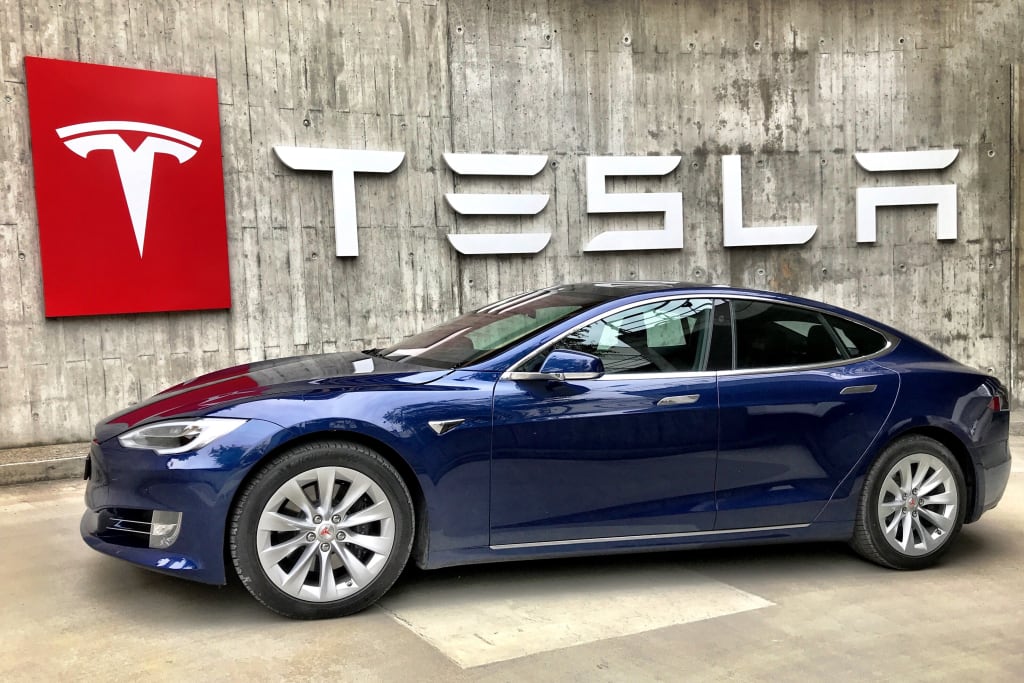
Tesla is recalling over 360,000 cars due to concerns that the Full Self-Driving (FSD) Beta software could increase the risk of crashes. The recall affects various Model S, Model X, Model 3, and Model Y vehicles. The National Highway Traffic Safety Administration (NHTSA) announced the recall on Thursday, stating that the FSD Beta system may allow the vehicle to act unsafely around intersections. For example, it could travel straight through an intersection while in a turn-only lane or enter a stop sign-controlled intersection without coming to a complete stop. The agency further added that the software could allow a vehicle to exceed speed limits or travel through intersections in an unlawful or unpredictable manner, thus increasing the risk of a crash.
Tesla plans to offer a software update free of charge to its customers to fix the problem. While the FSD software does not make a car fully autonomous, drivers are still required to remain focused on the road and keep their hands on the driving wheel. The Autopilot system provides suggestions for lane changes and other maneuvers to optimize a trip and offers navigation to and from user-provided destinations.
Tesla has faced a significant amount of scrutiny over its advertising of its self-driving technology, as well as the safety risks associated with the self-driving capability. The FSD software and Autopilot features have been marketed as fully autonomous, which has raised concerns. The California Department of Motor Vehicles has accused the company of deceptive advertising, alleging that Tesla's advertising of the products is misleading.
Last year, Senators Ed Markey and Richard Blumenthal called on the Federal Trade Commission (FTC) to investigate Tesla's advertising of the FSD software. The senators believe that Tesla's marketing has overstated the capabilities of its vehicles, and these statements increasingly pose a threat to motorists and other users of the road. Tesla senior director of public policy, Rohan Patel, responded to the letter, saying that the Autopilot and FSD Capability features enhance the ability of Tesla's customers to drive safer than the average driver in the US.
Data released in June by the NHTSA revealed that Tesla vehicles operating under the Autopilot system were involved in 273 reported crashes over roughly a yearlong period, with Tesla vehicles comprising almost 70% of the crashes involving advanced driver-assisted systems over that period.
Despite the criticism, Tesla has raised the price of its Full Self-Driving software to $15,000 in August. The increase came as Tesla expanded the availability of the FSD Beta software, which is now available to all drivers with a Tesla car equipped with FSD hardware, subject to an application process.
The recall is a significant setback for Tesla, which has been a leader in the development of self-driving cars. It highlights the challenges that the company and other car manufacturers face in developing autonomous vehicles that are safe and reliable.
In conclusion, the recall of over 360,000 Tesla cars equipped with Full Self-Driving Beta software or pending installation is a significant development that underscores the challenges of developing safe and reliable autonomous vehicles. While Tesla has been a leader in the development of self-driving technology, the recall and associated criticism suggest that the company still has work to do to ensure that its vehicles are as safe as possible for drivers and other road users.This isn't the first time that Tesla has issued a recall for its vehicles. In fact, the company has had to recall vehicles several times in the past for issues ranging from seat belt defects to software glitches. Despite these setbacks, Tesla's stock price has continued to soar, and the company remains a favorite among investors.
However, the recent concerns about the safety of its self-driving technology and the way the company markets it have been cause for alarm for many, including regulators and consumer safety advocates. As the use of autonomous vehicles becomes more prevalent, it is essential that safety concerns are taken seriously and addressed promptly. While Tesla has promised to offer a software update to fix the issue, it remains to be seen if this will be enough to satisfy those who have raised concerns about the safety of the FSD software.
Tesla's recent recall serves as a reminder of the risks and challenges associated with developing self-driving technology. While the promise of autonomous vehicles is tantalizing, it is essential that safety remains the top priority as companies continue to innovate in this area. With proper attention to safety and effective regulation, however, self-driving vehicles could ultimately lead to a future with fewer accidents and greater mobility for all.
About the Creator
Haider Zaidi
Penning stories that evoke emotion, inspire change, and ignite the imagination, I am a wordsmith on a mission to craft powerful narratives that captivate and impact the world. With a passion for storytelling and a commitment to creativity.
Keep reading
More stories from Haider Zaidi and writers in Wheel and other communities.
Tornado threat leaves Southeast
The National Weather Service (NWS) is calling it a trifecta of destruction as they believe that at least three tornadoes hit the state. Teams will be out on Friday to survey the damage and assess the impact of this deadly storm. As the NWS works to get a clearer picture of what happened, the northern end of the system is still causing chaos in the Great Lakes region.
By Haider Zaidi3 years ago in Earth
5 Best Food Choices at Auto Shows
Attending an auto show is an exciting experience filled with gleaming vehicles, innovative technology, and hours of walking through massive exhibition halls. With so much to see, you need the right fuel to keep your energy levels high. Here are five of the best food choices to enjoy during your next auto show visit.
By Karter Odin5 days ago in Wheel
Self-Driving Cars
If you watched the 2004 Will Smith film ‘I Robot’, you’ll know that a minor plot point is that cars in this future are, by default, self-driving. They can still be driven manually, but this is considered a risky choice which only Smith’s character chooses to do, due to being a fan of such ‘retro’ choices. When his car is wrecked during an attack late in the film, his boss assumes that he crashed due to driving manually (the one time in the film he actually wasn’t). At the time of the film’s release, self-driving cars must have seemed hugely futuristic to help to sell the future setting.
By Joe Morgan5 days ago in Wheel
A More Human Vocal
When we launched Vocal nearly a decade ago, the world was a very different place. LLMs did not exist, and stories were created one at a time by people sitting down to write, revise, and share something personal. Many of our assumptions about publishing, trust, and participation were built for a world where effort and output were inseparable.
By Justin @ Vocal4 days ago in Resources



Comments
There are no comments for this story
Be the first to respond and start the conversation.