
Save Money with Simple Tire Maintenance Tips
Know tire maintenance tips to keep your vehicle safe, save money on fuel, and extend tire life. Regular tire repair services ensures better performance.

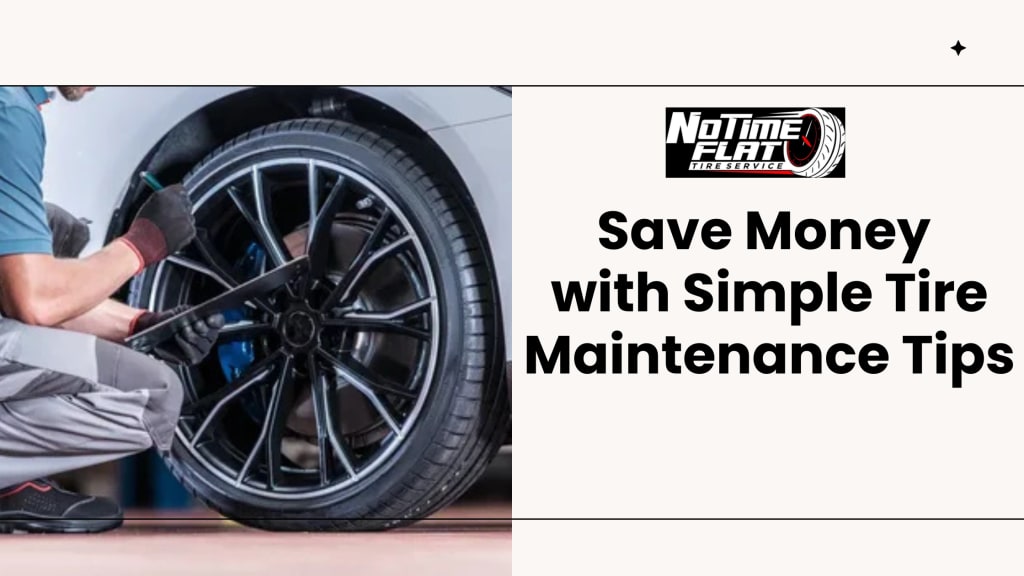
Tires are important to your vehicle, serving as the only contact between you and the road. They play an important role in ensuring your safety, vehicle performance, and overall driving experience. Proper tire maintenance keeps you safe and helps you save money in the long run.
Well-maintained tires can last longer, improve fuel efficiency, and enhance your vehicle's handling. In this blog, we'll examine how simple care with tire repair services can boost performance, reduce risks, and ultimately help you save money over time.
Knowing The Importance of Tire Maintenance
Tire maintenance is essential for several reasons. First and foremost, it greatly impacts safety. Worn or improperly maintained tires lead to accidents, as tires that are not inflated correctly can result in blowouts or loss of control while driving.
Regular maintenance with tire services ensures that your tires are in fine condition, reducing the risk of accidents. Tire maintenance affects fuel efficiency; under-inflated tires can reduce your vehicle's fuel efficiency by up to 20%, according to the U.S. Department of Energy. This translates to savings at the pump.
Moreover, proper maintenance can extend the life of your tires, preventing premature wear and the need for costly replacements. Tires are a substantial investment; maintaining them can help you get the most out of that investment. Well-maintained tires also contribute to better handling and performance of your vehicle, providing better traction, stability, and braking, thus enhancing your overall driving experience.
By maintaining your tires, you can avoid unexpected costs associated with emergency repairs or replacements, as regular maintenance helps catch issues before they become serious problems.
Keep Your Tires Properly Inflated
One of the most meaningful aspects of tire maintenance is ensuring that your tires are properly inflated. Under-inflated tires can lead to poor handling, improved tire wear, and reduced fuel efficiency. Check your tire pressure at least once a month and before long trips. Use a reliable tire pressure gauge and measure the pressure when the tires are cold, meaning they haven't been driven on for at least three hours. Most vehicles have a sticker located on the driver's side door jamb that lists the recommended tire pressure for the front and rear tires.
According to the National Highway Traffic Safety Administration (NHTSA), 70% of vehicles have at least one tire with an inflation problem. Under-inflated tires increase fuel consumption by as much as 20%, while over-inflated tires can lead to excessive wear and reduced traction. Always refer to the vehicle's information placard for the correct tire pressure, not the max pressure indicated on the tire sidewall.
Rotate Your Tires Regularly
Rotating your tires is another essential maintenance step that can extend the life of your tires and improve performance. The weight distribution of your vehicle causes different wear patterns on each tire, so rotating them helps ensure even wear. Rotating your tires every 5,000 to 8,000 miles or every six months is generally recommended. If you notice uneven wear or a specific tire wearing out faster than others, consider rotating them sooner.
Consult your vehicle's owner's manual for the recommended rotation pattern. Most commonly, the front tires are moved to the back and the back tires are moved to the front, often switching sides in the process. If your tires show uneven wear, check and correct your alignment before rotating.
Get a Wheel Alignment
Proper wheel alignment is important for even tire wear and optimal vehicle handling. Misalignment can occur due to daily driving impacts, such as hitting potholes or curbs, leading to uneven tread wear and compromised safety. Getting a wheel alignment at least once a year or every 25,000 kilometers is advisable.
Besides that, have your alignment checked if you notice your vehicle pulling to one side or if you experience vibrations while driving. Regular alignment checks can improve your vehicle's handling, increase fuel efficiency, and extend the life of your tires.
Make Sure Your Tires Are Balanced
Tire balancing services ensure that the weight of the tire and wheel is evenly distributed. Unbalanced tires lead to uneven tread wear, vibrations, and a rough ride.
It's recommended to have your tires balanced whenever you install a new set of tires, rotate them, or if you notice vibrations while driving. Properly balanced tires provide a smoother ride, improve handling, and extend the life of your tires and suspension components.
Frequently Inspect Your Tires
Regular inspections are key to maintaining tire health. During an inspection, look for signs of wear and tear like cracks, bulges, or punctures. Check for any visible damage and ensure that the tread depth is adequate.
A quick way to check tread depth is to use the penny test: insert a penny into the tread groove; if you can see the top of Lincoln's head, it's time to replace your tires. Consider having your tires inspected by a professional tire service provider at least once a year, as they can assess the overall condition of your tires and make necessary repairs or replacements.
Check Your Tire's Inflation Regularly
In addition to checking your tire pressure monthly, monitoring for slow leaks or changes in pressure due to temperature fluctuations is essential. If you notice a tire constantly losing air, get it inspected by tire repair shop experts for punctures or damage.
You can also perform a simple soap-and-water test to detect leaks by applying soapy water to the tire; if bubbles form, you have a leak. Keeping a tire gauge handy in your vehicle allows you to inspect your tire pressure easily whenever needed.
Adjust Your Driving Habits
Your driving habits can largely affect tire life. Adopting safer driving practices can help extend the lifespan of your tires. Avoid aggressive driving habits like rapid acceleration and hard braking, as these can wear down your tires faster.
Be mindful of your speed and the weight you carry in your vehicle. Look ahead to avoid potholes, curbs, and other road hazards, as hitting these obstacles can damage your tires and misalign your wheels.
Get Expert Assistance with Tire Services!
Proper tire maintenance is important for your safety, vehicle performance, and financial well-being. Following these simple tire maintenance tips can enhance your driving experience, save money on fuel and replacements, and reduce the risk of accidents.
Regularly checking tire pressure, rotating tires, obtaining alignments, balancing, inspecting, and adjusting driving habits are all critical steps in maintaining your tires. When you need tire services—fixing a flat, aligning or balancing your tires, or other maintenance—trust the experts to get you back on the road quickly. They will provide the necessary parts and services to keep your tires in shape.
Regular tire maintenance improves your safety and saves you money in the long run. Remember, well-maintained tires will take you further on the road—both in terms of distance and savings. Contact your mobile tire shop experts to guarantee your tires are well cared for! By taking these proactive steps, you can enjoy a safer driving experience and make the most of your investment in your vehicle. Happy driving!
About the Creator
No Time Flat
Top-notch tire services and quality tires at No Time Flat in Jenison, MI. Whether you need tire installations, repairs, or maintenance, we've got you covered.
Keep reading
More stories from No Time Flat and writers in Wheel and other communities.
Essential Checklist of Car Prep for Road Trip on Holiday
The time to plan that much-needed break with a road trip has come! Besides the excitement, you must remember one most crucial step - getting your car ready for the holiday. Riding along the highway with car trouble can quickly turn a dream getaway into a nightmare. But worry not as this blog post involves a checklist on a car prep for road trip so you can focus on developing lasting memories, not dealing with breakdowns.
By No Time Flatabout a year ago in Wheel
5 Best Food Choices at Auto Shows
Attending an auto show is an exciting experience filled with gleaming vehicles, innovative technology, and hours of walking through massive exhibition halls. With so much to see, you need the right fuel to keep your energy levels high. Here are five of the best food choices to enjoy during your next auto show visit.
By Karter Odinabout 7 hours ago in Wheel
Pearl
1980 something. we all hung out at Pearl and you and i were nothing special, or so i thought. i mean we all danced, drenched in our own sweat, our own saline solution of fear, too many beers, shots, laughter, tears, fucks in the bathroom and i don't know when we began to be afraid. do you?
By ROCK aka Andrea Polla (Simmons)7 days ago in Fiction



Comments
There are no comments for this story
Be the first to respond and start the conversation.