
Magnet-Free Induction Motors: A Big Step Toward Reducing Carbon Emissions
Cutting-Edge Electric Motor Reduces Carbon Emissions Without Rare Earth Materials


The global push to reduce carbon emissions has sparked innovation in many industries, and the automotive sector is no exception. In recent years, there has been growing interest in developing electric motors that reduce dependency on rare earth materials, which are often hard to source and expensive to extract. Two companies, Mahle and Valeo, are teaming up to introduce a new type of electric motor, known as the Inner Brushless Electrical Excitation (iBEE) system. This motor promises to reduce lifecycle carbon emissions significantly while maintaining high performance.
The Technology Behind the iBEE System
Mahle, a German automotive supplier, has been working on improving the design of electric motors for several years. In 2021, the company introduced a motor that eliminates the use of permanent magnets, which often rely on rare earth materials. Instead of magnets, Mahle developed a system called the Magnet-free Contactless Transmitter (MCT). This system uses wireless induction to magnetize the rotor, the spinning part of the motor, without the need for physical magnets or brushes.
In traditional electric motors, physical magnets and brushes create electromagnetic fields to power the rotor. However, these components can wear out over time, requiring maintenance. By using wireless induction, Mahle’s MCT design not only removes the need for these parts but also makes the motor more durable and easier to maintain. Additionally, because it uses fewer components, the MCT motor can be built in a more compact and efficient manner.
On the other side of the partnership, Valeo, a French automotive supplier, has been working on magnet-free stators, the stationary part of electric motors, along with advanced control systems. Valeo’s innovative technology includes power-dense hairpin copper winding, which allows their motors to deliver high levels of performance. Valeo has been developing this technology in collaboration with Renault, and it will be part of Renault's E7A motor, which is set to launch in 2027.
A Powerful Collaboration
By joining forces, Mahle and Valeo hope to create a more advanced version of magnet-free motors, combining Mahle’s rotor technology with Valeo’s control systems. Together, they are working on the iBEE system, which is designed for high-performance electric vehicles. The iBEE system is expected to deliver between 220 and 350 kW (295 to 469 horsepower), making it a powerful option for upper-segment vehicles.
In addition to the iBEE system, Mahle and Valeo are also focusing on improving motor cooling. Keeping motors cool is essential for maintaining performance and efficiency. Mahle has already developed an oil cooling system for its SCT motor, a high-performance motor capable of running at over 90% of its peak power for long periods. This cooling system will be adapted to work with the iBEE system to ensure it can perform efficiently under continuous operation.
A Significant Reduction in Carbon Emissions
One of the key benefits of the iBEE motor system is its potential to significantly reduce carbon emissions. Mahle and Valeo aim to cut the carbon footprint of their new motor by over 40% compared to traditional motors that use permanent magnets. This represents a major improvement over the 30% reduction goal that Valeo had set with its earlier E7A motor project.
The reduction in carbon emissions is important not only for the environment but also for the future of electric vehicles. As more countries and companies commit to lowering their carbon emissions, the demand for cleaner, more efficient technologies is growing. Electric motors like the iBEE system, which can deliver high performance without relying on rare earth materials, will play a crucial role in the transition to greener transportation solutions.
The Road Ahead
While the iBEE system is still in development, Mahle and Valeo plan to begin testing their first prototypes by the end of 2024. If successful, the iBEE motor could become a key component of high-performance electric vehicles in the coming years. Its combination of powerful performance, reduced maintenance needs, and lower carbon emissions makes it a promising innovation in the world of electric motors.
As the automotive industry moves towards a future where electric vehicles are the norm, innovations like the iBEE system will be essential for reducing the environmental impact of transportation. Mahle and Valeo’s collaboration highlights the importance of combining expertise to develop cutting-edge solutions that benefit both consumers and the planet.
Conclusion
The iBEE motor system represents a major step forward in the quest to reduce carbon emissions in the automotive industry. By eliminating the need for rare earth materials and offering a more durable, efficient design, Mahle and Valeo are helping to pave the way for a cleaner, greener future. If their efforts prove successful, the iBEE system could become a game-changer in the world of electric motors, delivering powerful performance while significantly cutting down on carbon emissions.
Thank you guys for reading this article. Hopefully you like this information. For more articles follow me.
About the Creator
Keep reading
More stories from Black Rose and writers in Wheel and other communities.
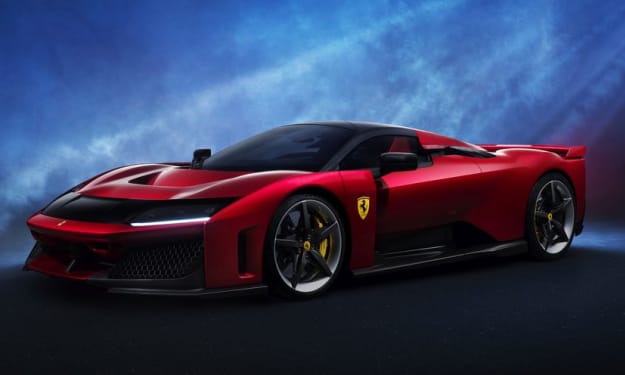
Ferrari’s F80: A Powerhouse on Wheels with Boost Optimization Technology
Ferrari has always been known for producing high-performance, sleek, and iconic sports cars. With the launch of the F80, the automaker has taken it to another level, combining cutting-edge technology and unmatched power to create a driving experience like no other. The F80 is not just another Ferrari; it is the most powerful road car Ferrari has ever produced, and it promises to give drivers an experience that blurs the lines between a race car and a street-legal vehicle.
By Black Roseabout a year ago in Wheel
Road Trips and the Reality of Animal Collisions
Road trips — what can be a better way to enjoy a holiday? Get together with your family or friends, pack all your things in your SUV or a van, load up some music you like, and set off for a big adventure. Driving through highways, watching the scenery change with little towns and mountains flying by.
By Michal Grayena day ago in Wheel


Comments
There are no comments for this story
Be the first to respond and start the conversation.