
How to Identify Hidden Damages in Vehicles in Auctions - A Buyer's Guide
How to Avoid Costly Surprises and Spot Hidden Damage Before You Bid

Online car auctions offer an exciting opportunity to buy vehicles at competitive prices. But what if the car that looks perfect on your screen turns out to have hidden damage? Many buyers have experienced the frustration of discovering costly issues only after the auction ends. Hidden problems like flood damage, frame repairs, or major mechanical faults can turn your dream buy into a nightmare.
The key to avoiding costly surprises at car auctions is knowing how to spot hidden damage before you place a bid. Through careful research, thorough inspection, and understanding the vehicle’s background—including whether it originated from a vehicle donation—you can steer clear of expensive mistakes and move forward with confidence in your purchase.
Key Takeaways
- Always research the vehicle’s history using reliable tools before bidding.
- Use professional or in-person inspections to uncover hidden mechanical or structural issues.
- Understand common signs of damage that may not be obvious in listing photos.
- Ask specific, detailed questions to clarify any concerns about a vehicle’s condition.
- Review auction terms regarding vehicle conditions, return policies, and inspection periods.
Why Hidden Damages Are Common in Auctions
Vehicles at auctions often come from repossessions, insurance claims, trade-ins, or fleet liquidations. While many are in good condition, others may have sustained damage from accidents, floods, or mechanical neglect. Sellers don’t always disclose the full history or may provide only limited details.
Online listings can be misleading. Photos might be outdated or carefully taken to hide imperfections. Some issues, like internal engine problems or frame repairs, aren’t visible in pictures. That’s why identifying hidden damages before bidding is essential.
Step-by-Step Guide to Spotting Hidden Damages
1. Check the Vehicle History Report
Before anything else, run a thorough vehicle history report using the VIN. This report can reveal:
- Accident history
- Previous ownership
- Salvage or rebuilt titles
- Odometer rollbacks
- Flood or fire damage
Even if the car looks flawless, a history report can uncover red flags. Be cautious with vehicles that have unclear or missing history details.
2. Inspect Listing Details Closely
Review every part of the auction listing carefully. Look beyond the make, model, and year. Focus on:
- Discrepancies between mileage and wear (e.g., worn pedals with low miles)
- Signs of poor repairs in photos (uneven paint, mismatched panels)
- Lack of undercarriage or engine bay photos
- Vague or overly positive descriptions without detail
If photos look too perfect or the seller avoids specifics, consider it a warning sign.
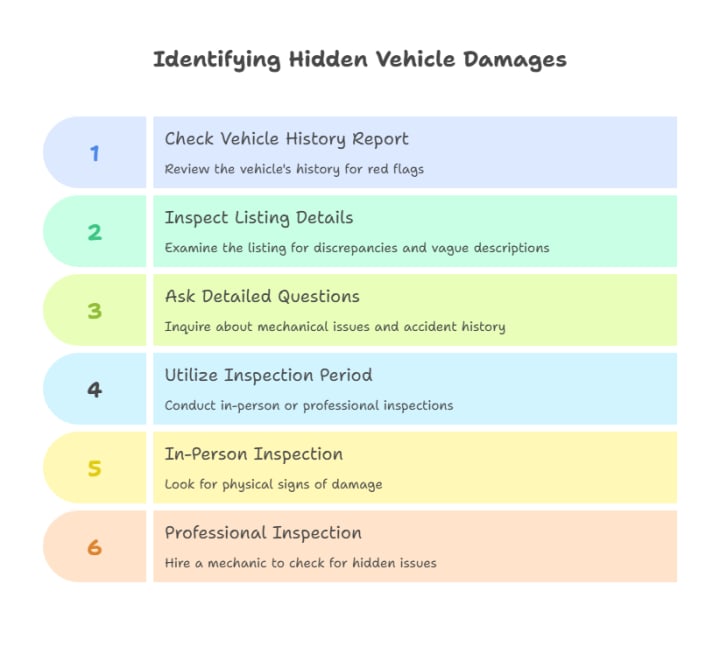
3. Ask the Right Questions
Don’t hesitate to reach out with detailed questions. Ask about:
- Known mechanical issues
- Recent repairs or replaced parts
- Accident history
- Frame or suspension damage
- Rust, leaks, or warning lights
If answers are evasive or inconsistent, proceed with caution. Reliable sellers are transparent.
4. Utilize the Inspection Period
Most auctions offer limited inspection windows before bidding. Use this time to your advantage:
In-Person Inspection
If possible, see the car yourself. Look for:
- Uneven gaps between body panels (indicating prior accidents)
- Paint overspray or mismatched colors
- Musty smell inside (may indicate water damage)
- Warning lights on the dashboard
- Fluid leaks under the vehicle
- Rust in unusual places (under carpets, in the trunk)
Professional Inspection
If you can’t attend in person, consider hiring a mechanic or inspection service. A trained eye can catch various mechanical issues, like:
- Frame misalignments
- Hidden engine problems
- Transmission wear
- Electronic system failures
Investing in a pre-bid inspection can save thousands in future repairs.
Common Hidden Damages to Watch For
Frame Damage
Even minor accidents can twist a vehicle’s frame. Signs include:
- The car is pulling to one side
- Uneven tire wear
- Doors are not closing properly
Frame damage often goes unnoticed until alignment or suspension issues appear.
Flood Damage
Flooded vehicles may look fine, but hide serious electrical or corrosion problems. Watch for:
- Rust in bolts or seat tracks
- Damp carpets or musty smells
- Foggy or water-stained headlights
- Corroded wires or connectors
Many flood-damaged cars are cleaned up and sold at auction — always check the history.
Poor Repairs
Hastily repaired vehicles may pass a glance but fail under pressure. Look for:
- Uneven paint texture or color
- Gaps between body panels
- Misaligned trim or mismatched wheels
These are signs the vehicle might have been in a crash and poorly fixed.
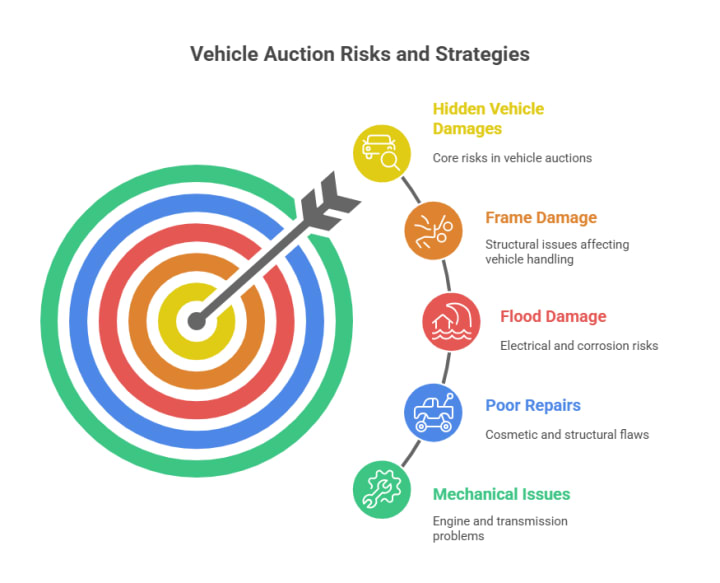
Mechanical Issues
The engine, brakes, and transmission may have problems hidden from photos. Clues include:
- Fresh oil or coolant leaks
- Burnt smell under the hood
- Excessive smoke on startup
- Knocking sounds when idling
Always verify service records when available.
Stay Grounded in Your Bidding Strategy
Hidden damage isn’t always obvious, especially if emotions cloud your judgement. Stay focused with a clear bidding plan:
- Set a firm budget and stick to it
- Walk away if the car’s condition raises doubts
- Don’t bid based on appearance alone
- Avoid bidding wars that may cause you to overpay for a risky vehicle
Know the Auction Terms
Each auction has its policies regarding condition disclosures and buyer responsibilities. Before you bid:
- Read the terms and conditions carefully
- Understand your rights if a major issue is discovered post-sale
- Know what fees are involved (buyer premiums, transportation, taxes)
- Clarify whether the vehicle is sold as-is, which often means no returns
FAQ
1. What are the most common hidden damages in auction vehicles?
A: Frame damage, flood damage, poor collision repairs, and mechanical failures are among the most frequent hidden issues.
2. How can I verify if a vehicle has been in an accident?
A: Use the vehicle’s VIN to access a detailed history report. Look for accident records, title issues, or airbag deployments.
3. Can I inspect a vehicle before bidding?
A: Yes. Most auctions offer a preview period. You can also hire a professional inspection service to assess the car for hidden issues.
4. Why is the vehicle listed so cheaply?
A: Low prices often reflect risks like hidden damages, salvage titles, or mechanical issues. Investigate thoroughly before bidding.
5. What should I do if I win a car with undisclosed damage?
Check the auction’s terms. Most vehicles are sold as-is, so it's crucial to inspect them beforehand. If damage was deliberately hidden, you may have legal recourse, but that can be difficult and time-consuming.
6. Are professional inspections worth it for auction cars?
A: Absolutely. A small inspection fee can save you from buying a car that needs thousands in repairs.
Final Thoughts
Buying a vehicle from an auction can be a smart way to secure your dream car—one that’s free from hidden damages and hassle. When you do your homework, ask detailed questions, and use professional inspection services, you can bid confidently knowing that you’re safeguarding your investment. A car auction in Norfolk, VA, offers a unique opportunity to access a well-vetted selection of vehicles where the process is designed to help you avoid unpleasant surprises.
Many reliable non-profit entities run car auction in this region. So, get prepared, be thorough, and let a Norfolk auction be the gateway to your hassle-free, damage-free dream car.
About the Creator
Angelina Dave
Angelina Dave is a passionate writer and advocate focused on themes of equality, social justice, humanity, and the fight against racism.
Keep reading
More stories from Angelina Dave and writers in Wheel and other communities.
How Data is Driving Automotive Dealership Success
Running a successful car dealership has never been just about selling cars. It’s about understanding what customers want, managing inventory wisely, and making sure every part of the business runs smoothly. Data is helping dealerships make better decisions, reduce waste, and improve customer experiences.
By Angelina Daveabout a year ago in Wheel
Road Trips and the Reality of Animal Collisions
Road trips — what can be a better way to enjoy a holiday? Get together with your family or friends, pack all your things in your SUV or a van, load up some music you like, and set off for a big adventure. Driving through highways, watching the scenery change with little towns and mountains flying by.
By Michal Grayen3 days ago in Wheel



Comments
There are no comments for this story
Be the first to respond and start the conversation.