
How to Clean a Car Heater Radiator without Disassembling it
Step 1: Elevate your vehicle Step 2: Check the radiator hoses Step 3: Drain the Radiator Step 4: Clean the radiator Step 5: Check the coolant level

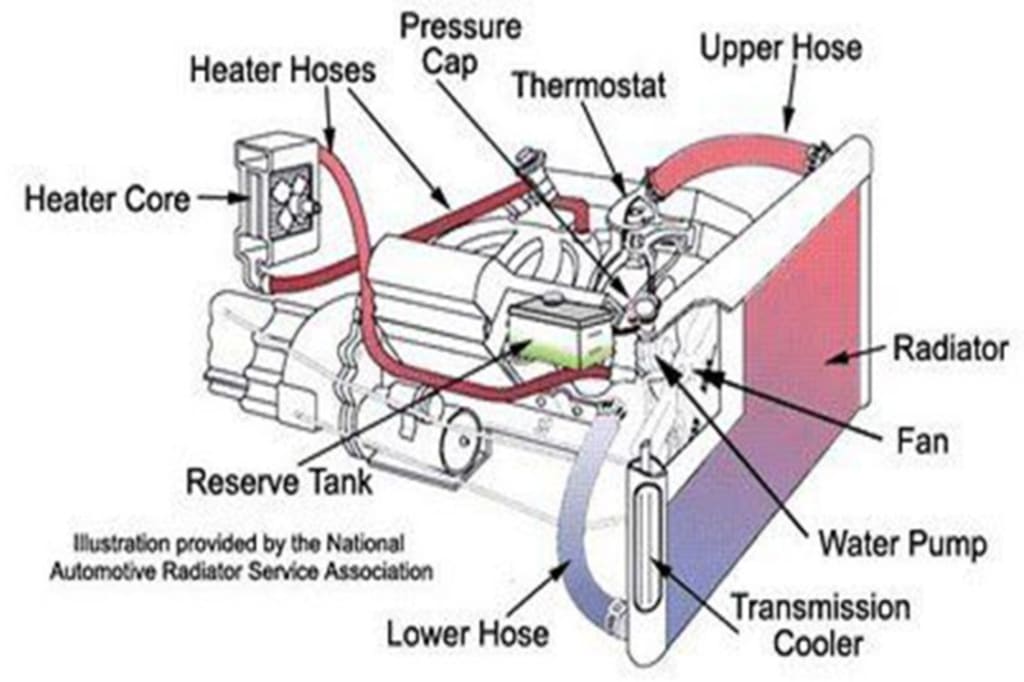
Your car's heating radiator also called a unit heater, is essential for heating the air entering the passenger compartment. Mainly used during the winter period, it guarantees the comfort of the motorist and the other passengers. Thus, it is an element that is not easy to access, so it is only rarely checked. However, when the heater stops working, it is likely dirty or clogged with impurities. Please find out how to clean your car heater radiator without taking it apart!
Materials Needed:
- Protective gloves
- Toolbox
- A can of coolant
- Demineralized water
- WD-40 cleaner
- A jack
- Candles
- Drain pans
- A soft-bristled brush
Summary:
Step 1: Elevate your vehicle
Step 2: Check the radiator hoses
Step 3: Drain the Radiator
Step 4: Clean the radiator
Step 5: Check the coolant level
Find the best auto repair shop to change your radiator:
Step 1: Elevate Your Vehicle
Using the jack and the jack stands, you will place your vehicle in height to facilitate the following steps. It will be necessary to park the car on a flat surface beforehand and wait for it to cool down if you have just made a trip onboard.
Step 2: Check the Radiator Hoses
Start by carrying out the external check of the radiator, making sure that the hoses located between the radiator and the expansion tank and the engine are not leaking. Do not hesitate to tighten the necklaces if they seem relaxed to you. Then, with a brush and WD-40, clean the front of the radiator.
Step 3: Drain the Radiator
Under your vehicle, you will place the drain pan at the bottom of the engine. First, remove the cap from the expansion tank and open the drain cock underneath the car. Secondly, you will wait for all the coolant to flow into the drain pan. Finally, for vehicles without a drain valve, it will be necessary to loosen the hose's clamp at the bottom of the circuit and then disconnect it.
Step 4: Clean the Radiator
As soon as the liquid stops flowing, close the drain valve or reconnect the hose if there is no valve. After tightening the bleed valves, pour demineralized water into the vehicle's expansion tank and close the cap.
Then, you will turn on the engine so that it idles for a few minutes to circulate the demineralized water in the cooling system. Then repeat the radiator drain operations to get water out of the system.
Step 5: Check the Coolant Level
The last step is to fill the expansion tank with coolant. As it has been drained, the system will be emptied of its impurities and gain viscosity. Again, wait until the engine is cold before checking the coolant level.
Finally, you will be able to lower your vehicle from the jack and jack stands.
Cleaning the radiator is an operation that is reasonably accessible to all motorists regardless of their level in automobile mechanics. However, suppose the demineralized water turns out to be dirty when you carry out the maneuver. In that case, it will be necessary to call a professional heater or air conditioning repair in the workshop to descale the system with rather dangerous products.
Remember to wipe off any excess coolant that may have spilled. If the engine temperature needle exceeds half of the gauge on the console, consult a qualified mechanic or service center for advanced diagnostic procedures.
Radiator Fins
Check your vehicle Owner's Manual before doing this. Always follow the manufacturer's complete instructions for cleaning and maintenance. Make sure the radiator is cool to the touch.
A safer option to harsh chemicals and solvents, Simple Heavy-Duty Cleaner is non-corrosive and safer for cleaning aluminum, stainless steel, and other metals. The professional-grade, engine-compatible formula breaks down tough grease, oil, road grime, and other automotive fluids, making it ideal for cleaning your radiator.
About the Creator
Joe Smith
Joe Smith is a professional researcher and write in different niches to engage visitors. Moreover, writing that is useful, error-free, and adheres to SEO standards.
Industries
- Automotive
- Business
- Moving and Storage
- Rustic Wood
- Tech
- Travel etc.
Self-Driving Cars
If you watched the 2004 Will Smith film ‘I Robot’, you’ll know that a minor plot point is that cars in this future are, by default, self-driving. They can still be driven manually, but this is considered a risky choice which only Smith’s character chooses to do, due to being a fan of such ‘retro’ choices. When his car is wrecked during an attack late in the film, his boss assumes that he crashed due to driving manually (the one time in the film he actually wasn’t). At the time of the film’s release, self-driving cars must have seemed hugely futuristic to help to sell the future setting.
By Joe Morganabout 2 hours ago in Wheel
Why Elon Musk Keeps Cutting Tesla Prices And What It Means For The Future Of EVs
The discounts keep coming, the stock keeps shaking, and the EV future suddenly feels a lot less predictable I remember the first time I realized Tesla had quietly dropped the price of a car I’d been obsessively speccing out.
By abualyaanart6 days ago in Wheel
Tatt~Master
— Assembly Line Tatt Machine ~ Impressions to Impress — As I begin to understand more about the Tattoo Phenomenon. I've written silly, yet verbatim, dating site anecdotes in 'Frazzled.' So let me ask you: Would you be More attracted to someone slathered with tattoos, or Less?
By Jay Kantor3 days ago in Humor




Comments
There are no comments for this story
Be the first to respond and start the conversation.