
How Fleet Management Software Solves Key Business Problems
Boost Efficiency, Cut Costs, and Improve Safety with the Right Tools


As a fleet manager or owner of the business, keeping your drivers or vehicles safe and compliant can seem like an overwhelming task. Driving is claimed to be a contributing factor in more than 33% of work-related fatalities in Australia, where work-related vehicles make up more than 30% of all registered motor vehicles. Likewise, a study found that accidents involving motor vehicles accounted for more than 75% of truck drivers' work-related deaths. It indicates how critical it is for any operations directors or owners to maintain fleet-related compliance.
However, high costs and inefficiency can be some fleet management challenges often faced by companies. The good news is that as the world is becoming increasingly digitalised, the use of fleet management software is becoming more popular and also an essential part of any company. This guide is for you if fleet management is challenging for you. With the help of this beginner's guide, new fleet managers can navigate fleet health and safety compliance with the proper knowledge and best practices.
This article covers all the information you need regarding fleet health and safety compliance and offers insights on how fleet management software can address many of your business's issues.
What is Fleet Safety?
Following rules, guidelines, and best practices to preserve the security and integrity of fleet vehicles, drivers, and operations is known as fleet health and safety compliance. To guarantee that fleets run safely and effectively, compliance covers a range of topics, such as driver education, vehicle maintenance, and regulatory compliance. Making fleet safety a top priority can aid in lowering the frequency of auto accidents that affect not only the lives of workers but also the fleet's overall performance.
What Are the Challenges Faced in Fleet Management?
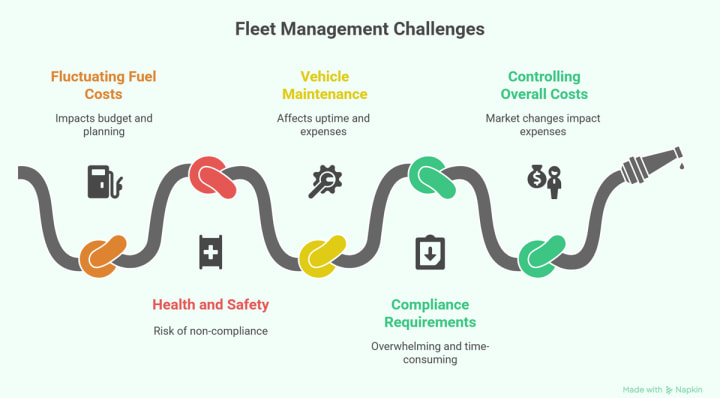
If you are an operations director, a fleet manager or even a company owner, these might be the difficulties you face almost regularly-
1. Changing fuel cost
The constantly rising cost of fuel is likely one of the most significant obstacles to cost reduction for a fleet manager. Although a fleet manager has no control over changes in the market price or the outside variables that affect prices, there are ways to lower fuel expenses and consumption. A competent fleet manager must assess the options to determine whether they continue to offer the biggest cost savings. Although gasoline continues to dominate the market, the margin is shrinking as electric and hybrid cars gain traction.
2. Sustaining health and safety
Your business must ensure that it has complied with health and safety regulations in case one of your employees is involved in a traffic accident. In order for claims to be processed promptly and effectively, you must make sure that strong reporting protocols are in place that allow drivers to handle an accident by correctly adhering to insurance reporting procedures.
3. Maintaining vehicles
To improve fleet efficiency, focusing on vehicle maintenance is essential. Depending on how big your company is, you have two options here. Smaller companies may opt to outsource to experts, while larger companies may choose to perform servicing and repairs in an internal workshop. Whichever path your company chooses, your fleet manager might face challenges while making sure that vehicle inspections are conducted in accordance with the law.
4. Meeting Compliance Requirements
The list is endless and includes safety tests, insurance, defect reporting, driver checks, daily checks, and inspection sheets. Managing compliance can get overwhelming and burdensome to some extent. Fleet risk management and compliance are crucial components of the job, and every facet must not only be performed but also recorded. This guarantees that every vehicle has a complete record of information available for auditing purposes, as well as in the event of an accident, should a claim or investigation need to be made.
5. Controlling overall costs
It may seem obvious, but cost control and reduction are top priorities for all businesses, and fleet management is no different. To reduce fleet costs, managers and owners are constantly struggling and sometimes fail to cope with the changing market. It is necessary for fleet managers to examine pertinent data about their fleet and identify areas for improvement. This can involve lowering the cost of buying a car, checking fuel usage, and analysing driver behaviour to get more for less.
6. Handling overloaded information
One of the most common yet least discussed fleet maintenance issues includes managing and utilising multiple sources of information. Much data will be produced by your fleet operation, but we've learned from experience that not all of it will be helpful. Sorting through such enormous volumes of data takes time and increases the possibility of overlooking crucial, pertinent information. It also takes administrative time and money to update such data.
Why Fleet Management Software Is a Necessity for Businesses?
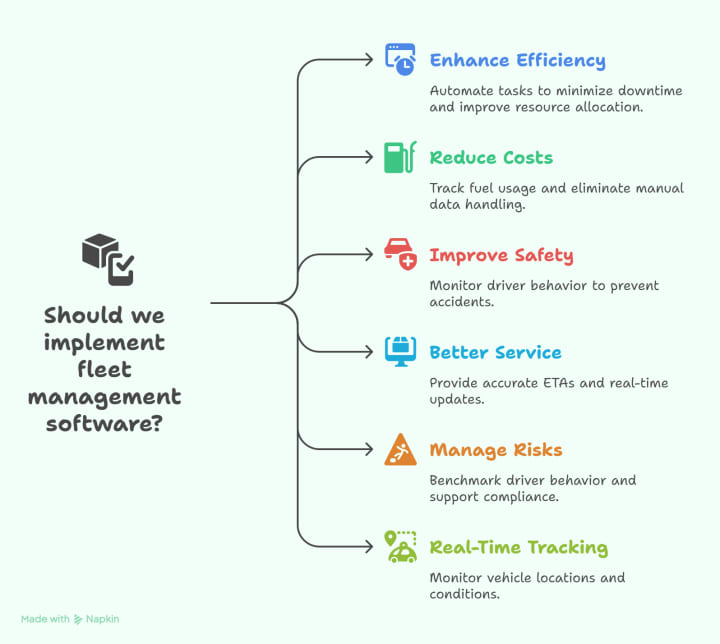
To improve fleet efficiency, it's essential to know about the right tools and utilise them in the right way in your business. If you have also heard of fleet management software and are confused regarding whether your company needs it or not, go through these amenities that the tools can bring-
• Enhanced Operational Efficiency
Businesses can minimise downtime and guarantee that their vehicles are always in top condition by automating fleet management tasks like tracking vehicle locations and scheduling maintenance. Operations run more smoothly and resources are allocated more effectively as a result.
• Cost Savings
There are a number of ways that fleet management software can drastically cut expenses. For example, it assists in tracking fuel usage and pinpointing areas for increased fuel efficiency. You won't have to spend a considerable amount on paying a team for handling extensive data. All you will need is a capable and compatible fleet management software.
• Improved Safety and Compliance
When the concern is about fleet management, safety is crucial. Tools for tracking driver behaviour, including speeding, hard braking, and sudden acceleration, are offered by FMS. Businesses can handle and mitigate the risk of accidents and increase general safety by recognising and correcting unsafe driving practices.
• Better Customer Service
By providing precise ETAs (Estimated Time of Arrival) and prompt delivery updates, FMS enables companies to improve customer service. Real-time shipment tracking and efficient customer service enhance the customer experience overall, increasing customer satisfaction and loyalty.
• Increased Risk Management
Risk management is crucial to keeping your fleet operating and your customers satisfied. Fleets, from trucking companies to hotel shuttle services, face a variety of risks on a daily basis. Businesses can lower risk by using a fleet management system to benchmark driver behaviour, provide audit/compliance support, and instantly replay incidents for accident investigations. With integrated reminders and dependable, real-time tracking data, fleet management software helps detect possible risks and mitigate them, even though it cannot completely erase them.
• Real-Time Monitoring and Tracking
A key component of fleet management software is real-time tracking. It helps companies to keep an eye on the whereabouts and condition of their vehicles at all times. This ability is crucial for guaranteeing on-time delivery, reacting quickly to crises, and giving clients accurate information.
Conclusion
For companies that have a fleet of vehicles, fleet management software is crucial. Better customer service, cost savings, safety, real-time tracking, and precise decision-making are just a few advantages it provides. Its significance cannot be disputed, despite the difficulties it presents, including initial costs, integration, training, and maintenance.
This software gives businesses a competitive edge, encourages sustainability, guarantees compliance, allows for scalability, and maintains their flexibility. Fleet management software will play a bigger role in determining how fleet operations develop in the future as technology evolves. If your fleet business is dealing with high costs, inefficiency, and safety risks, and you are looking for the most effective solution, take a step towards fleet management software, try it out on your business to see a positive change.
About the Creator
Keep reading
More stories from Emma Sneddon and writers in Wheel and other communities.
How To Get Help With Paying Bills
Are bills piling up and leaving you feeling overwhelmed? You're not alone. Many Australians face financial difficulties, especially when it comes to managing day-to-day expenses like rent, electricity, medical costs, and groceries. Thankfully, there are numerous resources and programs available to help ease the pressure. Managing bills can feel like a never-ending challenge, especially when unexpected expenses pop up or when you're dealing with financial hardship.
By Emma Sneddon7 months ago in Lifehack
The Ultimate Checklist Before Selling Your Car to a Wrecker
If your car has reached the end of its life or has serious damage, selling it to a wrecker can be a fast and convenient solution. Many car owners assume wreckers only provide scrap value, but professional wreckers often pay based on the condition and reusable parts of your vehicle.
By Alec Johnson5 days ago in Wheel
Why BMW Still Builds Inline-Six Engines When Others Don’t
For decades, most car manufacturers have moved toward smaller four-cylinder engines or compact V6 designs. They’re easier to package in modern cars, cheaper to build, and often simpler to fit into tight engine bays. Yet BMW continues to invest heavily in inline-six engines. From classic engines like the M54 to modern units such as the B58 and S58, the straight-six remains central to the brand’s identity. The reason isn’t nostalgia, it’s engineering.
By MT Auto Parts – BMW Specialists from the UK3 days ago in Wheel



Comments
There are no comments for this story
Be the first to respond and start the conversation.