
Essential Car Insurance Checklist: Coverage, Costs & Add-Ons Explained
Learn the essential car insurance checklist, covering the types of coverage (Liability, Comprehensive, Collision), how premiums are calculated, deductibles, and optional add-ons like roadside assistance.

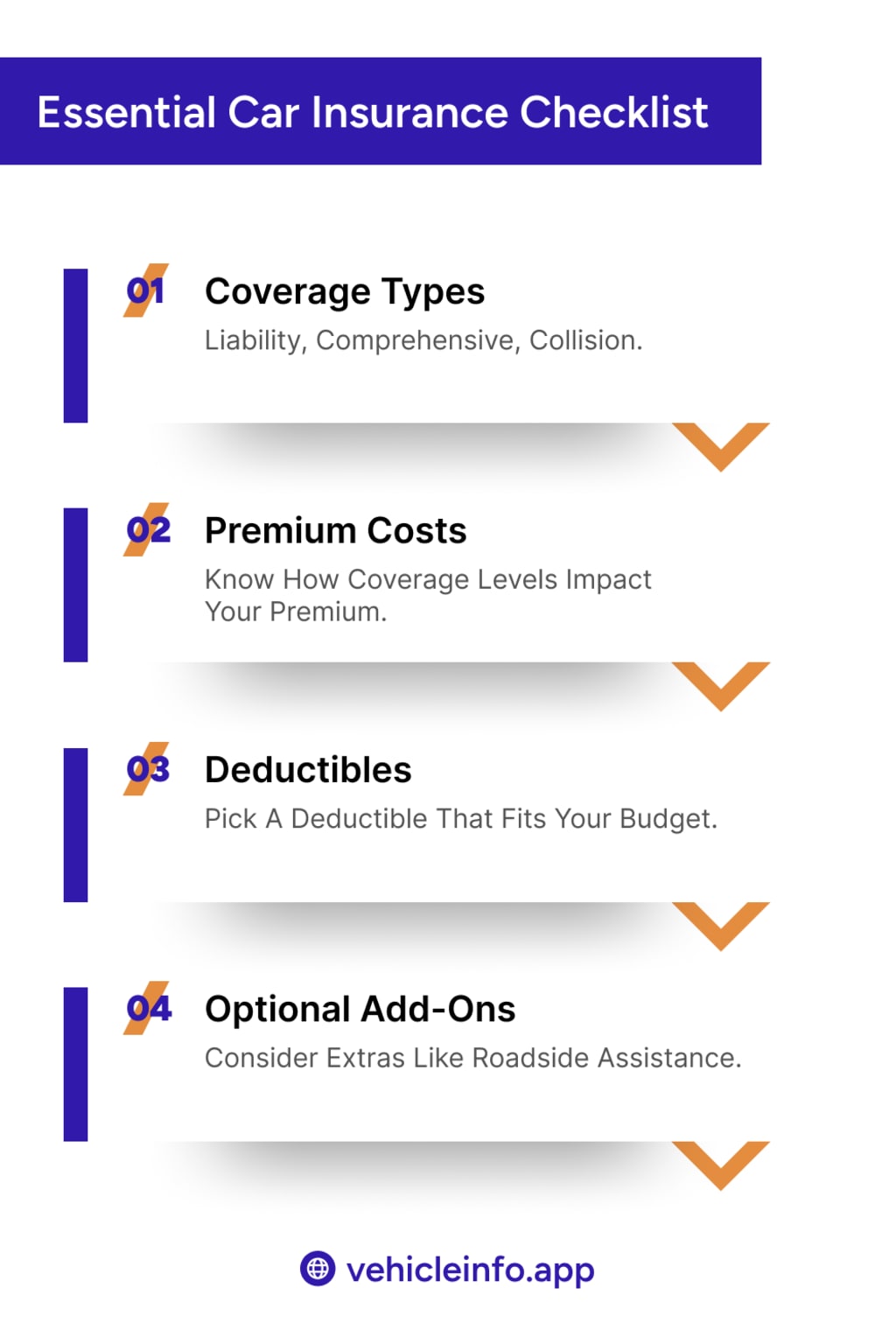
Choosing the right car insurance doesn’t have to be complicated. Whether you're a first-time buyer or just reviewing your policy, this simple checklist will help you understand the key things you need to know about car insurance. From coverage types to optional add-ons, we’ll guide you through it all so you can make the best decision for your needs.
Coverage Types: What Do You Really Need?
First, let's talk about the types of coverage you should consider for your car. Each one offers a different level of protection, so it's important to know what each covers.
Liability Insurance: The Basics
Liability insurance is the most basic type of car insurance and is required in most states. It covers costs if you're at fault in an accident. There are two types:
Bodily Injury Liability: Pays for the other person’s medical expenses if you cause an accident.
Property Damage Liability: Covers the cost of repairs if you damage someone else's property (like their car or fence).
This is the minimum coverage you’ll need to stay legal, but it might not be enough if you're in a serious accident. So, it's worth considering higher coverage limits.
Comprehensive Insurance: Extra Protection
Comprehensive coverage is optional but a smart choice if you want extra protection. It covers things like:
Theft, vandalism, or damage from natural disasters (hail, floods, etc.).
Damage caused by hitting an animal.
This coverage is great if your car is new or valuable, as it helps protect against events that are out of your control.
Collision Insurance: Protect Your Ride
Collision coverage covers damage to your car if you're in an accident, regardless of who’s at fault. If you hit another car, a tree, or anything else, collision insurance helps pay for repairs.
Great for New Cars: If your car is new or worth a lot, this coverage can save you from big out-of-pocket costs.
Collision insurance isn’t required by law but is often a good idea if you have a loan or lease on your car.
How Car Insurance Premiums Are Calculated
Your insurance premium is how much you pay for coverage, usually every month. Here's how it’s determined:
Coverage Level Affects Your Premium
The more coverage you have, the higher your premium will be. If you go for just liability insurance, you’ll pay less, but you won’t have protection for things like theft or hitting a tree.
Minimum Coverage (Liability): Cheapest option, but also the least protection.
Full Coverage (Liability, Comprehensive, and Collision): More expensive but offers better protection in case something happens.
It’s important to find the right balance. While you don’t want to overpay, having enough coverage to protect yourself and your car is key.
Your Driving History: Safe Drivers Save Money
Insurance companies look at your driving history to decide how risky you are. If you have a clean record, you’ll pay less. If you’ve had accidents or tickets, expect higher premiums.
Safe Driver Discount: A clean driving record could help you save on your premium.
Accidents and Tickets: These can raise your rates, as insurance companies see you as a higher risk.
Car Type and Location Matter
The type of car you drive and where you live can also impact your premium. For example, luxury cars or sports cars are more expensive to insure because they cost more to repair or replace. Also, if you live in a high-traffic area, you might pay more due to a higher chance of accidents.
High-Value Cars: Expect higher premiums if you own an expensive or luxury vehicle.
Urban Areas: Living in a city with heavy traffic or high crime can increase your rates.
Deductibles: Finding What Works for You
A deductible is the amount you pay out of pocket before your insurance kicks in. Here's how to think about it:
Low Deductible
If you choose a low deductible, your monthly premium will be higher, but you’ll pay less if you need to file a claim. This is great if you want to avoid paying a lot when something goes wrong but are okay with higher monthly payments.
Higher Premium, Lower Out-of-Pocket Cost: Choose this if you want peace of mind.
High Deductible
A high deductible means lower monthly payments, but you'll pay more if you need to make a claim. This is a good option if you're looking to save on premiums and can afford to pay a larger amount if something happens.
Lower Premium, Higher Out-of-Pocket Cost: Choose this if you don’t mind paying more in an emergency.
Optional Add-Ons: Get Extra Protection and Convenience
While the basic coverage will protect you, there are some optional add-ons you might want to consider for extra peace of mind. Let’s look at the most popular options:
Roadside Assistance: Help When You Need It
Roadside assistance helps you when your car breaks down. It includes services like:
- Towing
- Tire changes
- Jump-starting your battery
- Fuel delivery
It’s a small extra cost but can save you a lot of stress if you find yourself stranded.
Rental Car Coverage: Stay Mobile While Your Car is in the Shop
If your car is being repaired after an accident, rental car coverage helps pay for a rental car. This ensures you can keep driving while your car is out of action. It's especially useful if you rely on your car for daily life.
Gap Insurance: Protect Against Depreciation
If your car is totaled or stolen, gap insurance helps cover the difference between what you owe on your car loan and its actual cash value. This is crucial if you owe more on your car than it’s worth, which often happens in the first few years of ownership.
Choosing the right car insurance doesn't need to be overwhelming. By understanding the types of coverage you need, how premiums are calculated, and what optional add-ons are available, you can make a choice that fits your needs and budget. Remember, it’s important to balance the cost of your insurance with the coverage you actually need to feel secure.
Need help choosing the right coverage? Let us know in the comments below—we’re here to help!
About the Creator
Yankit Gayakvad
With 4 years of experience in digital marketing, I specialize in SEO, SMO, SEM, and content strategy. I use data-driven techniques to enhance online visibility, boost engagement, and drive measurable growth for brands.
Keep reading
More stories from Yankit Gayakvad and writers in Wheel and other communities.
The Hidden Costs of Buying a Car Without Knowing Its Full History
When purchasing a car, most buyers focus on its current condition, appearance, and price. However, one critical factor is often overlooked: the vehicle’s full history. Ignoring the history of a car can lead to significant hidden costs that could impact both your wallet and peace of mind. Whether you’re buying a used car from a dealership or a private seller, knowing a vehicle’s past is essential for making an informed decision.
By Yankit Gayakvadabout a year ago in Wheel
The Lunar Check-In: Engineering the First Five-Star Stay in the Stars
The silent, silver plains of the Moon—once the exclusive playground of Cold War pioneers and robotic rovers—are about to get a lot more hospitable. We aren’t just talking about research outposts or "survival pods" anymore. We are talking about high-thread-count sheets, panoramic views of the "Earth-rise," and the logistical miracle of hospitality at 1/6th gravity. The dream of the Lunar Hotel is no longer confined to the pages of 1950s pulp fiction; it is currently being drafted on the CAD programs of the world’s most ambitious aerospace firms.
By yusuf selho4 days ago in Wheel
Silken Chains
Silhouettes of the female form were given flesh and bone. Silken skin glistened under the spotlight. Dry ice rose around our Icons as they danced atop their podiums in the Square. Heralded for their beauty, their movements were slight, powerful, and sensual.
By Paul Stewart7 days ago in Fiction




Comments
There are no comments for this story
Be the first to respond and start the conversation.