
Cargo Space Comparison in Used trucks
Cargo Space Comparison in Used trucks


When shopping for a used truck, one of the most important factors to consider is cargo space. Whether you need it for work, hobbies, or daily hauling, knowing how different used trucks compare in cargo capacity can help you make the right choice. If you're browsing options at a Used trucks dealer near Blacksburg, understanding cargo space specifications—bed length, volume, and usability—will ensure you pick a truck that meets your needs without paying for extra features you don’t require.
Why Cargo Space Matters in Used Trucks
Cargo space directly affects what and how much you can haul. Whether you transport tools, equipment, furniture, or recreational gear, the size and shape of the truck bed influence your overall experience. For used trucks, it's also essential to consider how previous use might have affected the cargo area’s condition. This is why knowing the capacity differences between popular truck models helps you prioritize your needs.
Measuring Cargo Space: What to Look For
Cargo space isn’t just about length—it includes width, depth, and overall volume. When comparing used trucks, pay attention to:
● Bed length: Usually measured in feet (e.g., 5.5 ft, 6.5 ft, 8 ft)
● Bed width: The usable width between wheel wells vs. overall width
● Bed depth: How deep the bed walls are, impacting load capacity
● Cargo volume: Total cubic feet of bed space available
● Features: Bed liners, tie-downs, bed extenders, and tailgate functionality
Knowing these details helps you match the truck to the cargo you intend to carry.
Full-Size Pickup Trucks: Cargo Space Leaders
Full-size pickups are generally the best choice for maximum cargo space. Common models like the Ford F-150, Chevrolet Silverado 1500, Ram 1500, and Toyota Tundra each offer different configurations in their used versions.
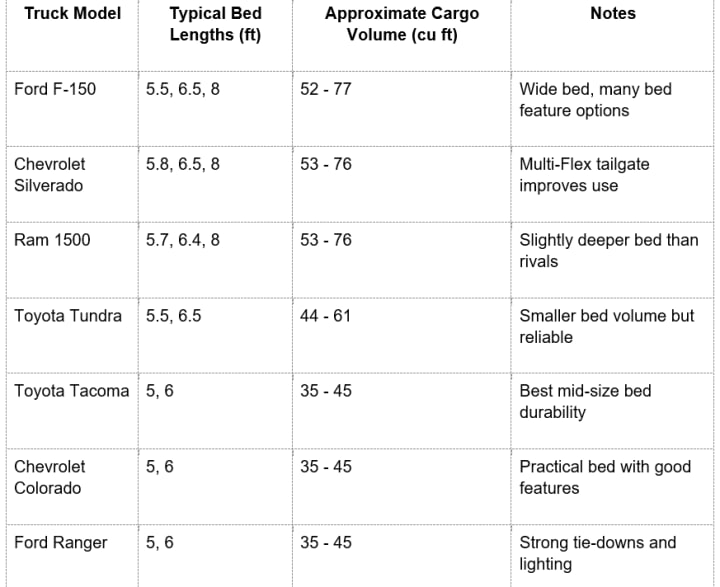
● Ford F-150: Known for versatile bed lengths from 5.5 to 8 feet and a wide bed width (up to 50 inches between wheel wells). The 8-foot bed versions provide over 70 cubic feet of cargo volume, great for large items.
● Chevrolet Silverado 1500: Offers similar bed options with 5.8, 6.5, and 8-foot beds. Its bed width and depth are competitive, and features like the Multi-Flex Tailgate increase usable space.
● Ram 1500: Bed lengths of 5.7, 6.4, and 8 feet are typical. Ram beds are known for having a slightly wider and deeper bed compared to some competitors, giving a bit more cubic footage overall.
● Toyota Tundra: Often comes with 5.5 or 6.5-foot beds. Its bed space is slightly smaller in volume compared to American full-size trucks but still very functional.
Mid-Size Pickup Trucks: Compact but Capable
Mid-size trucks have grown in popularity, offering more maneuverability and fuel efficiency while still providing decent cargo space. Used mid-size trucks like the Toyota Tacoma, Chevrolet Colorado, and Ford Ranger are common options.
● Toyota Tacoma: Bed lengths usually 5 or 6 feet. Though smaller than full-size beds, Tacomas have well-designed cargo areas with a deep bed and strong tie-down points. The volume ranges around 35 to 45 cubic feet.
● Chevrolet Colorado: Typically offers 5-foot and 6-foot beds. The bed width is narrower but the depth and overall cargo volume are competitive in this class.
● Ford Ranger: Beds are usually 5 or 6 feet long, with good width and depth for its class. Ranger beds are practical and often have features like integrated bed lights.
Extended Cab vs. Crew Cab Bed Sizes
Cab style affects available cargo space since extended cab and crew cab models often sacrifice bed length for extra passenger space. For used trucks:
● Regular Cab: Usually paired with the longest beds (up to 8 feet), maximizing cargo space.
● Extended Cab: Beds tend to be 6.5 feet or shorter, balancing passenger and cargo needs.
● Crew Cab: Beds often shrink to 5.5 or 6 feet, focusing more on rear passenger comfort.
If cargo space is a priority, consider a regular or extended cab model. Crew cabs are better suited when passenger space takes precedence.
Bed Features That Impact Cargo Usability
Beyond size, bed features can enhance or limit how useful cargo space is in a used truck.
● Bed liners: Protect the bed from damage and make loading/unloading easier. Spray-in liners are more durable than drop-in liners.
● Tie-down anchors and cleats: Essential for securing cargo and preventing damage during transit.
● Bed extenders: Increase bed length when needed for oversized cargo.
● Tailgate designs: Some trucks offer multi-function tailgates that can fold down flat or step down, improving loading access.
Inspecting these features on used trucks can save money and improve your hauling experience.
Comparing Cargo Space in Popular Used Truck Models
How Previous Use Affects Cargo Space Condition
When buying used trucks, cargo space condition varies based on prior usage. Work trucks often have scratches, dents, or rust in the bed area, which may affect durability and resale value. Personal-use trucks typically have better-kept beds but may lack protective liners.
Before purchasing, inspect for:
● Signs of rust or corrosion, especially near wheel wells and tailgate
● Bed liner quality and damage
● Tailgate operation smoothness
● Cleanliness and structural integrity
A well-maintained bed is easier to work with and can save future repair costs.
Bed Modifications and Aftermarket Options
Some used trucks may come with aftermarket modifications like spray-in liners, bed caps, tonneau covers, or toolboxes. These additions can add value and improve cargo usability but verify quality and fit.
If the truck doesn’t have these, you might consider installing:
● Spray-in liners for durability
● Tonneau covers to protect cargo from weather
● Bed racks for carrying longer items
Budget for these upgrades if cargo protection is a priority.
Fuel Economy vs. Cargo Space Tradeoff
Generally, larger bed trucks with extended beds have higher curb weights and lower fuel efficiency. Mid-size trucks with smaller beds often provide better fuel economy, making them a good choice for buyers who want cargo space without sacrificing gas mileage.
Consider how often you’ll haul heavy loads versus your fuel cost priorities when comparing used trucks.
Tips for Buying Used Trucks with the Best Cargo Space
● Define your cargo needs precisely (length, volume, type of load).
● Choose the cab style that balances passenger and cargo priorities.
● Compare specific bed lengths and volumes on models available near you.
● Inspect the truck bed carefully for wear and damage.
● Ask about any included or potential aftermarket bed accessories.
● Consider fuel economy alongside cargo space for cost-effectiveness.
Conclusion
Cargo space is a crucial factor when choosing a used truck, impacting your ability to haul tools, gear, or recreational equipment efficiently. Full-size trucks generally offer the most generous beds, while mid-size trucks balance cargo capacity with maneuverability and fuel economy. Paying attention to bed dimensions, features, and condition can save you time and money in the long run. If you’re exploring options. Choosing wisely ensures your used truck remains a reliable and functional asset for years to come.
About the Creator
Alex Winslow
A Good Writer, Always love to See the world in Peace Image.
Keep reading
More stories from Alex Winslow and writers in Wheel and other communities.
2025 Nissan Car Models with Advanced Driver Aids
The automotive world continues to evolve rapidly, and Nissan is at the forefront with its 2025 car models featuring advanced driver aids designed to enhance safety, convenience, and driving enjoyment. For those shopping around, visiting a trusted nissan dealership nc is a smart step to explore the latest technologies firsthand. Nissan’s 2025 lineup integrates cutting-edge driver assistance systems that offer features such as adaptive cruise control, lane-keeping assist, and semi-autonomous driving capabilities. This article will explore the 2025 Nissan car models and the advanced driver aids they come equipped with, showcasing how Nissan is shaping the future of safer driving.
By Alex Winslow7 months ago in Wheel
me, me, me
when i read back my poetry it screams “me, me, me” on my screen in bold letters and i can’t shut it up — most days, i cannot make any other words out; i want to throttle a thousand versions of the me gone by, i want to throw myself from a figurative balcony, i want to sink a sword into every pen i’ve held
By angela hepworth5 days ago in Poets



Comments
There are no comments for this story
Be the first to respond and start the conversation.