
A Strategic Guide to Selection Mining Crushing Equipment
This article provides a professional overview of the primary types of crushing equipment used in mining, their strategic placement within a comminution circuit, and the technological trends shaping their future.
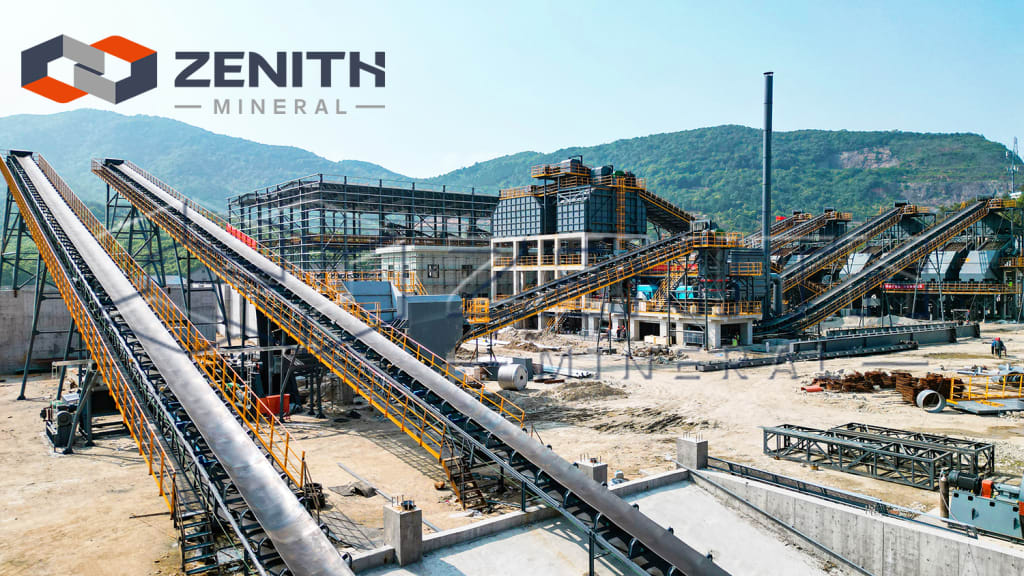
In the value chain of mineral extraction, the primary crushing stage is the gateway through which all mined ore must pass. The efficiency, reliability, and capability of mining equipment directly dictate the downstream performance of the entire processing plant, influencing everything from energy consumption and throughput to final product recovery. Unlike standard aggregate crushing, mining applications present unique challenges, including handling vast volumes of exceptionally hard and abrasive ores, operating in remote and demanding environments, and managing a feed material that is often variable and uncooperative.
1. The Comminution Circuit: The Role of Each Crushing Stage
Crushing in mining is rarely a single-step process. It is systematically designed in stages to reduce the run-of-mine (ROM) ore to a size suitable for grinding mills.
• Primary Crushing: This is the first line of attack, accepting massive ROM ore directly from the mine, which can be over 1 meter in size. The primary crusher's role is brute force reduction, typically down to a product of 150-250 mm. Key considerations here are capacity and ability to handle large feed size.
• Secondary Crushing: This stage further reduces the primary crusher's product, typically to a range of 20-50 mm. The focus shifts from pure force to efficiency and product shape. A well-configured secondary stage significantly alleviates the load on the energy-intensive grinding circuit.
• Tertiary Crushing: For finer initial products or harder ores, additional crushing stages may be employed to achieve a final feed size of 5-15 mm for the mill. This practice, known as "pebble crushing" or using a "crushing plant ahead of a ball mill," is a highly effective strategy for grinding circuit optimization and overall energy reduction.
2. Key Equipment Types and Their Mining Applications
The choice of crusher is dictated by the ore characteristics (hardness, abrasiveness, moisture content), required capacity, and desired product size.
2.1. Primary Crushers
• Jaw Crushers: The workhorse of primary crushing. They function using a fixed and a movable jaw, creating a V-shaped cavity. Their robust design is ideal for handling the toughest and most abrasive ores.
o Key Features: High reliability, simple operation, ability to accept very large feed.
o Typical Application: Large-scale hard rock mines (copper, gold, iron ore).
• Gyratory Crushers: For very high-capacity primary stations (over 1,000 t/h), gyratory crushers are the preferred choice. They consist of a long, spindle-shaped crushing head inside a conical shell.
o Key Features: Higher capacity and lower energy consumption per ton than jaw crushers at large scales. More complex and expensive to install.
o Typical Application: High-tonnage open-pit mines.
2.2. Secondary and Tertiary Crushers
• Cone Crushers: The dominant technology in secondary and tertiary roles. They operate on a similar principle to gyratory crushers but are smaller and inverted. Modern cone crushers offer sophisticated control systems for optimizing product size and shape.
o Key Features: Excellent reduction ratios, good product shape, highly configurable.
o Variants: Standard cone crushers for secondary duty; Short Head cones for finer tertiary crushing.
2.3. Mobile and Semi-Mobile Crushing Stations
A significant trend in mining is the move toward mobility at the primary crushing stage.
• Semi-Mobile Crushing Stations (SMCS): These are large units, often housing a gyratory crusher, that can be relocated every few years as the mine face advances. They are moved in modules using heavy-duty transporters.
• In-Pit Crushing and Conveying (IPCC): This system uses fully mobile or semi-mobile crushers located directly within the mine pit. The crusher feeds a conveyor belt, which replaces a fleet of trucks for long-distance haulage.
o Strategic Advantage: IPCC systems offer substantial reductions in operating costs, fuel consumption, and greenhouse gas emissions by minimizing truck haulage.
3. Strategic Selection Criteria: Beyond the Machine
Choosing the right crusher involves a holistic analysis of several factors:
• Ore Characteristics: A comprehensive geometallurgical analysis is essential. The ore's compressive strength, abrasiveness (Bond Abrasion Index), and moisture content will rule out certain crusher types.
• Plant Capacity and Flow Sheet: The crusher must be integrated into the overall process design. A SAG mill circuit, for instance, has different crushing requirements than a ball mill circuit.
• Lifecycle Cost Analysis: The decision should not be based on initial capital expenditure (CAPEX) alone. Operating costs (OPEX), including energy consumption, liner wear life, and maintenance downtime, are critical determinants of total cost of ownership.
• Site-Specific Factors: Remote locations may favor simpler, more robust technology like jaw crushers over more complex gyratories. Water scarcity might make dry crushing technologies like HPGR more attractive.
Selecting and operating mining crushing equipment is a strategic engineering decision with far-reaching implications for a project's profitability and sustainability. The industry has moved beyond simply choosing a machine to break rock. By prioritizing energy efficiency, embracing digital tools for optimization, and integrating crushing seamlessly with downstream processes, mining operations can significantly reduce their operational costs and environmental footprint, ensuring that the first step in mineral processing is also a step toward a more efficient and sustainable future.
About the Creator
A Historic Waterwheel Returns to Family Roots Along the Riverbank
The story of a Historic Waterwheel Returns to Family Roots is more than a tale of wood and water. It is a story of memory, family honor, and deep love for local history. For many years, the old waterwheel stood silent near the bend of a quiet river. Time and storms had worn it down. The wood had faded. The iron had rusted. Yet the spirit of the wheel never faded in the hearts of the family who once built and cared for it.
By Grady Gaston5 days ago in Wheel
Belle of the Bayou
Bad move, cher. Not just the slip of her kitten heel on the rainy February cobblestones in the Fourth Ward. She got caught snooping. Detective Deleon clucked and strutted like a rooster in his rush to clear her from the scene, waving cigar smoke to and fro as he gesticulated amid the thick air of the speak easy. An experienced crime reporter, Marie knew better than to let the coppers catch her on the wrong side of the line, but curiosity had gotten the better of her.
By Maia Gadwall the metAlchemist6 days ago in Fiction



Comments
There are no comments for this story
Be the first to respond and start the conversation.