
A Simple Guide to Charging Electric Vehicles
We present you with an easy and simple guide on recharging electric vehicles

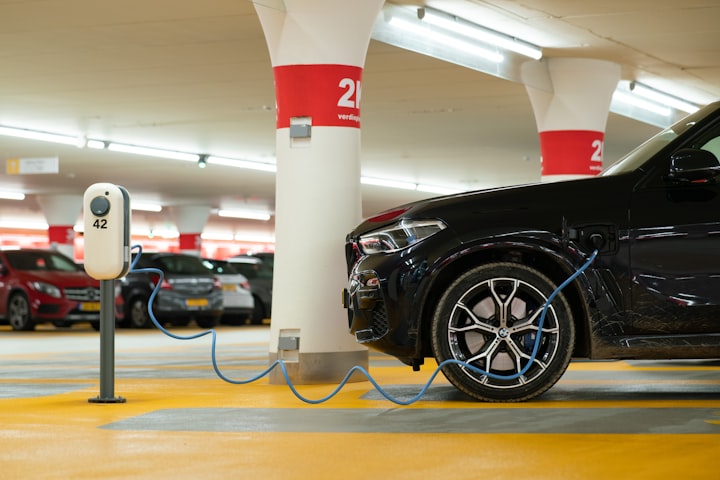
Easy guide to charging electric vehicles
If you talk to a non-electric vehicle driver, most will say that the thing that slows them down the most when it comes to purchasing an electric vehicle is the lack of electric vehicle charging stations. With today's infrastructure, it is not always possible to plug an electric vehicle where and when it is desired. The fear of not being able to charge them can make people and organizations not want to buy electric vehicles to drive them on a daily basis.
Additionally, price variables, parking fees, and limited access hours can further complicate EV charging. However, driving an electric vehicle does not have to be difficult or expensive.
Guide overview
In this EV charging guide, we'll cover the basics - from everything you need to charge at home or at work to maintaining a charge while driving. We'll also take a look at how long EV charging takes and how much it costs.
You can get the most out of electric conduction if you have:
- a socket for charging at home or at the workplace
- good knowledge of the use of the vehicle
- a public electric charge account
- a clear idea of the cost and time required for loading
Electric vehicles make the most sense when the cost of refueling (that is, charging) is kept low and access is convenient.
Terms related to electric vehicle charging
Before delving into the different aspects of cargo, let's define some of the key terms:
On-board charger
Level 1 and Level 2 charging devices are installed at the factory and are called "on-board chargers". They convert AC power from the wall to DC power that charges the vehicle's battery. Charging speed can vary, but the most common onboard chargers are 6.6 kW in battery electric vehicles (BEV) and 3.3 kW in plug-in hybrid electric vehicles (PHEV). DC fast charging uses its own external charger.
EVSE (Electric Vehicle Service Equipment)
It stands for "electric vehicle service equipment." It is the middleman between a power supply and the vehicle's charging port and is typically mounted on a wall or base. Its function is simply to transmit the AC power to the vehicle safely.
Level 1 charge
The slowest charging way. Almost all electric vehicles include a cable that connects to the vehicle's onboard charger and a standard household charging socket (120V). This setting provides between 3 and 8 km per hour. While this may not sound impressive, it can work on vehicles that travel less than 40 miles a day and can be charged overnight.
Level 2 charge
Provides 200-240 V power through an EVSE that has a plug that connects to the car or through a 240 V charging socket (similar to that used in an oven or dryer) that requires a cable or adapter. Tier 2 chargers can have up to 80 amps and drivers can add 10 to 104 miles of range in one hour of charge.
Quick charge with DC
In this case, a charger is a machine the size of a gas pump. There is no single standard for fast charging: Tesla has the Supercharger network; Nissan Leaf, Kia, and Mitsubishi Get Faster Charge with CHAdeMO; and Chevy Bolt, BMW, Volkswagen, among others, use SAE Combo (Combined Charging System or CCS). All of the above fast chargers provide a charge of approximately 80% in 30 minutes and faster charging options are released each year.
EVSE product manufacturer
A company that manufactures charging station equipment. Note that this does not necessarily mean that they also provide a network.
Electric Vehicle Service Provider (EVSP)
An EVSP provides connectivity through a network of charging stations. By connecting to a central server, it manages the software, database, and communication interfaces that enable the station to operate.

How much does it cost to charge an electric car?
Most EVs are primarily charged at home or at a fleet charging station overnight, where it is often recommended to install a level 2 system. Manufacturers of these systems charge approximately € 400-500, although there are slightly lower prices (and more expensive options) on the market.
In addition to EVSE, installation costs can range from around € 200 in a home garage to over € 900 in a commercial application, depending on the installation and the electrician providing the service. For example, an installation in the middle of an open parking lot will cost more than installing a wall-mounted station near the electrical room. Once you're ready to charge, the electricity prices in your area will determine the cost of that power.
Note: Depending on your region, there may be federal and state / provincial aid for commercial and domestic chargers.
Electric vehicle charging:
Assuming you pay close to the national average of € 0.11 per kilowatt-hour (kWh), adding 120km to a Nissan Leaf would cost you less than € 2.7. In other words, the US Environmental Protection Agency (EPA) estimates that this vehicle costs 0.88 euros to travel 40 km.

In Tesla's Model S, which has a range of more than 402 km in several of its versions, it would cost less than 4.5 euros for a range of 201 km and 9 euros for a complete battery from scratch. Compared to the average fuel cost of € 0.63 per liter and the average fuel consumption of 10.6 km per liter, it would take around € 24 to obtain the same range, i.e. 402 km, in a vehicle of gasoline.
If a lower-end PHEV is charged, the cost of the charging station is negligible. The level 2 charger can be waived and plugged into a standard charging socket at home or at work. In models like the Ford Fusion Energi (9 hours), you can connect it at night and find yourself with 30 kilometers of autonomy in the morning.
About the Creator
Victor Lawrence
Victor is a content creator and love to share his thoughts across the web.
Keep reading
More stories from Victor Lawrence and writers in Wheel and other communities.
Why Elon Musk Keeps Cutting Tesla Prices And What It Means For The Future Of EVs
The discounts keep coming, the stock keeps shaking, and the EV future suddenly feels a lot less predictable I remember the first time I realized Tesla had quietly dropped the price of a car I’d been obsessively speccing out.
By abualyaanart6 days ago in Wheel
The Ultimate Checklist Before Selling Your Car to a Wrecker
If your car has reached the end of its life or has serious damage, selling it to a wrecker can be a fast and convenient solution. Many car owners assume wreckers only provide scrap value, but professional wreckers often pay based on the condition and reusable parts of your vehicle.
By Alec Johnsona day ago in Wheel


Comments
There are no comments for this story
Be the first to respond and start the conversation.