
Your guide to Chebika Oasis, Tunisia's hidden mountain oasis paradise
Chebika Oasis in western Tunisia is full of contrasts: dry cliffs, lush palm groves, abandoned ruins, and a waterfall in the middle of it all. This guide shares what to expect on one of the most scenic hikes in Tunisia (and possibly the world!)

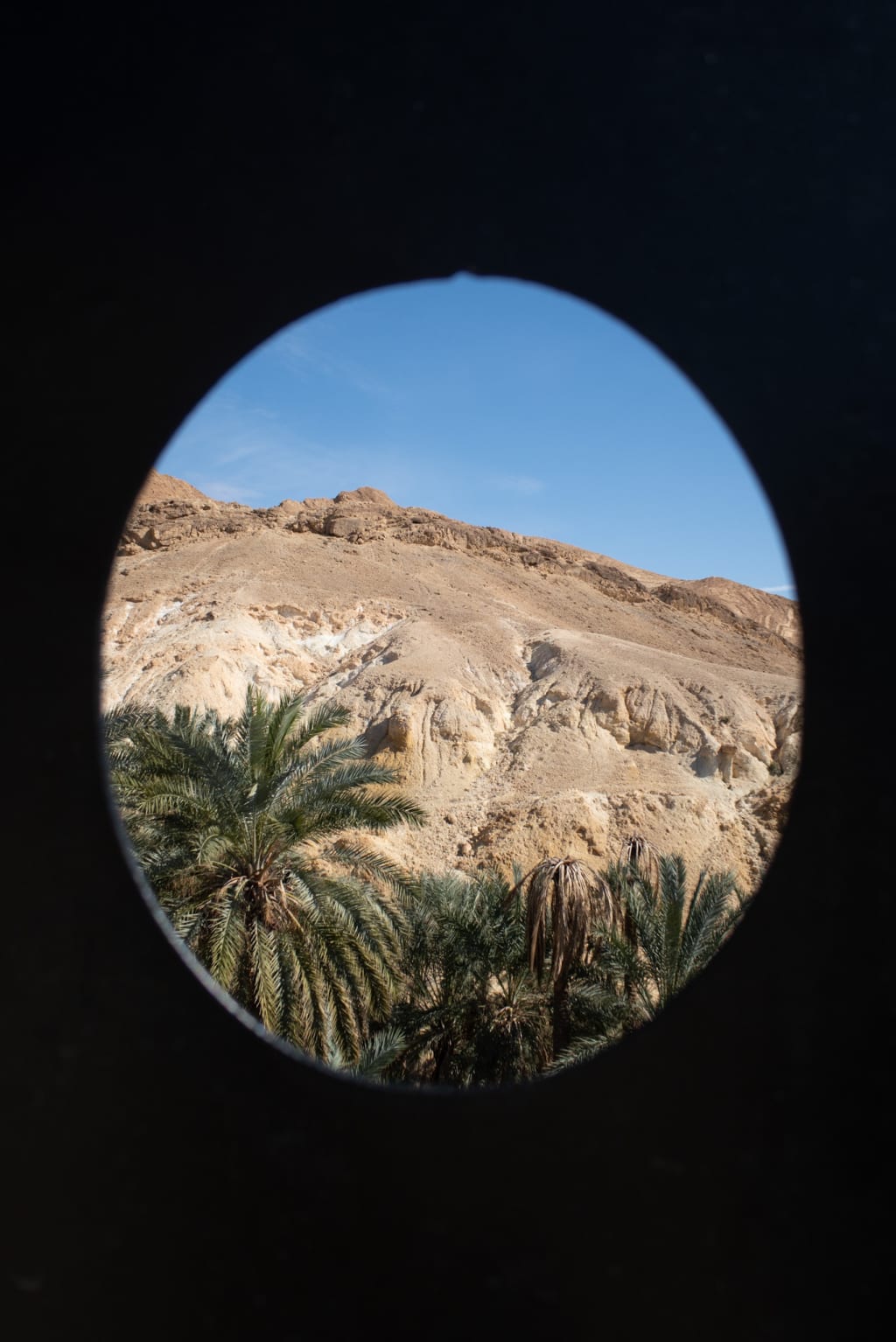
When people think of Tunisia, they might often picture the Mediterranean Sea and an overall laid-back beach lifestyle. They might picture Sidi Bou Said, which has become synonymous with Tunisia in travel advertisements and has become known as "Tunisian Santorini." (I have strong opinions on this one, but that's for another day). They might also picture camels in the vast sand dunes of the Sahara, a typical stereotypical perspective about the overall Middle Eastern and North African region.
Both of these are very accurate elements of Tunisian culture. However, what many don't realize is that Tunisia is also home to some awe-inspiring canyons and hiking trails to round out its nature portfolio. Some of these trails are offset with palm trees, giving a very unique appearance with lush greenery in an otherwise barren landscape.
Chebika Oasis is one of these destinations that you truly cannot miss if you're thinking of visiting Tunisia. If you’re planning an itinerary that includes the Tozeur region or southern Tunisia’s Sahara landscapes, Chebika is an absolute must. Without further ado, let’s learn why!
What makes Chebika unique?
Chebika Oasis forms part of a trio of mountain oases that serve as essential stops on Sahara desert tours departing from the nearby city of Tozeur. The other two stops are Tamaghza (also known as Tamerza) and Midès Canyon.
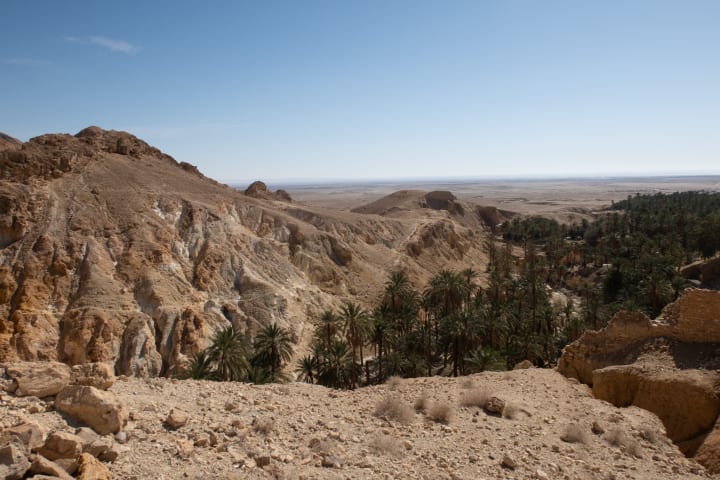
The contrast of the barren cliffs with the lush trees is one of the aspects that makes Chebika Oasis so awe-worthy. Chebika owes its prosperity to a sophisticated irrigation system called "foggaras." These underground tunnels channel water from natural springs to distribute water across the oasis. This system sustains palm groves and crops in a landscape that would be otherwise completely barren territory.
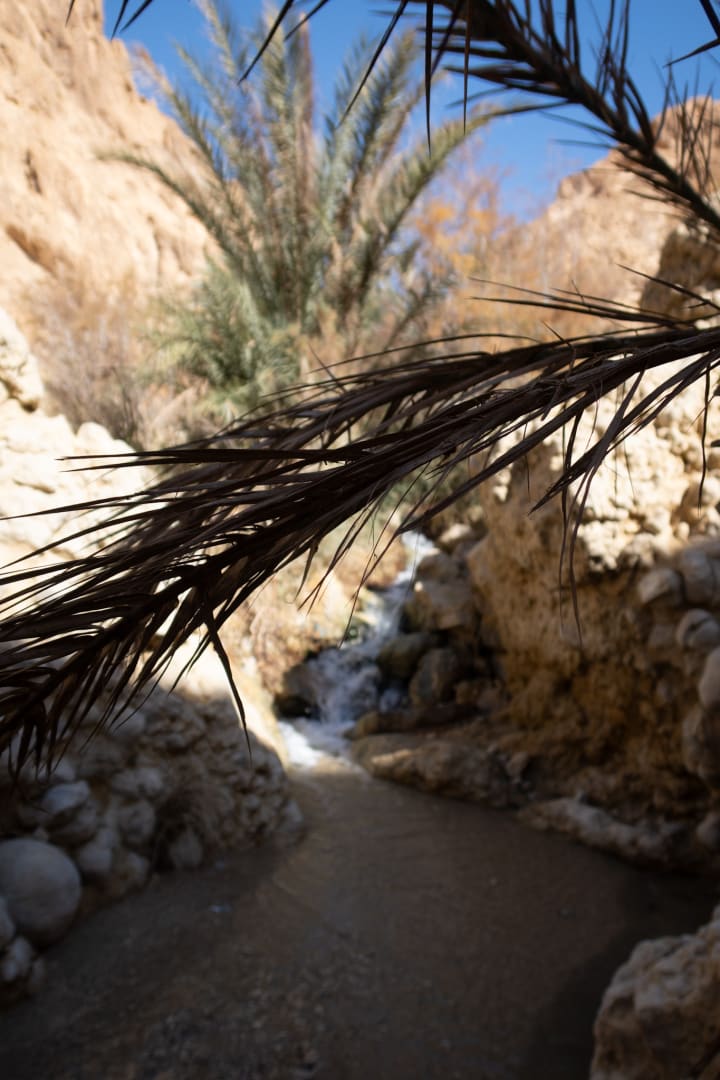
Chebika holds historical significance as well. In antiquity, it was a Roman outpost known as Ad Speculum, and was then later a mountain refuge of the Amazigh (Berber) people. Today, you can still see remnants of the ancient settlement located on the hiking path.
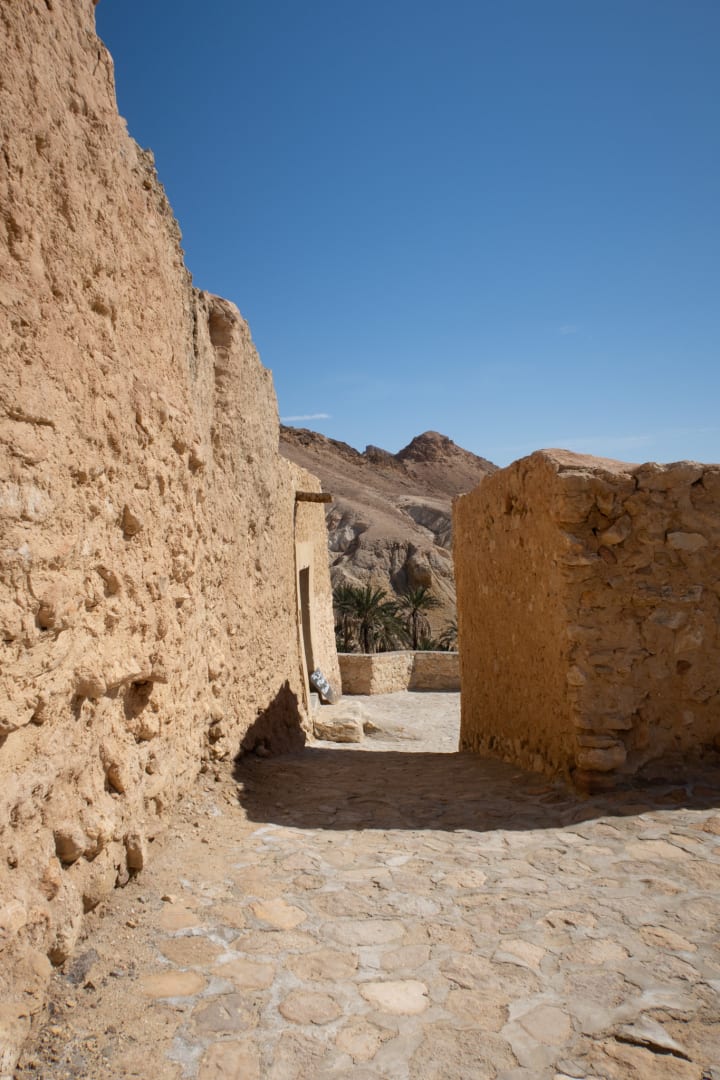
Unfortunately, Chebika carries a heavy history tied to one of Tunisia’s most devastating natural disasters. In 1969, relentless rain fell for nearly five weeks straight, triggering catastrophic floods across the region. The canyon slopes couldn’t contain the sudden rush of water, which caused landslides. The flood killed hundreds, destroyed thousands of homes, and forced many residents of Chebika to abandon the village. The village ruins, combined with the surrounding landscape, give Chebika an arguably haunting beauty.
What's in a name? Why is it called Chebika?
The name “Chebika” is believed by some locals to come from a Tunisian Arabic word meaning “small net.” This interpretation refers to the unique patterns the water creates as it cascades over the rocky terrain and waterfalls of the oasis. The exact origin of the name isn’t certain, though.
Chebika also known by the Arabic name “Qasr el-Shams” (Palace of the Sun) due to its sun-drenched location.
Fun fact: In Tunisian Arabic, the phrase “chbīk?” (شبيك؟) is an informal way of asking “What’s wrong with you?” and sounds a lot like “Chebika”!
What can I see and do in Chebika?
Exploring Chebika means getting active. The main trail is a loop that starts in the village, winds through the canyon and past the waterfall, then climbs up to the ruins of the old settlement before looping back. It’s not a tough hike, but it’s seriously stunning. You won't be exerting too much effort, but you'll feel peaceful and happy.
I keep saying it, but I'll say it again: The contrast between the lush palm groves and the arid desert backdrop is surreal!
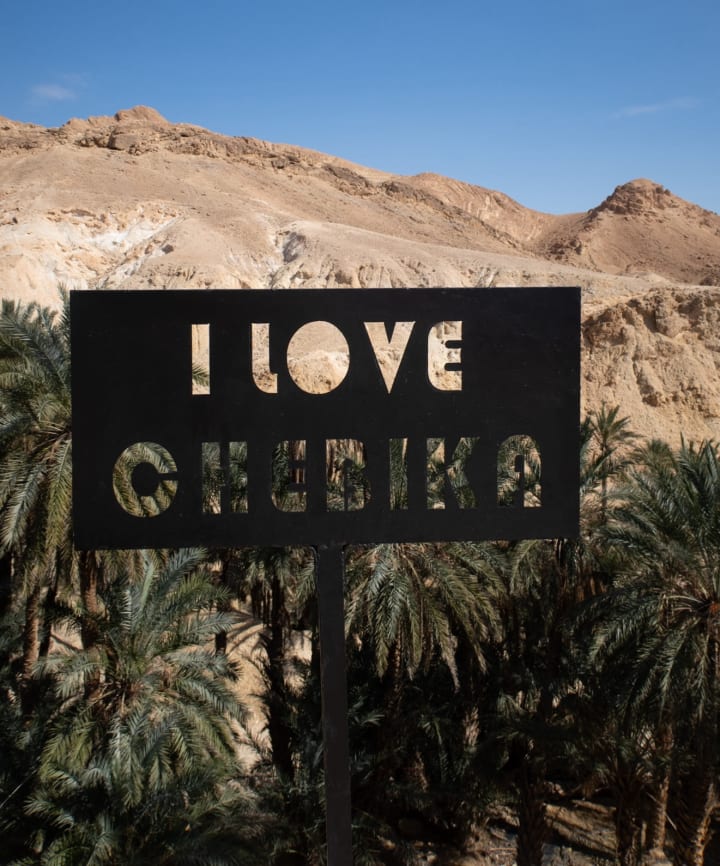
2025 Travel Guide: Know before you go to Chebika Oasis
Chebika Oasis is in the Tozeur Governorate. It is usually the first stop for most tours of the nearby mountain oases, including Tamaghza and Mides Canyon.
How to Get There: To properly explore the mountain oases, it would be helpful to have a 4×4 vehicle, but a normal sedan will work just as fine as well. If you end up taking a tour in Tozeur, you'll probably be in a 4x4.
Consider a Guide: Booking through a local platform such as WildyNess connects you with regional guides who can take you to all three oases (and more!) These guides offer valuable insights and also help ensure your visit directly supports the local economy. You can also book your transportation and accommodation through them.
Safety Note: U.S. and Canadian government travel advisories have flagged this region due to its border proximity to Algeria. Personally speaking, I find this a bit preposterous. Chebika is a routine stop on desert tours and has a steady flow of both local and international visitors, and it's calm, well-traveled, and far more accessible than the warnings might suggest. While I have never been to Algeria because I hold an American passport (it's complicated for me), I believe that these warnings are overblown. I would say use your own discrepancy to stay safe, as you would in any country, city or even your own neighborhood.
Want to stay connected?
If you like my work, please consider buying me a coffee or leaving me a tip on Vocal. Proceeds will go to me ordering a "direct," (pronounced the French way: "DEE-rect") which is a cappuccino-meets-latte in Tunisia. You can also support my photography by purchasing custom digital prints (I'm still working on them, and I'll happily take commissions! Just drop a comment if you're interested).
To stay updated with off-the-beaten-path explorations both in Tunisia and beyond, please subscribe to me on Vocal. I've been living in Tunisia in 2025 and believe that there's so much to share about this country. I'll also expand to other global destinations down the line (I've visited 30+ countries, which may not seem like a lot, but I've tried to focus on off-the-beaten-path countries).
You can also connect with me personally! If you're interested in a custom itinerary, comment below and I'm happy to discuss with you! Thank you so much for your support.
About the Creator
Atoosa Ryanne Arfa
I'm a hopelessly curious wanderer and love sharing stories of interesting perspectives around the world. My goal is to share stories from the periphery, inspired by my love for traveling to off-the-beaten-path places.
Keep reading
More stories from Atoosa Ryanne Arfa and writers in Wander and other communities.
Bulla Regia: Your guide to Tunisia’s Roman ruins surrounded by greenery
If you’re even a little bit obsessed with Roman history, Bulla Regia deserves a spot on your travel map. Tucked just outside Jendouba in northwest Tunisia, this place holds some of the best-preserved Roman ruins outside of Italy and is a reminder that the Roman Empire was basically everywhere.
By Atoosa Ryanne Arfa8 months ago in Wander
Worth the Wait: Puerto Viejo, Costa Rica
Beach bumming in a small Caribbean beach town sounded like a perfect way to end our 6-month trip through Mexico and Central America. Or so we thought. The foul, fishy stench of rotten seaweed hit our nostrils as we stepped from the cramped bus and looked out at a rather depressing, empty, and underwhelming black sand beach. It was pouring with rain, and we had to quickly fish out our ponchos. We thought, this couldn’t be it, could it?
By Sh*t Happens - Lost Girl Travel8 days ago in Wander



Comments
There are no comments for this story
Be the first to respond and start the conversation.