
Yellow Warning: When the Wind Demands Our Attention
Understanding weather alerts, preparedness, and why caution can save lives
Weather has always shaped human life, but in recent years its warnings have grown louder, clearer, and more urgent. Among these alerts, the Yellow Warning often appears understated compared to red or orange alerts, yet it carries a message that should never be ignored. When the wind demands our attention, a yellow warning serves as a reminder that nature is shifting—and we must respond with awareness and responsibility.
This article explores what a yellow weather warning really means, why wind warnings are increasingly common, and how individuals and communities can stay prepared without panic.
What Is a Yellow Weather Warning?
A Yellow Warning is issued by meteorological authorities to signal potentially hazardous weather conditions. It does not mean a disaster is guaranteed, but it highlights a situation that could escalate if ignored. In the case of strong winds, a yellow warning often indicates gusts capable of causing minor damage, travel disruption, and risks to vulnerable structures or people.
Unlike red warnings, which signal immediate danger, yellow warnings are about early awareness. They are meant to prompt caution, planning, and informed decision-making rather than fear.
When the Wind Becomes a Risk
Wind is often underestimated. Unlike floods or fires, it is invisible, and its danger is easy to dismiss. However, strong winds can cause:
Falling trees and branches
Damage to roofs, power lines, and temporary structures
Disruption to road, rail, and air travel
Increased danger for pedestrians, cyclists, and construction workers
Even moderate wind speeds can become dangerous when combined with loose objects, poor visibility, or already weakened infrastructure. A yellow warning is the weather’s way of saying: conditions are changing—pay attention.
Why Yellow Wind Warnings Are Increasing
Across the world, weather patterns are becoming more unpredictable. Climate scientists point to rising global temperatures as a key driver behind shifting wind systems and more frequent storms. While not every yellow warning is linked directly to climate change, the overall increase in such alerts reflects a planet under stress.
Urbanization also plays a role. Cities filled with scaffolding, high-rise buildings, and narrow streets can amplify wind effects, creating sudden gusts and wind tunnels. What might have been harmless decades ago can now pose real risks in densely populated areas.
The Psychology of Ignoring Warnings
One of the biggest challenges with yellow warnings is complacency. Because they are not labeled as severe, many people choose to ignore them altogether. This mindset can be dangerous.
Yellow warnings are not about predicting disaster; they are about preventing avoidable harm. Many accidents occur not because people lacked information, but because they underestimated it. A fallen branch, a loose sign, or a sudden gust while driving can turn a normal day into an emergency.
By the time conditions worsen, it may already be too late to react calmly.
How to Respond to a Yellow Wind Warning
Responding to a yellow warning does not require drastic action, but it does call for smart choices. Here are practical steps individuals can take:
Secure outdoor items such as bins, garden furniture, or tools
Avoid unnecessary travel, especially in high-sided vehicles
Stay clear of trees, scaffolding, and construction zones
Check weather updates regularly for changes in alert levels
Employers should assess outdoor work risks and adjust schedules if needed
Small precautions can significantly reduce the chances of injury or property damage.
Community Responsibility and Awareness
Weather warnings are not just personal alerts; they are community signals. Local authorities, schools, and businesses play a vital role in responding appropriately. Clear communication, flexible planning, and public awareness campaigns can make a huge difference in how safely a community navigates adverse conditions.
Social media also plays a growing role. While it can spread misinformation, it can equally help share real-time updates and safety advice. The key is relying on trusted sources rather than speculation or panic-driven posts.
Media, Messaging, and the Power of Early Alerts
The effectiveness of a yellow warning depends largely on how it is communicated. Simple language, consistent messaging, and repeated reminders help ensure that people take notice. When media outlets treat yellow warnings seriously—without exaggeration—they help normalize preparedness.
Ignoring early warnings often leads to blame after incidents occur. Taking them seriously builds a culture where safety is proactive, not reactive.
A Signal Worth Respecting
A Yellow Warning is not a cause for fear—it is a call for attention. When the wind demands our awareness, it asks us to slow down, look around, and act responsibly. In a world where weather extremes are becoming more common, learning to respect early warnings may be one of the most important habits we can develop.
Preparedness is not about expecting the worst; it is about being ready for uncertainty. And sometimes, the quietest warnings are the ones that matter most.
About the Creator
Keep reading
More stories from Aqib Hussain and writers in Wander and other communities.
Forest Skating Trails Are a Winter Wonderland: Here Are a Few to Try Across Canada
There is something undeniably magical about skating through a snow-covered forest. The world feels quieter, softer, and slower. Snow clings to pine branches, the air is crisp against your cheeks, and your skates carve gentle lines into smooth ice that winds through towering trees. Forest skating trails are more than just a winter activity — they are an immersive experience that transforms the coldest season into something extraordinary.
By Aqib Hussain15 days ago in Wander
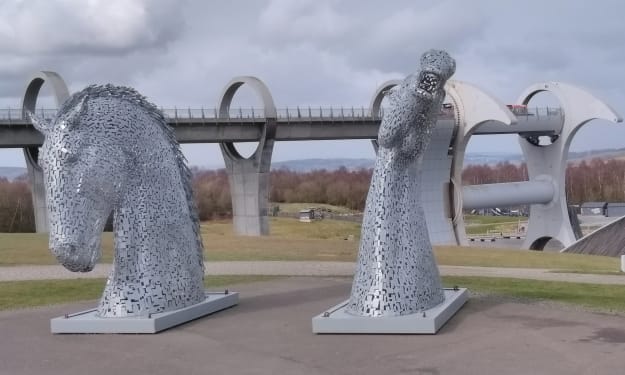
The Kelpies and The Falkirk Wheel
The Kelpies The Kelpies A few years ago I was driving up the M9 towards Dollar in Scotland, it was dark and raining and suddenly I nearly crashed the car when I saw two huge hundred-foot-high horses' heads to my left-hand side. I had to pull over. I am not sure if I tried to take a photograph but I was dumbfounded.
By Mike Singleton 💜 Mikeydred 3 days ago in Wander
Pearl
1980 something. we all hung out at Pearl and you and i were nothing special, or so i thought. i mean we all danced, drenched in our own sweat, our own saline solution of fear, too many beers, shots, laughter, tears, fucks in the bathroom and i don't know when we began to be afraid. do you?
By ROCK aka Andrea Polla (Simmons)3 days ago in Fiction



Comments
There are no comments for this story
Be the first to respond and start the conversation.