
Why is Consolidation Needed Among African Airlines?
Airlink’s CEO Answers as Qatar Airways Buys 25% Stake


The African aviation industry is undergoing a significant transformation, with consolidation emerging as a key theme among airlines. The recent acquisition of a 25% stake in Airlink by Qatar Airways has sparked discussions about the necessity of consolidation in the region. In this blog, we’ll explore why consolidation is crucial for African airlines and how it could reshape the continent's aviation landscape, drawing insights from Airlink’s CEO.
Background of Airlink
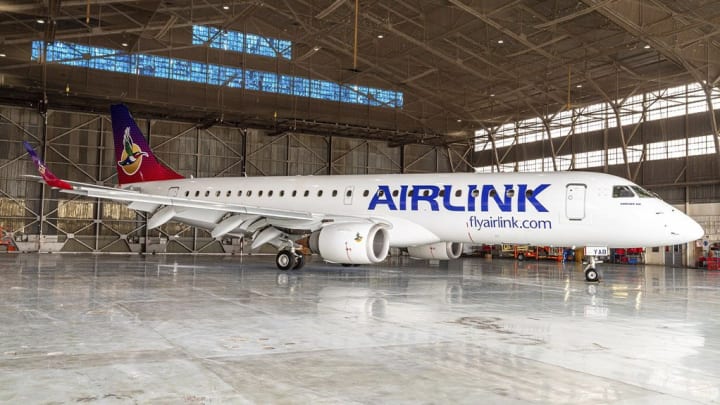
Airlink is a privately owned regional airline based in Johannesburg, South Africa. Established in 1992, the airline has grown to become one of the largest independent regional carriers in Southern Africa. Airlink operates a comprehensive network of routes that connect smaller towns and regional centers across Southern Africa with major hubs, including Johannesburg, Cape Town, and Durban.
Airlink was founded by Rodger Foster, who remains the CEO, along with a group of investors. Initially, the airline focused on providing vital air services to under-served regions in South Africa, particularly areas that were not commercially viable for larger carriers. This strategy enabled Airlink to carve out a niche market, serving remote destinations and smaller airports.
In its early years, Airlink formed a strategic partnership with South African Airways (SAA), operating as a franchisee under the SAA brand. This partnership allowed Airlink to access SAA’s booking systems and frequent flyer programs, significantly boosting its market presence. However, the airline maintained its operational independence, managing its fleet, routes, and personnel.
Throughout the 2000s and 2010s, Airlink steadily expanded its route network, adding destinations not only within South Africa but also in neighboring countries such as Zimbabwe, Namibia, Mozambique, Botswana, and Zambia. The airline’s focus on regional connectivity made it a vital player in the Southern African aviation market, particularly in connecting smaller communities with major economic hubs. In 2020, Airlink ended its franchise agreement with SAA, rebranding itself as an independent carrier. This move was partly driven by SAA's financial struggles and restructuring efforts. By establishing its own identity, Airlink aimed to increase its flexibility and competitiveness in the regional aviation market.
Airlink operates a diverse fleet that includes Embraer E-Jets, Embraer ERJ regional jets, and British Aerospace Jetstream turboprops. The airline has consistently invested in modernizing its fleet to enhance efficiency, reduce operational costs, and provide a better passenger experience. The airline's operations are known for their reliability, with a strong focus on punctuality and customer service. Airlink’s extensive network, combined with its commitment to safety and service quality, has earned it a solid reputation among travelers in the region.
In recent years, Airlink has continued to expand its network, adding more international destinations and forging strategic partnerships with other global carriers. The acquisition of a 25% stake in Airlink by Qatar Airways in 2024 marks a significant milestone in the airline's history, providing it with additional resources and global connectivity. This partnership with Qatar Airways is expected to further enhance Airlink’s position in the African market, offering passengers more options and better connectivity both within the continent and beyond.
Airlink’s journey from a small regional airline to one of Southern Africa’s leading carriers is a testament to its strategic vision and commitment to serving the needs of the region. As it enters a new phase of growth with the backing of a global partner like Qatar Airways, Airlink is well-positioned to continue playing a crucial role in the development of African aviation.
The Case for Consolidation
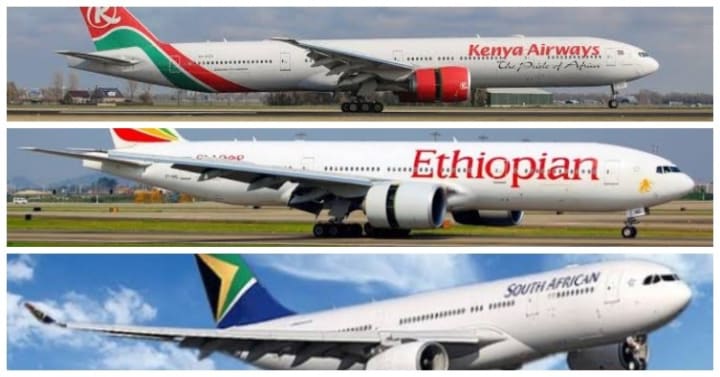
Africa’s aviation market is vast but fragmented, with numerous airlines operating across the continent. Many of these airlines struggle to maintain profitability, often competing in overlapping markets with limited resources. Airlink’s CEO has pointed out that the proliferation of airlines attempting to survive in this environment is unsustainable. Consolidation, he argues, is essential for several reasons:
a. Achieving Economies of Scale
One of the most significant advantages of consolidation among African airlines is the ability to achieve economies of scale. When airlines merge or form strategic alliances, they can pool their resources, leading to a substantial reduction in operational costs. For instance, consolidated airlines can optimize their fleet usage, share maintenance facilities, and negotiate better deals with suppliers. This collective efficiency translates into lower costs per unit, which is crucial in an industry characterized by high fixed costs. As operational costs decrease, airlines are in a better position to offer more competitive pricing to passengers, making air travel more accessible.
Additionally, economies of scale enable airlines to invest in technology and infrastructure that might be unaffordable for smaller, independent carriers. By sharing resources, airlines can improve their operational efficiency, such as through streamlined booking systems, improved baggage handling, and more efficient ground operations. These improvements not only reduce costs but also enhance the overall passenger experience. The consolidation trend, therefore, is not just about surviving in a competitive market but also about thriving by offering better services at lower prices, ultimately benefiting both the airlines and their customers.
b. Enhancing Market Reach
Consolidation among African airlines plays a crucial role in enhancing market reach. By merging their networks, airlines can offer passengers a broader range of destinations and more convenient flight options. This expanded network reduces the reliance on non-African hubs like Paris or Frankfurt for connecting flights, making travel within Africa and to global destinations more direct and efficient. For instance, the strategic partnership between Airlink and Qatar Airways exemplifies this benefit. Airlink, with its extensive regional network, and Qatar Airways, with its global reach, can offer seamless connectivity, allowing passengers to travel across continents with greater ease.
This enhanced market reach also enables African airlines to compete more effectively on the international stage. By offering more comprehensive route options, consolidated airlines can attract a larger share of the global market, driving passenger growth and increasing revenues. Moreover, this increased connectivity fosters economic growth within the region by facilitating trade, tourism, and investment. As more destinations become accessible, both business and leisure travelers benefit from improved travel options, which can lead to increased demand for air travel within Africa and beyond. Ultimately, consolidation helps African airlines expand their market presence, making them more competitive globally.
d. Strengthening Financial Stability
Financial stability is a critical concern for many African airlines, which often face high operational costs, fluctuating demand, and limited access to capital. Consolidation offers a pathway to stronger financial health by enabling airlines to pool their financial resources, reduce debt burdens, and attract new investments. When airlines join forces, they can better weather economic downturns and industry challenges, ensuring their long-term sustainability. The recent investment by Qatar Airways in Airlink is a prime example of how strategic partnerships can bolster an airline's financial position. By securing a 25% stake in Airlink, Qatar Airways provides not only capital but also access to a global network, enhancing Airlink's financial stability and growth prospects.
This financial strengthening allows airlines to invest in modernizing their fleets, expanding their route networks, and improving customer service, all of which contribute to long-term profitability. Furthermore, a financially stable airline is better positioned to negotiate favorable terms with suppliers, secure better financing options, and withstand market volatility. In an industry where margins are often thin, the financial benefits of consolidation can make the difference between survival and success. By enhancing financial stability, consolidation ensures that African airlines can continue to serve their customers and contribute to the continent's economic development.
e. Improving Service Quality
Consolidation in the airline industry can lead to significant improvements in service quality, benefiting passengers and enhancing the overall travel experience. With fewer airlines operating, those that remain can focus more on quality rather than quantity. This often involves investing in newer, more efficient aircraft, which not only reduces operational costs but also offers passengers a more comfortable and reliable journey. Airlines can also enhance in-flight services, such as offering better food and beverage options, more entertainment choices, and improved customer service.
In addition to in-flight improvements, consolidated airlines are better equipped to maintain more reliable schedules, reducing the likelihood of delays and cancellations. This reliability is a key factor in passenger satisfaction and can lead to increased customer loyalty. Moreover, with stronger financial backing and a more extensive network, consolidated airlines can offer more direct flights and convenient connections, further enhancing the travel experience. For African airlines, improving service quality through consolidation is crucial in a market where competition from international carriers is intense. By offering a superior product, African airlines can attract more passengers, both from within the continent and internationally, thereby increasing market share and boosting revenues. In the long run, better service quality not only drives customer satisfaction but also fosters a positive image of African aviation on the global stage.
How Consolidation Could Transform African Aviation
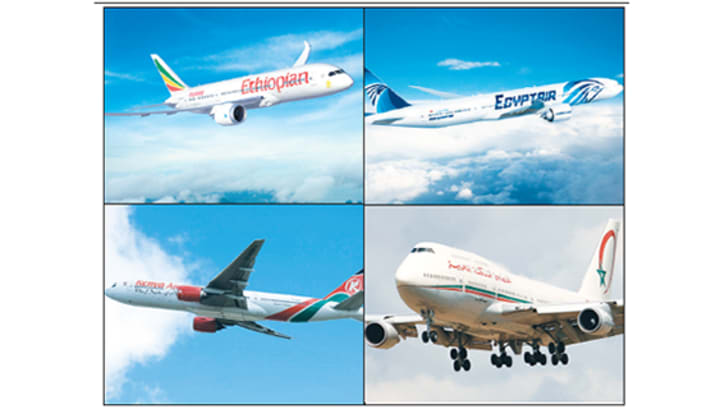
The consolidation trend is not just about survival; it’s about transforming the African aviation industry. By reducing the number of players and focusing on building stronger, more efficient airlines, the industry can move towards a more sustainable future. Here’s how consolidation could reshape the landscape:
a. Creation of Strong Regional Hubs
Consolidation in African aviation has the potential to create robust regional hubs within the continent, reducing reliance on foreign airports for intra-African travel. Currently, many African travelers must transit through European or Middle Eastern hubs such as Paris, London, or Dubai to reach other African destinations. This not only increases travel time and costs but also hinders the development of Africa's own aviation infrastructure. By consolidating, African airlines can build stronger networks around key cities like Johannesburg, Nairobi, and Addis Ababa, transforming them into major aviation hubs for the continent.
This approach has proven successful in other regions. For instance, Dubai's Emirates Airlines has turned Dubai International Airport into a global hub, facilitating seamless connections between Asia, Europe, and Africa. Similarly, Singapore Airlines has developed Singapore's Changi Airport into a world-class hub, linking Southeast Asia with the rest of the world. In Africa, consolidation could help replicate these successes, allowing African airlines to offer more direct flights and better connectivity across the continent. This would not only make travel more convenient for passengers but also stimulate economic growth by enhancing trade, tourism, and investment within Africa.
b. Competitive Pressure on Non-African Airlines
As African airlines consolidate and strengthen, they can more effectively compete with international carriers that currently dominate the African skies. European, Middle Eastern, and Asian airlines have long capitalized on the fragmented African aviation market, often offering superior services and more extensive route networks. However, with consolidation, African airlines could level the playing field by expanding their networks, improving service quality, and offering competitive pricing. This increased competition could force non-African airlines to enhance their offerings and lower fares, ultimately benefiting passengers.
A similar dynamic has been observed in other regions. In the United States, the consolidation of major airlines such as American Airlines, Delta, and United has intensified competition, leading to better service and more route options for passengers. In Europe, the merger of British Airways and Iberia into the International Airlines Group (IAG) created a stronger competitor against other European and global carriers. By following this model, African airlines could increase their market share and provide travelers with more choices, reducing the need to rely on foreign carriers for both regional and international travel.
d. Increased Investment in Infrastructure
A consolidated and financially stable African airline industry would be more attractive to both public and private investors, potentially leading to significant investments in airport infrastructure. Currently, many African airports struggle with outdated facilities, limited capacity, and insufficient maintenance. However, a more profitable and reliable airline industry could justify investments in modernizing these airports, improving the passenger experience, and accommodating increased traffic. World examples illustrate the transformative impact of such investments. For instance, after the consolidation of the Latin American carriers LAN and TAM into LATAM Airlines Group, there was a marked increase in airport infrastructure development across the region, particularly in hubs like Santiago and São Paulo. Similarly, the consolidation of European airlines into larger groups has been accompanied by substantial investments in airport facilities, as seen with the expansion and modernization of London Heathrow and Madrid Barajas.
In Africa, similar investments could lead to the development of world-class airports that meet international standards, facilitating smoother operations and enhancing the overall travel experience. This would not only benefit passengers but also make African airports more competitive on the global stage, attracting more international flights and boosting the continent’s role in global aviation. By focusing on consolidation, the African aviation industry has the potential to undergo a transformative change, creating stronger airlines, more efficient travel networks, and a more vibrant economy. The lessons from other regions provide a roadmap for how Africa can build a more sustainable and competitive aviation industry that meets the needs of its people and contributes to the continent's long-term development.
The Role of Strategic Partnerships
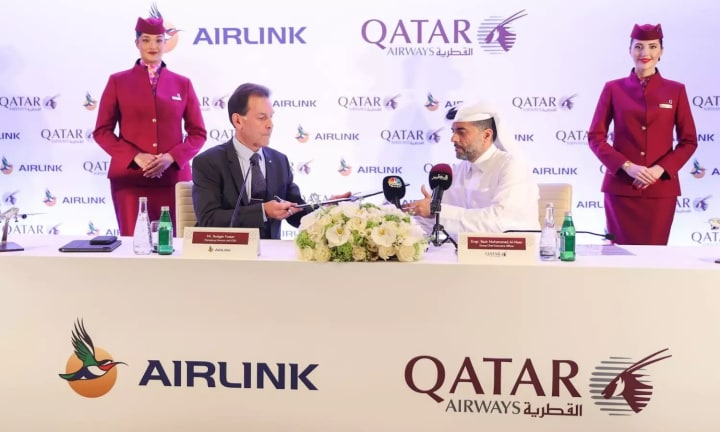
Airlink's decision to sell a 25% stake to Qatar Airways likely stems from several strategic and financial considerations that align with the airline's long-term goals. There are some key reasons why Airlink may have accepted this deal.
Selling a stake to Qatar Airways provides Airlink with an infusion of capital, which can be crucial for expanding operations, upgrading the fleet, and enhancing overall financial stability. The aviation industry, particularly in Africa, is highly competitive and capital-intensive. By securing investment from a global powerhouse like Qatar Airways, Airlink can strengthen its balance sheet and ensure sustainable growth. This financial backing also allows Airlink to weather economic downturns, currency fluctuations, and other challenges that African airlines often face.
The partnership with Qatar Airways offers Airlink access to a broader global network, which can significantly enhance its connectivity both within Africa and internationally. Qatar Airways, as one of the world's leading airlines, has an extensive route network that spans over 160 destinations worldwide. By integrating into this network, Airlink can offer its customers more seamless connections to major global cities, improving its competitive edge. This move aligns with Airlink's strategy to expand its footprint beyond Southern Africa and become a more prominent player in the broader African aviation market.
Partnering with Qatar Airways enables Airlink to tap into the operational expertise and industry best practices of a globally recognized airline. Qatar Airways has a strong track record in areas such as customer service, fleet management, and operational efficiency. By collaborating closely with Qatar Airways, Airlink can improve its own operational standards, enhance service quality, and adopt innovative technologies. This exchange of knowledge and resources can lead to cost savings, improved performance, and a stronger market position.
Aligning with Qatar Airways allows Airlink to leverage the brand reputation and global reach of a top-tier airline. Qatar Airways is known for its high standards of service, reliability, and innovation. This association can enhance Airlink's brand perception, making it more attractive to passengers, investors, and partners. Additionally, the endorsement of Qatar Airways can boost Airlink's credibility and visibility in the international aviation community, potentially opening doors to further partnerships and collaborations.
The African aviation market is characterized by fragmentation, with numerous small and medium-sized airlines competing for market share. By selling a stake to Qatar Airways, Airlink positions itself as a more formidable competitor in this landscape. The backing of a major international airline provides Airlink with a competitive advantage, allowing it to better compete with other African and non-African carriers. This move could also be seen as a proactive step to consolidate its position in anticipation of further industry consolidation across Africa.
Lastly, the decision to sell a stake in Qatar Airways may be part of Airlink's long-term strategic vision of evolving into a larger, more diversified airline. This partnership could be the first step towards deeper collaboration, potentially leading to joint ventures, code-sharing agreements, or even further equity investments in the future. By aligning with a strong international partner, Airlink can ensure that it remains relevant and competitive in the rapidly changing global aviation industry.
Airlink's decision to sell a 25% stake to Qatar Airways likely reflects a strategic move to secure financial stability, expand its market reach, and enhance its competitive position in the African aviation industry. This partnership provides Airlink with the resources and expertise needed to navigate the challenges of the industry and capitalize on growth opportunities both within Africa and globally.
Final Thoughts
Consolidation among African airlines is not just a trend—it’s a necessity for survival and growth in a challenging market. As Airlink’s CEO emphasizes, fewer, stronger airlines are better equipped to serve the continent's needs, offering improved connectivity, service quality, and financial stability. The recent investment by Qatar Airways in Airlink is a clear indication of the potential that lies in strategic partnerships and consolidation. As the African aviation industry continues to evolve, consolidation will play a key role in shaping its future. By embracing this change, African airlines can look forward to a more prosperous and competitive industry that better serves the needs of its passengers and contributes to the continent’s economic growth.
About the Creator
Horace Was
Essay Writer, Aviation and Technology Expert
Keep reading
More stories from Horace Was and writers in Wander and other communities.
World of Fighter Jets
Fighter jets are essential for modern air dominance, combining speed, agility, and firepower to control the skies. With many advanced aircraft in service worldwide, determining the top contenders involves evaluating their capabilities, technological innovations, and country of origin. This blog highlights the top 10 fighter jets of 2023, detailing their features and origins.
By Horace Was2 years ago in Wander
Worth the Wait: Puerto Viejo, Costa Rica
Beach bumming in a small Caribbean beach town sounded like a perfect way to end our 6-month trip through Mexico and Central America. Or so we thought. The foul, fishy stench of rotten seaweed hit our nostrils as we stepped from the cramped bus and looked out at a rather depressing, empty, and underwhelming black sand beach. It was pouring with rain, and we had to quickly fish out our ponchos. We thought, this couldn’t be it, could it?
By Sh*t Happens - Lost Girl Travel8 days ago in Wander




Comments
There are no comments for this story
Be the first to respond and start the conversation.