
Where the Temples End and the Sea Begins: My First Scuba Dive in Gokarna
Gokarna has a way of drawing you in quietly. You arrive expecting temple bells, barefoot pilgrims, and slow sunsets and you get all of that.
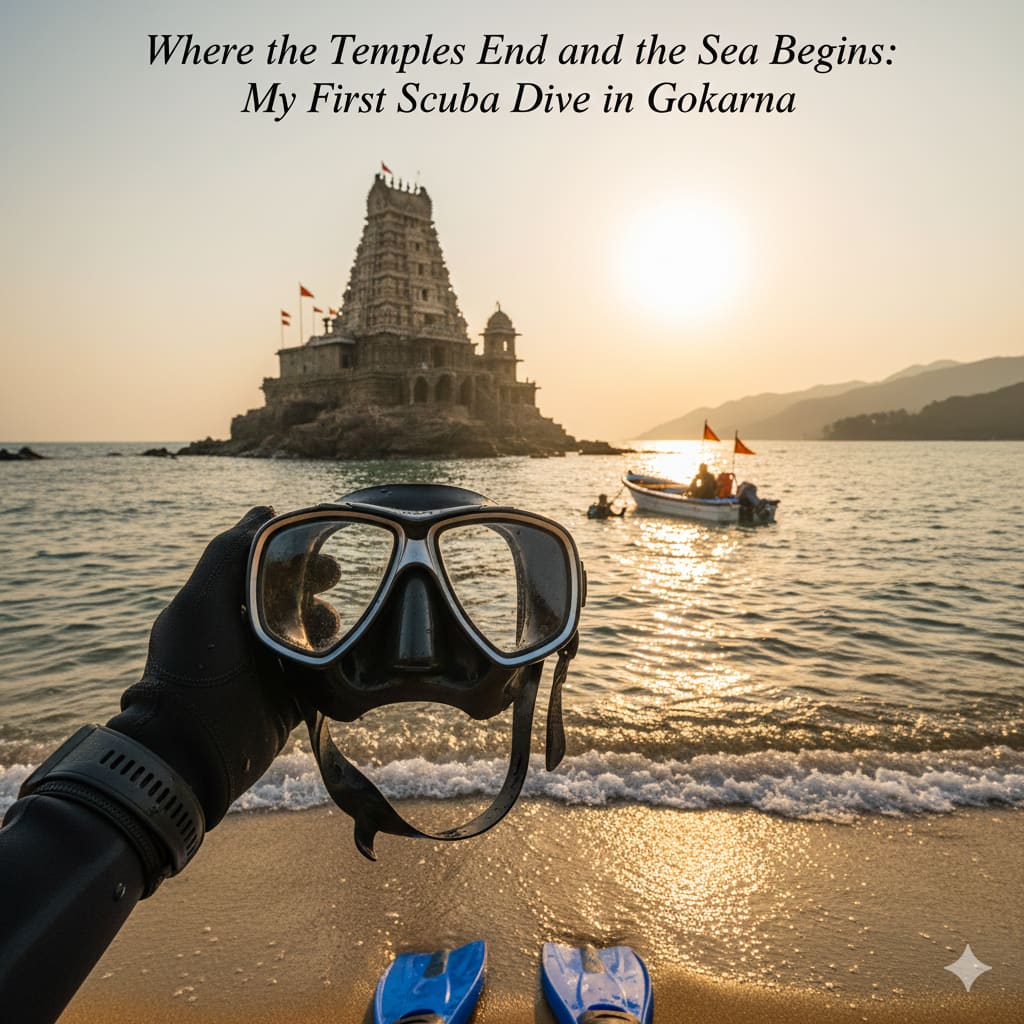
Gokarna has a way of drawing you in quietly. You arrive expecting temple bells, barefoot pilgrims, and slow sunsets and you get all of that. But what surprised me most was how seamlessly this sacred coastal town led me from incense-scented streets to the vast silence beneath the sea. Scuba diving in Gokarna wasn’t something I had planned obsessively. It happened almost naturally, like the town nudging me to look beyond the shore and discover what lies beneath its calm waters.
If you’re someone who loves authentic travel experiences—those that unfold gently rather than shout for attention—this story and guide might resonate with you. Let me walk you through my first scuba dive in Gokarna, along with everything you need to know to plan your own.
From Sacred Shores to Salty Air: First Impressions of Gokarna
My morning in Gokarna began with temple chants drifting through narrow lanes and ended with waves folding into the shore like slow breaths. The town feels suspended between devotion and detachment. On one side, the Mahabaleshwar Temple anchors Gokarna’s spiritual identity; on the other, beaches like Kudle and Om invite you to forget time altogether.
It was during one such lazy afternoon at Kudle Beach, watching the horizon blur into shades of blue, that I first heard about scuba diving in Gokarna. No flashy ads, no loud promises—just a quiet mention from a fellow traveller who said, “If you want to see a different side of Gokarna, go underwater.”
That line stayed with me.
Why Scuba Diving in Gokarna Feels So Different
Unlike popular diving destinations that feel commercial and crowded, Gokarna offers something rare: simplicity. Diving here isn’t about ticking off an extreme adventure; it’s about immersion—both literal and emotional. The dive sites are relatively close to shore, the groups are small, and instructors take time to ease beginners into the experience.
What makes scuba diving in Gokarna special is how naturally it fits into the town’s rhythm. There’s no rush to prove anything. The waters are calm during the right season, visibility is decent, and the marine ecosystem—rocky formations, coral patches, and schools of tropical fish—reveals itself slowly.
For a first-time diver like me, that gentleness mattered. It felt less like conquering the sea and more like being welcomed into it.
Best Time to Visit and How to Reach Gokarna
Timing is everything when it comes to scuba diving. The best time to visit Gokarna for scuba diving is from October to March. During these months, the Arabian Sea is calm, visibility improves, and the weather is comfortable enough to enjoy both water activities and beach hopping.
November to February is particularly ideal. Early morning dives during this period are magical, with sunlight filtering through the water and illuminating marine life below. The monsoon season, from June to September, is not suitable for diving due to rough seas and strong currents, and most dive centers remain closed for safety reasons.
Reaching Gokarna is easier than it feels. The nearest airport is Dabolim Airport in Goa, around 150 kilometres away. From there, a taxi or bus ride along the coast brings you straight into Gokarna’s laid-back atmosphere. Mangalore International Airport, about 240 kilometres away, is another option, especially for travellers coming from southern India.
Train travellers can get down at Gokarna Road Railway Station, which is well-connected to Bangalore, Goa, and Mangalore. From the station, it’s a short auto-rickshaw or taxi ride to the beaches or town.
Taking the Plunge: What My First Dive Was Really Like
I won’t lie—I was nervous. The idea of breathing underwater sounds poetic until you’re actually handed a regulator and told to trust it. The dive center I chose, based near Om Beach, began with a calm, reassuring briefing. The instructor explained everything patiently: how the equipment works, how to equalize pressure, and how to communicate underwater.
We practiced in shallow water first, letting our bodies adjust to the unfamiliar sensation. And then came the boat ride—short, quiet, and filled with anticipation.
The moment I descended, the world changed. Sound faded. Movements slowed. Schools of fish drifted past like they had nowhere else to be. The rocky seabed below looked ancient, almost meditative. For 30 minutes, nothing existed except breath, bubbles, and blue.
That’s when it hit me—this wasn’t just an activity. It was a form of stillness I hadn’t known I needed.
Safety, Dive Centers, and Budgeting Tips You’ll Actually Use
Safety is non-negotiable when it comes to scuba diving, especially for beginners. Gokarna has several certified dive centers, mostly around Om Beach and Kudle Beach, offering beginner dives and training programs. Always choose a center with experienced instructors, proper equipment, and clear safety protocols.
Listen carefully during briefings, stay close to your instructor, and never hesitate to signal discomfort underwater. Simple habits—like staying hydrated, avoiding alcohol before diving, and being well-rested—make a huge difference.
From a budgeting perspective, Gokarna is refreshingly affordable. A beginner scuba diving session typically costs ₹2,500 to ₹4,500, including equipment and instructor guidance. Accommodation ranges from budget beach huts starting at ₹600 per night to comfortable boutique stays and eco-resorts. Food is inexpensive, especially if you eat at local cafés and beach shacks serving fresh seafood and South Indian meals.
Beyond the Dive: Nearby Attractions and a Perfect 3-Day Itinerary
Scuba diving might be the highlight, but Gokarna offers plenty to explore once you’re back on land. Beaches like Half Moon Beach and Paradise Beach are perfect for quiet afternoons, while the beach trek connecting Kudle, Om, and Half Moon offers stunning coastal views.
For a touch of history, Mirjan Fort—about 20 kilometres away—is a beautiful half-day trip, especially in the early morning or late afternoon. Nature lovers can venture further to Yana Caves or Vibhuti Falls, both of which add a sense of adventure to the journey.
A simple 3-day itinerary works beautifully:
- Arrive on Day 1, settle in, and explore Kudle or Om Beach at sunset.
- Dedicate Day 2 to scuba diving, followed by a relaxed lunch and a beach trek.
- Spend Day 3 visiting the Mahabaleshwar Temple, Mirjan Fort, and soaking in the town’s slow pace before heading out.
Final Thoughts: Where Gokarna Truly Begins
Gokarna taught me that travel doesn’t always have to be loud to be meaningful. Sometimes, the most unforgettable experiences happen in silence—beneath the surface, where expectations dissolve and presence takes over.
Scuba diving in Gokarna isn’t about dramatic reefs or record-breaking depths. It’s about discovery, calm, and the quiet thrill of doing something new in a place that encourages you to slow down. Where the temples end and the sea begins, you might just find a version of yourself that’s a little lighter, a little braver, and deeply at peace.
If you’re planning a trip to Gokarna, let the ocean be part of your story. It has more to say than you might expect.
About the Creator
Keep reading
More stories from Aditi Khandelwal and writers in Wander and other communities.
A Morning Above the Clouds: My Mandalpatti Jeep Safari Experience
Some travel experiences feel special the moment you plan them. Others surprise you only when you’re already there. My Mandalpatti Jeep Safari fell firmly into the second category. I had heard people talk about “clouds at your feet” and “views that don’t feel real,” but nothing truly prepares you for what it feels like to be standing on a silent hilltop, wrapped in mist, as the sun slowly wakes up the Western Ghats.
By Aditi Khandelwal3 months ago in Wander
Worth the Wait: Puerto Viejo, Costa Rica
Beach bumming in a small Caribbean beach town sounded like a perfect way to end our 6-month trip through Mexico and Central America. Or so we thought. The foul, fishy stench of rotten seaweed hit our nostrils as we stepped from the cramped bus and looked out at a rather depressing, empty, and underwhelming black sand beach. It was pouring with rain, and we had to quickly fish out our ponchos. We thought, this couldn’t be it, could it?
By Sh*t Happens - Lost Girl Travel10 days ago in Wander
Watching The Total Lunar Eclipse and Blood Moon...March 3rd 2026.
By a stroke of good luck - I just happened to be in Colorado to watch (or squint) at the 2026 Lunar Eclipse in the wee hours of the morning. It was freezing cold, but who can resist the beautiful Rocky Mountain peaks as the antics in the sky compete with dawn. The advent of morning grudgingly pausing in its beginning of yawning awake.
By Novel Allen8 days ago in Wander



Comments
There are no comments for this story
Be the first to respond and start the conversation.