
What animals will you see in Ngorongoro?
A guide to what you will encounter in Ngorongoro.

Ngorongoro Crater located at the northern Tanzania stands as one of the most beautiful and visually wonderful safari destinations in the World. It is often referred to as the “Garden of Eden,” and this beautiful natural crater is a home to more than 25,000 large animals, who are all found within just over 260 square kilometers. The result is having an incredible wildlife-viewing experience that cannot be found anywhere else in the world.
Ngorongoro crater has its crater walls enclosing a self-contained ecosystem, and this ecosystem well balances itself naturally. The Ngorongoro Crater offers many travelers an all year around opportunities to witness Africa’s most iconic animal species, especially the big five animals and many colorful birds.
A Snapshot of animals found in the Crater
The geographical structure of the Ngorongoro Crater has created a natural enclosure like a “natural zoo” that contains both predators and prey together, creating a growing and self-balancing wildlife community. Here are the major animal groups you can expect to find when you visit Ngorongoro:
1. The Big Cats
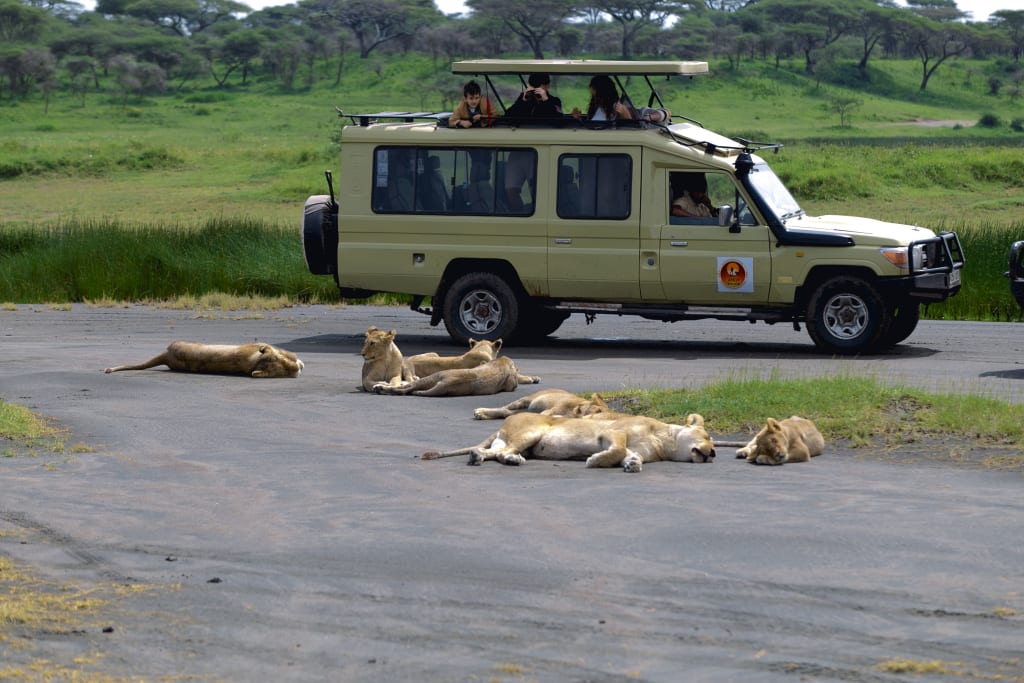
• Black-Maned Lions: The Ngorongoro Crater is famous for its black-maned lions, a genetic variation that gives males a rare and beautiful appearance. These predators are often seen lounging in the open plains of Ngorongoro, checking the potential prey. The population of lions in this crater is so large to the extent that lions here are very easy to observe.
• Leopards: these shy and solitary cats live also on this crater. Finding them may be not as easily as lions but once you find it, it is always rewarding when you see it.
• Cheetahs: these speedy cats, cheetahs are mostly found in the open grasslands of the Crater. These often hunt during the day, so during the daytime, the visitors may have a good chance of seeing them in action.
2. The Gentle Big Animals
• African Elephants: elephants that are found in Ngorongoro are very old, the male elephants have massive tusks and all this is thanks to the environment of the crater. Here elephants roam freely on this region and it is beautiful to watch them.
• Hippos: these are found in the freshwater pools and marshes in the crater. Hippos mostly spend most of their days submerged in water to stay cool. Visiting Ngorongoro will surely make the visitor observe these animals in its natural environment.
• Buffaloes: These animals are found in many places within the crater and they often move in large herds. They are a favorite target for lion prides.
3. The Rare and Endangered
• Black Rhinos: One of the crater’s most important conservation success stories is its conservation of a small but stable population of black rhinos. These endangered animals are often seen grazing in the open grasslands, and spotting one is something travelers wish to encounter.
• African Wild Dogs (rare): these are rarely seen nowadays, but African wild dogs were once an important part of the crater's ecosystem. Conservationists are still finding ways to reintroduce these animals in the Ngorongoro and protect these elusive species.
The Grazers.
A large part of the crater’s beauty comes from the presence of a lot of animals moving across the landscape freely, mostly the herbivores. These herbivores form the base of the food chain in Ngorongoro and play an important role in keeping and balancing the population of predator animals. The animals are:
• Wildebeests: Here in Ngorongoro, there are a hundreds to thousands of wildebeest roaming the crater. They form part of the large wildebeest migration populations that moves across Tanzania and Kenya.
• Zebras: they are easily recognizable by their stripes. Zebras are social animals and often mix with wildebeest herds for mutual protection.
• Gazelles and Antelopes: visiting Ngorongoro you will also see Thomson’s gazelles, Grant’s gazelles, and eland, all of which helps a lot in the ecological balance of the area.
• Warthogs: these animals are often underestimated, but recently have become famous due to its speed in running and its maneuverability when chased with predators. They are also found in Ngorongoro.
These grazers are important since they feed predators and also they provide a beautiful wildlife viewing in the area.
Birdwatcher’s Paradise
Bird enthusiasts will find the Ngorongoro Crater an especially rewarding beautiful destination. Here there is a diversity of habitats, there are lakes, wetlands, grasslands, and forests which support the presence of over 500 species of birds.
Notable Bird Species in the Ngorongoro:
• Flamingos: inside the crater there is a lake known as Lake Magadi. This lake is often covered in pink and filled with flocks of flamingos that feed on these algae-rich waters of the lake.
• Ostriches: This is the world’s largest bird, flightless and a fast bird running on the ground, roams these plains of Ngorongoro in small groups and can be found by the safari goes there.
• Kori Bustard: This is the heaviest flying bird in Africa and frequently spotted in open areas of Ngorongoro.
• Secretary Birds, Eagles, and Vultures: these birds of prey are common in Ngorongoro, with species like the martial eagle and white-backed vulture soaring above or feeding on dead animals.
The Predator-Prey Relationship
The predator-prey relationship in the Ngorongoro Crater is dramatic and better on its own way. Here you will notice that:
• Lions will often hunt wildebeests and zebras, and sometimes they will do it right in front of safari vehicles.
• Cheetahs; these are more specialized in smaller prey hunting, they rely on stealth and speed to catch gazelles.
• Hyenas; these are powerful predators and scavengers and they are known to challenge lions for their kills.
• Jackals; these play a supporting role as opportunists, picking off small prey or leftovers from other animals.
Conservation Successes and Ongoing Challenges
The Ngorongoro Crater is a conservation stronghold and also a tourist site. Protecting this ecosystem requires continuous effort from different stakeholders.
• Black Rhinos have been the focus of anti-poaching programs and initiatives. Rangers are always conducting all the time patrols to protect these critically endangered animal species.
• Elephants are monitored closely due to threats from ivory poaching in other parts of Africa.
When you visitors to the Ngorongoro crater, you indirectly contribute to these efforts through park fees, sustainable tourism practices, and by spreading awareness.
Seasonal Changes and When to Visit
Wildlife in the Ngorongoro Crater is visible year-round, but seasonal variations can make certain experiences more beautiful, for example;
- Dry Season (June to October). During this season it is easier to spot animal as vegetation is sparse and water sources are limited, there is a cooler temperatures and clearer skies and it is a season which is ideal for predators who concentrate near prey at water sources.
- Wet Season (November to May). During this season there is lush green landscapes and wildflowers which create an environment better for photography, it is a prime birdwatching season due to migratory species. Also January to February marks calving season for wildebeests, which in turn draws out predators to the wildebeest areas.
Final Thoughts: A Must-Visit for Wildlife Lovers
The Ngorongoro Crater is one of the few places on Earth where you can meet and watch different animals in a single day all within one area.
Whether you're looking to see the Big Five, admire flocks of flamingos, Ngorongoro crater is for you.
Your visit will support conservation and will help protect this beautiful area for future generations. Welcome to Tanzania.
About the Creator
Jaynevy Tours
Jaynevy Tours offers personalized Tanzanian safaris to Serengeti, Ngorongoro Crater, and Zanzibar. Expert guides and unique experiences for all.
Keep reading
More stories from Jaynevy Tours and writers in Wander and other communities.
Tipping in Tanzania
Have you ever asked yourself how much to tip when you visit Tanzania? In many countries, tipping can be a little confusing to different visitors. But in Tanzania, tipping is very simple. This habit of tipping is growing and changing as environment and circumstances change, especially on tourism and hospitality industry.
By Jaynevy Tours8 months ago in Wander
The Kelpies and The Falkirk Wheel
The Kelpies The Kelpies A few years ago I was driving up the M9 towards Dollar in Scotland, it was dark and raining and suddenly I nearly crashed the car when I saw two huge hundred-foot-high horses' heads to my left-hand side. I had to pull over. I am not sure if I tried to take a photograph but I was dumbfounded.
By Mike Singleton 💜 Mikeydred 3 days ago in Wander


Comments
There are no comments for this story
Be the first to respond and start the conversation.