
Un Voyage Historique Français Sombre et Joyeux
A trip for a lover of history and French culture!
I have long wanted to visit France. I have a great appreciation for French culture, and I've learned a bit of the language. A friend from college got to spend an year in that beautiful country while her husband studied in Nice. How I envied them!
I am also a lifelong student of history, and I am particularly fascinated with the World War II era. So, when it is safe to travel (and when Europe starts letting Americans visit again), I plan to visit several WWII historical sites in France - with some lighthearted excursions in between, to keep the trip from being too depressing.
If all is well by May 2021, then that would be a great month to fly to Paris! The weather will be lovely, plus, according to travel sites, May is the cheapest month to fly to there (but I should book my flight at least two months prior to my travel date).
Now where to stay? Word from the streets of Paris is that the best neighborhood for first-time visitors is the 7th arrondissement because of its proximity to the main attractions. But I'm sure that also makes it one of the most expensive areas, so that won't work for a traveler on a budget.
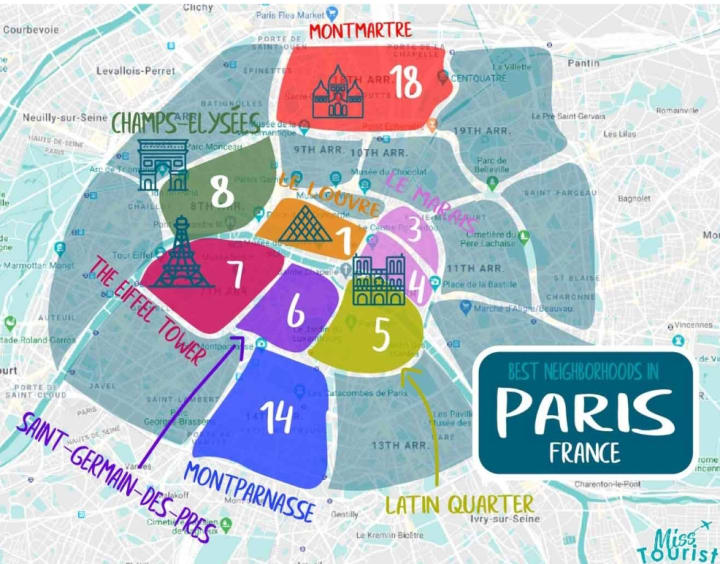
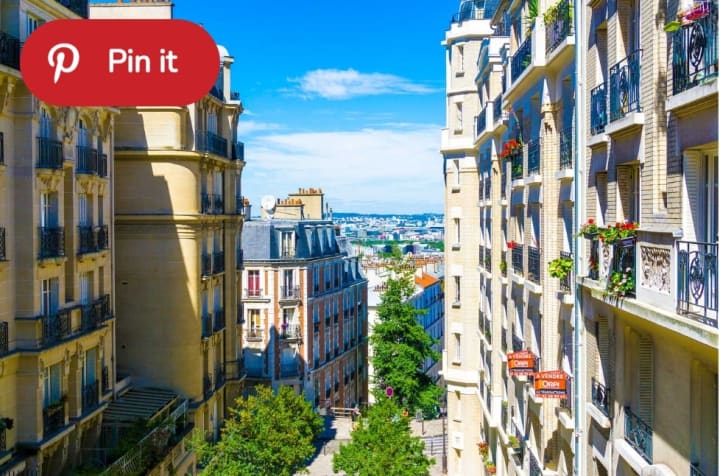
The 18th arrondissement, Montmartre, is my top choice. This gorgeous outer district sits on a 130-meter hill overlooking the city. It's near the Moulin Rouge, and famous artists such as Picasso, Renoir, and Degas lived and worked in their studios here! Montmartre has some charming little hotels, or I can book an Airbnb for a more up-close Parisian experience. There are places to see within walking distance - a good mode of transportation for one who wants to see more than the typical tourist attractions - or I can take the metro to other parts of Paris.
If I don't want to stick out like a sore thumb, then I'll need to leave my t-shirts and jeans at home. If I really want to wear jeans, then they'll need to be nicer ones - no holes or frayed edges. Typical American "fashion" is a no go in Paris! This will be the time to bring out my dressier clothes that I rarely have occasion to wear. I'll need to do something with my hair other than stuffing it under a ball cap. (Those need to be left at home, too.) Perhaps one night, I'll go out in a simple but elegant dress with a pretty scarf, fashionable shoes, and maybe also a stylish hat! (But not a stereotypical beret!)
After settling in, it will be difficult to contain my excitement and get some rest. But I absolutely must get some sleep in order to have the energy I'll need to see as much as I can in just a few days.
Day 1: Paris
On my first morning in Paris, I will have to rise very early. There will be a lot of sightseeing and travel on my first day! But first I'll have to decide what to eat for breakfast. I'm going to think like Julia Child, forget my diet, and enjoy French cuisine! (I'll burn the calories with all the walking I'll be doing, anyway.) A brasillé pastry filled with pears or chocolate (or one of each!) sounds wonderful!
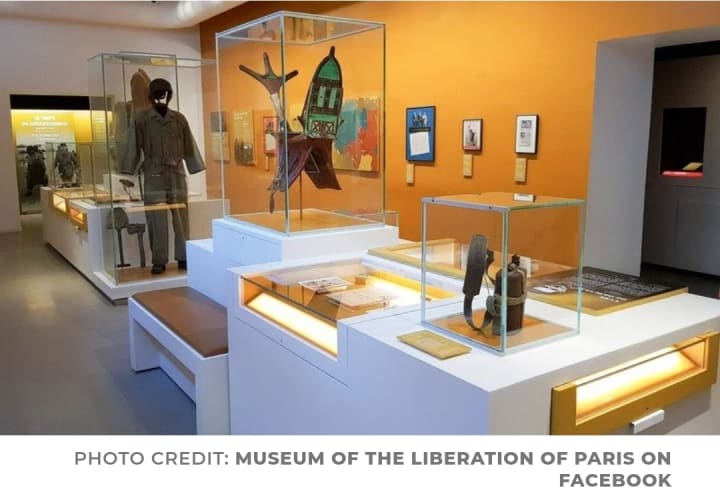
The first site on my itinerary is the newly restored Musée de la Libération de Paris – Musée du général Leclerc – Musée Jean Moulin on Place Denfert-Rochereau. Jean Moulin was a leader in the French Resistance, and General Philippe Leclerc de Hauteclocque's 2nd French Armoured Division liberated Paris. Twenty meters underground (more than a hundred steps) is the bunker that served as the headquarters of Resistance fighter Colonel Henri Rol-Tanguy, Head of the Île-de-France (Parisian region) French Forces of the Interior. This museum complex provides insight of what it was like to be in the Resistance, as well as an immersive experience of the week-long insurrection that led to the Liberation of Paris. I may not be able to look at every object, document, and photograph, but I won't miss the 180-degree film that contains about 20 minutes of incredible archive footage. On my way to and from this place, I'll keep an eye out for plaques and memorials that are on walls throughout the city and in Metro tunnels, many of which read "(Name) in the Resistance was shot to death here by German soldiers."
If this day happens to be a Tuesday, Thursday, or Saturday (I will try to make it so), then I will take a walking tour of Paris that discusses the four-year occupation, the week-long battle for the Liberation of Paris, and how Hitler's orders to destroy the city were ultimately ignored by the Commandant. This three-hour tour winds its way among the Jewish quarter, the Holocaust Museum, the Deportation Memorial, and Notre Dame Cathedral.
Now it will be time for lunch, which in France is the main meal that gets one through the day. A typical French lunch consists of three or four courses: an entrée, a main course, and a cheese course and/or dessert. There will be so many delectable options; fortunately, I don't have to decide this yet!
Next stop is the National Resistance Museum located in a 19th-century mansion overlooking the Marne River in Champigny-sur-Marne, a southeastern suburb of Paris. Here I can visualize the clandestine activities of Resistance fighters who risked their lives to provide safe houses for agents who parachuted in, arrange for drops of weapons and supplies, help downed Allied pilots escape, and relay intelligence that led to the successful Allied invasions of France, from the north and south.
This museum also has the only two photos from protests in Paris on November 11, 1940 when Nazis and French police arrested more than a hundred resisters and caused many injuries.
At this point, I will leave Paris and begin the backpacking and train-hopping portion of my trip through northern France, where I will stay in hostels or wherever I can safely sleep on a reasonably comfortable bed or sofa. First, I will take a train north to the beaches of Normandy. During this two- or two-and-a-half-hour long journey, if I'm lucky enough to get a window seat, I will drink in the beautiful countryside. I will also use this time to brush up on French words and phrases. Perhaps other passengers will be nice enough to help!
Day 2: Normandy
There are many museums and memorials to choose from, so I'll have to narrow it down to just a few. First stop is the Caen Memorial Museum in the city of Caen. I have chosen this place because it has a starting point that leads down a dark spiraling walkway that details the unresolved tensions and resentments of the First World War that led to the Second World War, the latter of which is covered in great detail. The museum also educates on post-WWII events such as the Cold War.
Next stop is the Utah Beach D-Day Museum that is built on the spot where the first American troops landed on D-Day (or Jour J in French). This museum provides a chronological account of Operation Overlord, the code name for the invasion of the Allies into Normandy from across the English Channel. Here I can see an original B26 bomber (one of only six in existence worldwide), and watch the experience of American troops in the film Victory in the Sand. I can get a vivid picture (more than what comes from just reading about it) of the horrific yet miraculous events that occurred when, in just a few hours, and in the face of overwhelming odds, the heroic efforts of not just American but also British and Canadian forces - joined by smaller contingents of Polish, Danish, and Free French troops - along the northern coast drove Nazi forces back and, before long, out of France.
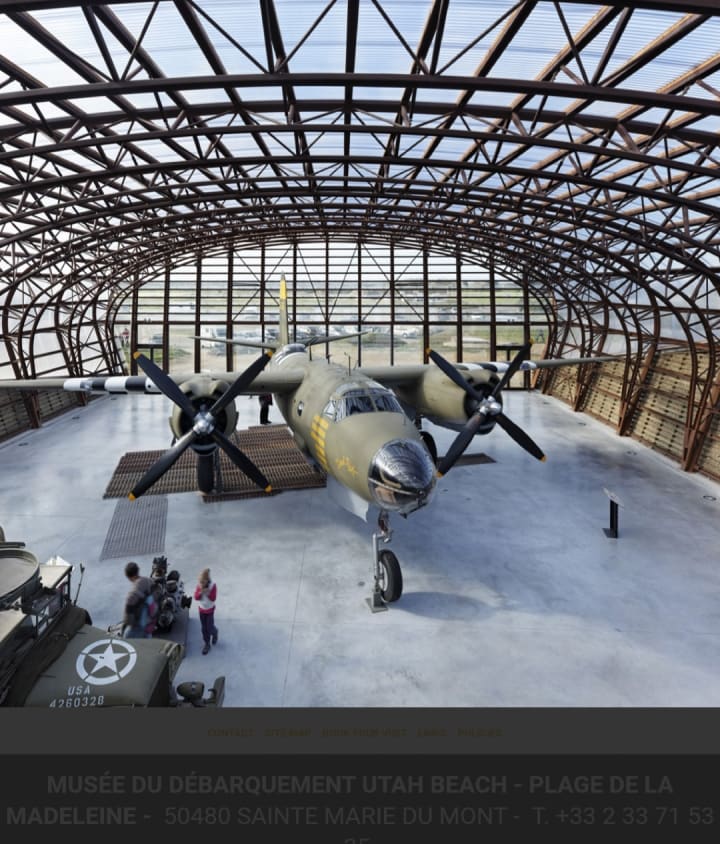
While there, I will also take some time to see the Pointe du Hoc Ranger Monument, above the Utah and Omaha beaches, where Army Rangers scaled the hundred-foot cliffs and seized the German artillery that could have fired upon Allied troops. The area remains riddled with deep craters where bombs fell and lives were lost.
The final stop for the day will be one that I will have to mentally prepare myself for as I take my time eating lunch. Even so, I know this will bring many tears. As one with a large capacity for empathy, this will be the hardest part of the whole trip. But it's too important to skip over.
The Normandy American Cemetery and Memorial in Colleville-sur-Mer was the first to be established on European soil in June 1944. The rows of nearly ten thousand white limestone crosses and Stars of David on the lawn overlooking Omaha Beach are a somber reminder of the terrible cost of war.
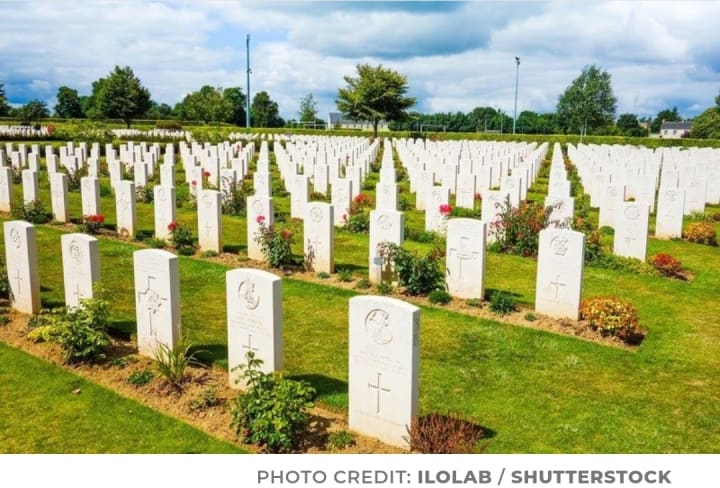
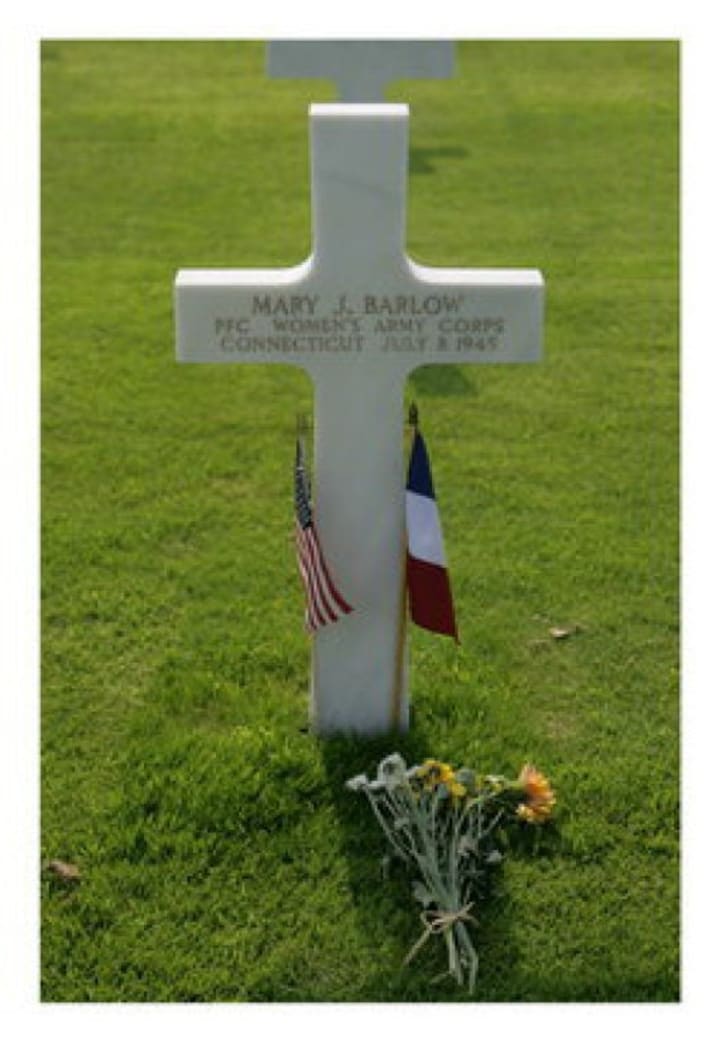
There are four graves in particular that I will visit; they are of servicewomen I've read about. In Plot A, Row 19, Grave 30 lies PFC Mary J. Barlow, who along with two other members of the 6888th Central Postal Directory Battalion, Sgt. Dolores Browne and PFC Mary Bankston, was killed in a jeep accident in Rouen, France in July 1945. The 6888th was the first all-female, all-African-American battalion to serve overseas.
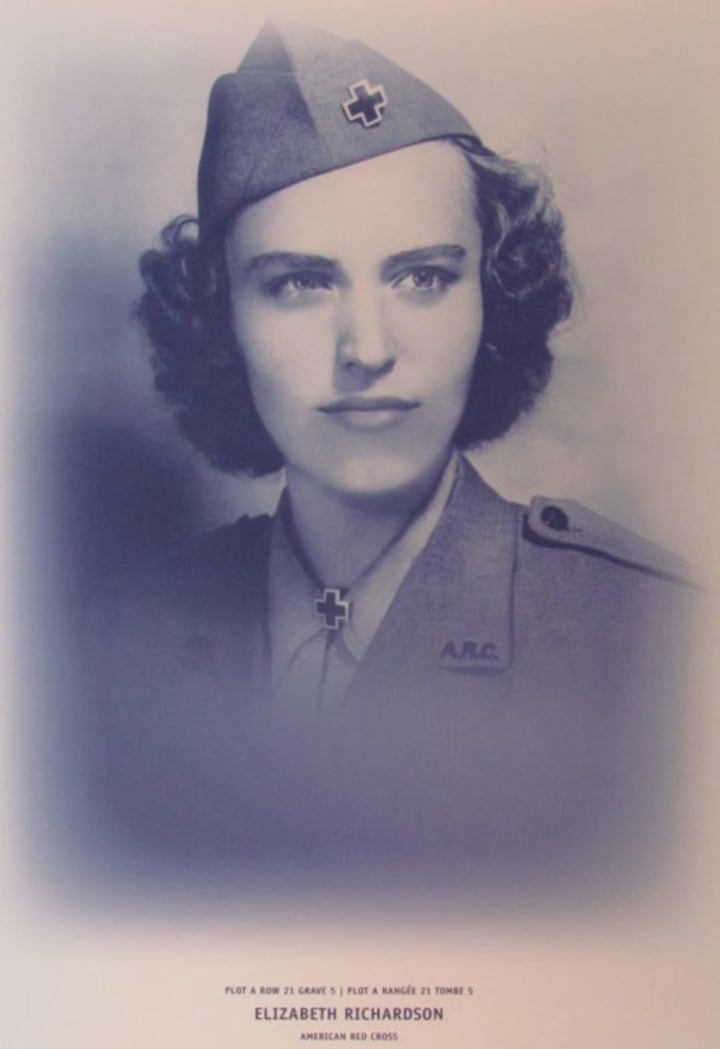
Two rows behind Barlow in Plot A lies Elizabeth A. Richardson, a 27-year-old American Red Cross volunteer from Mishawaka, Indiana (my home state). She was killed in a plane crash near Rouen on July 25, 1945, just over two weeks after the deaths of the three other women buried with honors in the cemetery. (Sgt. William R. Miller, her pilot, is buried behind her.)
Before I leave this place, I'll try to hold myself together enough to read the personal stories of American personnel in the visitor center. I'll also try to stay long enough to see the flag-retirement service and ceremony that occurs about thirty minutes before the cemetery closes for the day.
There will be nothing more I can do on this day but find a bed and cry myself to sleep.
Day 3: More significant sites
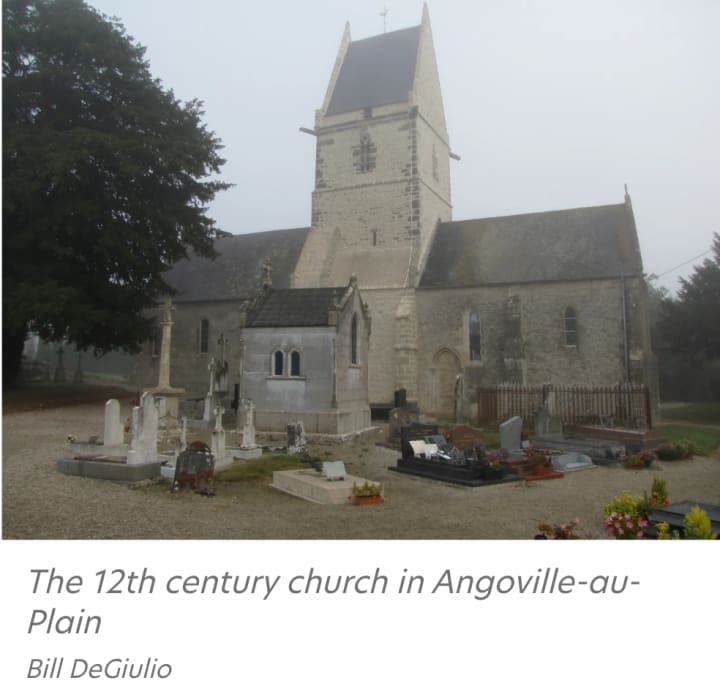
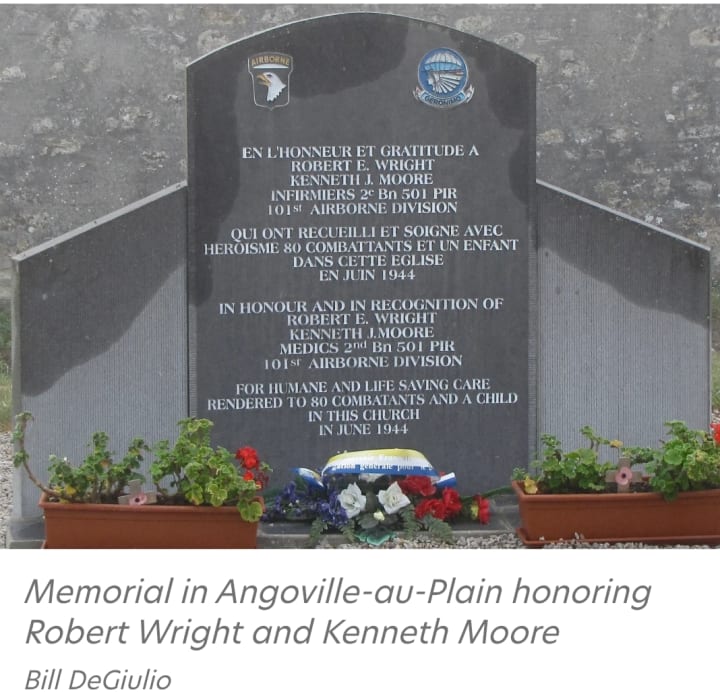
After another delicious French breakfast that defies dietary caution, there will be three more WWII sites to see on this day. First is a church in the tiny village of Angoville-au-Plain, just a few miles inland from Utah beach, that was the setting of a story that has touched my heart. It is where Robert Wright and Kenneth Moore, medics with the 101st Airborne Division, set up a first-aid station. The 101st was dropped behind enemy lines early on June 6th, 1944 before other Allied troops arrived; their mission was to cut off the main road connecting Cherbourg to Paris, a road that passed close to Angoville-au-Plain. Within hours, Wright and Moore were treating dozens of wounded soldiers and two local girls wounded by a mortar round. They had to periodically risk their lives by going out into the field to search for more wounded.
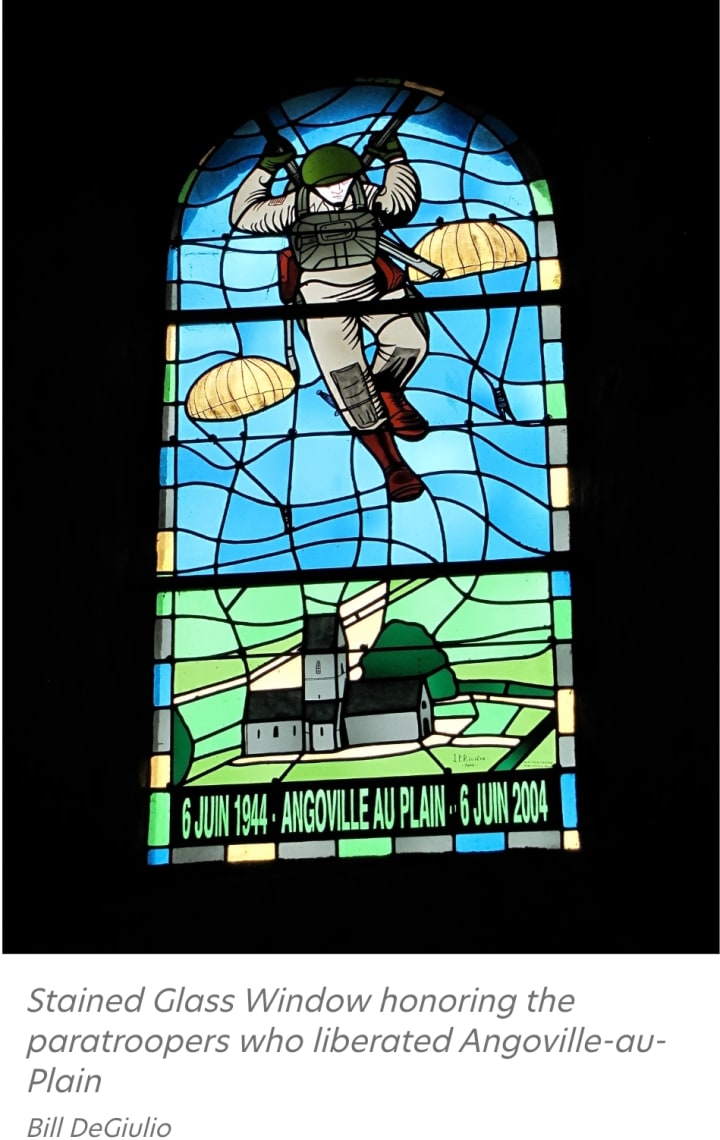
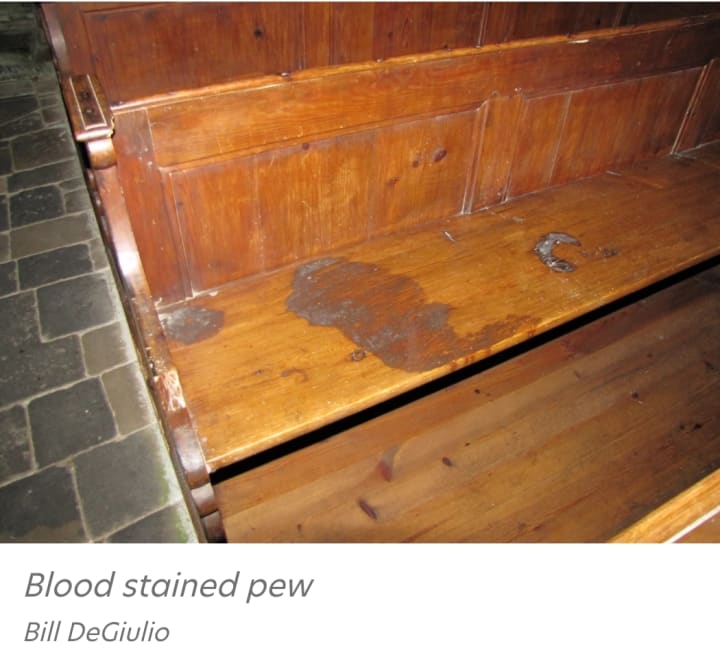
During the three-day battle in which the village changed hands multiple times, Wright and Moore continued their work, even after American troops were forced to withdraw and the medics were told they were on their own. German soldiers let them be when they saw that they were treating the injured from both sides of the conflict. All the medics required for anyone entering the church was that they leave their weapons outside. At one point, a mortar shell hit the church and all the windows were shattered by gunfire. Wright and Moore saved eighty lives, including one of the girls; the other sadly died of her wounds, and she was buried in the church cemetery. The windows have been replaced with two beautiful stained-glass windows, one honoring the brave paratroopers who liberated the village and the other honoring Wright and Moore. Blood stains remain on the benches and pews - a testament to what happened there.
I will also see in the church cemetery, among the old gravestones, a much newer one with the initials R.E.W. Robert E. Wright passed away in December 2013 at the age of 89. It was his wish to be buried in this place.
Next, I will take a train to Dunkirk, the site of tragic events in May 1940 that were avenged by the landings at Normandy. Like everything else, it will make what I've read more real to me. I will visualize British and French troops under heavy fire from Nazi forces, boarding naval vessels and the boats of civilian English fishermen - anyone who had any kind of boat, really - trying to reach safety across the Channel to England. Three-hundred-and-thirty thousand French, British, Belgian and Dutch soldiers were safely evacuated. But too many more didn't make it.
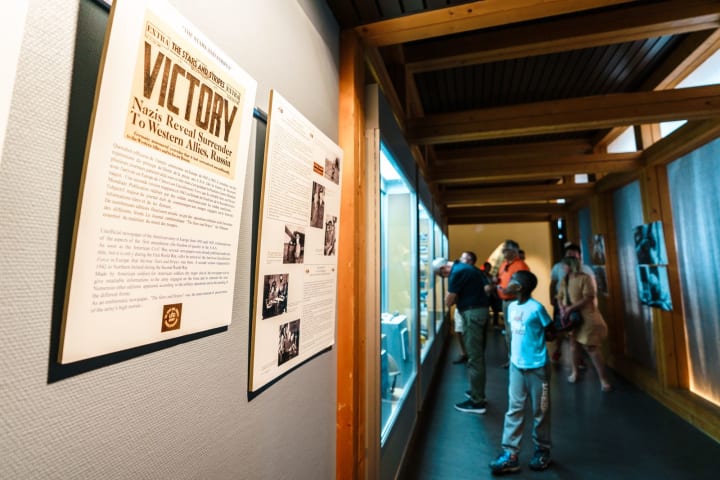
Then I will travel to Reims, to the Musée de la Reddition at 12 Rue du Président Franklin Roosevelt - mere steps from the train station - where a room in a school building served as the war room of General Eisenhower's supreme headquarters. This is where the declaration of unconditional surrender was signed by German officers on May 7, 1945. Approximately one year after D-Day, the war in Europe was finally over.
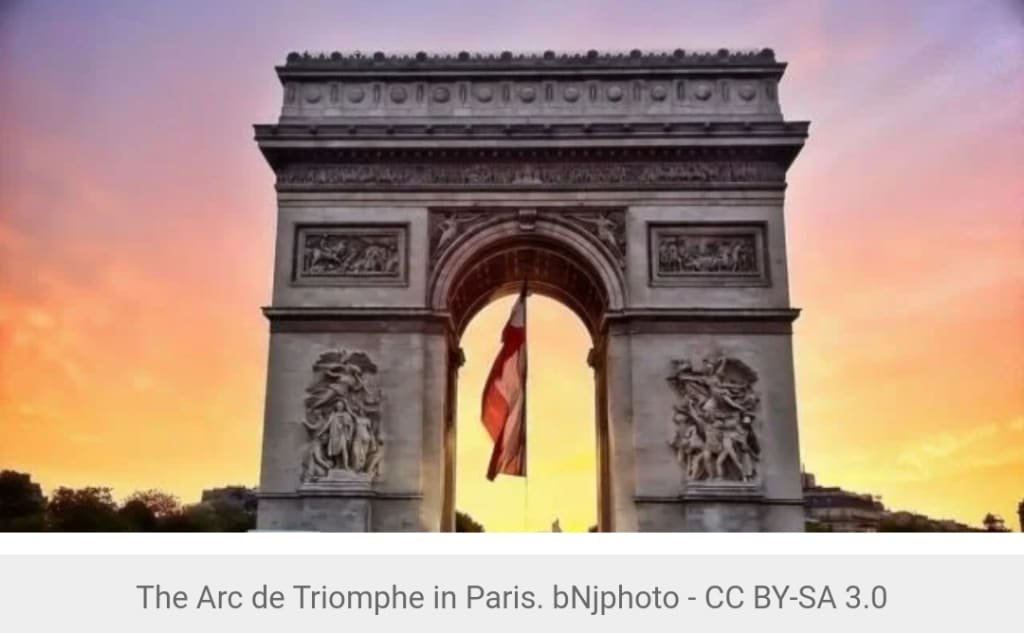
At this point, the somber parts of my trip will mostly be over. There will be a short jaunt southwest back to Paris, where I will partake in two joyous pleasures - three if I count a nice dinner, which I will be willing to splurge on. After getting a room for the night, in the same arrondissement as before, and cleaning up and dressing up, I will visit the Arc de Triomphe at Place Charles de Gaulle, right in the heart of Paris - the site of the French Tomb of the Unknown Soldier, honoring those who fell in both world wars. The monument has a Memorial Flame that has never been extinguished. It's also where Free French forces, led by General Charles de Gaulle - and other Allied troops - marched victoriously in August 1944 and again in May 1945. I hope I can be there at 6:30 in the evening, so I can see the daily ritual of rekindling a flame. If I can't make it by that time, then I hope I'm there when the sun is setting. Either way, it will make an awesome memory - and Instagram photo!
Then I will walk just two kilometers to the Eiffel Tower. I will go to the top, but not until after the sun goes down. I want a spectacular nighttime view of the City of Lights!
To finish off my last night in Paris, if I'm not too exhausted, I will enjoy some entertainment at the Moulin Rouge!
Day 4: Au Revoir
I will fly home on this day, but before I do, I will visit one more Parisian attraction, the Luxembourg Garden. I will enjoy the beautiful gardens while watching performances of local musicians and maybe also some puppet theater!
Then, with my memories and photos, I will have to say au revoir to lovely France. But not for the last time, I hope.
About the Creator
Keep reading
More stories from Jennifer Miller and writers in Wander and other communities.
The Light Side of 2020. Second Place in Thankful Thoughts Challenge.
What I am most thankful for this year is the single word that Princess Leia spoke in Rogue One: A Star Wars Story. The Rebel Alliance had just suffered huge losses at the Battle of Scarif. But the hard-fought-for piece of intelligence that was passed into Princess Leia's hands gave all the freedom fighters hope for a coming victory.
By Jennifer Miller5 years ago in Futurism
Worth the Wait: Puerto Viejo, Costa Rica
Beach bumming in a small Caribbean beach town sounded like a perfect way to end our 6-month trip through Mexico and Central America. Or so we thought. The foul, fishy stench of rotten seaweed hit our nostrils as we stepped from the cramped bus and looked out at a rather depressing, empty, and underwhelming black sand beach. It was pouring with rain, and we had to quickly fish out our ponchos. We thought, this couldn’t be it, could it?
By Sh*t Happens - Lost Girl Travel10 days ago in Wander
10 Irresistible Reasons to Visit Upper Mustang
Upper Mustang offers a trek that's in a class of its own. With its rugged landscapes, rich Tibetan Buddhist culture, and a history that's steeped in the mystique of the "Forbidden Kingdom," it's a destination that stands head and shoulders above the rest. Due to its restricted status, it's largely untainted, giving you a genuine Himalayan experience. You'll delve into ancient monasteries, hidden caves, and the walled city of Lo Manthang. The dry climate and rough terrain create a unique desert feel. If adventure is what you're after, here are ten compelling reasons to visit Upper Mustang.
By Kumar Lamaabout 22 hours ago in Wander




Comments
There are no comments for this story
Be the first to respond and start the conversation.