
The Ultimate Guide to Inflatable Camping Tents: Comfort and Convenience for Every Adventurer
1. Understanding Inflatable Camping Tents 1.1 What is an Inflatable Camping Tent? An inflatable camping tent is a modern twist on traditional tents, utilizing air-filled tubes instead of poles for structure. This type of tent inflates quickly—often within minutes—offering an easy setup that appeals to many outdoor enthusiasts. Typical characteristics include: * Light weight and portability * Durable materials like Oxford fabric that resist wear and tear * Design features focused on user experience When comparing inflatable tents to traditional camping tents, the ease of setup and packing often sets inflatable options apart. Plus, the materials used in these tents offer a great blend of comfort and protection from the elements. 1.2 Advantages of Inflatable Tents Inflatable tents come with several perks that make outdoor adventures more enjoyable: * Quick and Easy Setup: The convenience of getting your tent up in minutes is a game changer, especially after a long day of hiking. * Lightweight and Portable Design: These tents are generally lighter, making them easier to carry, whether you’re backpacking, car camping, or heading to a festival. * Enhanced Durability and Weather Resistance: Their construction helps them stand up well against the elements, ensuring you stay dry and comfortable. 1.3 Disadvantages and Considerations Like everything else, inflatable tents have their downsides: * Potential Puncture Risks and Repairs: While they are durable, sharp objects can puncture the fabric. Carrying a repair kit can be a lifesaver. * Weight Limitations for Backpacking: While they are lighter than many traditional tents, some models can still be bulkier than desired for backpacking. * Storage and Transportation Challenges: Properly folding and storing your tent requires effort, and if not packed correctly, it can take up more space than anticipated. 2. Features of an Ideal Inflatable Tent 2.1 Hand Pump: Efficiency and Convenience Having a reliable hand pump is essential for setting up your inflatable tent: * Manual vs. Automatic Pumping Systems: Hand pumps provide great control, but electric pumps, if available, can save you time. * Tips for Using a Hand Pump Effectively: Inflate evenly and don't rush—this helps maintain the integrity of the tent. * Maintenance of the Pumping Equipment: Keep the pump clean, store it in a dry place, and check for any leaks before a trip. 2.2 Waterproof and Windproof Properties When choosing an inflatable tent, consider these important features: * Understanding Waterproof Ratings (HH Ratings): Look for tents rated above 2000mm for good waterproofing. This number indicates how well the material can withstand water pressure. * Design Features That Enhance Wind Resistance: Look for guy lines, vestibules, or aerodynamic shapes that help reduce wind resistance. * Importance of Quality Seams and Flaps: Double-stitched seams and flaps can prevent water from seeping in during storms. 2.3 Seasonal Adaptability: 4 Seasons Capabilities An ideal inflatable tent should be versatile enough for all seasons: * Structural Features for Winter Camping: Insulated materials and a robust design can help retain heat and withstand snow loads. * Ventilation Considerations for Summer Use: Features like mesh windows allow air flow while keeping bugs out. * Versatility for Spring and Fall Weather: Look for tents with adjustable vents and flaps that can adapt as the weather changes.

3. Unique Design Elements
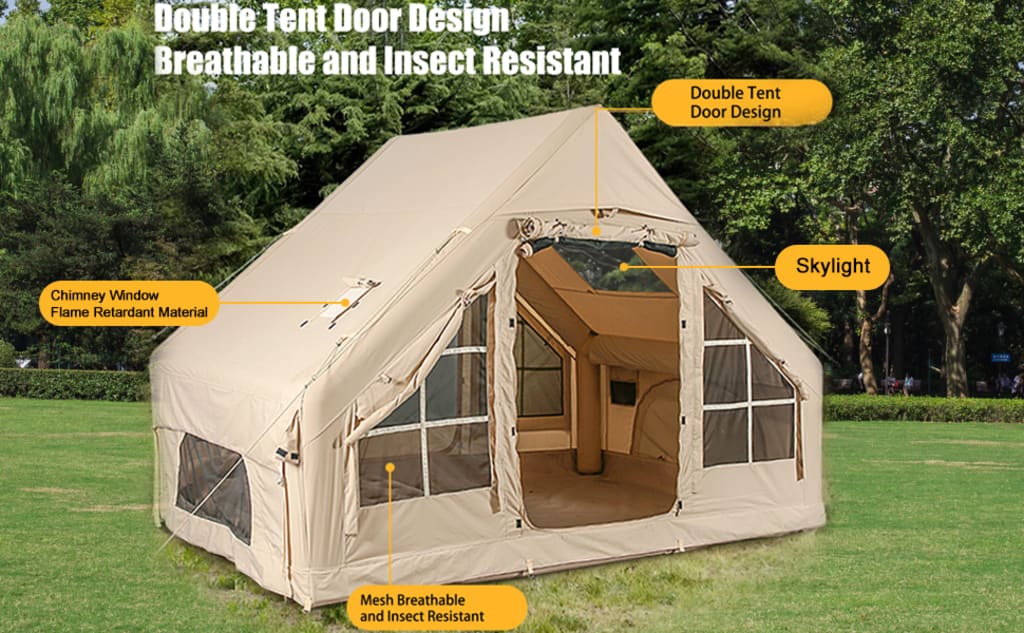
3.1 Cabin Style with Mesh Windows
Cabin-style inflatable tents are gaining popularity:
* Benefits of Mesh Windows for Ventilation: They help keep the tent airy without letting in unwanted pests.
* Enhancing Visibility and Mosquito Protection: Roll-up flaps can offer both a great view and effective bug barriers.
* Options for Privacy Screens and Zipper Designs: Look for zippers that are sturdy and privacy flaps for added comfort.
3.2 Chimney Windows for Stoves
A chimney window can truly elevate your camping experience:
* Importance of Chimney Vents for Heating: These windows allow for proper venting when using a camping stove, keeping the air inside safe and comfortable.
* Safety Considerations with Camping Stoves: Always follow guidelines to prevent dangerous emissions from entering the tent.
* Choosing the Right Location for Chimney Setup: Position your stove outside, with the chimney vent facing away from the tent for added safety.
3.3 Interior Layout and Space Management
Maximizing your inflatable tent’s layout is key:
* Typical Layouts in Inflatable Tents: Many offer separate sleeping and living areas, which is ideal for families.
* Storage Options and Organizational Features: Look for built-in pockets or hanging loops for gear organization.
* Accommodating Families or Groups in Spacious Designs: Always ensure there's enough room for sleeping bags and personal items to avoid feeling cramped.
4. Setting Up and Maintaining Your Inflatable Tent
4.1 Step-by-Step Setup Guide
Getting your tent up doesn't have to be stressful:
* Finding the Perfect Campsite Location: Look for flat, dry ground that's clear of sharp rocks or debris.
* Inflating and Securing the Tent Properly: Attach the pump, inflate carefully, and secure with guy lines to add stability.
* Final Checks for Stability and Weather Readiness: Walk around and make sure everything is tightened and secured.
4.2 Tips for Maintenance and Care
Keeping your tent in great shape is easy with a few practices:
* Cleaning and Storing Your Tent Post-Camping: Let it dry completely before storing it to prevent mold.
* Regular Checks for Leaks and Damage: Conduct frequent inspections for small tears and fix them promptly.
* Proper Transportation Methods to Avoid Wear: Always pack your tent in a protective bag to avoid snags.
4.3 Dealing with Common Issues
Campers may encounter a few issues along the way:
* How to Patch Small Punctures or Leaks: Carry a patch kit—leaks can be fixed quickly with the right supplies.
* Troubleshooting Setup Challenges: If you’re having difficulty, double-check for any warnings in the manual, or look for instructional videos online.
* Managing Tent Condensation and Moisture: Ensure proper ventilation to help prevent moisture build-up inside.
5. Camping with Inflatable Tents: Tips and Tricks
5.1 Making the Most of Your Tent Space
Smart packing can enhance your camping trip:
* Smart Packing Strategies for Extra Items: Use compression sacks for sleeping bags and clothes to save space.
* Utilizing Outdoor Space for Cooking and Relaxation: Set up a cooking area outside your tent, leaving the space inside for sleeping.
* Creative Storage Solutions for Camping Gear: Hanging organizers or portable shelves can help keep things tidy.
5.2 Safety and Comfort Considerations
Choose your camping site wisely for a safe and enjoyable experience:
* Selecting the Right Campsite for Safety and Comfort: Look for flat surfaces and avoid sites under dead trees or in low-lying areas prone to flooding.
* Weather Preparedness: Staying Warm and Cool: Be ready with appropriate gear for weather variations like rain or unexpected heat waves.
* Fire Safety and Tent Usage Tips: Always keep a safe distance between your cooking area and your tent.
5.3 Enjoying the Outdoors with Style
Camping can be stylish and fun:
* Adding Personal Touches to Your Camping Setup: Bring along fairy lights or colorful outdoor rugs for a cozy aesthetic.
* Utilizing Outdoor Furniture and Accessories: Portable chairs and tables can make your campsite more comfortable and inviting.
* Best Practices for Outdoor Cooking and Dining: Cooking outside allows for fun family gatherings while keeping the tent free of odor.
Conclusion
Inflatable camping tents are a fantastic combination of comfort, convenience, and versatility. Whether you're embarking on a family camping trip or enjoying a solo adventure, consider exploring the great outdoors with these tents that make your experience easier and more enjoyable. Embrace nature without sacrificing comfort!
FAQs
1. How long does it take to set up an inflatable tent?It typically takes around 5 to 10 minutes, depending on the design and experience level.
2. Are inflatable tents safe in harsh weather conditions?Yes, if you choose a quality tent designed for bad weather, like one with a high HH rating and sturdy construction.
3. What maintenance is required for inflatable camping tents?Regular cleaning, timely repairs, and proper storage are essential to maintain its lifespan.
4. Can inflatable tents be used year-round?Absolutely! Look for models specifically marked as suitable for 4 seasons.
5. How do I choose the right size inflatable tent for my needs?Consider the number of occupants and any additional gear you'll have to accommodate; bigger isn't always better!
About the Creator
Hoài Như
I’m passionate about travel and love exploring new places, experiencing different cultures, and finding inspiration through every journey.
Postcard from Bangor
Welcome to “Postcards Between Pages,” where we journey to places where stories come alive, and the landscape speaks with the echoes of literary giants. Today, we’re mailing you an audio postcard straight from Bangor, Maine—home to SK Tours of Bangor and the heart of Stephen King’s legendary world. Together, we’ll traverse the eerie streets and storied landmarks that inspired the King of Horror, listen to tales and whispers from beyond the page, and unravel how Bangor’s soul has shaped the nightmares and dreams of readers across the globe.
By Kristen Barenthaler4 days ago in Wander
Why Hanifaru Bay is a Dream Destination for Marine Life Enthusiasts
Hanifaru Bay, situated in the Baa Atoll in the Maldives, is one of the earth's most bizarre protected marine areas. This protected zone has a special reputation for the annual visitation of mantas and whale sharks and provides a chance for a nature enthusiast to explore the wonders of the ocean.
By ameliarosannaabout 21 hours ago in Wander


Comments
There are no comments for this story
Be the first to respond and start the conversation.