

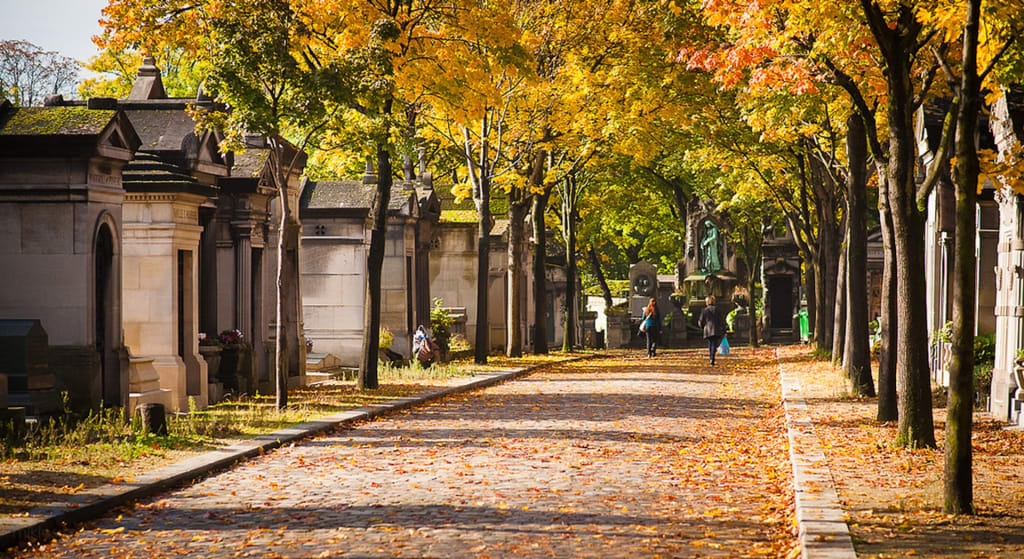
As the largest cemetery in Paris, France - the Père Lachaise cemetery has been the burial ground of many great writers, artists, soldiers and scientists. A cemetery styled as a beautiful garden that contains multiple monuments to past wars - to this day it is the most visited cemetery in the world.
Historical Background
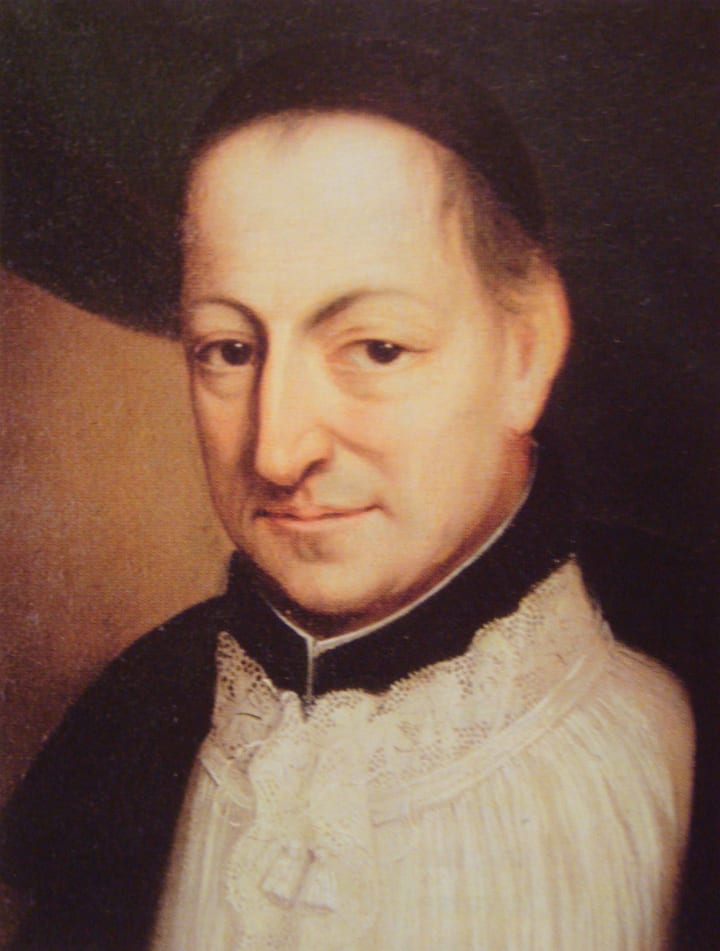
In 1804, the cemetery first opened and it takes its name from the confessor - Père François de la Chaise who worked for the court of Louis XIV, better known as the ‘sun king’. It was declared a cemetery and given its status by Napoleon Bonaparte and in that year, the cemetery only contained thirteen graves. This was mainly because of where it was situated, too far away for anyone to go to - it was usually left out of the burial process. Marketing strategies were organised and at the end of 1804, there was a parade and a fanfare that was to let people know that the remains of the great Jean de la Fontaine and the remains of the legend that was Molière were being transferred to the new cemetery. In 1805, there were a further 44 burials. With 49 in 1806, 62 in 1807 and 833 towards 1812. In 1817, there was another ‘parade’ or marketing strategy which transferred the remains of Pierre Abélard to the cemetery and by 1830, there were around 33’000 people buried in the cemetery wishing to lay among the rich and famous.
Expansion projects were therefore required and in the years from 1824-1850, the cemetery expanded five different times. Today, there are over a million people buried in the cemetery and many, many more in the columbarium for the cremated ones.
21st Century
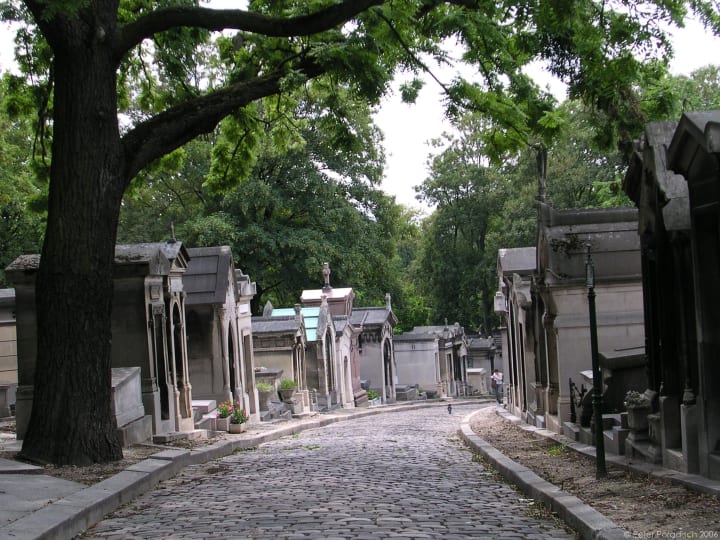
It is far more difficult than it once was to be buried in the Père Lachaise Cemetery since the plots are becoming more squeezed together and certain rules have been put in place allowing only certain people to be buried there now. If you would like to be buried in a Paris cemetery then you need to have been born or have lived in the city. However, being buried at Père Lachaise has a waiting list which means it is not always guaranteed. One of the methods used by the cemetery in order to inter more people is to bury family members in the same grave plot or to bury dozens of family members in the same mausoleum. In present times, there have been various contracts drawn up about leasing grave plots for thirty years at a time. If the lease is not renewed by a family member or a next of kin, then the remains can be removed from the cemetery to make way for newer graves. These remains are then moved another part of the Père Lachaise Cemetery commonly known as the ‘aux morts’. The number of human remains at Père Lachaise today is estimated to be between 2 and 3 million.
In Popular Culture
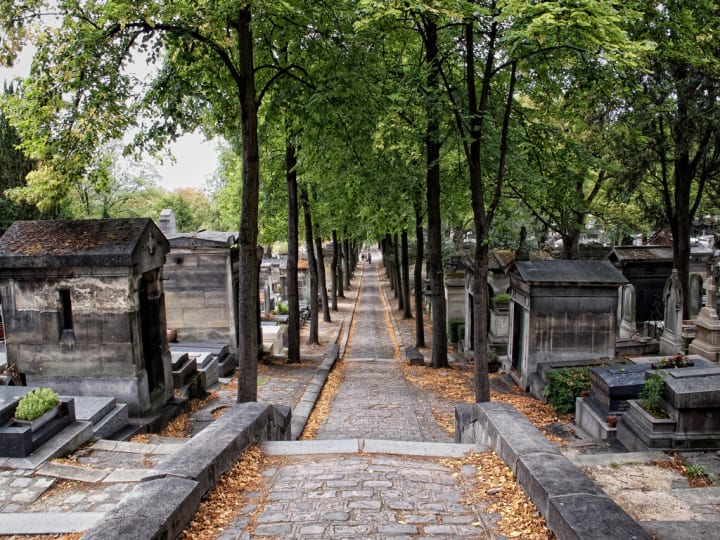
Now, we all know how much I love literature and it just so happens that the Père Lachaise Cemetery turns up in many different French Novels. For example: ‘Le Père Goriot’ by Balzac reveals that the main character is buried in the Père Lachaise Cemetery and in ‘The Count of Monte Cristo’ by Alexandre Dumas, the cemetery is mentioned as one that de Villefort intends to bury his daughter in. In the book ‘Les Miserables’ by Victor Hugo, Jean Valjean is interred in the Père Lachaise cemetery upon his death and in Gustav Flaubert’s ‘Sentimental Education’ there is a great description of the cemetery as well.
When it comes to film, there is nothing short of representations of the cemetery absolutely everywhere. In Oliver Stone’s biopic starring Val Kilmer entitled ‘The Doors’ - we find out that the lead singer is actually buried in the cemetery. All the way down to ‘Fantastic Beasts: The Crimes of Grindelwald’ in which Grindelwald convenes his followers in the Père Lachaise cemetery.
Burials
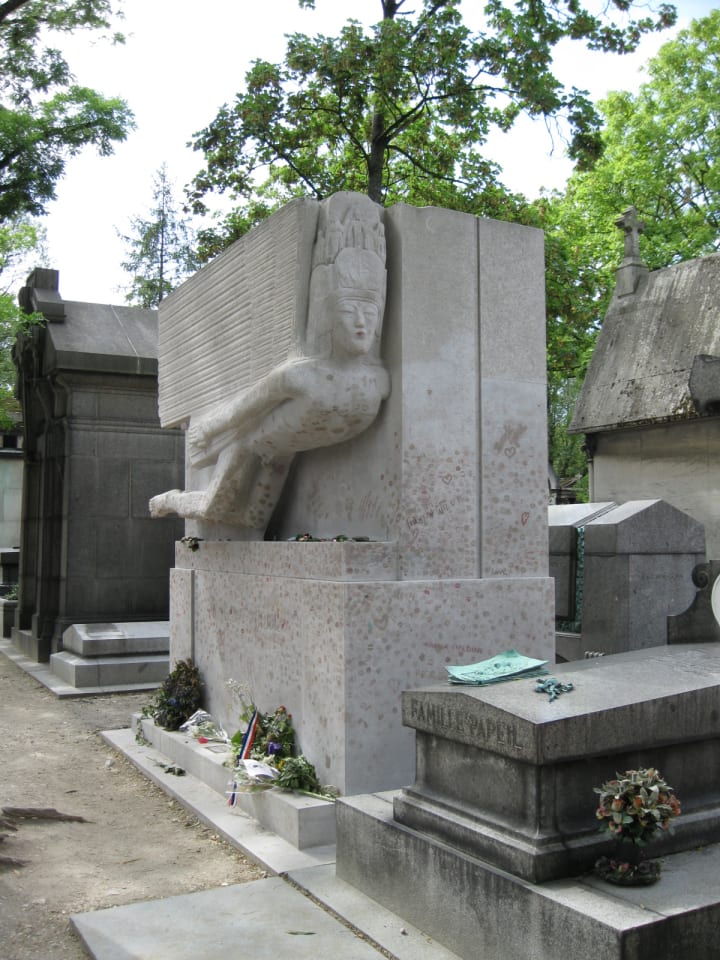
- There are 2-3 million people buried in the Père Lachaise Cemetery and now we are going to have a look at some of the more notable ones that you can actually visit if you travel there:
- In 1918, the poet and critic Guillaume Apollinaire was interred in the cemetery shortly after his death at the age of 38 years’ old.
- Dead at the age of 51 in the year 1850, Honoré de Balzac, the prolific and brilliant French Novelist was interred there
- In 1923, the stage actress Sarah Bernhardt died at the age of 78 and was interred in the cemetery
- At the age of 36 years’ old the writer and composer of the opera ‘Carmen’, Georges Bizet, was interred in the cemetery
- At the age of 39, Frederic Chopin was interred in the cemetery in 1849
- Jacques-Louis David died and was buried elsewhere, his heart remains in the Père Lachaise cemetery.
- At the age of 65, the painter Eugène Delacroix was buried in the cemetery in 1863
- At the age of 84, the great mime and actor Marcel Marceau was interred in the cemetery in 2007
- In 1982, the writer Georges Perec was interred in the cemetery having died at the age of 45 years’ old
- French singer Edith Piaf was interred in 1963, having died at the age of 47 years’ old
- In 1922 at the age of 51 years’ old, the prolific French Writer Marcel Proust died and was later interred in the cemetery
- At the age of 72 in 1946, the novelist and poet Gertrude Stein was interred in the cemetery
- Oscar Wilde died at the age of 46 in 1900 and is interred in the cemetery with the ashes of his partner, Robbie Ross
- At the age of 52, the great African American writer and activist, Richard Wright was interred in the cemetery in 1960
- The remains of the painter Theodore Gericault are interred in the cemetery. He died in 1824 at the age of 32 years’ old
- At the age of 27, Jim Morrison of the band ‘The Doors’ died and was interred in the cemetery in 1971
Conclusion
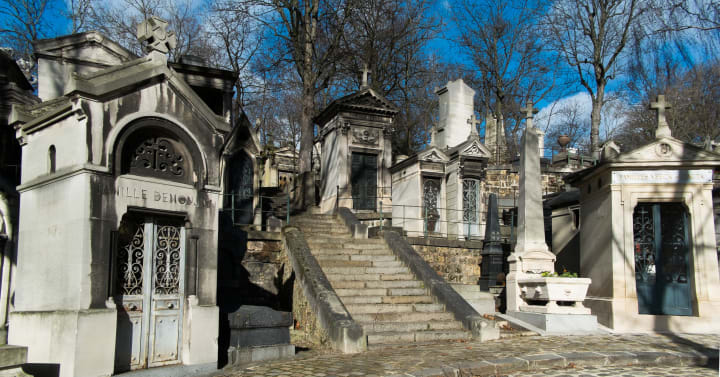
As the cemetery continues to expand and new graves become added amongst the old, I feel like we are going to see many more people interred here - I predict somewhere in the 5 millions by the year 2075.
About the Creator
Annie Kapur
I am:
🙋🏽♀️ Annie
📚 Avid Reader
📝 Reviewer and Commentator
🎓 Post-Grad Millennial (M.A)
***
I have:
📖 280K+ reads on Vocal
🫶🏼 Love for reading & research
🦋/X @AnnieWithBooks
***
🏡 UK
Keep reading
More stories from Annie Kapur and writers in Wander and other communities.
Book Review: "Henry II: A Prince Among Princes" by Richard Barber
Let me introduce you to what I'm doing at the moment; I am reading one book about each king or queen from English History, starting with Edward the Confessor and going all the way through to Queen Elizabeth II. So far, I have read a book about Edward the Confessor, that I thoroughly enjoyed. I have read a book about Harold Godwinson that could've been enjoyed more. I have read a really great book about William the Conqueror, learned a ton from a great book about William Rufus (William II) and read a brilliant book about Henry I. I moved on to King Stephen and then to Empress Matilda and now - I read a book on Henry II. This book is entitled: Henry II: A Prince Among Princes.
By Annie Kapur4 years ago in Geeks
Neon Nights & Ancient Lights: My Unforgettable Tokyo Urban Heritage Tour
How Exploring Tokyo’s Historic Urban Landmarks Turned My Trip Into a Modern Adventure Through Time --- Tokyo is a city that feels like it’s moving at the speed of light—yet somehow it still holds the echoes of ancient history in its streets. When I planned my trip to Tokyo, I knew I wanted more than just skyscrapers and shopping. I wanted to experience the city’s historic urban landmarks, the places where old Japan meets the modern world.
By Ahmed aldeabellaabout 19 hours ago in Wander
Weather in Morocco in July By Morocco Family Vacation
When we planned our family trip to Morocco, July wasn’t my first choice. Like most parents, I worried about the heat especially with kids. I pictured endless sun, cranky afternoons, and constant searching for shade. But our schedule left us with July, so we adjusted our expectations and planned carefully.
By Ariel Cohen3 days ago in Wander


Comments
There are no comments for this story
Be the first to respond and start the conversation.