
The largest castles in the world, which ones can you visit?
The largest castles in the world, which ones can you visit?
The Old Continent is home to the majority of the world's greatest castles, yet contrary to popular belief, Europe has never had a monopoly on grand strongholds and rich mansions. Some were constructed to highlight the status of kings, while others were constructed to defend the kingdom within whose borders they were constructed. Many have survived to the present day, and some are still open to the public.
At the outset, it should be noted that the unambiguous identification of the largest castle is extremely difficult. This is due to the fact that in such research one can adopt one of several measurement methods. Some sources take into account the original surface, others take into account the present state, including elements rebuilt and/or added in modern times. In the same way, it is difficult to identify the longest bridges in the world, because in this case the type of construction must be taken into account. To avoid confusion, we will focus only on the current area of the structures listed. You should check the information about the possibility of visiting each object before you set out on your trip.
Edinburgh Castle
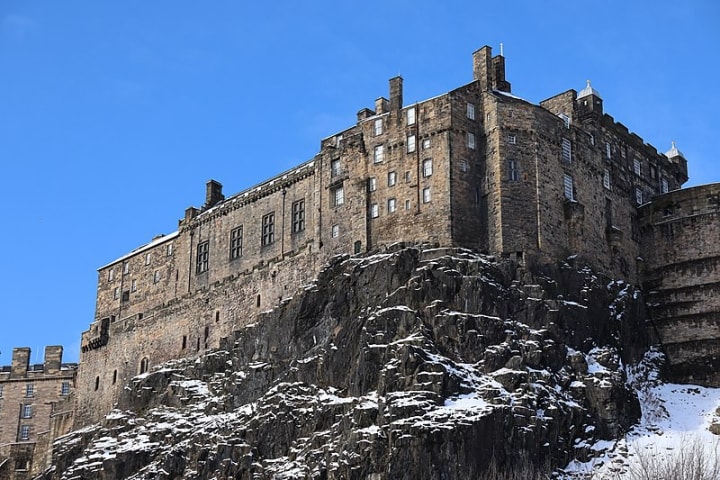
We start our tour in Scotland. On the rocky mountain of Castle Rock rises a huge castle, casting a shadow over the center of Edinburgh. The first castle buildings were erected there as early as the 12th century, during the reign of King David I, but early defensive fortifications existed as early as the beginning of our era. The castle we can admire today is one of the oldest buildings in the city, next to St. Margaret’s Chapel. It is the smallest building in our list, but “smallest” does not mean “small”. The area of the castle complex is 35737 square meters. For comparison — the smallest island in the world measures only 306 sq. m.
The Citadel of Aleppo

The first defensive buildings were probably erected on the hill as early as the 3rd century AD. Unfortunately, between 2012 and 2016 the condition of the complex deteriorated significantly — defensive actions in the fight against the Syrian rebels led to the occurrence of a lot of damage. The area of the magnificent citadel is 38804 sq. m.
The structure can be admired only from the level of the surrounding promenade.
Himeji Castle (White Heron Castle)

From the Middle East we move to Himeji in Japan In 1333, fortifications were erected on the hill. 13 years later, a full-fledged castle was erected in its place. In 1580, this magnificent building was almost completely destroyed. 21 years later, the object was rebuilt and expanded. The work was completed in 1608. The area of the complex is 41468 sq. m.
The building is open to the public.
Buda Castle in Budapest (Buda Castle)

Back to Europe. The monumental Buda Castle in Budapest, casting its shadow over the Danube from the right bank of the river, was built in the 14th century. Over the years, the building has undergone numerous reconstructions and modernizations. As a result of Turkish invasions, it was almost razed to the ground. In 1791, it took the form of a Baroque building. Further modernization was carried out from 1890, by order of Franz Joseph. The entire complex measures 44674 square meters.
The building is open to the public.
Spiš Castle

It’s time for Slovakia now, where in the village of Žehra stands the magnificent Spiš Castle. Built at the turn of the 11th and 12th centuries, the castle was severely damaged in a fire that broke out in 1780. Since then, the magnificent fortress has fallen into ruins and today we can only admire its remains. The area of the ruins is 49485 square meters.
The castle can be visited from April to November.
Hohensalzburg Fortress

Giant castles can also be found in Austria. The largest one was built in 1077 in Salzburg. In subsequent years other elements of the fortress were erected, and the greatest modernization took place in the years 1496–1518. It was then that the castle complex was combined with the Nonnberg monastery. It is the largest surviving fortress in Central Europe. The whole complex has an area of 54523 square metres.
The building is open to the public.
Windsor Castle

It is the turn of one of the most magnificent buildings in England. Windsor Castle was built on the initiative of William I the Conqueror. Work began in 1070. The stunning residence still serves its original role today — it is one of the three official estates of Queen Elizabeth II. The entire complex measures 54835 sq. m.
The castle is open to the public.
Prague Castle (Hradčany Castle)
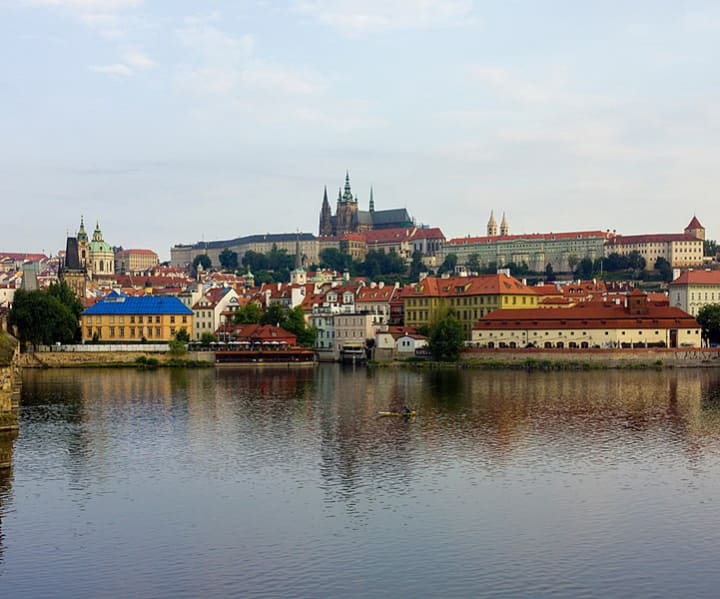
Prague Castle was built in the ninth century and since then lived to see many modernizations. The final form, which we can admire until today, took place in the 18th century. Historically the seat of the crowned heads, today it serves a representative function and is one of the biggest tourist attractions in Prague. The entire complex measures 66761 square meters.
The facility is open to the public.
Mehrangarh Fortress
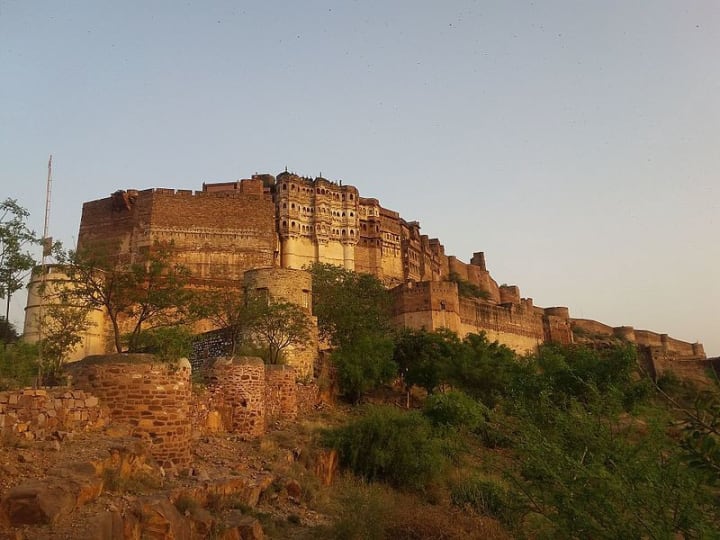
We move to India. One of the largest defensive forts there is the facility in Jodhpur, built on the initiative of Rao Jodha Singh. The fortress was expanded by subsequent rulers. The greatest changes were made in the 17th, 18th and 19th centuries. The complex covers an area of 81277 sq. m.
The building is open to visitors.
Malbork Castle
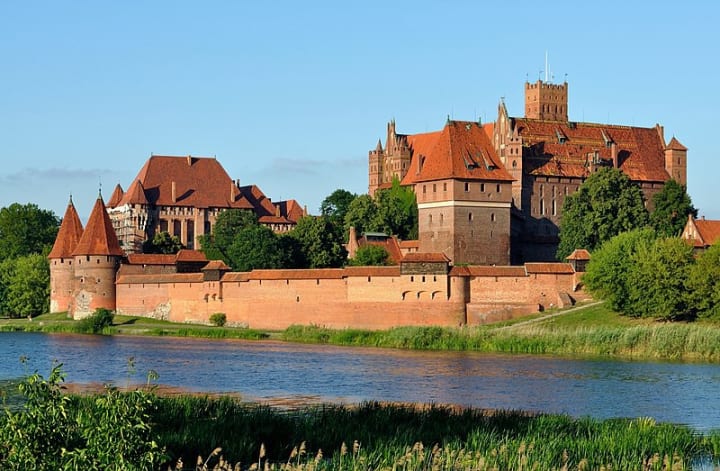
The castle with its exceptionally rich history was built in many stages. The beginning of the works can be dated back to 1280 and the end comes in the middle of the 15th century. The huge fortress was built at the initiative of the Teutonic Order. When in 1309 the office of the Grand Master was transferred to Malbork, the castle gained the status of capital of one of the most powerful states located on the southern shore of the Baltic Sea. In later times, the building served as the seat of the Prussian authorities and the Maritime Commission. For some time it was also used as the residence of Polish kings. Over the years, the complex has suffered much damage. Thorough reconstruction began after World War II. The area of the complex is 143591 sq. m.
The building is open to visitors.
About the Creator
Keep reading
More stories from writers in Wander and other communities.
Worth the Wait: Puerto Viejo, Costa Rica
Beach bumming in a small Caribbean beach town sounded like a perfect way to end our 6-month trip through Mexico and Central America. Or so we thought. The foul, fishy stench of rotten seaweed hit our nostrils as we stepped from the cramped bus and looked out at a rather depressing, empty, and underwhelming black sand beach. It was pouring with rain, and we had to quickly fish out our ponchos. We thought, this couldn’t be it, could it?
By Sh*t Happens - Lost Girl Travel5 days ago in Wander
Turkey: Take THEM With You.
The first time I went to Istanbul, I went with my sister. The second time, I brought family. Picture from the trip. Same city. Same accommodation - right in the center of everything, the spot we'd found the first time and couldn't justify leaving.
By Destiny S. Harris4 days ago in Wander



Comments
There are no comments for this story
Be the first to respond and start the conversation.