
The Americans Won the Race to Land on the Moon
A Decade Ahead of the Soviets

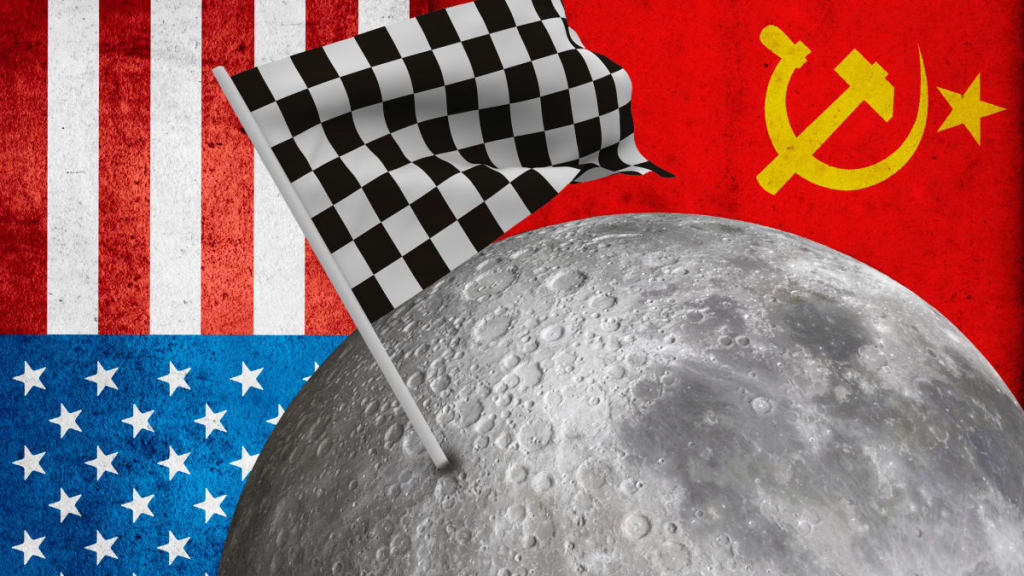
In 1969, the world watched in awe as Neil Armstrong and Buzz Aldrin became the first humans to set foot on the moon. This momentous event was the culmination of a fierce competition known as the Space Race, which had dominated the latter half of the 20th century. The race to achieve this extraordinary feat was not just about technological prowess but also a critical symbol of national pride and ideological superiority during the Cold War era. This blog explores the remarkable journey of the Space Race, the challenges faced by both superpowers and the implications of America's victory in reaching the moon a decade before the Soviets.
The Genesis of the Space Race
The Space Race began in the late 1950s, fueled by the Cold War rivalry between the United States and the Soviet Union. Both nations were eager to demonstrate their technological and scientific advancements. The Soviets initially gained a significant lead with the launch of Sputnik, the world’s first artificial satellite, in 1957. This event marked the beginning of a competitive era where each superpower sought to outdo the other in space exploration.
In response, the United States accelerated its efforts, culminating in the creation of NASA in 1958. With both countries rapidly developing their space programs, the tension between them escalated. This tension was particularly evident during the Cuban Missile Crisis in 1962, a pivotal moment that nearly led to direct conflict. Despite the heightened fears and the potential for disaster, both sides eventually sought a way to cooperate rather than escalate the situation further.
Kennedy’s Bold Proposal
In 1961, President John F. Kennedy delivered a speech that set the course for American space ambitions. He famously declared the goal of landing a man on the moon and returning him safely to Earth before the decade's end. This ambitious goal was driven not only by scientific curiosity but also by the desire to reaffirm American technological superiority.
Interestingly, there was a moment of potential collaboration between Kennedy and Soviet Premier Nikita Khrushchev. During a period of heightened tension, Kennedy proposed that the United States and the Soviet Union collaborate on lunar exploration. However, Khrushchev declined the offer, and the Cold War rivalry continued to dominate space exploration efforts.
The Race Intensifies
The subsequent years saw intense competition between the two superpowers. The U.S. Apollo program, spearheaded by NASA, was designed to achieve Kennedy’s lunar goal. Meanwhile, the Soviet Union was also advancing its space technology, although it faced numerous challenges and setbacks. The race became a matter of national pride, with each side striving to surpass the other in space achievements.
The climax of this competition came on July 20, 1969, when Apollo 11 successfully landed on the moon. Neil Armstrong's famous words, “That’s one small step for [a] man, one giant leap for mankind,” marked the culmination of years of intense effort and rivalry. The United States had achieved its goal, landing on the moon a decade before the Soviets.
Aftermath and Cooperation
Following the historic moon landing, the nature of the Space Race began to shift. The immediate competition gave way to a spirit of cooperation. In 1972, U.S. President Richard Nixon and Soviet leader Leonid Brezhnev agreed to the Apollo-Soyuz Test Project, which led to the first international space docking in 1975. This marked a significant moment of collaboration, symbolizing a shift from fierce competition to cooperative exploration.
What If?
The question of what might have happened if Kennedy and Khrushchev had collaborated on lunar missions remains a fascinating hypothetical. While it’s unlikely that such cooperation would have halted the Cold War entirely, it could have altered the dynamics of U.S.-Soviet relations and perhaps led to earlier joint efforts in space exploration. The competitive drive of the Space Race undoubtedly spurred significant advancements in technology and science, but it also kept the world on edge during a period of intense geopolitical tension.
Closing
The American victory in the Space Race, marked by the historic moon landing in 1969, was a defining moment of the 20th century. It showcased the extraordinary achievements possible when nations commit to ambitious goals and pushed the boundaries of human exploration. While the Cold War rivalry shaped the race to the moon, the eventual shift towards cooperation highlighted the potential for collaboration in the realm of space exploration. Reflecting on this era reminds us of both the competitive spirit that drove us to great heights and the enduring possibility for unity and progress in the pursuit of knowledge.
About the Creator
Horace Was
Essay Writer, Aviation and Technology Expert
Keep reading
More stories from Horace Was and writers in Wander and other communities.
Business Aviation
Business aviation often gets a reputation as a symbol of luxury and exclusivity. While it is true that private jets can be seen as a status symbol, their value extends far beyond mere opulence. Business aviation plays a crucial role in enhancing productivity, efficiency, and operational flexibility for companies and individuals alike. This article explores the multifaceted benefits of business aviation and why it is an essential component of modern business.
By Horace Was2 years ago in Wander
Worth the Wait: Puerto Viejo, Costa Rica
Beach bumming in a small Caribbean beach town sounded like a perfect way to end our 6-month trip through Mexico and Central America. Or so we thought. The foul, fishy stench of rotten seaweed hit our nostrils as we stepped from the cramped bus and looked out at a rather depressing, empty, and underwhelming black sand beach. It was pouring with rain, and we had to quickly fish out our ponchos. We thought, this couldn’t be it, could it?
By Sh*t Happens - Lost Girl Travel9 days ago in Wander
What Hidden Costs Should You Know in Armenia Tour Packages?
Booking Armenia Tour Packages is one of the easiest ways to explore this beautiful Caucasus destination. Many travel packages include hotels, transfers, and sightseeing tours, making travel convenient and organized. However, travelers should also be aware that some hidden costs may not always be included in the initial price.
By Viacation Tourism4 days ago in Wander




Comments
There are no comments for this story
Be the first to respond and start the conversation.