
Somnath Temple: A Timeless Symbol of Resilience and Devotion
Somnath Temple stands as a testament to the undying faith, rich history, and architectural brilliance of ancient India.

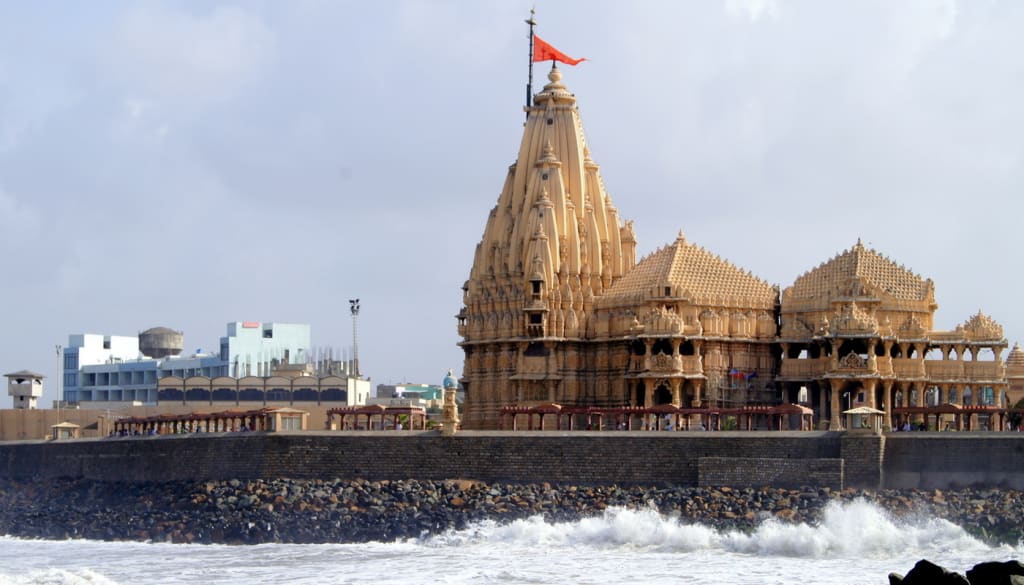
Settled on the western coast of India, the Somnath Temple stands as a testament to the undying faith, rich history, and architectural brilliance of ancient India. Located in Gujarat's Prabhas Patan, near Veraval, this temple is more than just a place of worship—it embodies centuries of resilience and devotion. Let's take a journey through its storied past, unique architecture, and cultural significance.
History of the Somnath Temple
The Mythological Roots
The origins of the Somnath Mandir trace back to ancient Hindu mythology. The temple is dedicated to Lord Shiva and holds the honor of being the first among the 12 Jyotirlingas. As legend goes, the Moon God, Chandra, was cursed by his father-in-law, Daksha, to lose his brilliance. Chandra prayed to Lord Shiva at this spot, and after being freed from the curse partially, the temple was established in Shiva’s honor.
Historical Timeline of the Temple
The Somnath Temple’s history dates back to antiquity. It has been destroyed and rebuilt multiple times due to invasions by foreign rulers, the most notorious being Mahmud of Ghazni in the 11th century. Despite these setbacks, the temple has always risen like a phoenix from the ashes, showcasing the enduring faith of its devotees.
Architectural Marvel of Somnath Mandir
Unique Architectural Style
The temple's architecture follows the Chalukya style, reflecting the intricate craftsmanship and attention to detail that defines India's rich heritage. The current structure, completed in 1951, showcases a perfect blend of traditional artistry and spiritual ambiance.
Key Elements and Design Features
The towering shikhara (spire) of the temple rises approximately 155 feet, topped with a flag that is changed three times a day. The mandap (assembly hall) and the garbhagriha (sanctum sanctorum) exude divine energy, drawing devotees and tourists alike.
Significance of Somnath Temple in Hinduism
Spiritual Importance
Being one of the 12 Jyotirlingas, the temple holds immense spiritual value for Hindus. Pilgrims believe that visiting Somnath can wash away sins and grant liberation (moksha).
Connection with Jyotirlingas
Each Jyotirlinga is believed to be a manifestation of Lord Shiva’s infinite energy. Somnath is considered the foremost among them, often referred to as the "Eternal Shrine."
The Repeated Destruction and Rebuilding of the Temple
First Invasion by Mahmud of Ghazni
In 1024 AD, Mahmud of Ghazni raided the temple, looting its immense wealth and destroying its structure. This marked the first of many invasions.
Subsequent Attacks and Reconstructions
The temple faced repeated attacks but was rebuilt each time by different rulers and devotees, making it a symbol of resilience.
Role of Sardar Vallabhbhai Patel in Reconstruction
Post-Independence, Sardar Patel played a key role in reconstructing the temple, ensuring it rose again in all its glory as a symbol of India’s unity and spirit.
Legends and Stories Surrounding Somnath Temple
The Curse of the Moon God, Chandra
The story of Chandra’s penance adds a layer of spiritual mystique, attracting devotees who seek the blessings of Lord Shiva for relief from suffering.
Lord Krishna’s Association with Somnath
It is believed that Lord Krishna was struck by an arrow at Bhalka Tirtha, near the temple, marking his departure from this world.
The Somnath Temple Complex
Main Temple Complex Overview
The temple complex features a grand courtyard, various smaller shrines, and a serene ambiance that invites meditation and prayer.
Sub-Temples and Shrines
Visitors can explore smaller shrines dedicated to other deities, enriching the spiritual experience.
Facilities for Visitors
The temple offers amenities like rest areas, clean drinking water, and guided tours, ensuring a comfortable visit.
Rituals and Festivals Celebrated at Somnath Mandir
Daily Rituals and Aarti Schedule
The temple follows a rigorous schedule of rituals, including morning aarti, afternoon rituals, and evening prayers, drawing throngs of devotees daily.
Major Festivals: Maha Shivaratri and Kartik Purnima
The temple comes alive during Maha Shivaratri, a grand festival dedicated to Lord Shiva, and Kartik Purnima, marked by colorful celebrations and spiritual fervor.
The Scenic Location of Somnath Temple
Proximity to the Arabian Sea
The temple’s location by the Arabian Sea offers a breathtaking backdrop, with waves crashing against its foundation—a symbol of enduring strength.
Panoramic Views and Attractions Nearby
Visitors often enjoy the scenic views and explore nearby attractions like Somnath Beach and Bhalka Tirtha.
The Light and Sound Show Experience
Overview of the Show
A captivating light and sound show held in the evening narrates the temple’s rich history, blending visual effects with storytelling.
Importance of the Show in Highlighting Somnath’s History
This experience brings to life the temple’s trials and triumphs, educating and entertaining visitors.
Visiting Somnath Temple: Practical Information
Timings and Entry Fees
The temple remains open from early morning until late evening. Entry is free, but donations are welcomed.
Best Time to Visit
The ideal time to visit is between October and March when the weather is pleasant.
Dress Code and Guidelines
Modest attire is encouraged, and photography inside the temple is restricted.
Accommodation Options Around Somnath
Budget Stays
Several affordable accommodations cater to budget-conscious travelers.
Luxury Hotels
For a more luxurious experience, visitors can choose from various high-end hotels.
Homestays for an Authentic Experience
Homestays offer a chance to experience the local culture and hospitality firsthand.
How to Reach Somnath Temple
By Air
The nearest airport is Diu Airport, approximately 63 km away.
By Train
Veraval Railway Station, just 7 km from Somnath, offers good connectivity.
By Road
Regular buses and taxis connect Somnath with major cities like Ahmedabad and Rajkot.
Nearby Attractions to Explore
Somnath Beach
A serene spot perfect for a relaxing walk after temple visits.
Bhalka Tirtha
The site where Lord Krishna spent his last moments.
Prabhas Patan Museum
A treasure trove of ancient artifacts and relics.
Conclusion
The Somnath Temple is not just a structure of stone and mortar; it is a symbol of faith, resilience, and spiritual devotion. Standing the test of time, it continues to inspire and draw millions of visitors each year, reaffirming the indomitable spirit of India's cultural heritage.
FAQs
What is the best time to visit Somnath Temple?
The ideal time to visit is between October and March when the weather is most favorable.
Are there any restrictions on photography inside the temple?
Yes, photography is restricted inside the temple premises to maintain its sanctity.
Is there any entry fee for visiting the temple?
No, entry is free, although donations are appreciated.
How far is the nearest airport from Somnath Temple?
The nearest airport is Diu Airport, around 63 km away.
What are the main festivals celebrated at Somnath Temple?
Maha Shivaratri and Kartik Purnima are among the major festivals celebrated here.
About the Creator
Kiomoi
Kiomoi is a travel start-up founded by veterans of the online travel industry. We are passionate travellers, entrepreneurial team geographically distributed in different parts of India. www.kiomoi.com
Worth the Wait: Puerto Viejo, Costa Rica
Beach bumming in a small Caribbean beach town sounded like a perfect way to end our 6-month trip through Mexico and Central America. Or so we thought. The foul, fishy stench of rotten seaweed hit our nostrils as we stepped from the cramped bus and looked out at a rather depressing, empty, and underwhelming black sand beach. It was pouring with rain, and we had to quickly fish out our ponchos. We thought, this couldn’t be it, could it?
By Sh*t Happens - Lost Girl Travel6 days ago in Wander
Looking The Total Lunar Eclipse and Blood Moon...March 3rd 2026.
By a stroke of good luck - I just happened to be in Colorado to watch (or squint) at the 2026 Lunar Eclipse in the wee hours of the morning. It was freezing cold, but who can resist the beautiful Rocky Mountain peaks as the antics in the sky compete with dawn. The advent of morning grudgingly pausing in its beginning of yawning awake.
By Sudais Zakwana day ago in Wander



Comments
There are no comments for this story
Be the first to respond and start the conversation.