
Optimal Trail Camera Placement for Turkey Hunting
Trail Camera Placement for Turkey Hunting
Trail cameras are an excellent tool for scouting your next turkey hunt. Here are a few suggestions to fine-tune your trail camera setup for tracking turkeys. When positioning cameras for turkeys, focus on several key areas.
- Strut Zones
- Roosting Areas
- Food Sources
- Fence Crossings & Natural Funnels
Trail Camera Placement for Turkeys #1 - Strut Zones
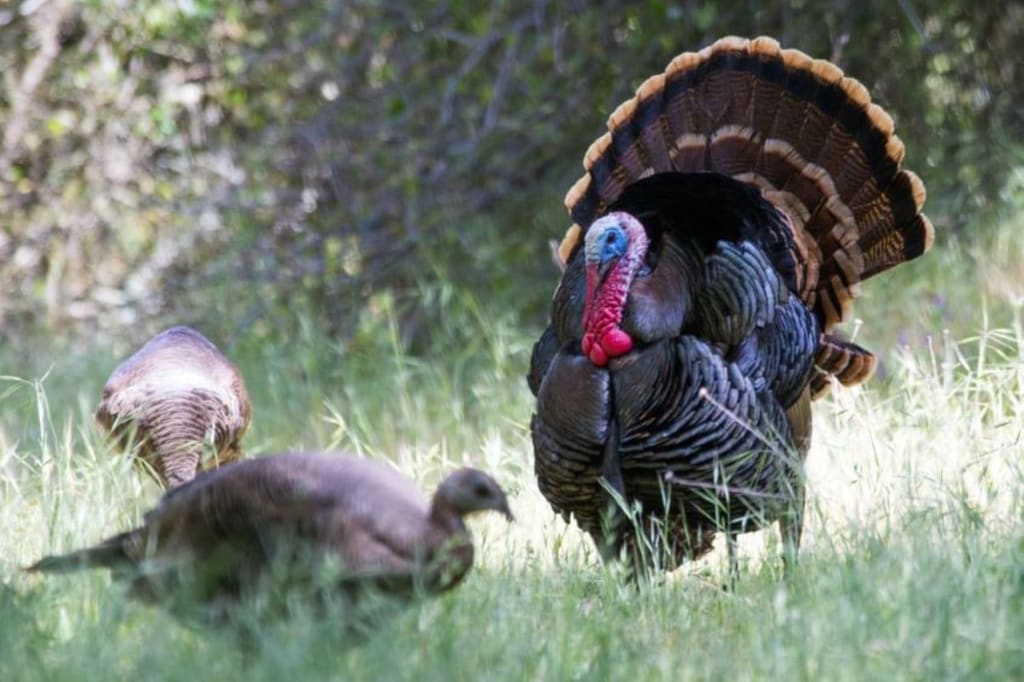
Strut zones are typically open spaces that serve as both feeding areas and places where hens gather. Toms often strut here to attract hens or stay close to a nearby nesting hen. If a tom isn’t already with a hen, this is a spot he will likely visit soon after leaving the roost. In large open fields, look for pinch points or trails that turkeys commonly use to enter the field. Using multiple cameras around these zones can greatly increase your chances of tracking turkeys and identifying specific trails they may use. Sometimes, groups of birds will spend the majority of their day in these large, open fields. If a tom is busy with his group of hens, he may ignore your decoy setup. In this case, your best opportunity might be to position yourself where he enters or exits the field.
Trail Camera Placement for Turkeys #2 - Roosting Areas
I prefer placing cell cameras near roosting areas for several reasons. One of the few reliable elements in turkey hunting is knowing where turkeys roost. While turkeys might not roost in the same spot every night throughout the season, there are usually a few reliable locations where they gather. By setting up multiple cameras in these areas, you can potentially pattern a particular bird or group of birds, similar to how you would track a mature buck. At the very least, you’ll know there are turkeys in the area.
Trail Camera Placement for Turkeys #3 - Food Sources
During the spring season, turkeys feed on a variety of plants, insects, and seeds. Early in the season, before the new growth begins, turkeys primarily feed on harvested agricultural fields like corn or soybeans. In wooded areas, you can spot places where they’ve been scratching through leaves in search of acorns and other nuts. On south-facing slopes, turkeys will seek out the first green shoots of legumes and grasses. As the season progresses and temperatures rise, they move to hayfields, pastures, and disturbed agricultural fields, where they feed on insects, grass shoots, and seeds. Cattle pastures are another hotspot, where turkeys flip over old cow patties in search of bugs, worms, and even "recycled" grains in the manure.
Clover food plots attract turkeys year-round. Placing trail cameras around food sources can be tricky if the area is large, but the more cameras you set up, the better your chances of patterning their behavior. Some hunters place a t-post in the ground or use a camera holder to position cameras in the middle of the plot. While turkeys may be cautious of the camera at first, they’ll quickly get used to it. Just avoid setting the camera in the middle of a field right before you plan to hunt that location.
Trail Camera Placement for Turkeys #4 - Fence Crossings & Natural Funnels
How many times have you had a turkey approach your setup, only to get stuck at a fence line? For reasons unknown, turkeys often hesitate to fly over fences. Any prominent gap, fence crossing, or open gate can be an excellent spot for a hunting trail camera, as it will capture turkeys moving between food sources or roosting areas. Other natural or man-made travel corridors, such as logging roads, creek crossings, and saddles, also make great camera locations.
About the Creator
3DPrinting
I am a technician in the 3D printing industry, and I am interested in the application of 3D printing in various fields.
Keep reading
More stories from 3DPrinting and writers in Wander and other communities.
The Hidden Downsides of Using Trail Cameras in Hunting
It may have been mid-August but it felt more like Christmas Day. With a pair of SD cards, a bag of D batteries and a leather Bota full of water, I was off to the field for the first trail camera card pull of my life. The suspense was nearly unbearable as I neared that camera on the open gate. One week prior, I had placed it there as it was apparent the deer were heavily browsing the neighboring beanfield and using the open gate as the main entrance to the dining hall. I returned to a dead camera and a full card meaning only one thing; I got pictures of something! The suspense turned into pure anticipation as I rushed back to the family desktop to review the card’s contents! I didn’t have to wonder for long.
By 3DPrintingabout a year ago in Petlife
Signs That You Grew Up in Texas
Greetings, Vocal creators! We're going to talk about arguably the best state in this country. I'm talking about Texas and it's also my home state, in case you didn't know. Nicknamed The Lone Star State, it has over 31 million people as of 2024 and is the second largest in the country. Last year, I wrote a story about the things that I loved about Arlington, which is where I'm originally from and where I grew up. Some notable people from the 28th state include Matthew McConaughey, Nolan Ryan, Matthew Stafford, and Willie Nelson. You can read the full story by clicking the link down below. The following entries are not in any particular order.
By Mark Wesley Pritchard 6 days ago in Wander


Comments
There are no comments for this story
Be the first to respond and start the conversation.