

I always feel at home in Bishopsgate because I don't live far from Liverpool Street Station, which incidentally is now the busiest station in London, thanks to the opening of the Elizabeth Line.

It might be hustling and bustling today as the street of Bishopsgate runs north to south through the City, linking various vital areas and landmarks. However, Bishopsgate has a fascinating history spanning centuries.

The origins of Bishopsgate date back to Roman times when it was the site of one of the gates in the Roman wall surrounding Londinium. This gate, located on the Roman road leading to Eboracum (York), was a crucial entry point to the City.

One of the Eight Gates Into London
In the medieval era, the gate was rebuilt and named after the Bishop of London, hence the name Bishopsgate.
There's no gate today, but I believe there is a marker near 8 Bishopsgate. I didn't see it when I went up 8 Bishopsgate, but I will look next time I'm down there.

Bishopsgate developed into a bustling area with inns and taverns catering to travellers and traders. Its position on the main road to the north of England made it a substantial commercial and transport hub.
During the Tudor and Stuart periods, the area around Bishopsgate thrived. Wealthy merchants and financiers began to establish themselves in the area.
The Great Fire of London (1666): Although the fire caused widespread destruction in London, Bishopsgate was largely spared. This made it even more prominent in the City's rebuilding and growth.

18th Century Onwards
The 18th and 19th centuries saw significant expansion and development. Bishopsgate became known for its elegant townhouses and became home to several influential people.
Liverpool Street Station opened in 1874 and became a central transport hub. With the advent of the industrial era and the expansion of the railway network, the area began to change.

Bishopsgate suffered damage during the Blitz WW2, which led to significant reconstruction and restoration. Bishopsgate also became home to many financial services companies, and with them came the birth of high-rise buildings.
A Parish District and now A Ward
Some churches, including St Helens Church and St Boltophs without Bishopsgate, are visible signs of what was once a prosperous Parish. Today, Bishopsgate is among the 25 Wards in the City of London.
St Helens is one of the largest surviving churches in the City of London. It's affectionately known as the Westminster Abbey of the City.
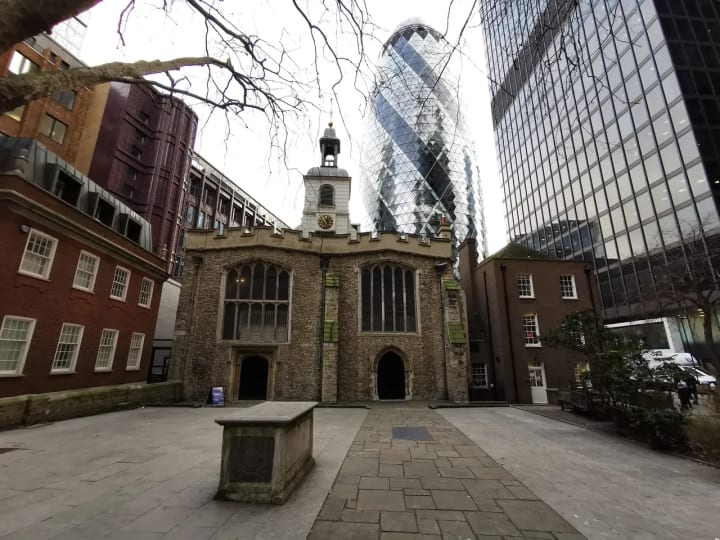
It was the parish church of William Shakespeare, who lived in the area in the 1590s. It was one of only a few churches in the City of London to survive the Great Fire of London 1666 and The Blitz.

St Boltoph Without Bishopsgate The church was one of four in medieval London dedicated to Saint Botolph or Botwulf, a 7th-century East Anglican saint, each standing by one of the gates to the City.
Interestingly, In around 1307, the Knights Templar were examined here by an inquisition on corruption charges. In 1413, a female hermit was recorded as living here, supported by a pension of forty shillings a year paid by the Sheriff.

There's even an old Turkish Bath in the Gardens of St Boltophs Without Bishopsgate.
The Gherkin
The Gherkin, formally 30 St Mary Axe and previously known as the Swiss Re Building, is a commercial skyscraper. It was completed in December 2003 and opened in April 2004.
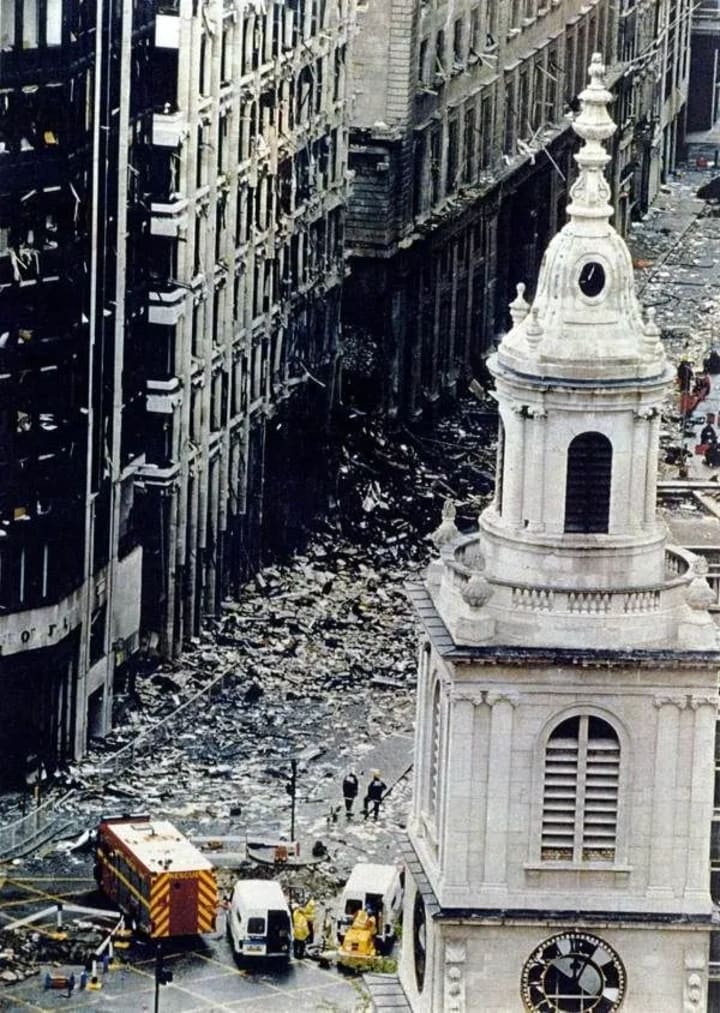
With 41 floors, it is 180 metres (591 ft) tall and stands on the sites of the former Baltic Exchange and Chamber of Shipping, which were extensively damaged in 1992 in the Baltic Exchange Bombing by a device placed by the Provisional IRA in St Mary Axe, a narrow street leading north from Leadenhall Street.
What's To Do in Bishopsgate?
Lots. You'd be surprised what's to do.
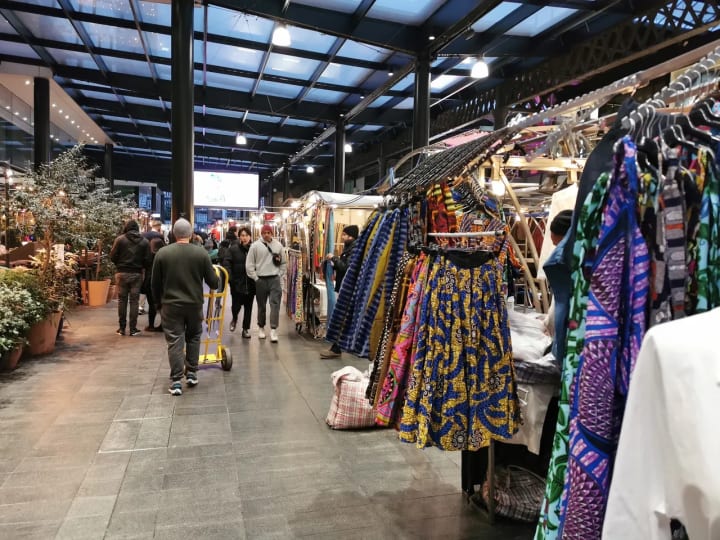
❇Spitalfields Market is just around the Corner
❇️Heron Tower for Brunch at Duck and Waffle or Lunch at Sushi Samba
❇️London Wall is around the Corner from St Boltophs Without Bishopsgate
I walk to the Tower of London and Tower Bridge from Bishopsgate via Commercial Road and Minories in Aldgate
❇️Leadenhall
❇️Monument
Parting Comments
As you know by now, the City of London (Londinium as it was called in the Roman Times) has a deep history. Every nook and cranny is filled with giant steps that precede ours in the 21st Century.
Next time you're in London, don't forget to check out this hood, which might look like a normal City area, but there's more to it than meets the eye.
Thank you very much for your attention, as always.
Best wishes
Tabby
About the Creator
Tabby London
The London I've been discovering is usually off the well-beaten track.I love the nooks and crannies and walking along the streets steeped in centuries worth of history. I'm fond of Zone 1 because that's where it all began centuries ago.
Keep reading
More stories from Tabby London and writers in Wander and other communities.
THERE'S MORE TO HISTORICAL TOWER HILL THAN MEETS THE EYE
I often went to Tower Hill as a child, but they were for special visits to the Bridge. I've also traipsed around Tower Hill for many years as a student. Now, I look for any excuse to go to Tower Hill. I always discover something new each time.
By Tabby London2 years ago in Wander
The Kelpies and The Falkirk Wheel
The Kelpies The Kelpies A few years ago I was driving up the M9 towards Dollar in Scotland, it was dark and raining and suddenly I nearly crashed the car when I saw two huge hundred-foot-high horses' heads to my left-hand side. I had to pull over. I am not sure if I tried to take a photograph but I was dumbfounded.
By Mike Singleton 💜 Mikeydred 3 days ago in Wander
Belle of the Bayou
Bad move, cher. Not just the slip of her kitten heel on the rainy February cobblestones in the Fourth Ward. She got caught snooping. Detective Deleon clucked and strutted like a rooster in his rush to clear her from the scene, waving cigar smoke to and fro as he gesticulated amid the thick air of the speak easy. An experienced crime reporter, Marie knew better than to let the coppers catch her on the wrong side of the line, but curiosity had gotten the better of her.
By Maia Gadwall the metAlchemist6 days ago in Fiction


Comments (1)
Thank you for the interesting and delicious content. Follow my stories now.