
Once upon a Samurai in Mexico… as well as Cuba, Spain, France and eventually Italy
The Samurai that united 6 countries over 400 years ago...

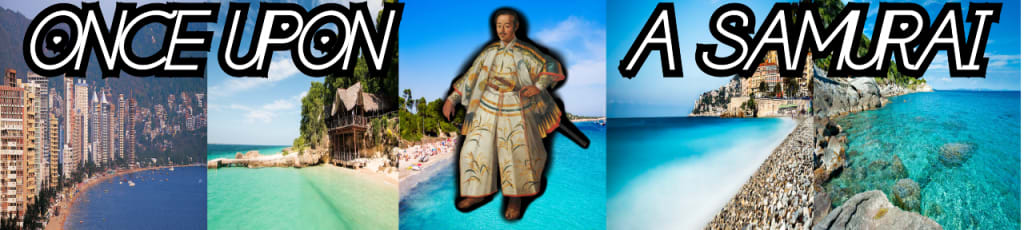
Imagine the sun caressing your skin as you relax on a towel draped over the warm sand on the beach of Acapulco, Mexico. All around you are restaurants cooking traditional Mexican dishes and vendors selling handmade trinkets you can take home as souvenirs or decorations. A truly beautiful and serene place to be. But as you walk along the streets of Acapulco, something catches your eye. A large sign with Japanese characters in the middle, and two large words on either side of it: Plaza Japón, which translates to Japan Plaza.
As you cross under the foreign yet familiar sign, you see the statue of a man sitting above more Japanese characters, surrounded by a quaint yet simple garden.
Who is the Japanese man forever captured in this statue? And what is he doing on the sandy beaches of Mexico?
Well, it’s kind of a funny story.
Let me take you back to a time before Mexico ever existed. Instead, there was the colony of Spain, which had been given the very clever name of New Spain. This also included the present day islands of the Philippines, which had been colonized by the Spanish in order to establish trade with the East. To make a long story short, a ship would travel back and forth between the two colonies. It would leave from the port of Acapulco and arrive in Manila, where the people exchanged everything from their culture, their languages, and most importantly their goods and merchandise.
Japan began to notice all of the trade that was going down, and not long after wanted a piece of the action as well. See, Japan was interested in Europe and their double T’s- technology and trade. But the only way to get their hands on it was to establish a solid relationship with Spain, the hotspot of international trade. And New Spain was their key since they could provide Japan with a direct connection to Europe, as opposed to the longer route usually traveled to trade Western goods.
Alas, Spain had no interest in Japan, as they had their sights on another set of islands. It wasn’t until an unforeseen shipwreck, which brought the Spanish to the shores of Japan, that a voyage was born; one that would forever change the course of history for six countries.
And that was the Keicho Embassy.
Led by the great Samurai Hasekura Tsunenaga, a noble man who fought for his country under the leadership of the northern Daimyo. Though not much is known of his life, we do know he was loyal warrior and ready to do anything to serve and protect his country. It was because of this, and other personal reasons, that he was chosen to lead the Keicho Embassy, with the goal to unite Japan with Spain for their commercial trade, and Italy for the religious expansion of Roman Catholicism in Japan.
Tsunenaga gathered up a crew of 180 men, which included some Japanese citizens, a few other samurais, as well as Spanish friars and explorers, to embark on this revolutionary expedition. Each had their own reasons for completing the journey, of course. Some wanted to travel to a warmer country, a certain few wanted to be recognized by the catholic order in Rome, while others simply wanted to make their mark in history. After all, Tsunenaga and his men would be the first Japanese to undertake such an expedition, crossing two enormous oceans and becoming the first Samurai's to ever set foot in the West.
The first leg of the voyage was exhausting. Crossing the Pacific ocean was full of plagues, disputes amongst crew members, and unfortunate casualties. But the Keicho Embassy eventually landed on the shores of Acapulco where they were well received by a great ceremony from the Mexican people. Tsunenaga and his Embassy would then continue through Mexico until they reached to Veracruz, a port on the opposite coast where New Spain’s ships would travel back to the motherland of OG Spain. After a brief stay in Cuba, the embassy changed ships and continued on their journey, crossing the Atlantic ocean to reach the western hotspot of Europe. Their first stop was Spain, where Tsunenaga personally delivered a letter to Spanish courts from Japan’s regional leader who wished to establish that direct relationship between Japan and Europe.
After Spain, Tsunenaga led the embassy to their second destination. They were supposed to travel directly to Italy, but bad weather made a dent in their plans which forced to make a quick detour to France. Once the weather calmed though, they were finally able to reach Rome where Tsunenaga and his crew met with the Pope. All seemed to be going well, until word reached Rome about what was going down back in Japan.
See, the year after the Keicho Embassy began their expedition, Japan established a policy of isolation, which included the rejection of contact with outside countries as well as the persecution of Catholicism. This obviously didn’t go over well with the Pope, who not only turned down Tsunenaga’s proposal, but forced him and the entire embassy to retreat back to New Mexico and eventually back to Japan.
The trip itself took seven years to complete, and on a surface level was a complete failure. At the time, there was no relationship established between Japan and Spain or Italy. The embassy returned home empty handed and was forgotten about for more than 200 years during that period of isolation in Japan. Some of the travelers even lost their lives upon returning, either because of disease or the ongoing religious persecution. Tsunenaga, upon returning to Japan with shame, lived two more years before passing away himself, though it is unknown exactly how. Some believe it was due to disease as well, while others have much darker theories...
But all was not lost.
The Keicho Embassy unknowingly planted seeds of friendships in all of the countries visited. And as Japan lifted their isolation policy, they once again began to establish relationships with other countries. And it's because of Tsunenaga's embassy that successful diplomatic relationships were established nearly 400 years later. Present day Japan has a great relationship with the countries of Mexico, France, Spain, Cuba AND Italy. Japan was even allied with the latter during both world wars!
Although Tsunenaga may have failed in his quest to establish that direct relationship between Japan and the European countries at the time, he was able to successfully unite them centuries later. And to commemorate his monumental journey, statues of the great Samurai were established throughout the various destinations of the Keicho Embassy:
- In the Church of Civitavecchia, Italy
- In Coria del Río, Spain
- In Havana Bay, Cuba
- In Tsukinoura, Japan
- And in the outskirts of Acapulco, Mexico
- Not to mention the amusement park/museum in Japan
All forever commemorating Tsunenaga's impactful voyage.
About the Creator
A.Messs
I love to write, about everything I guess
Keep reading
More stories from writers in Wander and other communities.
Eating in Morocco With Food Allergies by Morocco Family Vacation
Traveling with food allergies is stressful no matter where you go. Traveling with kids who have food allergies can feel overwhelming. When we planned our family trip to Morocco, this was the part that worried me the most. I kept asking myself the same questions: Would people understand allergies? Would language be a barrier? Would I be constantly on edge at every meal?
By Ariel Cohena day ago in Wander
Rachel Reviews: The Spiral Archive by Pieter Hendrik
It's difficult for me to know where to start with a review of this book as it was, for me, an entirely unique experience and one that I'll probably never have again. I don't want that to be interpreted as unenjoyable but it has left me scratching my head a little and ruminating on its content, its themes and its characters.
By Rachel Deeminga day ago in BookClub
A Dart at Dusk
Seconds ago, the sullen sun set on the two of us… my exuberant furry companion and me. A fresh breeze embraces us, delivering welcome relief from the day’s oppressive heat. His typical stumbling and staggering along — apace with a sloth — has turned into trip-trapping, high-stepping, almost skipping along.
By Angie the Archivist 📚🪶6 days ago in Petlife


Comments
There are no comments for this story
Be the first to respond and start the conversation.