
NASA's Parker Solar Probe: A Cosmic Quest to Unravel the Sun's Secrets
NASA technology
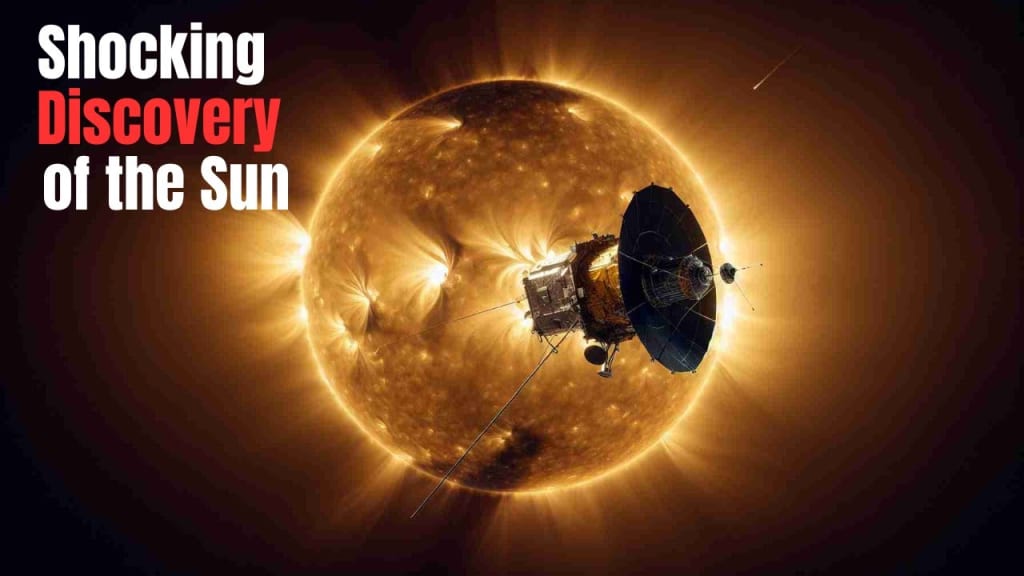
In a remarkable achievement reflecting both human ingenuity and technological excellence, NASA's Parker Solar Probe has once again defied the odds during its latest solar approach. In 2023, the spacecraft managed to get within an astonishing 13 million kilometers of the Sun's surface, and on December 24, 2024, it shattered its own record by flying within a mere 6 million kilometers of our fiery star. This milestone is a testament not only to the probe's engineering prowess but also to our ongoing quest to deepen our understanding of solar dynamics.
### Defying Expectations and Surviving Solar Extremes
The question of how a spacecraft can venture so close to the Sun without succumbing to its searing heat has long fascinated scientists. The Parker Solar Probe benefits from its state-of-the-art heat shield, crafted from carbon-composite materials and coated with a reflective white ceramic to deflect excessive heat. Although the Sun’s surface temperature exceeds 5,500 degrees Celsius, the probe’s design allows it to endure temperatures reaching about 1,400 degrees Celsius, preventing it from disintegrating in the solar vicinity.
This feat of engineering is not just about durability; it also involves a strategic scientific approach. The Parker Solar Probe was launched on August 12, 2018, with a fundamental mission: to explore unanswered questions about the Sun, particularly the enigmatic characteristics of its corona—the outer layer of the Sun's atmosphere, which perplexingly maintains temperatures much greater than that of the surface itself.
### Record-Breaking Speed and Data Transmission
On Christmas Eve 2024, NASA celebrated not only the proximity achieved but also the record speed reached by the probe—approximately 690,000 kilometers per hour. This velocity makes it the fastest human-made object in history, emphasizing the tremendous capability of modern engineering.
Following its spectacular solar approach, the spacecraft entered a radio silence phase, which left scientists hanging in anticipation. However, on December 26, the silence was broken, and NASA received confirmation that the Parker Solar Probe had survived its close encounter unscathed, sending back first telemetry data just in time for the New Year. Such data indicated that all scientific instruments were intact and functioning perfectly, ready to unveil the Sun’s secrets.
### The Hunt for Solar Insights
The Parker Solar Probe's mission is rooted in the desire to answer critical questions about solar winds—streams of charged particles emitted by the Sun—and the mysterious behavior of the corona itself. The mission was conceptualized to examine why the corona is vastly hotter than the Sun's surface and how solar winds accelerate as they make their journey through space.
Historically, this quest for knowledge dates back to the 1960s, when scientists first began hypothesizing about the solar wind's dynamics. The Parker Solar Probe, with its unique instrumentation, is now making observations that were previously deemed impossible. Data collected during past proximity flights indicated that the corona is not a uniform field but features peaks and valleys. For instance, in 2021, the probe made significant findings regarding solar wind “switchbacks”—short-lived spikes in particle streams that, upon initial discovery, left scientists with more questions than answers.
### Unveiling the Solar Wind's Mysteries
One of the most tantalizing discoveries made by Parker was the nature of these switchbacks, which appear as sharply bent structures in solar wind streams. The mission's objectives were further bolstered when the ESA’s Solar Orbiter collaborated with Parker in 2022 to capture switchbacks and analyze their properties in detail, allowing scientists to piece together the mystery of what causes such phenomena.
By investigating how solar winds behave at different distances from the Sun, researchers were able to substantiate theories regarding magnetic oscillations known as Alfvén waves, which transport energy in the solar magnetic fields and affect the charged particles composing the solar wind. Recent data have shown that these waves transfer energy, accelerating solar wind particles and helping to explain why they don’t lose speed as they travel away from the Sun.
### Future Prospects and Continuing Research
With two more close approaches to the Sun scheduled for this year, Parker Solar Probe is set to pave the way for groundbreaking research on solar phenomena. On March 22 and June 19, the probe will once again engage in close encounters to gather more data and refine existing theories about the solar wind.
The mission continues to harness state-of-the-art technology and scientific acumen, leading us to a better understanding of not only our Sun but also the broader gravitational dances occurring within our solar system. As we eagerly wait for the upcoming data set to arrive by the end of January, the excitement surrounding the Parker Solar Probe intensifies. Each new insight it provides not only enriches our knowledge but reminds us of the enduring mystery and majesty of the universe we inhabit.
Ultimately, the Parker Solar Probe exemplifies humanity's relentless quest for knowledge—pushing boundaries and illuminating the path toward understanding the fundamental forces that govern our solar neighborhood. In the vast cosmic expanse, the probe serves as a beacon of hope, continuously unraveling the enduring mysteries of our closest star.
About the Creator
Keep reading
More stories from David Iliya and writers in Wander and other communities.
The Seven Invisible Marks of the Chosen Ones
Not everyone possesses the extraordinary qualities that set them apart from the rest of the world. Throughout history, certain individuals have been described as the "chosen ones," marked by seven invisible signs that distinguish them from others. These marks are not physical or visible to the naked eye; rather, they are woven deeply within their beings, influencing their experiences and interactions in ways that often defy explanation. If you’ve ever felt different or sensed a greater purpose in your life, keep reading—especially until we reveal the seventh mark, which could confirm your status as one of the chosen.
By David Iliyaabout a year ago in Wander
Worth the Wait: Puerto Viejo, Costa Rica
Beach bumming in a small Caribbean beach town sounded like a perfect way to end our 6-month trip through Mexico and Central America. Or so we thought. The foul, fishy stench of rotten seaweed hit our nostrils as we stepped from the cramped bus and looked out at a rather depressing, empty, and underwhelming black sand beach. It was pouring with rain, and we had to quickly fish out our ponchos. We thought, this couldn’t be it, could it?
By Sh*t Happens - Lost Girl Travel10 days ago in Wander




Comments
There are no comments for this story
Be the first to respond and start the conversation.