
Memories Of A Flag: The Power Of Symbology
Apparently, a picture IS worth a thousand words!

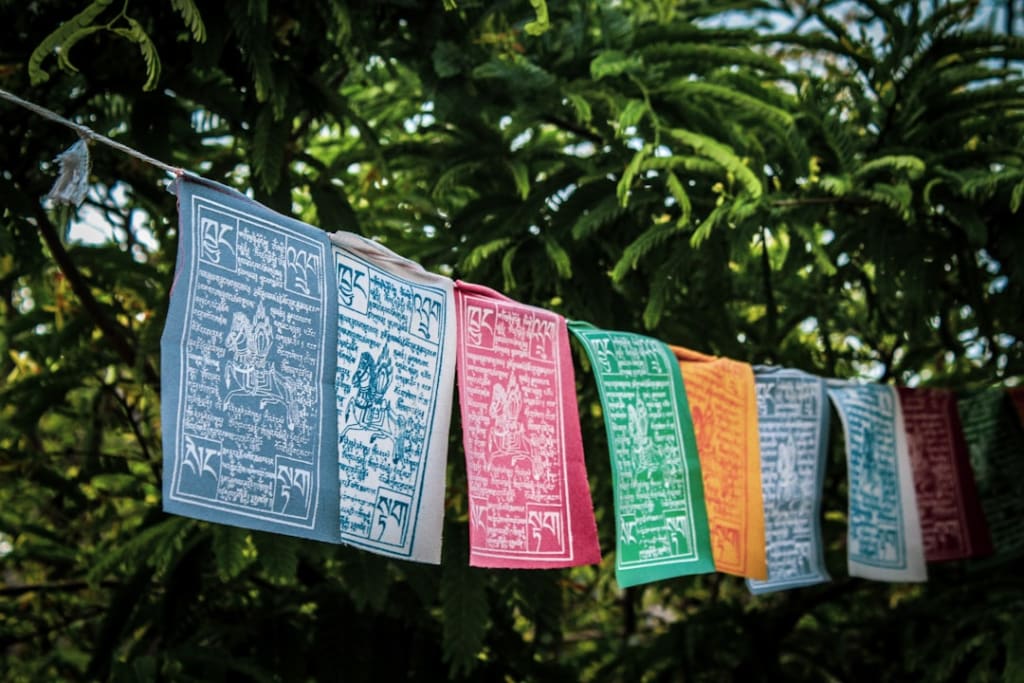
I have been attracted to symbology for as long as I can remember.
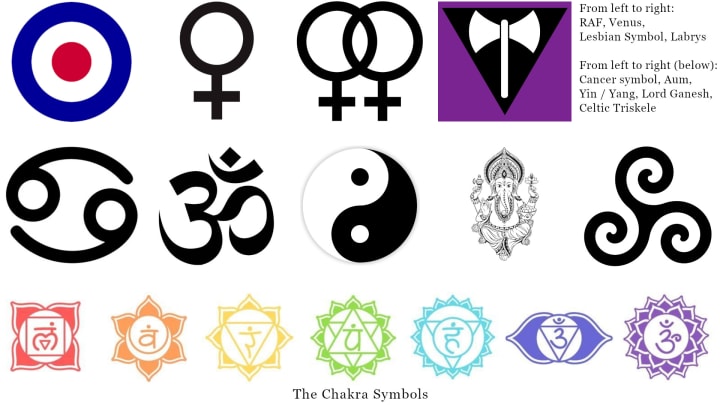
I pored over World War II books and built model airplanes; Supermarine Spitfires, Gloster Gladiators, and Hawker Tempests were my favourites. I fixated on the decals as I delicately added them to the finished products. The red, white, and blue concentric circles of the Royal Air Force, seemingly emulating a bullseye, interested me almost as much as the aircraft did.
In high school, I was drawn to Greek mythology, Poseidon’s trident, Dionysus’ goblet, and Artemis’ bow and arrow drew me to the stories even more. Goddess Aphrodite’s circle above a cross symbolizing strong feminine beauty and power pulled at my core; it was a symbol I would adore for the rest of my life.
The Amazonian labrys became a representation of female empowerment as I realized my sexual orientation was not like that of my peers. Subsequently, my love for Aphrodite’s iconic feminine symbol grew as I saw it entwined with its duplicate, the enduring representation of lesbianism.
I found myself fascinated by the Zodiac symbols, wondering why each was depicted as such, the sideways 69 representing my own sign of Cancer. The Hindu Aum kept me transfixed as I delved further into esoteric thinking and spiritual teachings. The flawless simplicity of Yin and Yang, two opposite forces fitting together perfectly as they work in unison to maintain a dynamic equilibrium.
Hinduism offered up even more beauty as I gazed upon the exquisite Sanskrit letters bearing the names of each chakra while studying Reiki. Lord Ganesh’s spectacular elephant iconography resonated with me, and I carry effigies of him as I travel the world, hoping that obstacles will be removed and luck will follow.
When I decided to start a therapeutic practice while living in Australia, it was the Celtic Triskele that inspired my logo, a design I brought into my International Immigrant brand as it symbolizes the unity of body, mind, and spirit.
Despite my love for the vast array of images within symbology, my interest in flags has remained constant. I sketched them from the time I could draw, doodling them in class as I listened to old-school teachers prattle on endlessly about things that held no interest for me. Even today, I find myself sketching them in quiet moments as I ponder some of life’s questions.
Much of my identity has been caught up in, and represented by, flags. Some bring a smile to my face while others make me shiver.
The Evolution of the South African Flag
Growing up in South Africa, the orange, white, and blue striped flag with the British Union Jack, Transvaal, and Orange Free State flags in the centre meant home to me.
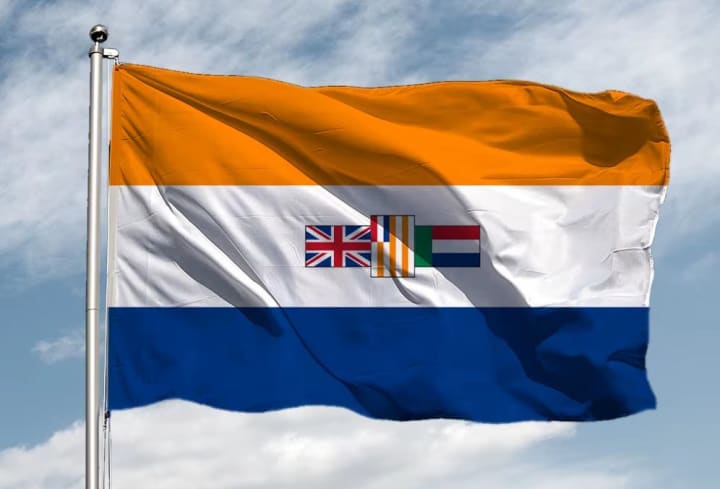
It was warm and inviting, a symbol of safety for those with white skin. For South Africans with a darker skin colour, however, it was a symbol of oppression and fear. It represented stolen land and the destruction of diverse cultures, the enslavement of the African people from the colonialism that had swept through the southern tip of the Mother Continent.
A new South African flag was unveiled in 1994, following the end of apartheid and the first democratic elections.
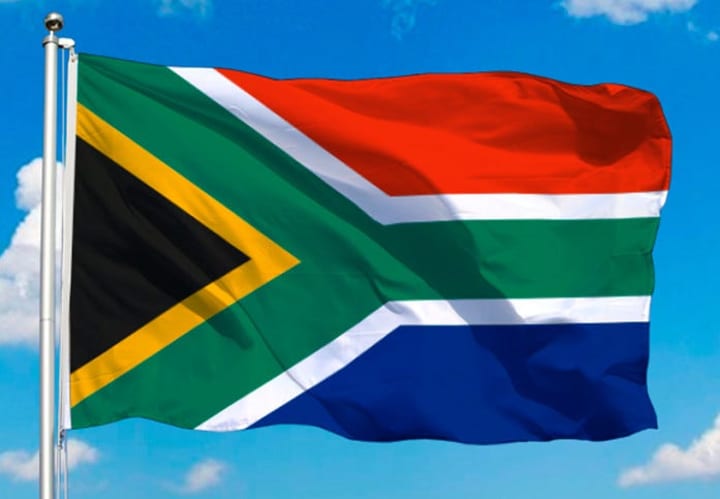
It meant nothing to me. Although I was supposed to embrace it with solidarity and unity, it just annoyed me. I thought it was ugly and garish, and I raged, along with my White brethren, that it wasn’t part of my personal history.
It looks very different to me now. It represents all the people of my homeland. I have come to understand the true history of South Africa as well as my part in the oppression of its majority. The old flag that filled me with a sense of home as I saw it flying over South Africa House in London in 1987 and again in 1992, now sends a shiver down my spine.
I’m glad it’s a relic of the past.
The Power and Pride of the Rainbow Flag
At twenty-one, I came out of the closet. I burst onto the lesbian scene with gay abandon, much to the chagrin of my parents, who thought discretion was a better alternative.
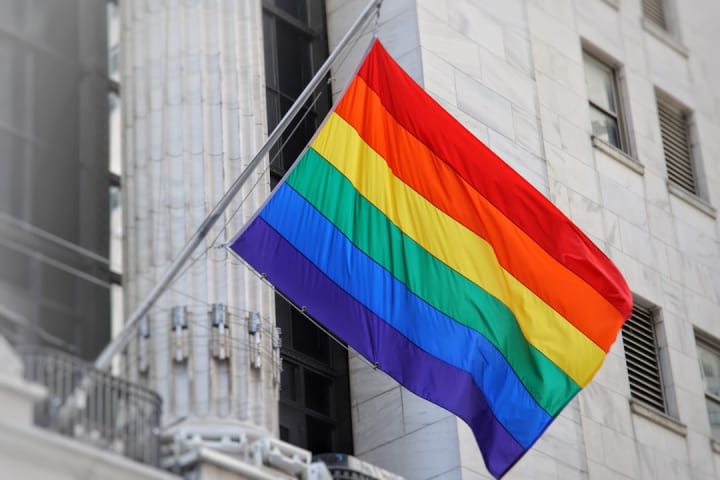
The simple rainbow flag represented freedom, pride, and choice. It spent much of its time hiding in dark corners in nineties South Africa, but we all knew it was there. As I ventured further into my journey as a gay woman, the six bright colours merged with my identity and adorned my home. A flag hanging from the inside of the front door, a bracelet dangling from my wrist, a decal on the back window of my car, the colours symbolizing unity.
There have been additions to the flag over the years, and while many of my older gaythren lament the changes, I embrace them. It is not merely the L, G, and B that are represented anymore, but also the Trans community, the BIPOC community, acknowledgment of those lost during the HIV/AIDS crisis in the 80s and 90s, and more recently, the intersex community.
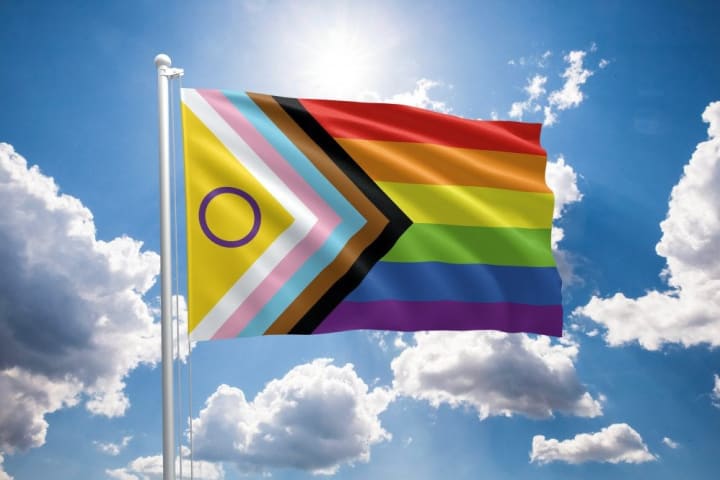
As I type this, the new flag is displayed proudly in my basement apartment as the Northern Hemisphere celebrates Pride month.
The Similarity of the New Zealand and Australian Flags, the Difference in Experience
In my thirties, I emigrated first to New Zealand and then to Australia. While my time in the Land of the Long White Cloud was marred by difficulty and frustration, my decade in the Land Down Under was sublime.
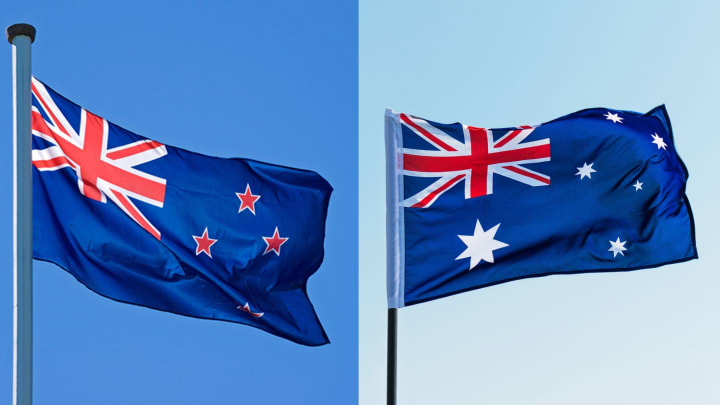
There are a few differences between the Kiwi and the Aussie flags. The Australian flag has a more accurate representation of the Southern Cross, as well as the addition of the Commonwealth star. All Aussie stars are seven-pointed and white, while New Zealand’s five-pointed stars are red with white borders.
For most of you, the differences are fairly marginal, and many wouldn’t know which was which. For me, however, they are worlds apart. One brings fond memories, great friends, and incredible chapters, while the other dredges up struggle, frustration, and challenges.
Two similar resemblances, two very different experiences.
The Polarization of the American Flag
For many decades, the American Flag represented freedom, the land of opportunity, and the American Dream. For many of us in the know, and I am counting my American friends in this, the American Dream is a fallacy, an option only available to a select few, but many of my students still believe in its existence.
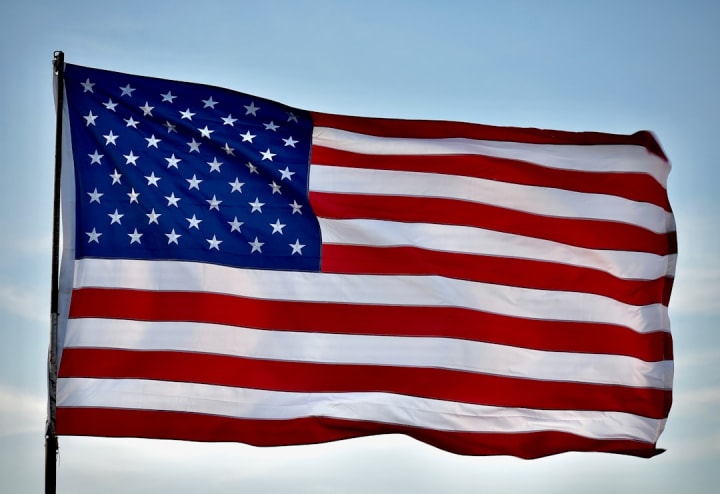
There was a time when the red, white, and blue flag brought hope and excitement to me, too, as I chased a life I wanted with every ounce of my being.
Much as the old South African flag did, the Stars and Stripes also brought fear and oppression to many of its citizens, those from marginalized groups tainted by the moral majority. Still, Old Glory stood strong in the face of division as, in theory, it welcomed the huddled masses to her shores.
Now, it brings only sadness. Now, the flag represents true fear and oppression under the direction of an autocratic government ruled by megalomaniacs and fascists. As US citizens flee the tyranny, the symbolic representation has changed.
As time has passed, so has my sentiment.
The Promise of the Canadian Flag
Never did I imagine how much joy a simple red maple leaf on a white background could bring. In my youth as I sat in classrooms sketching as many flags as I could remember, the red and white maple-leafed flag would make the occasional appearance on my white school pad.
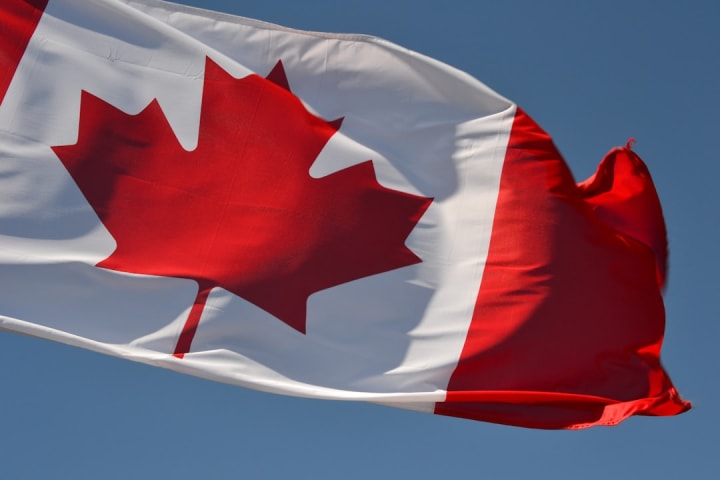
The symbology of the flag now sits nestled deeply within my soul. It represents people I have come to love, landscapes of pristine white in the winter, colourful vistas in the fall, and bright greens in the spring and summer. It symbolizes desire and sadness in equal measures, as I look toward an uncertain future.
My desire to settle in the Great White North has been strong, and I chased my dream with fervour, with everything I had to offer. As time passed and my hopes were not realized, sorrow set in, wrapping me in mourning.
Currently, I am torn as I oscillate between continuing the fight and heading for possible greener pastures.
However, my heart still sings, O Canada, the True North strong and free!
My journey has been long, and flags have greeted me like long-lost friends as I moved through countries, life stages, and changed circumstances. There may be other flags in my future, symbols of a new life, or it may end here with the red maple leaf standing strong on a pristine white background.
Please feel free to buy me a coffee if you like what you read.
About the Creator
Vanessa Brown
Writer, teacher, and current digital nomad. I have lived in seven countries around the world, five of them with a cat. At forty-nine, my life has become a series of visas whilst trying to find a place to settle and grow roots again.
Keep reading
More stories from Vanessa Brown and writers in Wander and other communities.
A Ghetto, A Flood, and A Change Of Attitude
“The Hole,” is what I called it. And it was a hole! To call it an apartment was a bit of a stretch. I guess that’s what you get living in the ghetto. It was all I could afford from my pitiful part-time wage teaching English at one of the language schools in San José, Costa Rica.
By Vanessa Brown10 months ago in Wander
Worth the Wait: Puerto Viejo, Costa Rica
Beach bumming in a small Caribbean beach town sounded like a perfect way to end our 6-month trip through Mexico and Central America. Or so we thought. The foul, fishy stench of rotten seaweed hit our nostrils as we stepped from the cramped bus and looked out at a rather depressing, empty, and underwhelming black sand beach. It was pouring with rain, and we had to quickly fish out our ponchos. We thought, this couldn’t be it, could it?
By Sh*t Happens - Lost Girl Travel10 days ago in Wander




Comments
There are no comments for this story
Be the first to respond and start the conversation.