
Kanchenjunga Trek
Trekking the Kanchenjunga: A Trip to the Far-Off Himalayas
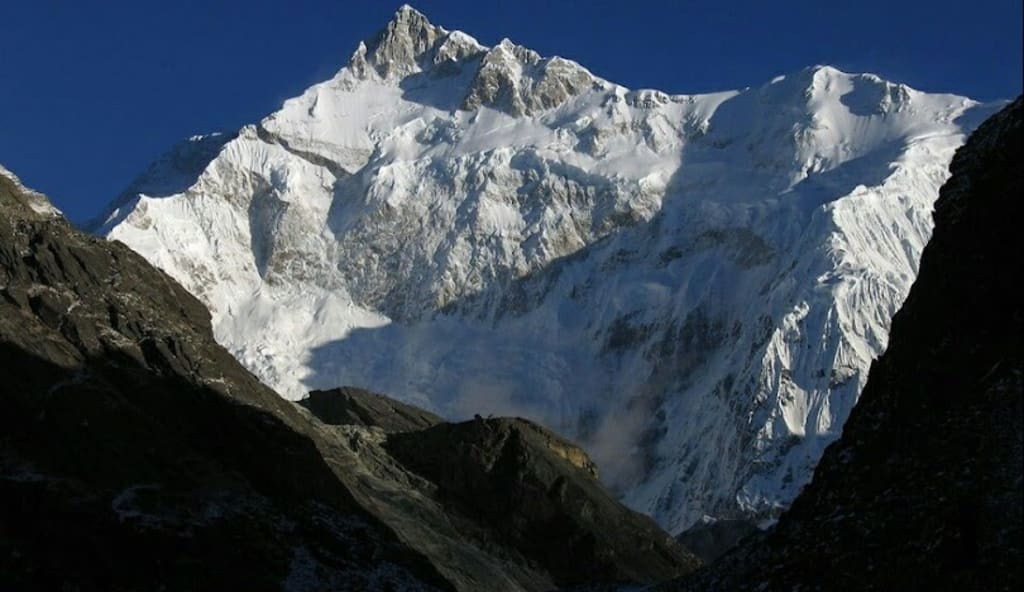
Situated at the intersection of Nepal, India, and Tibet, the third-highest peak on Earth, Kanchenjunga (8,586m), is tucked away in the remote eastern Himalayas. A treasure for daring hikers, the Kanchenjunga Trek offers an unmatched experience of pristine nature, inaccessible landscapes, and rich cultural heritage—despite not being as well-known as Everest or Annapurna. This hike rewards those seeking isolation and unadulterated beauty in nature, but it's not for the weak of heart.
Why Go on the Trek of the Kanchenjunga?
The Kanchenjunga Trek is the ideal destination for hikers seeking an adventure away from the usual road. This walk provides the peace and quiet of unexplored territory, isolated valleys, and the chance to see traditional mountain life in its most authentic form—a stark contrast to the congested paths of Everest and Annapurna. Numerous bird species, red pandas, Himalayan black bears, and the elusive snow leopard are among the various wildlife found in the area surrounding Kanchenjunga.
Locally referred to as the "Five Treasures of the Snow," Kanchenjunga is named after its five enormous peaks. Trekking to this magnificent mountain's northern and southern base camps provides breathtaking vistas of its snow-capped faces.
The Path of Trekking
The best place to start is Taplejung.
The Kanchenjunga trek normally begins in the isolated town of Taplejung, which is reachable by a quick flight from Kathmandu to Bhadrapur and then a rough road trip. Trekking through terraced farmlands, rhododendron forests, and charming villages home to the Rai and Limbu ethnic groups takes up the first few days of the journey.
Base Camp Kanchenjunga North
The trail heads north toward the northern base camp from Taplejung. As you gradually gain height, you'll pass through a number of settlements, including Sekathum, Amjilosa, and Ghunsa. The scenery steadily changes as you hike, going from verdant forests to mountain meadows. At 3,595 meters, the Tibetan Buddhist village of Ghunsa is the final significant settlement before ascending to higher heights.
The route leads to the Kanchenjunga North Base Camp at Pangpema (5,143m) from Ghunsa. Some of the most magnificent vistas of the towering peaks of Kanchenjunga may be found in this location. After several days of trekking, the peaceful Pangpema viewpoint—which offers an unparalleled view of Kanchenjunga's north face—is the final reward.
Base Camp Kanchenjunga South
There is still further trekking to the Kanchenjunga South Base Camp for those who want to complete a circuit. The trail proceeds south toward Tseram (3,870m) after returning to Ghunsa and eventually reaches Ramche (4,580m). This portion of the hike features a variety of environments, including ice rivers and glacier moraines.
At Oktang (4,730m), close to the Yalung Glacier, is where you'll find the southern base camp. Views of the south face of Kanchenjunga and other massive peaks, including Jannu (7,710m), also referred to as the "Mystery Peak," are available from this location.
When to Leave
For the Kanchenjunga Trek, April to May in the spring and October to November in the fall are the finest seasons. Clear skies, comfortable temperatures, and consistent weather are features of these seasons. Rhododendron flowers are most spectacular in spring, but fall offers the harvest season's golden hues and brisk air. Since there is a lot of rain and snow throughout the winter and monsoon seasons, the pathways become hazardous.
Regulations and Permits
Trekkers need both a Kanchenjunga Conservation Area Permit (KCAP) and a special trekking permit because the Kanchenjunga region is a restricted area. Additionally, trekkers must be accompanied by a registered guide and one or more additional people, per government regulations in Nepal. The remoteness of the location and the difficulty in reaching rescue assistance are the reasons for this necessity.
Level of Difficulty and Preparation
The Kanchenjunga Trek's isolated location, lengthy duration (often 20–25 days), and high altitudes make it one of the more difficult treks in Nepal. It calls for a great degree of endurance and physical fitness. Trekking can take five to seven hours a day, and as altitude increases, some days will require more effort than others. Days of acclimatization are important, particularly if you're climbing up to the base camps.
It is imperative that you fully prepare before starting this hike. This includes making sure you have the appropriate clothing for cold weather and high elevations, strengthening your muscles, and engaging in regular cardiovascular exercise.
Perspectives on Culture
The Kanchenjunga region offers a rich cultural experience in addition to its natural splendors. You will pass through settlements home to ethnic groups such as the Rai, Sherpa, Tibetan descendants, and Limbu. The prayer flags, chortens, and monasteries you'll encounter along the route are clear examples of Buddhism's impact. Engaging with the locals provides a vital understanding of their cultures and beliefs, since these mountain towns have managed to maintain their ancient way of life.
In summary
The Kanchenjunga Trek is more than just a walk; it's an excursion into the Himalayan mountains, with less-traveled paths, rougher terrain, and enormous spiritual and physical rewards. The Kanchenjunga Trek is waiting if you're searching for a hike that will test your body and mind while providing a distinctive cultural and natural experience.
About the Creator
Keep reading
More stories from bright vibes and writers in Wander and other communities.
Upper Mustang Trek
The Upper Mustang Trek is a unique and enthralling excursion into one of Nepal’s most secluded and pristine places. Known as the "Last Forbidden Kingdom," Upper Mustang was off-limits to outsiders until 1992, when it was still home to centuries-old monasteries, breathtaking arid landscapes, and an ancient Tibetan Buddhist culture. This journey offers a very different experience from other Himalayan excursions, with its location in the rain shadow of the majestic Annapurna and Dhaulagiri ranges. You will encounter arid deserts, wind-eroded cliffs, and deep gorges that are contrasted with snow-capped peaks.
By bright vibesabout a year ago in Wander
City thrice holy
My visit to Israel in the 1990s felt like a homecoming. Don’t ask me why. A quick tour of Jerusalem took in many historic and religious sites. Not least the excavations beside the Western (or Wailing) Wall. Here, becloaked scholars read ancient Hebrew scrolls, praying with their voices, hearts, minds and bodies. Here, Roman street divides modern office and apartment blocks. Here, east meets west, Jew lives alongside Arab. Here the most holy of Christian monuments has a church that is bisected by a line cutting through two walls, floor, ceiling and alter. One side Catholic, the other Greek Orthodox.
By Raymond G. Taylor5 days ago in Wander
Da Mayor Trip
I’m going to tell you a story. The Story doesn’t end here, this is just the beginning. On November 19 I was surprisingly terminated from my job. And for dubious reasons as well. I enjoyed my job for the most part. The work was easy, I got a long with my co-workers for the most part and the benefits and time off allowed me to do what I wanted to do – travel, go places and do things, and most of all – not be at work!
By D.A. Mayor7 days ago in Wander
How to Succeed at the Benson Directory®
Congratulations and welcome to the Benson Directory® employee #22391! As our newest call handler, you will have the privilege of speaking with dozens of unique and interesting people on a daily basis as well as the opportunity to earn bonuses for high performance. Contained within this handbook you will find a set of ease to follow instructions designed to help you settle in to your new role and begin paving the way to success.
By S. A. Crawford4 days ago in Fiction


Comments
There are no comments for this story
Be the first to respond and start the conversation.