
Iran
A Nation Between History, Beauty, and Bold Transformation

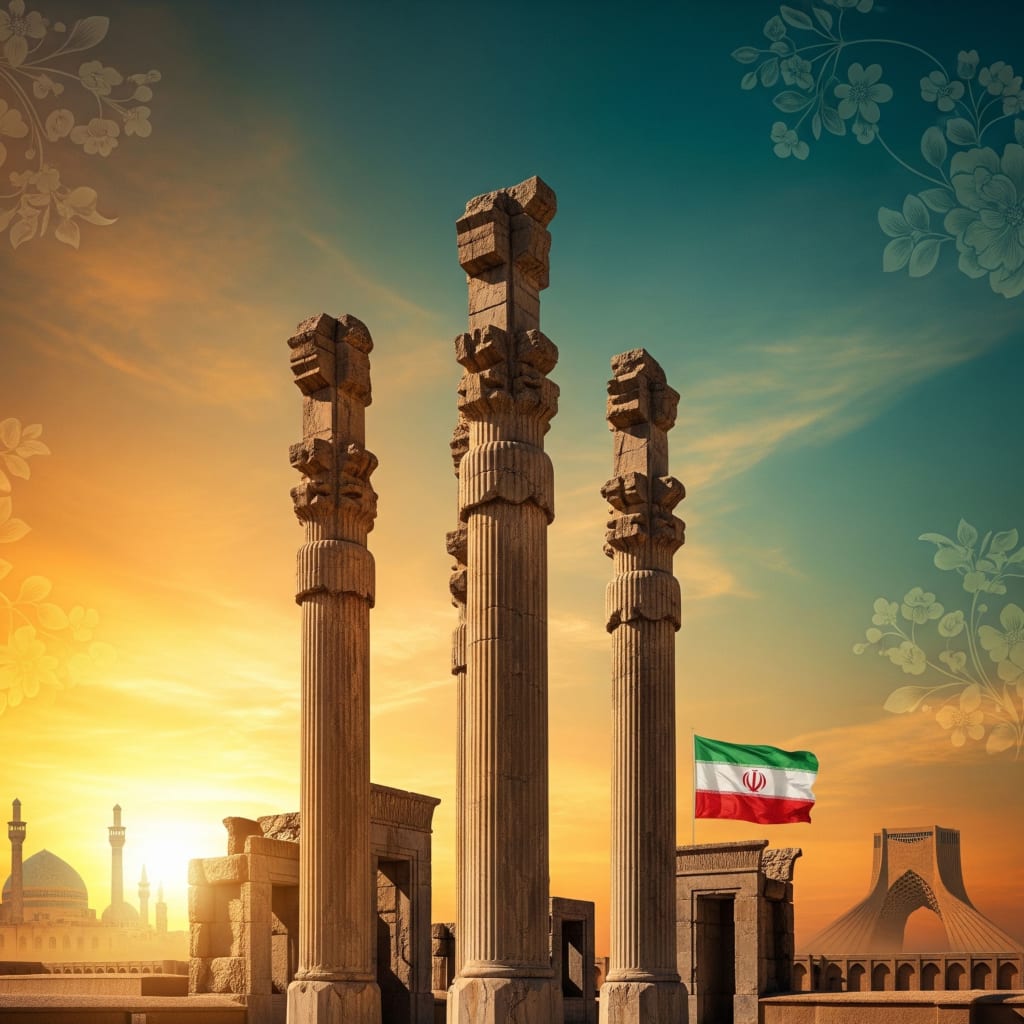
Iran: A Nation Between History, Beauty, and Bold Transformation
Iran is a land of paradox.
It’s where ancient empires sleep beneath desert sands, and where bustling modern cities glow with innovation and protest. It’s a place many outsiders think they know—but few truly understand.
This article isn’t about politics alone. It’s about people. About a nation that holds 2,500 years of civilization in one hand, and a smartphone streaming poetry or protest in the other.
🏛️ From Persia to Iran: A Legacy of Civilization
Long before it was known as Iran, the region was home to Persia, one of the greatest empires in human history.
The Achaemenid Empire (550–330 BCE), founded by Cyrus the Great, was a marvel of early governance and multicultural tolerance. It stretched from the Balkans to the Indus Valley—ruled not just by might, but by code and culture.
Persepolis, the ceremonial capital, still stands today—its stone pillars whispering stories of kings, rituals, and the glory of empire.
From there came Zoroastrianism, one of the world’s oldest monotheistic religions, whose echoes still resonate in Iranian culture, especially in concepts of light, fire, and moral balance.
📜 A Tapestry of Culture and Thought
Iran is often reduced in the media to its politics. But anyone who’s studied Persian poetry knows that Iran is first and foremost a civilization of the soul.
The Poets:
Iran gave the world Rumi, Hafez, Saadi, and Omar Khayyam—poets whose verses transcended religion, war, and time.
“Don’t grieve. Anything you lose comes round in another form.” – Rumi
“Even after all this time, the Sun never says to the Earth, ‘You owe me.’” – Hafez
Their works are still recited today in Iranian homes over tea, during Nowruz (Persian New Year), and even tattooed on the skin of young rebels.
The Art:
From miniature paintings to carpets woven like poems, Iranian art has always told stories—sometimes overtly, sometimes in whispers.
🌆 Modern Iran: More Than Headlines
Iran is often misunderstood as a monolith, when in truth, it’s wildly diverse—ethnically, geographically, ideologically.
Cities That Thrive in Contradiction:
Tehran is chaotic and electric, a city of cafes, coding bootcamps, underground rock, and fashion-forward youth.
Isfahan is serene and majestic, home to Safavid-era mosques with shimmering blue domes and intricate tile work.
Shiraz, the city of wine and roses, is still associated with poets and the softness of southern Iran.
Iran’s geography stretches from the Caspian Sea's green shores to the blazing Lut Desert (one of the hottest places on Earth). It’s a nation of snowy mountains, ancient villages, and oil refineries—a true land of contrasts.
🎭 The People Behind the Veil—Literally and Metaphorically
Iranian people are often portrayed as either oppressed or radical, but this misses the heart of what makes them unique: their resilience, creativity, and layered identity.
Yes, there are rules—strict ones, especially regarding dress codes, speech, and internet use.
But walk into any home, and you’ll find:
A table full of food, poetry books, and pride
A grandmother praying and a granddaughter painting
Fierce political debates and the hospitality of ancient Persia
Iranian youth are among the most internet-literate in the Middle East. Despite restrictions, they find ways to connect, create, and even resist through art, memes, film, and underground music.
🧕 Women in Iran: Strength Woven into Silence and Sound
Perhaps the most misunderstood aspect of Iran is the role of women.
Yes, many Iranian women wear the hijab—but many also protest it, reinterpret it, or find freedom in unexpected ways.
In recent years, women have:
Led protests and civil disobedience
Won global chess and science awards
Published bestsellers and directed Oscar-nominated films
"Woman, Life, Freedom"—the rallying cry of protests in 2022 and beyond—captured the world’s attention, but the struggle is older and deeper.
In Iran, femininity and defiance coexist—often behind closed doors, sometimes in plain view.
🕌 Religion and Revolution: A Complex Bond
Iran is an Islamic Republic—but also home to ancient Christian, Jewish, Zoroastrian, and Baha’i minorities.
Islamic practice in Iran often blends with Persian traditions, creating a rich spiritual and cultural tapestry.
However, the 1979 Islamic Revolution changed everything. It overthrew a monarchy and replaced it with clerical rule—leading to decades of tension between the ideology of the state and the evolving identity of its people.
What’s remarkable is how Iranians have both challenged and adapted—blending old customs with new values.
🎞️ Iranian Cinema: Truth in Allegory
If you want to understand Iran, watch its films.
Directors like Abbas Kiarostami, Asghar Farhadi, and Jafar Panahi have told subtle, profound stories using metaphor and silence—often evading censorship through layered storytelling.
These films have won awards at Cannes and the Oscars. They speak of:
Human struggle
Moral complexity
Silent resistance
Iranian cinema whispers what cannot be shouted—and that’s its power.
🧭 Why Iran Matters to the World
Iran is at the center of:
Geopolitics: oil, nuclear talks, regional power
Culture: ancient Persian heritage, Islamic philosophy, modern resistance
Spiritual insight: poetry, mysticism, questions of identity and morality
Understanding Iran means going deeper than news headlines. It means meeting the country as a living paradox—a place where beauty and control, tradition and rebellion, exist side by side.
About the Creator
abualyaanart
I write thoughtful, experience-driven stories about technology, digital life, and how modern tools quietly shape the way we think, work, and live.
I believe good technology should support life
Abualyaanart
Keep reading
More stories from abualyaanart and writers in Wander and other communities.
Heat Wave Fuels Massive Wildfire in Australia
Australia is facing yet another environmental emergency as a relentless heat wave fuels massive wildfires across several states. With temperatures climbing far beyond seasonal averages, dry winds sweeping across parched land, and vegetation turning into tinder, the conditions have created a perfect storm for catastrophic bushfires.
By Aqib Hussain4 days ago in Wander


Comments
There are no comments for this story
Be the first to respond and start the conversation.